Roles of Oestrogen & Progesterone in the Menstrual Cycle (Edexcel IGCSE Biology)
Exam board Pearson Edexcel · IGCSEUpdated 2026-07-02
The Menstrual Cycle
Spec point —
4.9· understand the roles of oestrogen and progesterone in the menstrual cycle
-
The menstrual cycle begins after puberty, usually in early adolescence (around age 11–14)
-
The average menstrual cycle lasts about 28 days, though it can vary between individuals
- Ovulation occurs around day 14, when an egg is released from an ovary and travels along the fallopian tube towards the uterus
- If the egg is not fertilised, the uterine lining (endometrium) breaks down and is shed through the vagina — this is called menstruation (a period)
- Menstruation usually lasts around 5 - 7 days and marks the start of the next cycle
- After menstruation, the uterine lining thickens again in response to hormones, preparing for the possible implantation of a fertilised egg
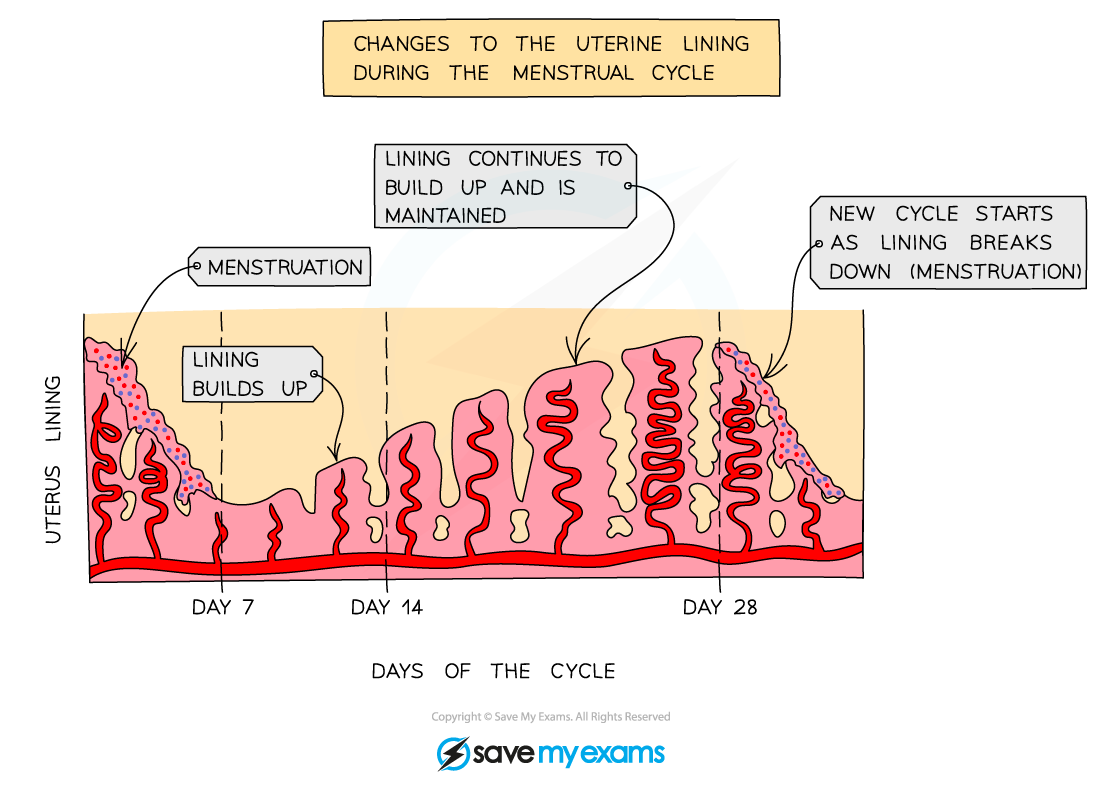
Changes in the lining of the uterus during the menstrual cycle
Hormonal control of the menstrual cycle
-
The menstrual cycle is controlled by hormones, two of which are oestrogen and progesterone
-
Oestrogen levels rise from day 1 to peak just before day 14
- This causes the uterine wall to start thickening and the egg to mature
- The peak in oestrogen occurs just before the egg is released
-
Progesterone stays low from day 1 – 14 and starts to rise once ovulation has occurred
- The increasing levels cause the uterine lining to thicken further; a fall in progesterone levels causes the uterine lining to break down (menstruation / ‘period’)
-
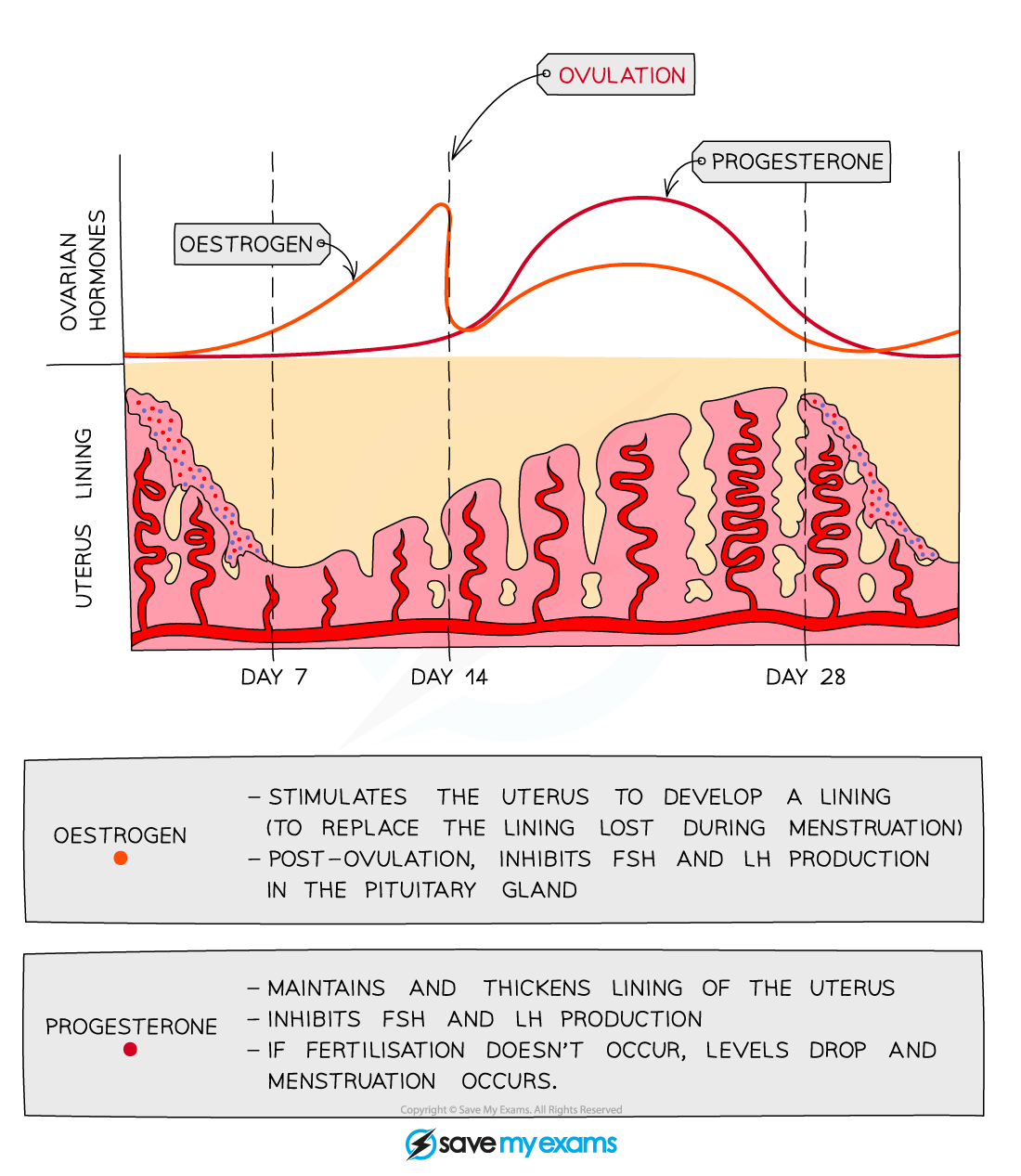
Changes in the levels of oestrogen and progesterone in the blood during the menstrual cycle
Was this revision note helpful?
Build on this topic