Roles of FSH & LH in the Menstrual Cycle (Edexcel IGCSE Biology)
Exam board Pearson Edexcel · IGCSEUpdated 2026-07-02
Spec point —
4.10B· understand the roles of FSH and LH in the menstrual cycle
Roles of FSH & LH in the Menstrual Cycle
-
In addition to oestrogen and progesterone, the menstrual cycle is controlled by FSH and LH
-
Both of these hormones are released from the pituitary gland in the brain
-
FSH (follicle-stimulating hormone) causes an egg to start maturing in the ovary
- It also stimulates the ovaries to start releasing oestrogen
-
LH (luteinising hormone) is released when oestrogen levels have reached their peak
- LH causes ovulation to occur and also stimulates the ovary to produce progesterone
-
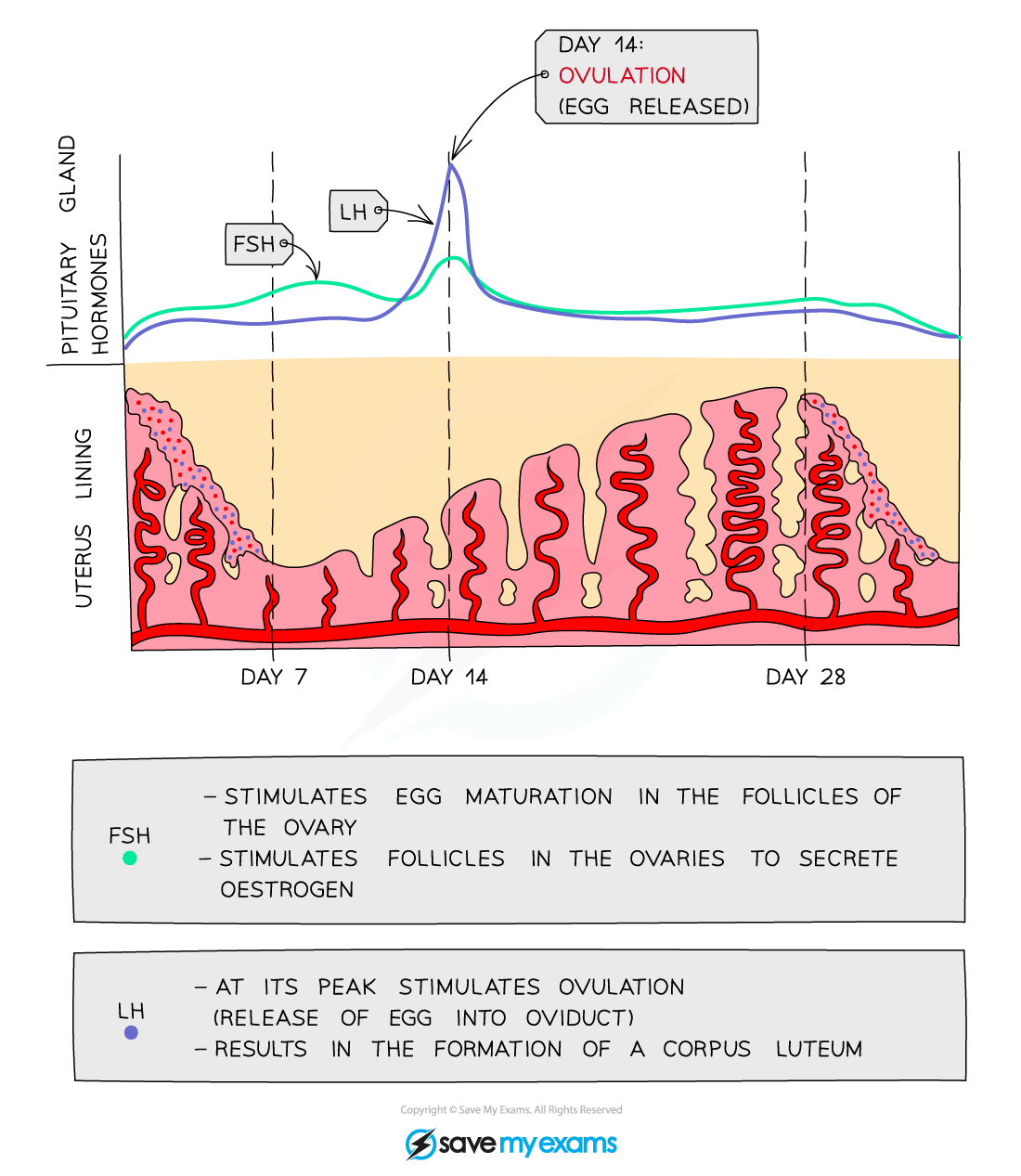
Changes in the levels of the pituitary hormones FSH and LH in the blood during the menstrual cycle
Interaction between all four of the menstrual cycle hormones
- The pituitary gland releases FSH to develop an ovarian follicle
- The follicle produces an egg and oestrogen
- Oestrogen stimulates uterine lining growth and inhibits FSH production
- **High oestrogen **levels trigger LH release from the pituitary, causing ovulation (around day 14)
- The follicle becomes the corpus luteum, producing** progesterone**
- Progesterone maintains the uterine lining
- If the egg isn't fertilised, the corpus luteum breaks down, progesterone levels drop, and menstruation occurs
- If pregnant, the corpus luteum continues producing progesterone until the placenta develops, which then maintains progesterone production throughout pregnancy
Was this revision note helpful?
Build on this topic