Practical: Investigating pH & Enzyme Activity (Edexcel IGCSE Biology)
Practical: Enzymes & pH
Spec point —
2.14B· practical: investigate how enzyme activity can be affected by changes in pH
- Amylase is an enzyme that digests starch into maltose
- The effect of different pH levels on the activity of amylase can be investigated using buffer solutions at different pHs
Apparatus
- Spotting tile
- Measuring cylinder
- Test Tube
- Syringe
- Pipette
- Stopwatch
- Buffer solutions at different pH levels
- Iodine
- Starch solution
- Amylase solution
Safety
- Both iodine solution and amylase solution can cause irritation to eyes - wear safety goggles
- Amylase solution can cause irritation to the skin - wear gloves
Method
- Add a drop of iodine to each of the wells of a spotting tile
- Use a syringe to place 2 cm3 of amylase into a test tube
- Add 1cm3 of buffer solution (at pH 3) to the test tube using a syringe
- Use another test tube to add 2 cm3 of starch solution to the amylase and buffer solution, start the stopwatch whilst mixing using a pipette
- Every 10 seconds, transfer a droplet of the solution to a new well of iodine solution (which should turn blue-black)
- Repeat this transfer process every 10 seconds until the iodine solution stops turning blue-black(this means the amylase has broken down all the starch)
- Record the time taken for the reaction to be completed by counting the number of tiles up to when the iodine stops changing colour and remains yellow-brown
- Repeat the investigation with buffers at different pH values (eg. pH 5.0, 7.0, 9.0 and 11.0)
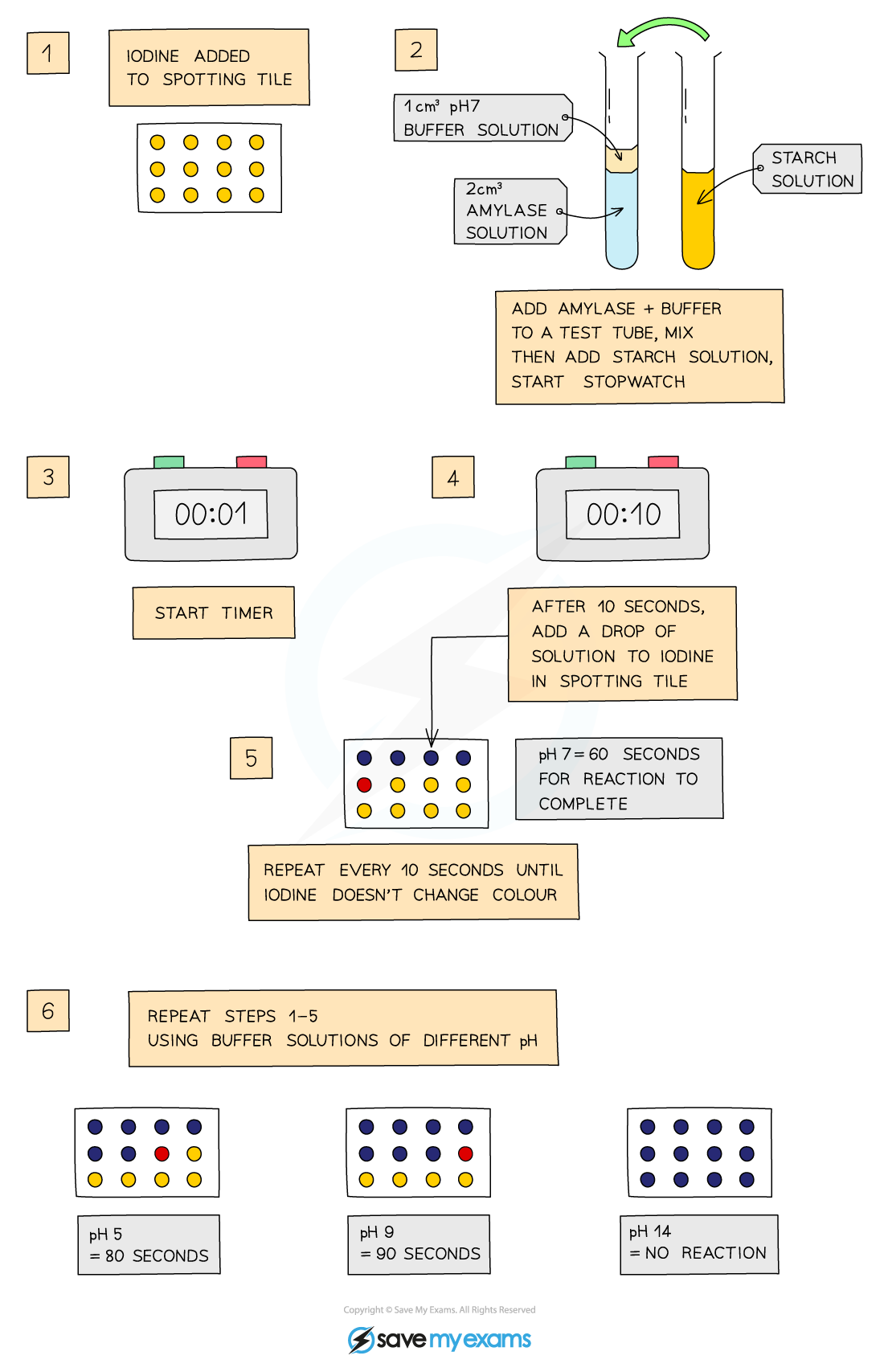
Investigating the effect of pH on enzyme activity
Results and Analysis
-
Amylase is an enzyme which breaks down starch
-
When the iodine solution remains orange-brown, all the starch has been digested
-
This investigation shows:
-
At the optimum pH, the iodine stopped turning blue-black and remained yellow-brown within the shortest amount of time
- This is because the enzyme is working at its fastest rate and has digested all the starch
-
-
At higher or lower pH's (above or below the optimum) the iodine took a longer time to stop turning blue-black or continued to turn blue-black for the entire investigation
- This is because on either side of the optimum pH, the enzymes are starting to become denatured and as a result are unable to bind with the starch or break it down
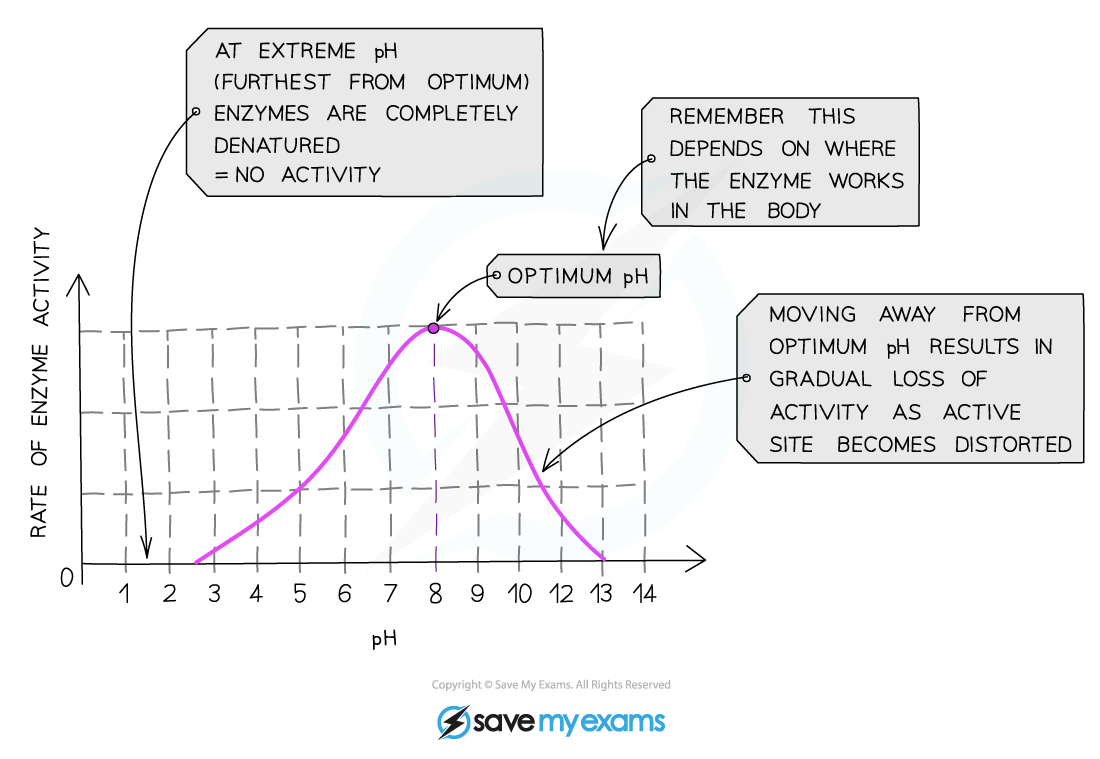
A graph showing the optimum pH for an enzyme from a region of the small intestine
Applying CORMS to practical work
- CORMS can be used to plan a valid investigation on the effect of pH on enzyme activity
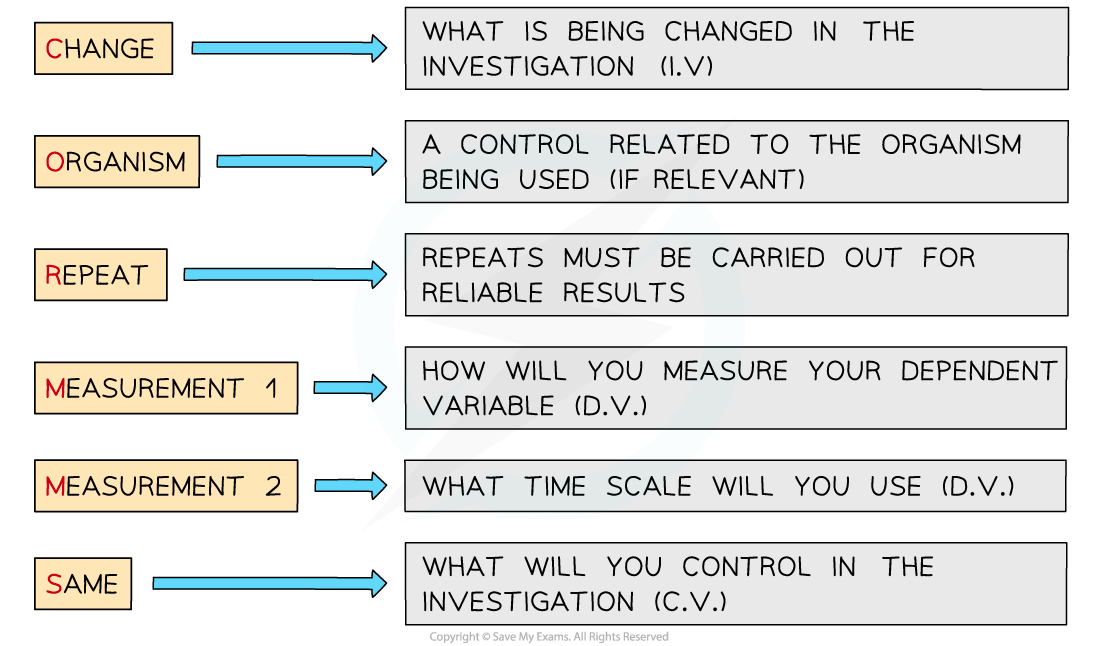
CORMS Evaluation
-
The CORMS for an investigation into the effect of pH on enzyme activity might look like this:
- C - change the pH of the environment
- O - same concentration of enzyme
- R - repeat the investigation several times to ensure reliability
- M1 - measure the time taken by counting the number of wells for the iodine to stop turning blue-black (1 well = 10 seconds)
- S -control the temperature and volume of the amylase, iodine and starch solution used in the investigation
Exam Hint When describing the effect of pH on enzyme activity, it is important to remember that any pH outside of the optimum can lead to the enzyme becoming permanently denatured.
Was this revision note helpful?
Build on this topic