Risk Factors for Coronary Heart Disease (Edexcel IGCSE Biology)
Heart Disease
Spec point —
2.67· understand how factors may increase the risk of developing coronary heart disease
-
The coronary arteries are the blood vessels which supply cardiac muscle with oxygen and glucose
-
In coronary heart disease (CHD), layers of fatty material (plaque) build up inside the coronary arteries
-
These fatty deposits are mainly formed from cholesterol
-
There are two sources of cholesterol in the body:
- Dietary cholesterol (from animal products eaten)
- Cholesterol synthesised by the liver
-
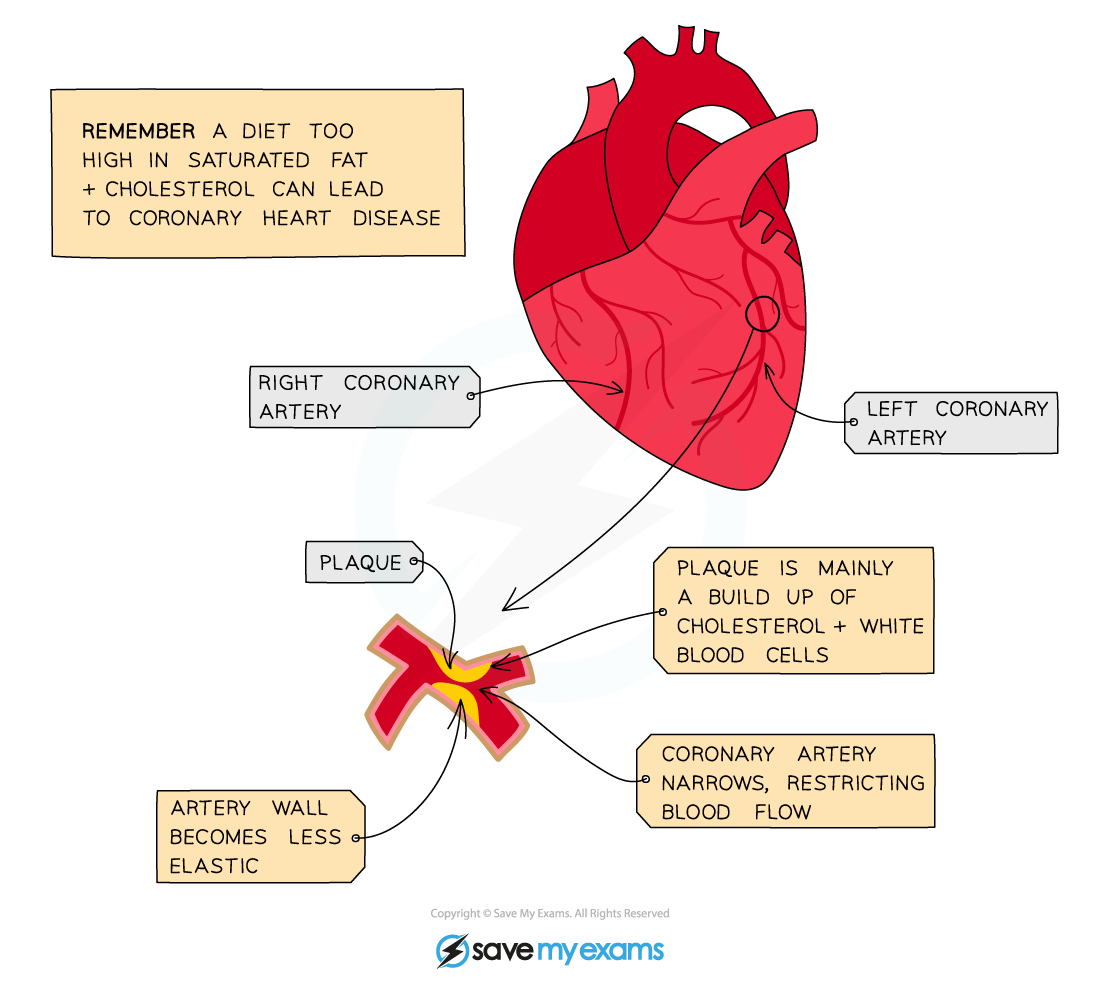
Buildup of plaque in the coronary arteries narrows the lumen
-
If a coronary artery becomes partially or completely blocked by these fatty deposits, the flow of blood through the arteries is reduced, resulting in a lack of oxygen for the heart muscle
- Partial blockage of the coronary arteries creates a restricted blood flow to the cardiac muscle cells and results in severe chest pains called angina
- Complete blockage means cells in that area of the heart will not be able to respire aerobically, leading to a heart attack
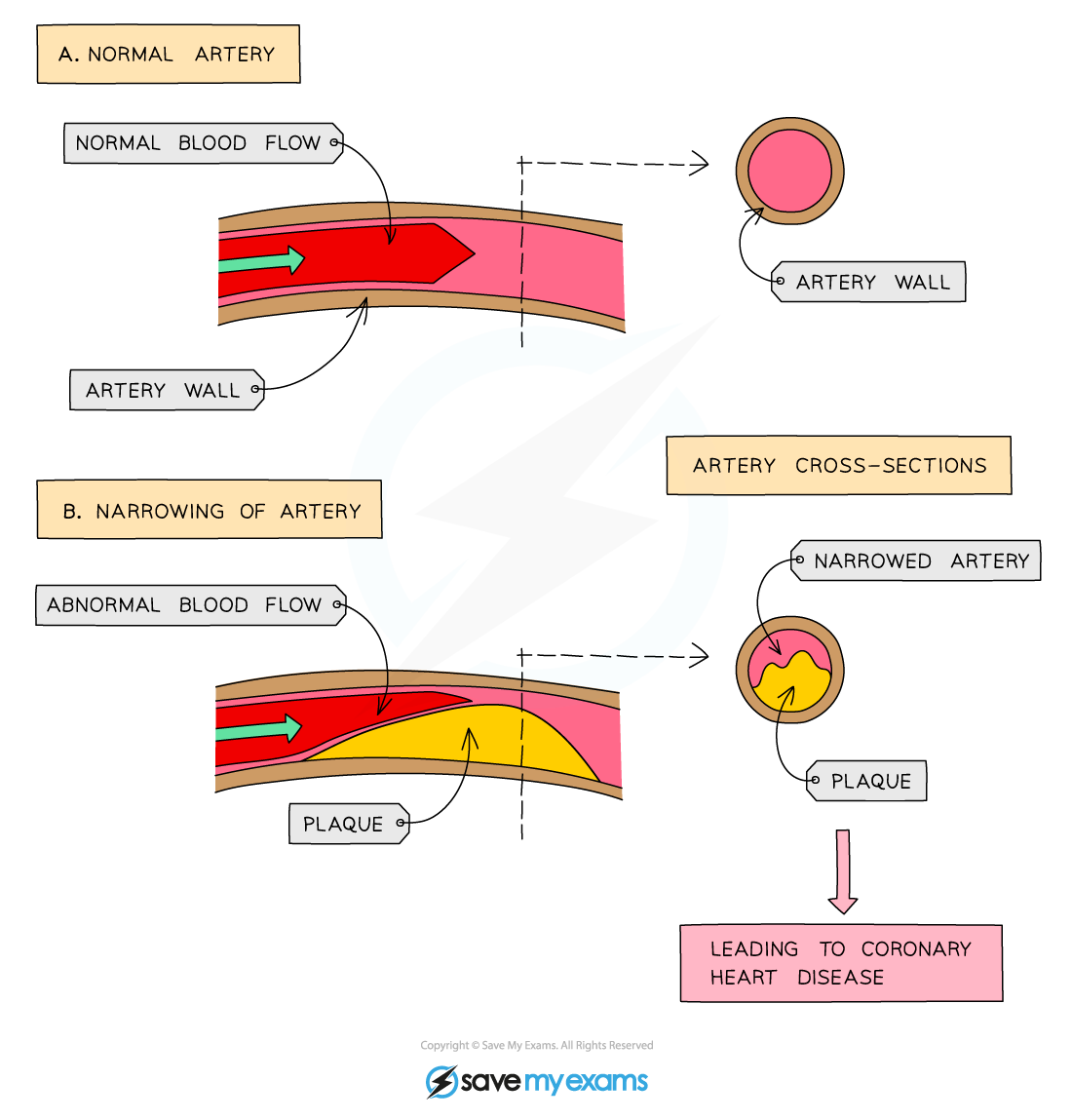
The effect of a narrowed lumen in a coronary artery is reduced blood flow to the heart
Risk factors of coronary heart disease
-
There are several risk factors which will increase the chances of coronary heart disease:
-
Obesity
- Carrying extra weight puts a strain on the heart
- Increased weight can lead to Type 2 diabetes which further damages your blood vessels
-
High blood pressure
- This increases the force of the blood against the artery walls and consequently leads to damage of the vessels
-
High cholesterol
- Speeds up the build up of fatty plaques in the arteries leading to blockages
-
Smoking
- Chemicals in smoke cause an increase in plaque build up and an increase in blood pressure
- Carbon monoxide also reduces the oxygen carrying capacity of the red blood cells
Was this revision note helpful?
Build on this topic