DNA Structure (Edexcel IGCSE Biology)
The Structure of DNA
Spec point —
3.16B· describe a DNA molecule as two strands coiled to form a double helix, the strands being linked by a series of paired bases: adenine (A) with thymine (T), and cytosine (C) with guanine (G)
-
DNA, or deoxyribonucleic acid, is the genetic material found in the nucleus of a cell
-
DNA, is a polymer made up of two strands coiled around to make a double helix
-
The strands are formed from a sugar phosphate backbone with bases:
- Adenine (A)
- Thymine (T)
- Guanine (G)
- Cytosine (C)
-
The bases are bonded together by complementary base pairing
- A pairs with T
- G pairs with C
-
Cell division and protein synthesis both rely on these base-pairing rules because each half of the DNA double helix acts as a template to be copied to create a completely new double helix
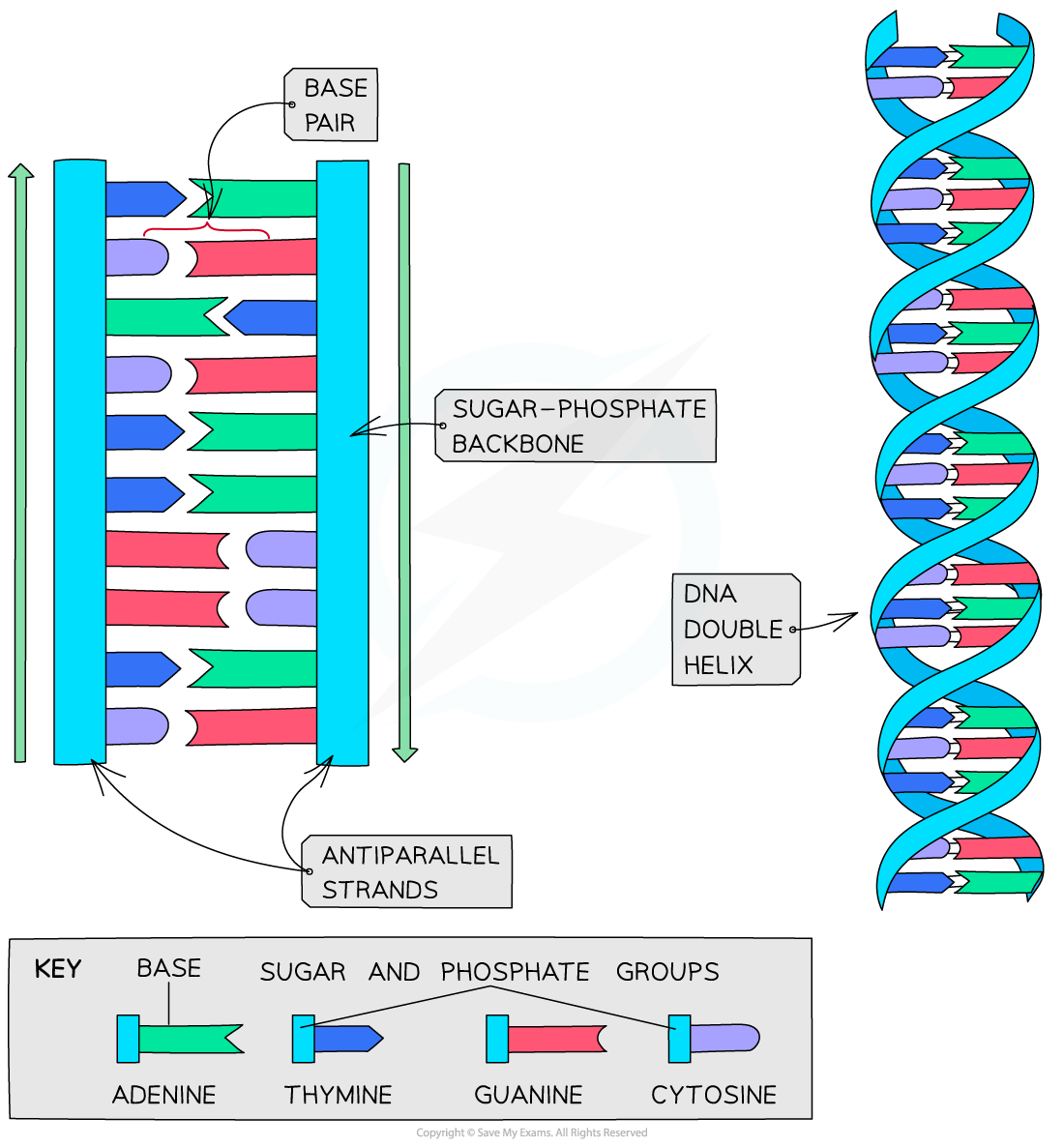
The structure of DNA and complementary base pairs
Exam Hint You are expected to know the names of each base so do make sure you use these appropriately in exam answers, rather than just relying on the abbreviated letters.
Was this revision note helpful?
Build on this topic