The Need for a Transport System (Edexcel IGCSE Biology)
Unicellular Organisms
Spec point —
2.51· understand why simple, unicellular organisms can rely on diffusion for movement of substances in and out of the cell
-
To function properly, organisms must exchange substances, like food molecules and waste, with their environment
- This exchange happens via diffusion, osmosis, and active transport across the cell membrane
-
Unicellular organisms, like amoebas, have large surface areas relative to their volume, meaning the distance from the surface of the cell to the centre is small
- Consequently, they don't need specialised exchange surfaces or transport systems, as diffusion, osmosis, and active transport through the cell membrane are sufficient for their needs
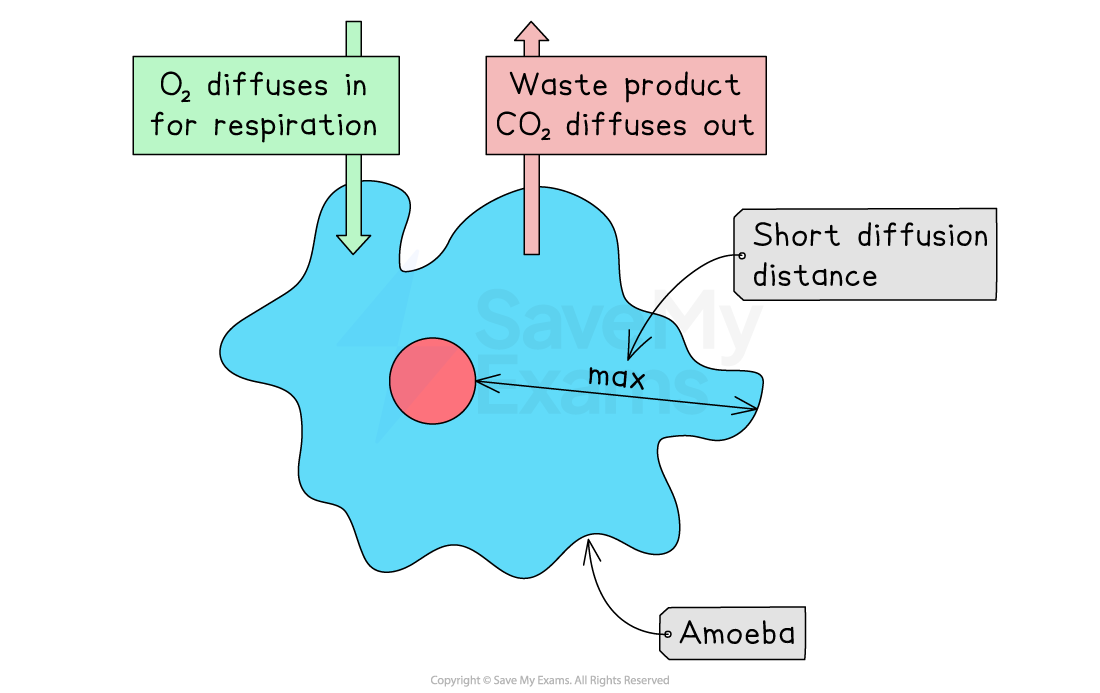
Unicellular organisms such as amoeba do not require transport systems due to their large surface area to volume ratio
Multicellular Organisms
Spec point —
2.52· understand the need for a transport system in multicellular organisms
-
Multicellular organisms, like humans, have bodies composed of many cells
-
These organisms have multiple cell layers, making the distance from the surface to the centre too long for diffusion alone
-
Diffusion to all cells would be too slow to meet the organism's needs, so larger organisms require transport systems
-
In animals, the circulatory system carries essential substances in the blood
- Eg. oxygen, glucose, carbon dioxide, water and urea
-
In plants, the vascular system transports substances:
- the xylem moves water and minerals from roots to shoots
- the phloem distributes sugars and amino acids throughout the plant.
-
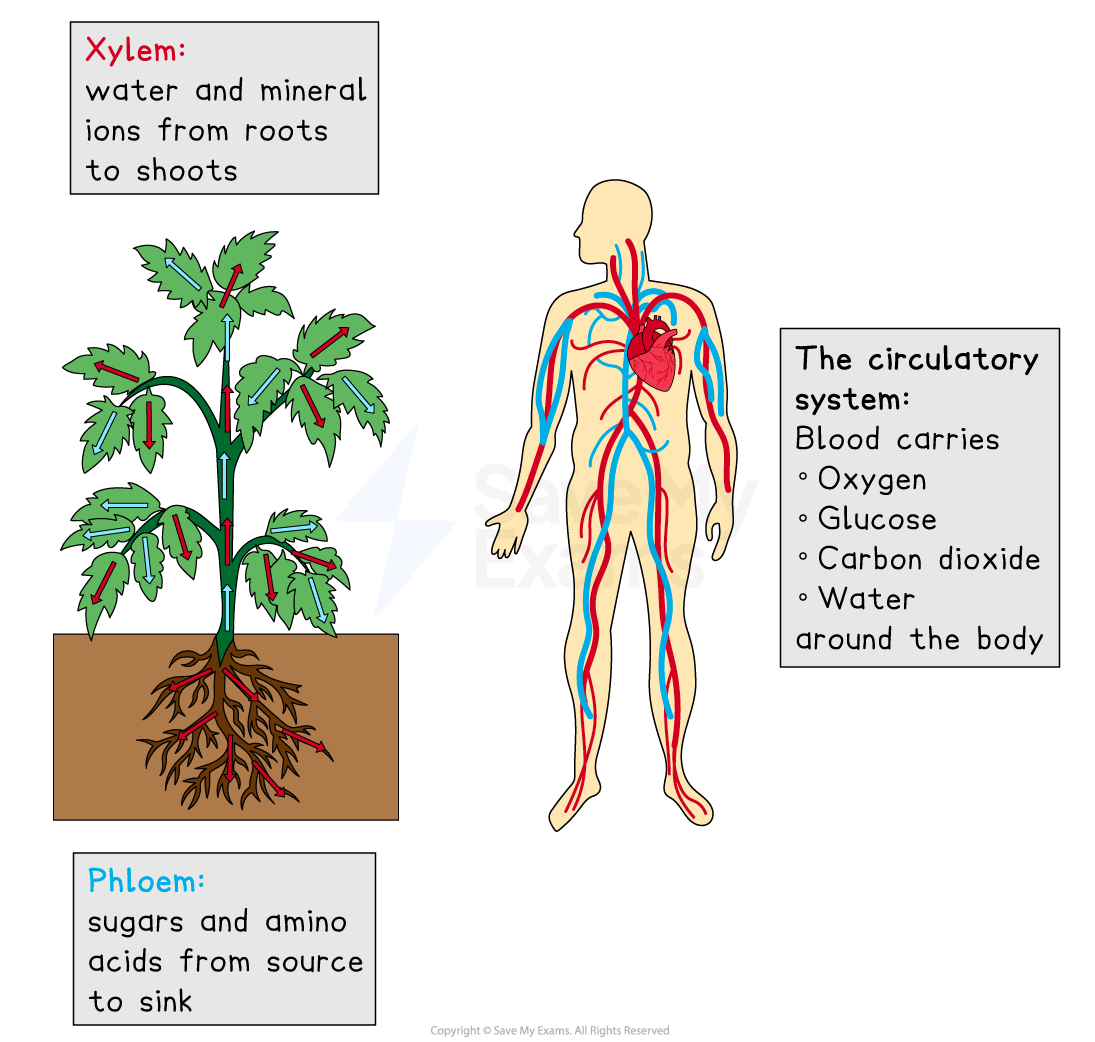
Humans and some plants have specialised transport systems
Was this revision note helpful?
Build on this topic