The Role of Hormones: ADH, FSH & LH (Edexcel IGCSE Biology)
The Role of Hormones: Advanced
Spec point —
2.95B· understand the sources, roles and effects of the following hormones: ADH, FSH and LH
The Role of Hormones: ADH, FSH & LH
-
As well as adrenaline, insulin, testosterone, progesterone and oestrogen, the following hormones are also of great importance in humans:
- ADH(antidiuretic hormone)
- FSH (follicle-stimulating hormone)
- LH (luteinising hormone)
ADH
-
If the water content (water potential) of the blood is too low:
- If the water potential of the blood is too low, the blood solute concentration is too high
- Osmoreceptors in the hypothalamus detect the concentration of solutes in the blood and signal the pituitary gland to release more ADH
- ADH makes the collecting ducts of the nephrons more permeable to water
- More water is reabsorbed from the collecting ducts back into the blood
- The kidneys produce a smaller volume of urine which is more concentrated (contains less water)
-
If the water content (water potential) of the blood is too high:
- If the water potential of the blood is too high, the blood is too dilute
- Osmoreceptors in the hypothalamus detect this and signal the pituitary gland to release less ADH
- The collecting ducts of the nephrons become less permeable to water
- Less water is reabsorbed from the collecting ducts back into the blood
- The kidneys produce a larger volume of urine which is less concentrated (contains more water)
Hormonal control of the menstrual cycle
-
Four hormones control the events that occur during the menstrual cycle. These are:
- Oestrogen
- Progesterone
- FSH (follicle-stimulating hormone)
- LH (luteinising hormone)
-
Oestrogen and progesterone are both involved in preparing and maintaining the uterus lining
- Oestrogen, produced by the ovaries, helps rebuild and thicken the uterus lining after menstruation
- Progesterone, produced by the corpus luteum (the empty egg follicle in the ovary), helps maintain the thick uterus lining in preparation for a possible pregnancy
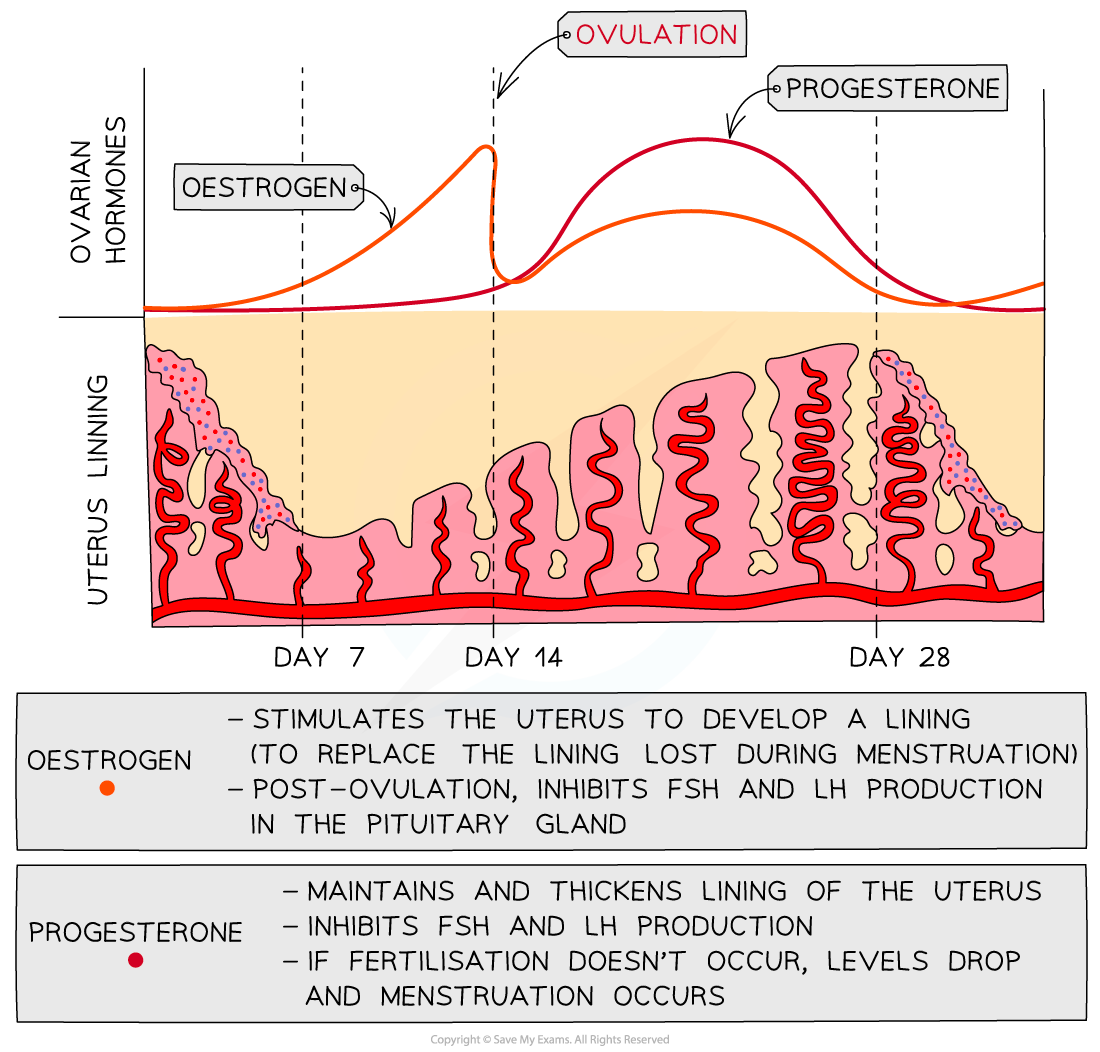
Oestrogen and progesterone are both released from the ovaries and control events of the menstrual cycle
The roles of FSH and LH
-
FSH is released by the pituitary gland and causes an egg to start maturing in the ovary
- It also stimulates the ovaries to start releasing oestrogen
-
The pituitary gland is stimulated to release LH when oestrogen levels have reached their peak
- LH causes ovulation to occur and also stimulates the ovary to produce progesterone
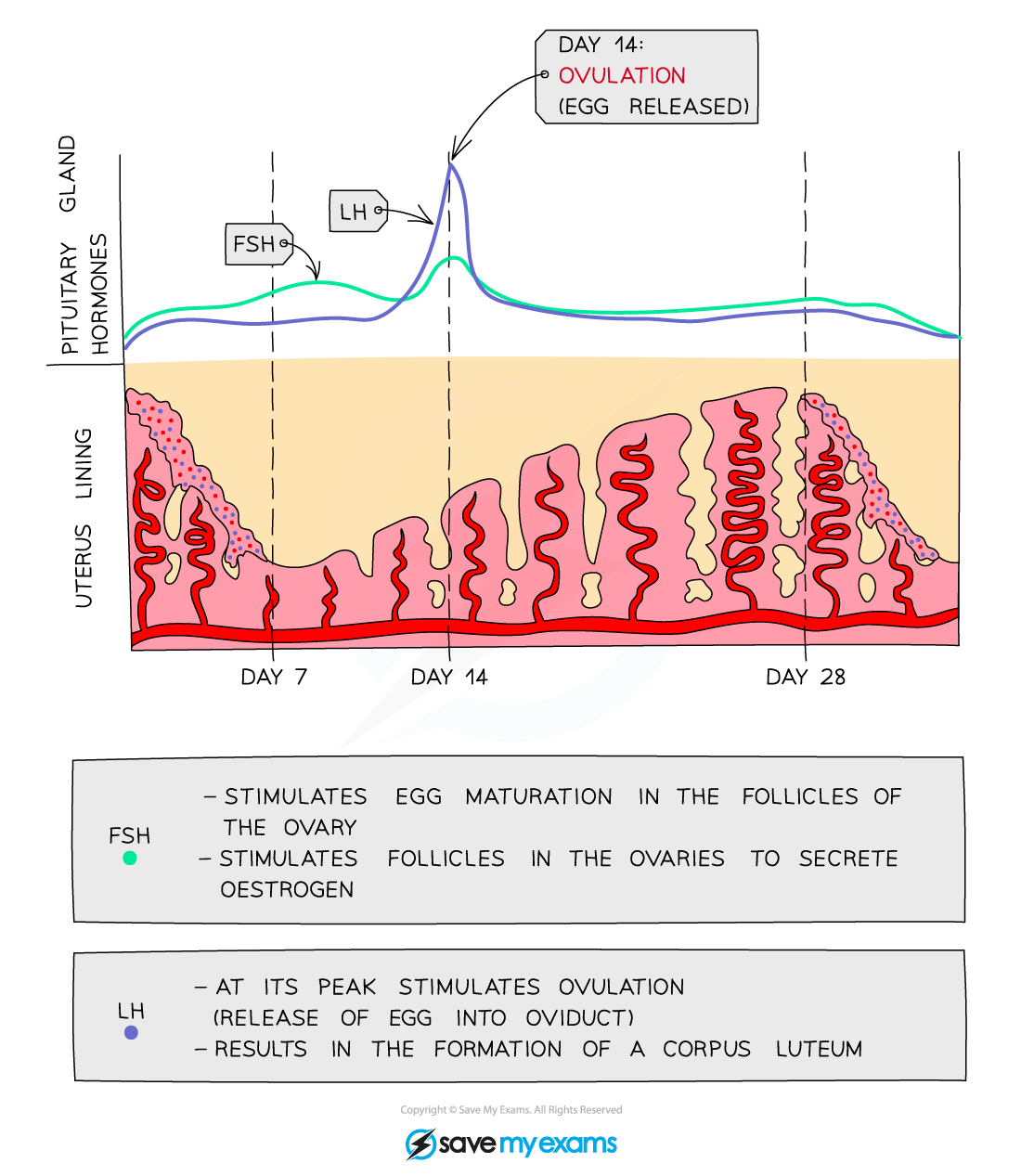
Changes in the levels of the pituitary hormones FSH and LH in the blood during the menstrual cycle
Other important hormones in the human body table
| Hormone | Source | Role | Effect |
|---|---|---|---|
| ADH | Pituitary gland | Controlling the water content of the blood | Increases the permeability of the collecting ducts in the kidneys to water, increasing the reabsorption of water back into the blood |
| FSH | Pituitary gland | Causes ovary to develop a mature egg cell | Stimulates the development of egg cells in the ovary and the release of oestrogen |
| LH | Pituitary gland | Causes ovary to release a mature egg cell | Stimulates the release of an egg cell from the ovary (ovulation) and the release of progesterone |
Was this revision note helpful?
Build on this topic