Practical: Investigating Population Size (Edexcel IGCSE Biology)
Spec point —
4.2· practical: investigate the population size of an organism in two different areas using quadrats
Practical: Investigating Population Size
- Ecology is the branch of biology that studies species distribution, abundance, interactions between species, and their interactions with the abiotic environment
- Ecologists investigate ecosystems, often using tools like quadrats to study population size
Quadrats
- Quadrats are square frames made of wood or wire
- They can be a variety of sizes, e.g. 0.25 m2 or 1 m2
- They are placed on the ground and the organisms within them are recorded
- Plants species are commonly studied using quadrats to estimate their abundance
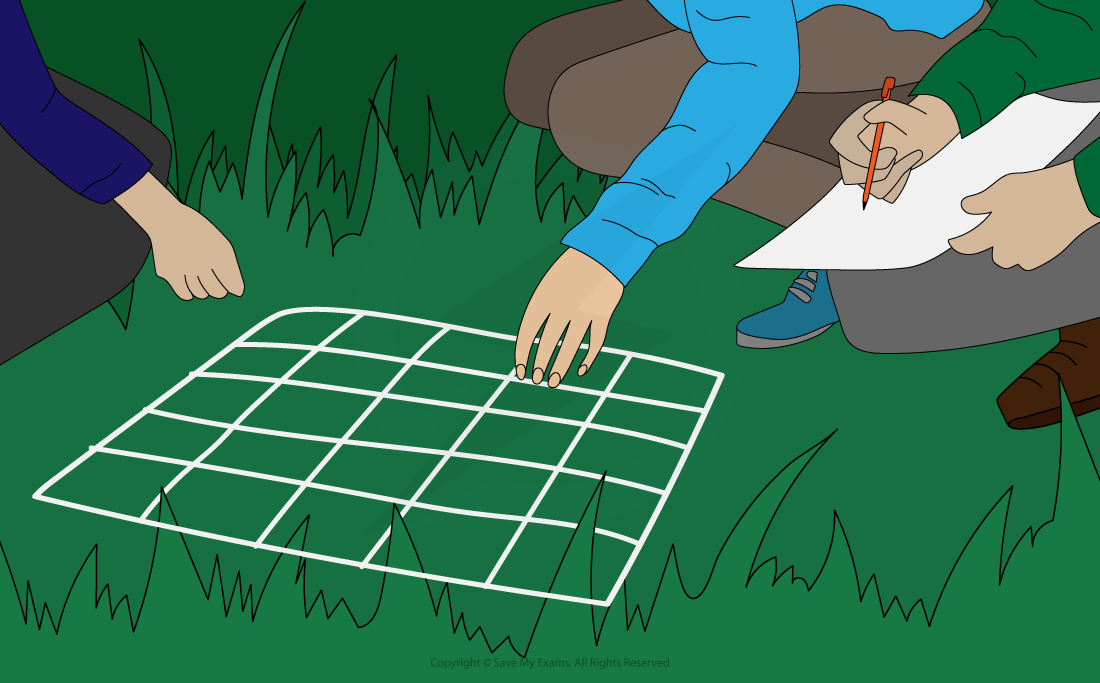
Quadrats are used to investigate population size or species distribution
-
Quadrats can be used to measure abundance by recording:
-
the number of individuals of a single species, e.g. buttercups
-
species richness: the number of different species present
-
percentage cover: the approximate percentage of the quadrat area in which an individual species is found
- this method is used when it is difficult to count individuals of the plant species being recorded, e.g. grass or moss
-
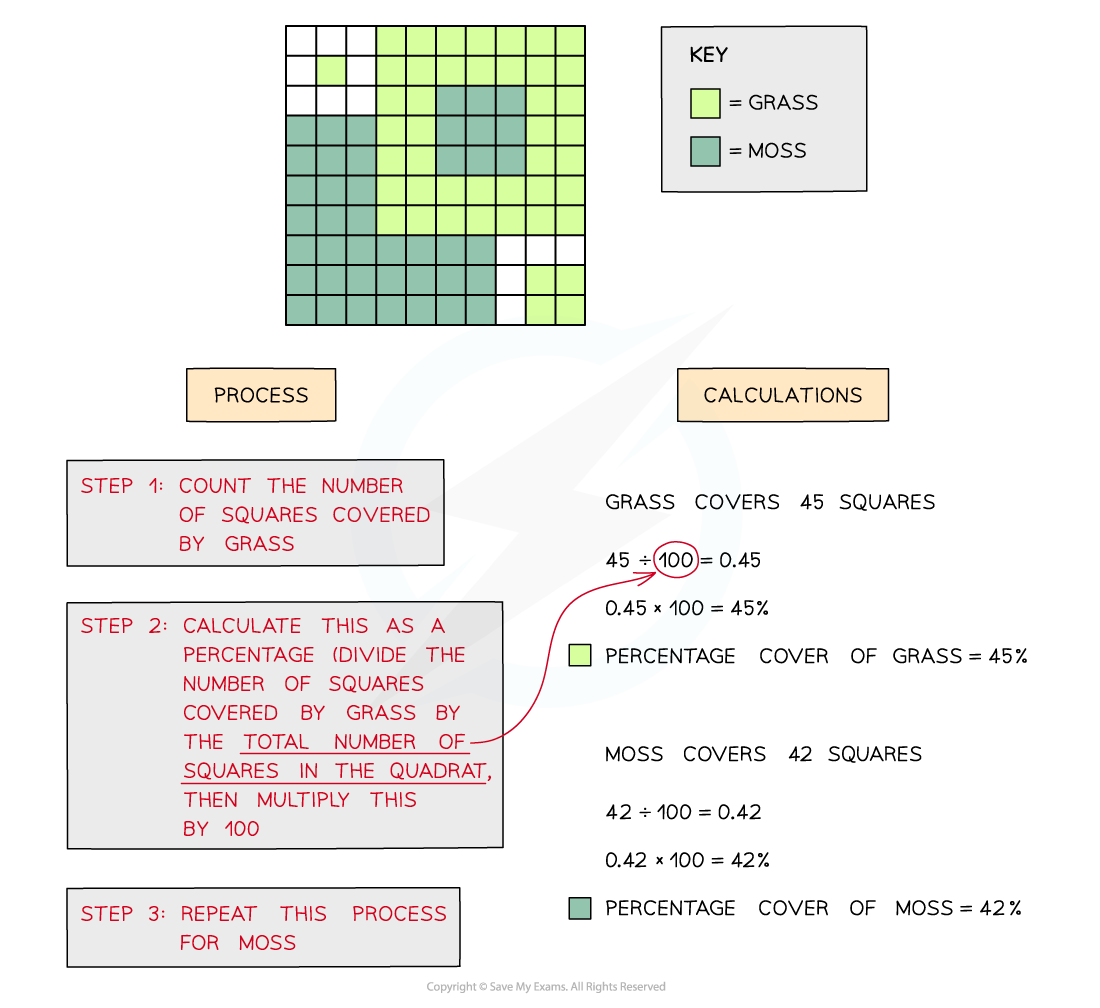
Percentage cover can be assessed using a quadrat
Investigating population size in two different areas using quadrats
Apparatus
- 2 tape measures
- Quadrat
- Random number generator
- Species key
Method
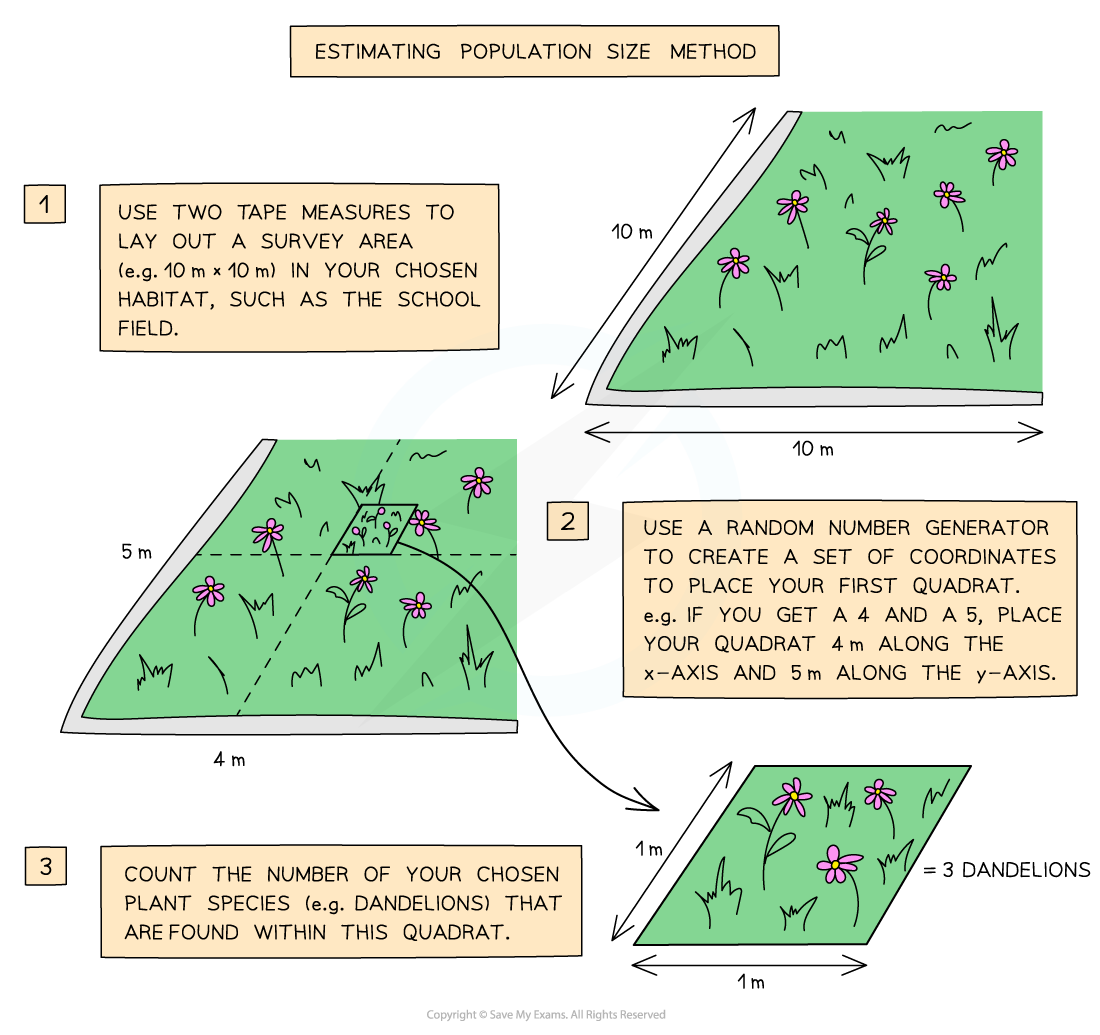
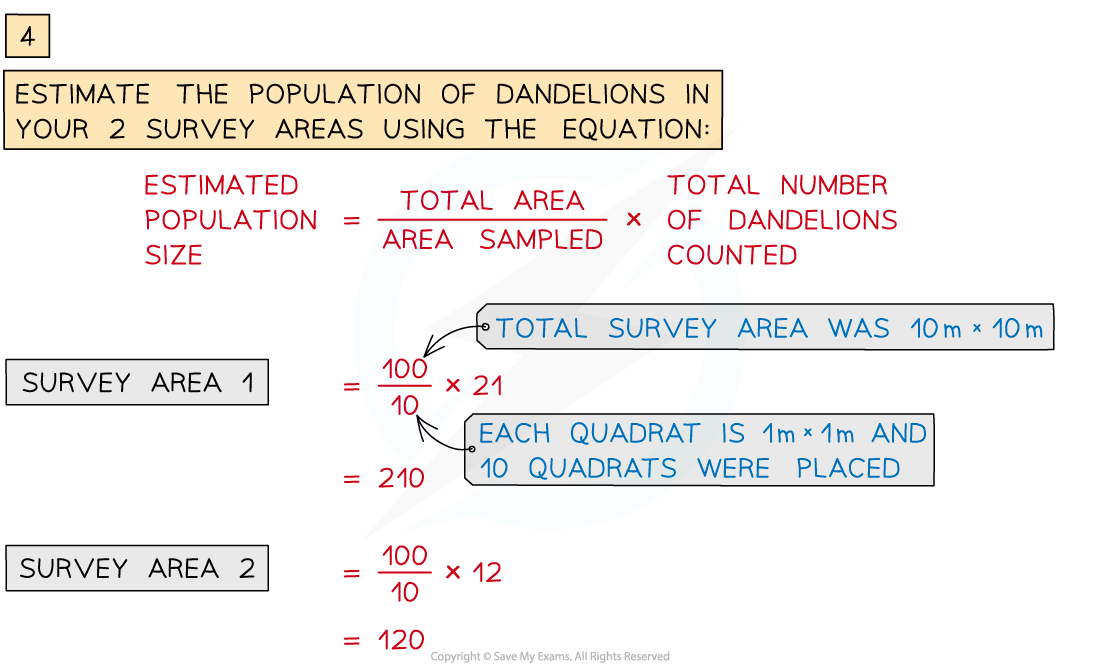
The population size of a plant species in a survey area can be estimated using quadrats
Results
-
Once the results have been collected and the averages calculated, we can compare the abundance of the species in each survey area
-
Species abundance is likely to be influenced by biotic factors such as:
- competition
- predator-prey relationships
- interactions with other organisms within the food chain or food web
-
The abundance will also be influenced by abiotic factors such as:
- light intensity
- mineral availability
- water availability
- pH
- temperature
- salinity
Limitations
-
It can be easy to miss individual organisms when counting in a quadrat, especially if they are covered by a different species
- Solution: Use a pencil or stick to carefully move leaves out of the way to check if there is anything else underneath
-
Identifying species may be tricky
- Solution: Use a species key to identify the species
Exam Hint Take care with your spelling of the word 'quadrat' it is commonly written as 'quadrant' by students in examinations.
Was this revision note helpful?