The Production of Cloned Mammals (Edexcel IGCSE Biology)
Exam board Pearson Edexcel · IGCSEUpdated 2026-07-02
Cloning Mammals
Spec point —
5.19B· describe the stages in the production of cloned mammals involving the introduction of a diploid nucleus from a mature cell into an enucleated egg cell, illustrated by Dolly the sheep
Adult cell cloning
-
Adult cell cloning is achieved in the following way:
- The nucleus is removed from an unfertilised egg cell, producing an enucleated egg cell
- The diploid nucleus from a mature adult body cell, such as a skin cell, is inserted into the enucleated egg cell
- A very small electric shock stimulates the cell to divide (by mitosis) to form an embryo
- These embryo cells contain the same genetic information as the adult skin cell
- When the embryo has developed into a ball of cells, it is inserted into the uterus of an adult female (known as the surrogate mother) to continue its development until birth
-
This process was used to create the first clone (exact genetic copy) of a mammal in 1996
- Scientists in Scotland successfully cloned an adult female sheep
- The clone was called Dolly
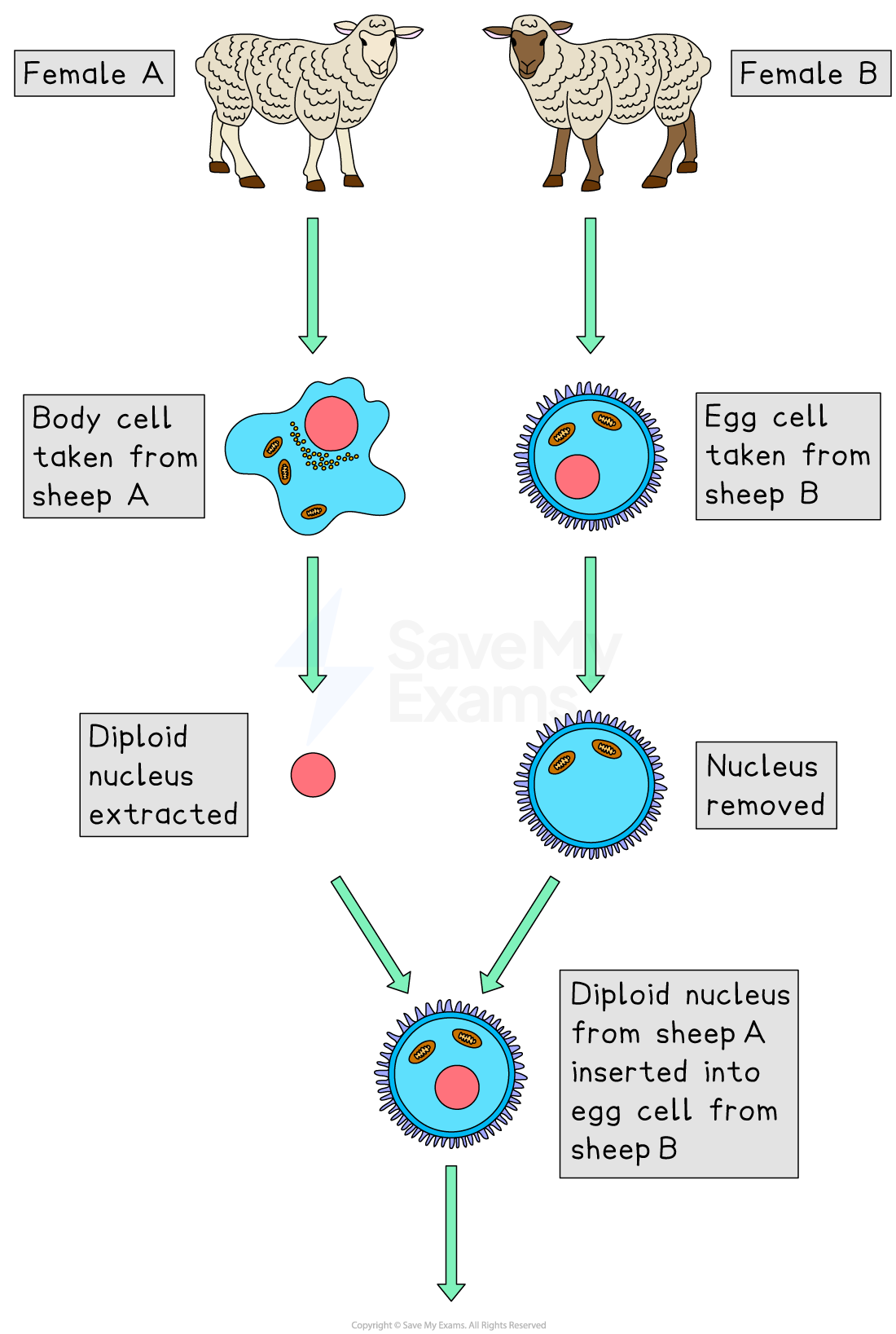
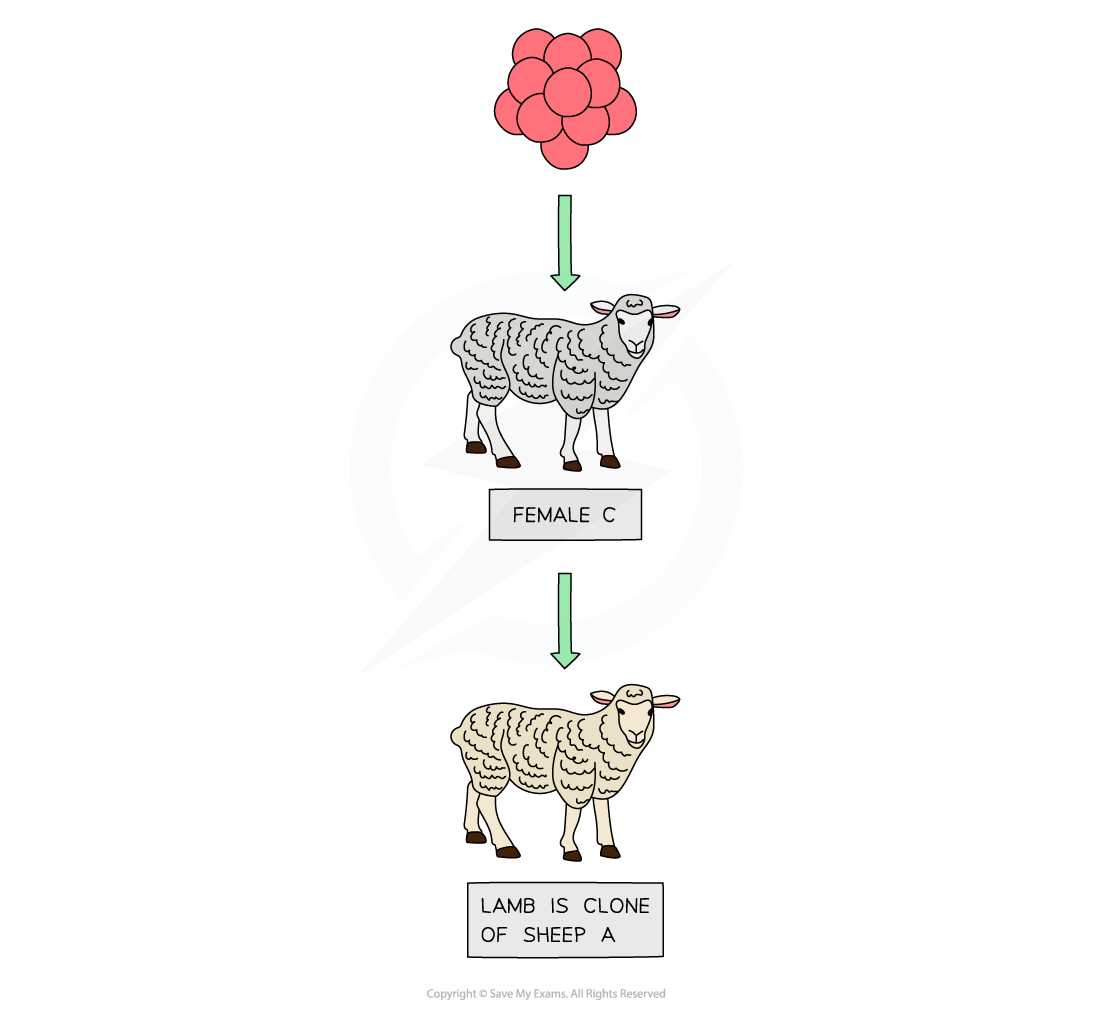
Adult cell cloning: the cloning technique used to produce the first cloned mammal, Dolly the sheep
Benefits & risks of cloning table
| Benefits of cloning | Risks of cloning |
|---|---|
| Cloning can be used to help preserve endangered species or resurrect extinct animals | Cloning results in a lack of genetic diversity. This can make clones more vulnerable to disease or changes in the environment, leaving the population at risk |
| Cloning makes it possible to quickly and cheaply produce commercial quantities of consistently high-quality plants at any time of the year | There is some evidence that cloned animals may not be as healthy as normal ones |
| Cloning allows farmers to increase yields by using high-quality livestock and plants | There are ethical concerns about cloning, especially when it comes to humans. Many people believe it is unethical to clone humans. Additionally, cloning in humans has a high rate of failure, with some unsuccessful attempts resulting in stillborn children or children with severe disabilities |
Cloning to Produce Human Proteins
Spec point —
5.20B· understand how cloned transgenic animals can be used to produce human proteins
- Dolly the sheep was the first cloned mammal produced from an adult cell
- Scientists can produce transgenic animals by inserting a foreign gene into their genome
- The foreign gene can code for a useful protein, which the animal can then produce in its milk, eggs, or blood
- Once a transgenic animal has been created, it can be cloned to produce more animals with the same trait
- Uses of transgenic animals include producing useful proteins for medical purposes, such as proteins to treat diseases in humans
Was this revision note helpful?
Build on this topic