The diagram below shows three different types of virus.
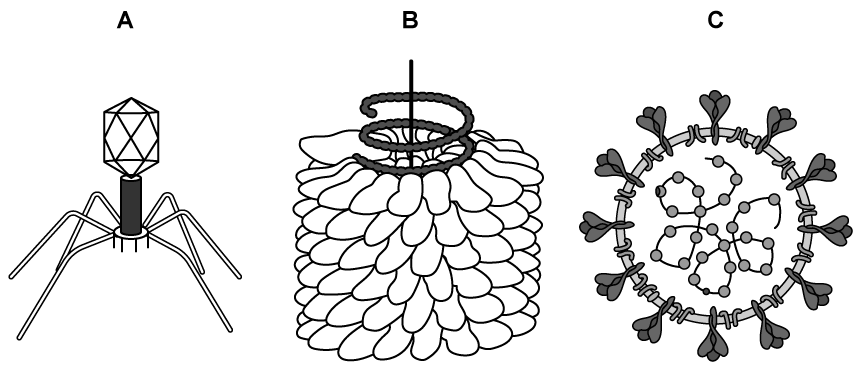
- Virus A is a bacteriophage, which injects its genetic material into bacterial cells
- Virus B is TMV, which infects the cells of certain species of plants, such as tobacco, tomatoes and peppers.
- Virus C is a coronavirus, such as the one that causes the disease Covid-19, and it can infect human cells.
The diagrams are not drawn to scale.
(i) Name two structural features that are universal for all types of virus.
(2 marks)
(ii) Suggest why it is necessary for the three types of virus to have differences in their structure.
(3 marks)
Another example of a virus pathogen that can infect humans is HIV.
HIV can be spread through exchange of bodily fluids.
State three other ways pathogens can spread between people.
When someone is infected with HIV they can develop a condition called AIDS.
People with AIDS are susceptible to infections by pathogens, and can die from infections that most people without AIDS could recover from easily.
(i) HIV infects the white blood cells of the infected person and stops them from working.
Explain why this might cause people to be more susceptible to infections.
(1 mark)
(ii) One way of preventing this from occurring is for people with HIV to take medication to prevent the viruses from replicating.
Explain why this can prevent the infected person from developing AIDS.
(2 marks)
The graph below shows an estimation of the number of people worldwide that died from AIDS-related illnesses between the years 1990 and 2020.
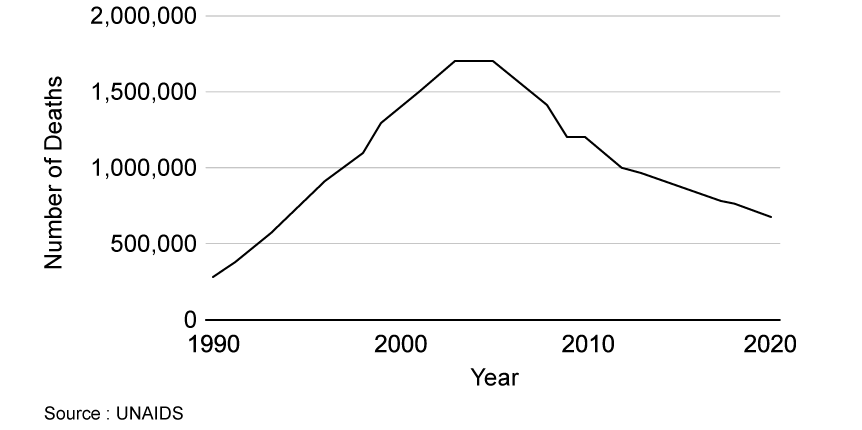
(i) Describe the trend of data in the graph.
(2 marks)
(ii) Suggest two reasons why the number of AIDS-related deaths has declined in recent years.
(2 marks)