Alpha, Beta & Gamma Radiation (Edexcel IAL Physics)
Exam board Pearson Edexcel · IALUpdated 2026-07-02
Spec point —
138
Alpha, Beta & Gamma Particles
-
Some elements have nuclei that are unstable
- This tends to be when the number of nucleons does not balance
-
In order to become more stable, they emit particles and/or electromagnetic radiation
- These nuclei are said to be radioactive
-
There are three different types of radioactive emission: Alpha, Beta and Gamma
Alpha Particles
- Alpha (α) particles are high energy particles made up of 2 protons and 2 neutrons (the same as a helium nucleus)
- They are usually emitted from nuclei that are too large

Beta Particles
-
Beta (β−) particles are high energy electrons emitted from the nucleus
- β− particles are emitted by nuclei that have too many neutrons

-
Beta is a moderately ionising type of radiation
- This is due to it having a charge of +1e
- This means it is able to do some slight damage to cells (less than alpha but more than gamma)
-
Beta is a moderately penetrating type of radiation
- Beta particles have a range of around 20 cm - 3 m in air, depending on their energy
-
Beta can be stopped by a few millimetres of aluminium foil
Gamma Rays
- Gamma (γ) rays are high energy electromagnetic waves
- They are emitted by nuclei that need to lose some energy

- If these particles hit other atoms, they can knock out electrons, ionising the atom
- This can cause chemical changes in materials and can damage or kill living cells
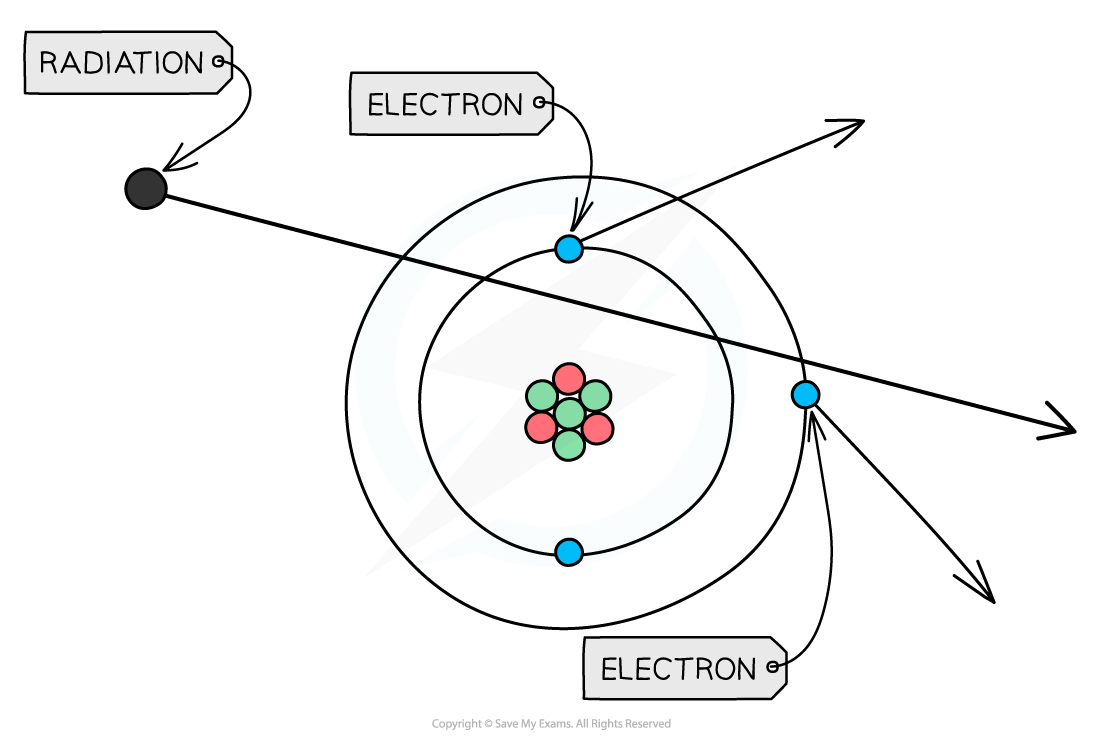
When radiation passes close to atoms, it can knock out electrons, ionising the atom
- The properties of the different types of radiation are summarised in the table below
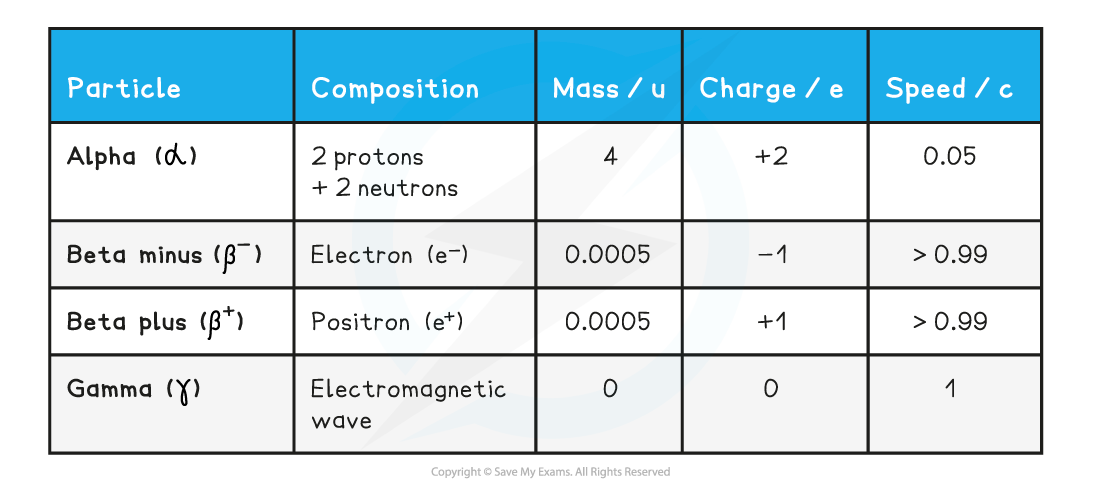
- u is the atomic mass unit (see “Atomic Mass Unit (u)”)
- e is the charge of the electron: 1.60 × 10⁻¹⁹ C
- c is the speed of light: 3 × 10⁸ m s-1
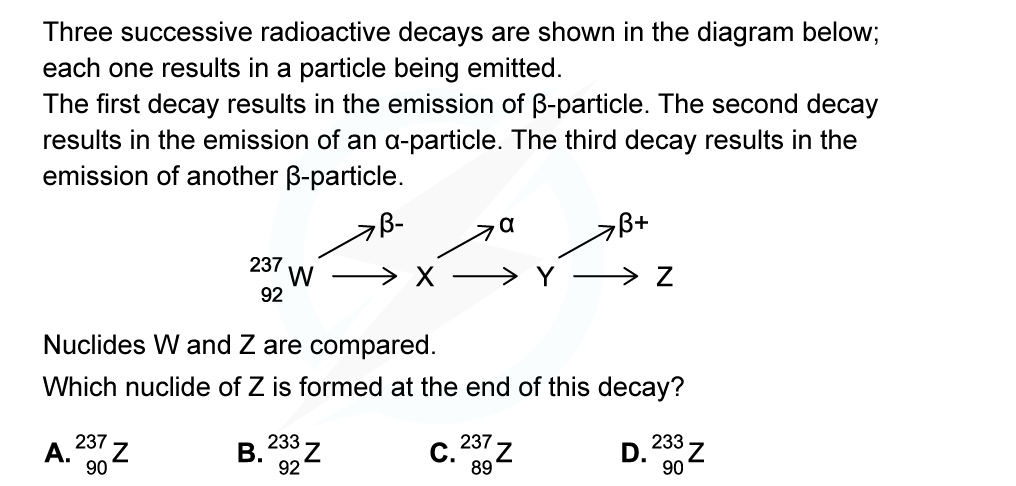
Worked Example
Answer: D
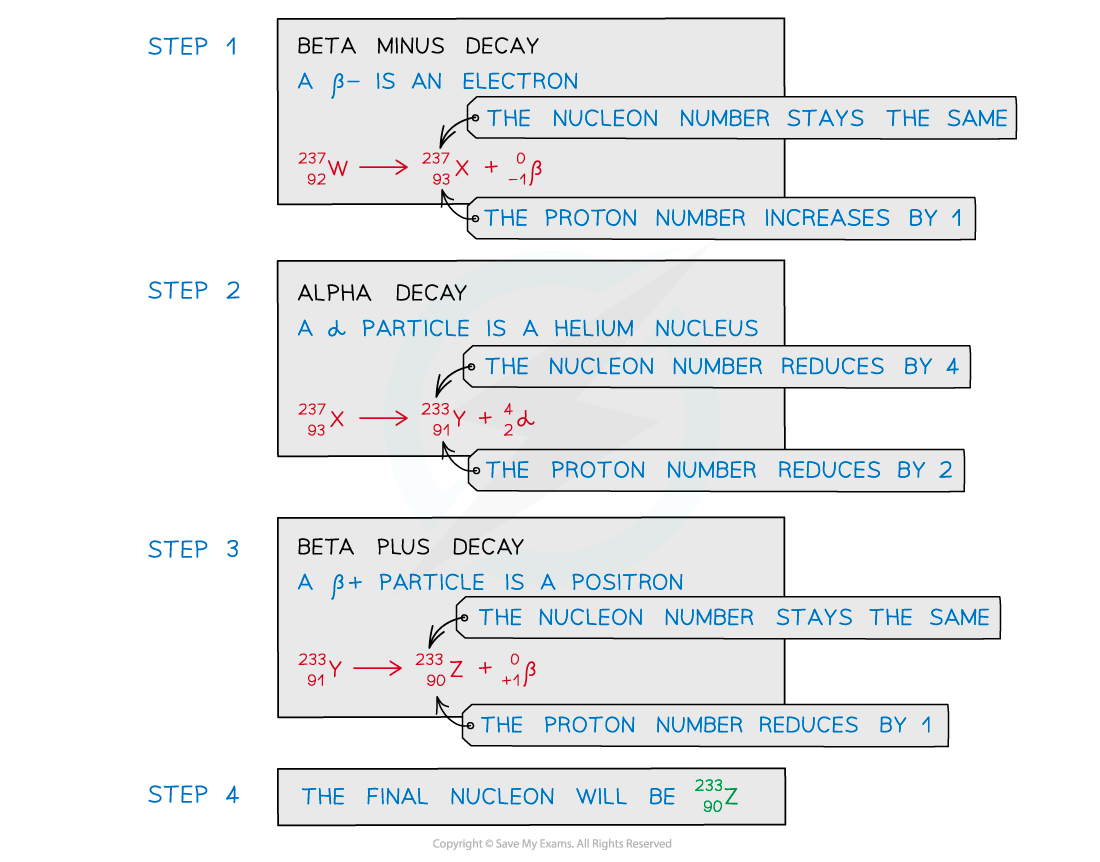
Exam Hint It is important to be familiar the properties of each type of radiation and their symbols.
Was this revision note helpful?
Build on this topic