Electrical Power (Edexcel IAL Physics)
Exam board Pearson Edexcel · IALUpdated 2026-07-02
Spec point —
69
Electrical Power
- Work is also defined as a transfer of energy
- When components transfer electrical energy to other stores, work must be done because energy is transferred
- Therefore, potential difference is the work done per unit charge
- Current is the rate of flow of charge
- These equations can be combined to give the work done by a component in an electric circuit
- Power is the rate of doing work
- This gives us
- Therefore, the power dissipated (produced) by an electrical device is given by:

- Using V = IR to rearrange for either V or I and substituting into the power equation means we also write power in terms of resistance R

-
Since current and voltage are both squared in these equations, this means that
- for a given resistance, if the current or voltage doubles, the power will increase by a factor of four
- for a given power, if the resistance doubles, the current will decrease by a factor of , and the voltage will increase by a factor of
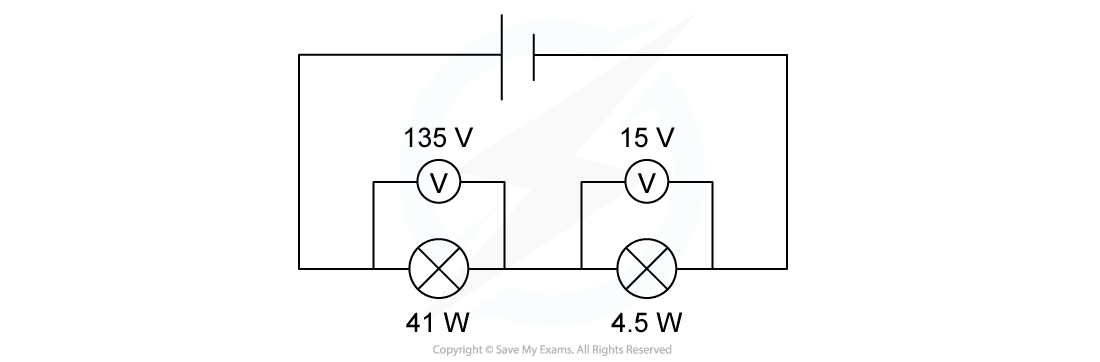
Worked Example Two lamps are connected in series to a 150 V power supply.
Which statement is correct?
A. Both lamps light normally
B. The 15 V lamp blows
C. Only the 41 W lamp lights
D. Both lamps light at less than their normal brightness
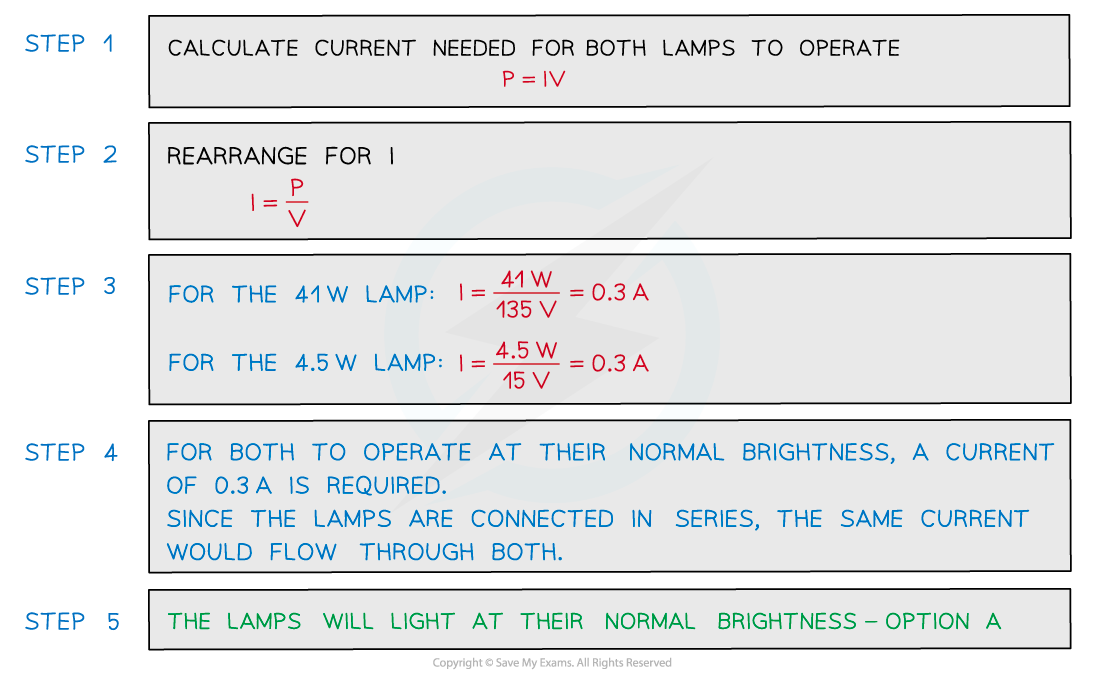
Answer: A
Exam Hint You can use the mnemonic “Twinkle Twinkle Little Star, Power equals I squared R” to remember whether to multiply or divide by resistance in the power equations.
Which equation to use will depend on whether the value of current or voltage has been given in the question.
Was this revision note helpful?
Build on this topic