Transmission & Reflection of Waves (Edexcel IAL Physics)
Spec point —
55
Transmission & Reflection of Waves
-
When waves are incident on the interface between two different media, they are either transmitted or reflected
- 'Incident on' simply means 'to meet'
- The interface is also called the boundary between media
- Transmitted means to pass through
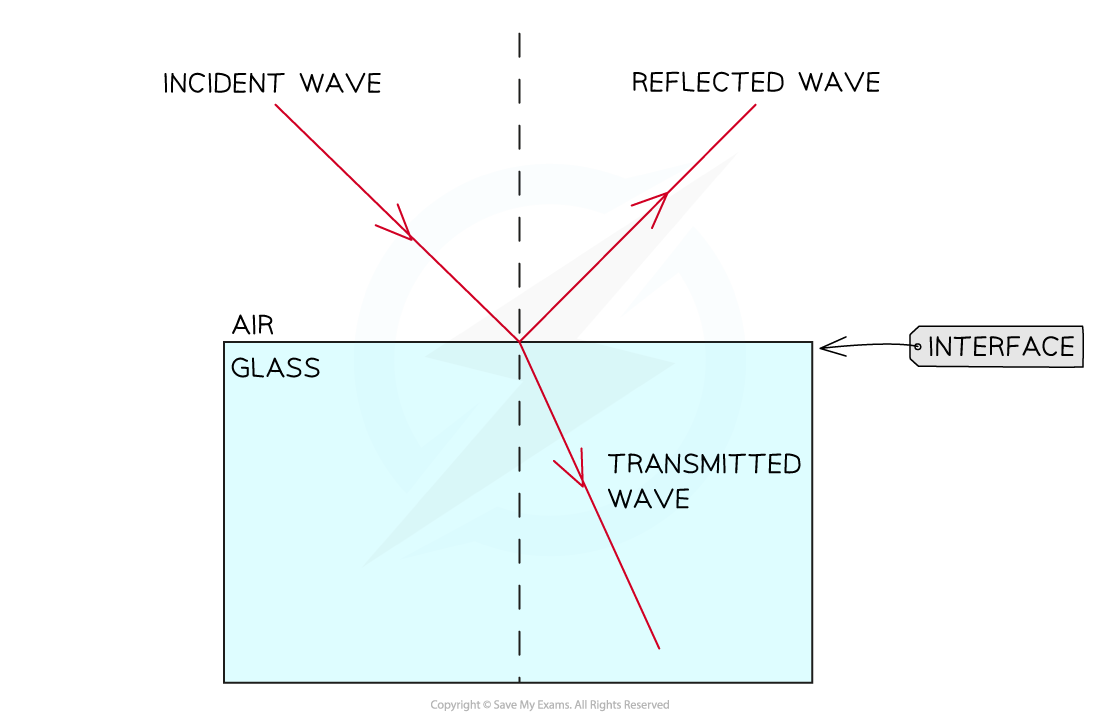
- When the media have similar densities the energy of the wave is mostly transmitted
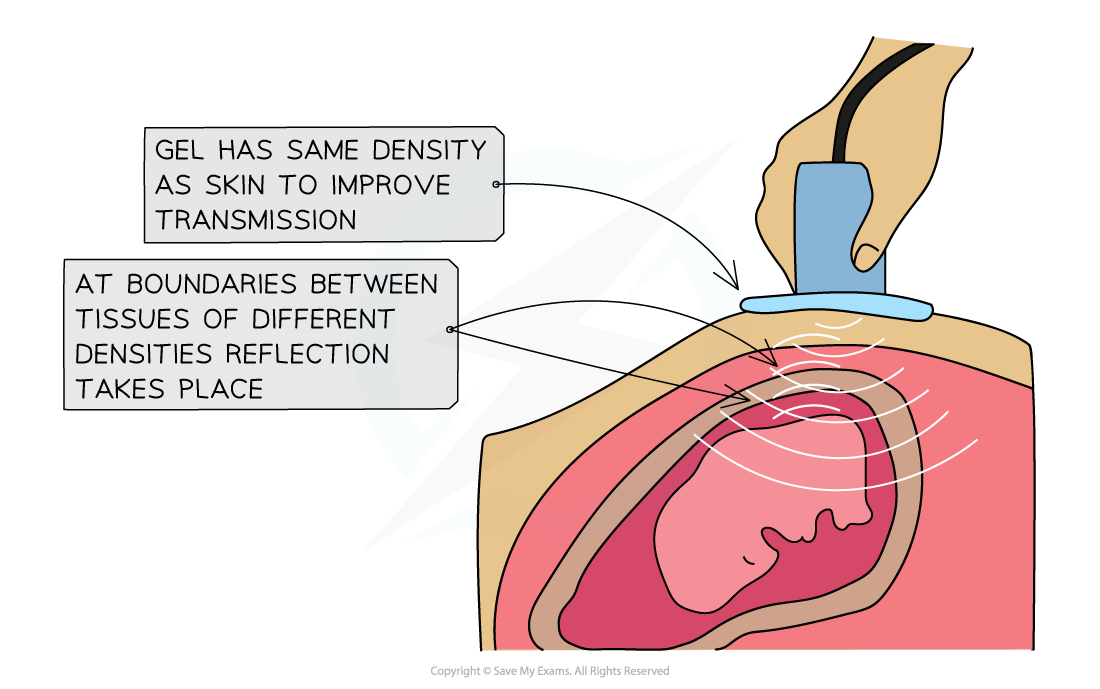
- When the media have different densities most of the energy is reflected
Reflected waves in use
-
Uses of reflected waves include:
- Medical x-rays
- Sonar
- Ultrasound scans
Transmitted waves in use
-
In the above examples the waves have to be transmitted through one medium first, before they are reflected
- X-rays are transmitted through soft tissue
- Sonar is transmitted through air or water
- Ultrasound is transmitted through a gel of similar density to the skin so that it reaches the tissues inside the body
Reflection
- Reflection occurs when: A wave hits a boundary between two media and does not pass through, but instead stays in the original medium
- The law of reflection states:
The angle of incidence = The angle of reflection
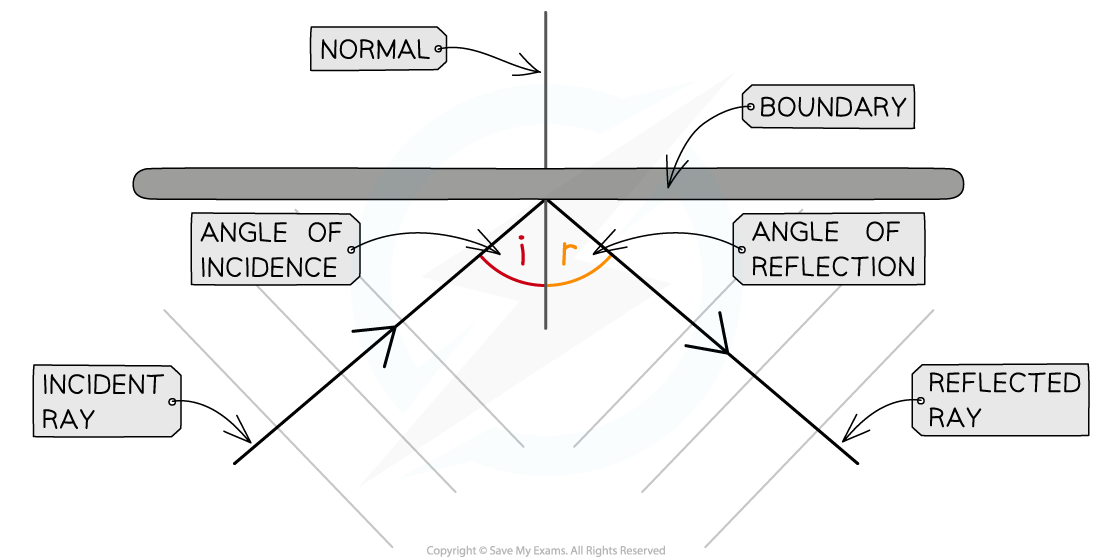
Reflection of a wave at a boundary
-
Some of the wave may also be absorbed or transmitted
- Echos are examples of sound waves being reflected off a surface
-
Flat surfaces are the most reflective
- The smoother the surface, the stronger the reflected wave is
-
Rough surfaces are the least reflective
- This is because the light scatters in all directions
-
Opaque surfaces will reflect light which is not absorbed by the material
- The electrons will absorb the light energy, then re-emit it as a reflected wave
Transmission
-
Transmission occurs when: A wave passes through a substance
-
For light waves, the more transparent the material, the more light will pass through
- Transmission can involve refraction but it is not exactly the same
- For the process to count as transmission, the wave must pass through the material and emerge from the other side
-
When passing through a material, waves are usually partially absorbed
-
The transmitted wave may have a lower amplitude because of some absorption
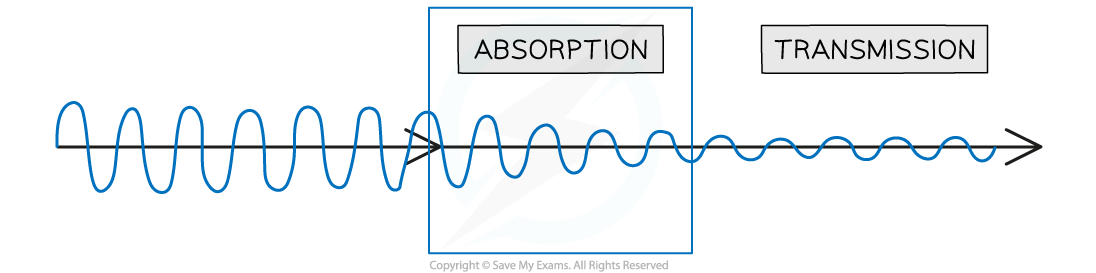 When a wave passes through a boundary it may be absorbed and transmitted
- For example, sound waves are quieter after they pass through a wall
-
Was this revision note helpful?