Polyamides & Poly(ethenol) (Edexcel IAL Chemistry)
Polyamides - Physical Properties
Spec point —
19.10
Examples of polyamides
Kevlar
-
Kevlar is an example of a polymer formed through condensation polymerisation
-
The polymer chains are neatly arranged with many hydrogen bonds between them
-
This results in a strong and flexible polymer material with fire resistance properties
-
These properties also lend Kevlar to a vital application in bullet-proof vests
-
The monomers used to make Kevlar are:
- 1,4-diaminobenzene
- Benzene-1,4-dicarboxylic acid
-
As seen with Nylon, a dioyl dichloride can be used instead of the acid as well (benzene-1,4-dioyl chloride)
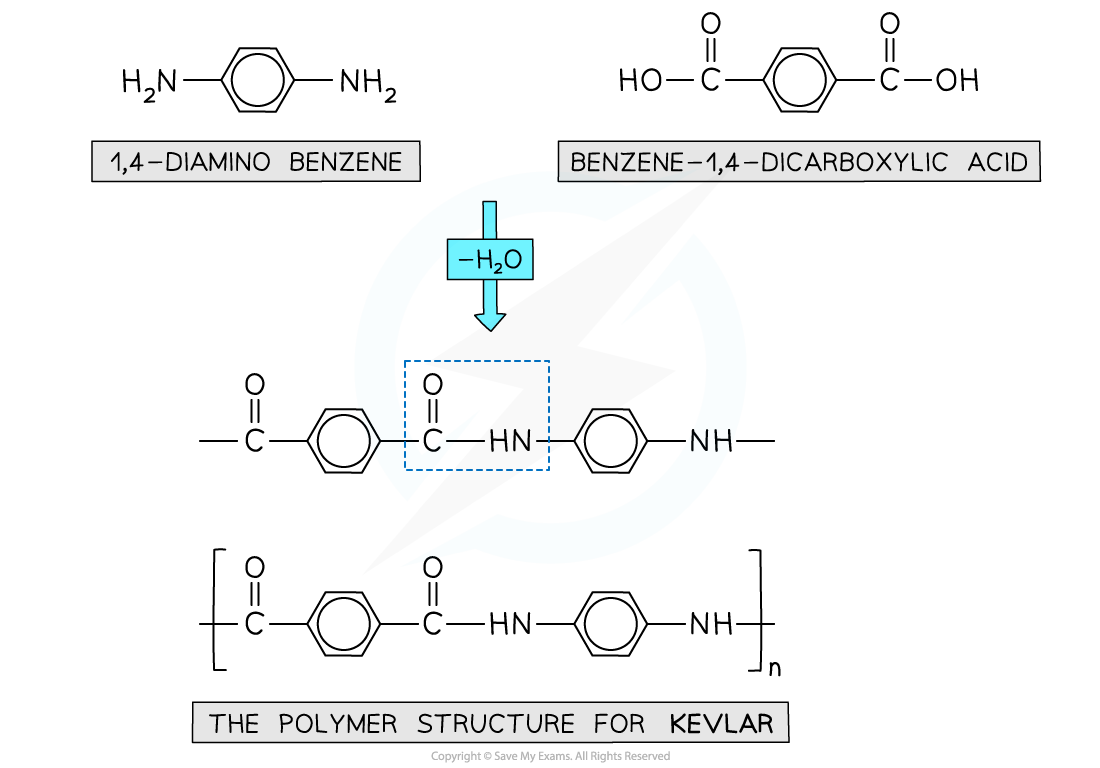
Kevlar is made using a diamine and dicarboxylic acid monomers
Nylon 6-6
-
Nylon 6,6 is a synthetic polyamide
-
Its monomers are 1,6-diaminohexane and hexane-1,6-dioic acid
- The ‘6,6’ part of its name arises from the 6 carbon atoms in each of Nylon 6,6 monomers
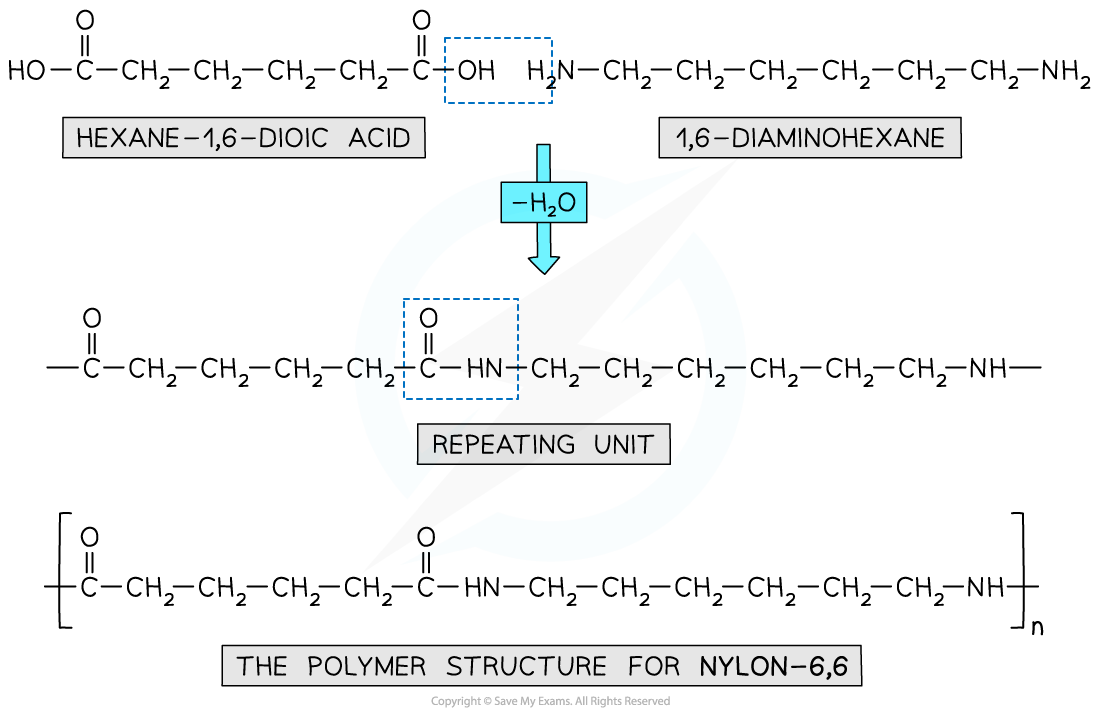
Nylon 6,6 is a synthetic polyamide made using diamine and dicarboxylic acid monomers
Properties of polyamides
-
Most polyamides (nylons) tend to be semi-crystalline
-
They are generally very tough with good thermal and chemical resistance
-
Polyamides tend to absorb moisture from their surroundings
- This absorption increases until equilibrium is reached
-
The impact resistance and flexibility of polyamides increases with water content whilst strength and stiffness decrease
-
The strong bonds in polyamides make the polyamide chains strong allowing them to be made into strong fibres for clothing
- E.g. Kevlar shown above
-
Polyamide film (cling film) is used in food packaging due to its toughness and the fact it prevents gas molecules from passing through
-
Polyamide film is also used for 'Boil in the bag' foods due to its high-temperature resistance
Poly(ethenol)
- Poly(ethenol) is another addition polymer, sometimes called poly(vinyl alcohol)
- It is not made in the usual way by directly polymerising a monomer
- Instead, it is made in two stages:
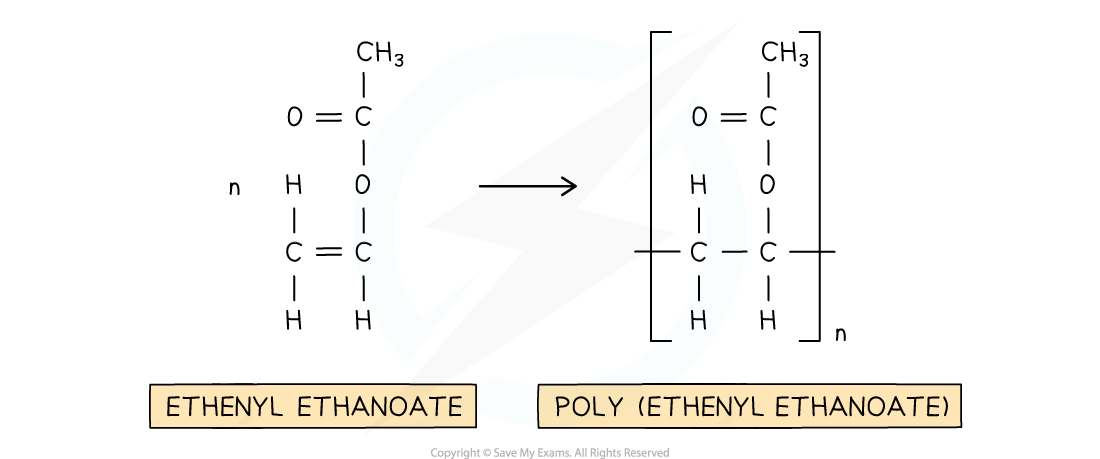
Stage 1: polymerisation of ethenyl ethanoate
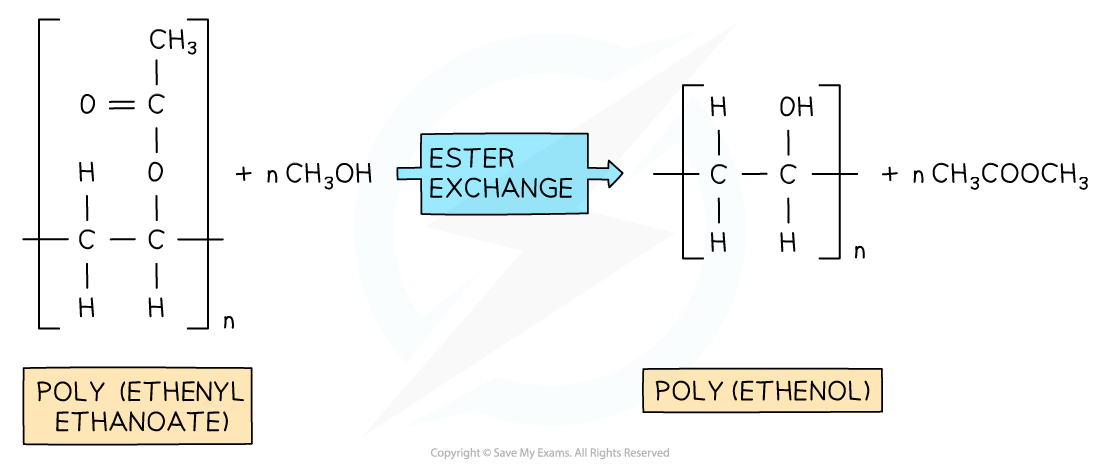
Stage 2: poly(ethenyl ethanoate) reacts with methanol forming poly(ethenol) and methyl ethanoate (this process is known as ester exchange)
- The amount of ester exchange is controlled by varying the temperature
Solubility
-
Poly(ethenol) contains many OH groups
-
These groups can form hydrogen bonds with water making poly(ethenol) soluble in water
-
The degree of solubility depends on how many ester groups have been replaced with OH groups
- Solubility ranges from insoluble, to soluble in warm/hot water, to soluble in cold water
Uses
-
Poly(ethenol) is used to make disposable laundry bags for use in hospitals
- These laundry bags are soluble in water
-
Dirty bedding and clothing, which may be covered in microorganisms from patients, are put in the laundry bags
-
The bag is then placed in the washing machine without hospital workers having to touch the dirty fabrics
-
During washing the bag dissolves and the fabrics are washed clean
-
Poly(ethenol) is also used to make liquid-detergent capsules that contain measured quantities of detergent for use in washing machine and dishwashers
- The capsule dissolves during use
Was this revision note helpful?