Propan-1-ol Oxidation (Edexcel IAL Chemistry)
Core Practical 7: Oxidation of Propan-1-ol
Spec point —
10.20
Oxidation of propan-1-ol
-
Primary alcohols can be oxidised to form aldehydes which can undergo further oxidation to form carboxylic acids
- When propan-1-ol is oxidised, propanal is produced and when oxidised further propanoic acid will be formed
Synthesis and purification of propanal and propanoic acid
-
Carefully add 20 cm3 of acidified potassium dichromate(VI) solution, K2Cr2O7 (aq), to a 50 cm3 pear-shaped flask and cool the flask in an iced water bath
-
Set up the reflux apparatus keeping pear shaped flask cool
-
Place anti-bumping granules into the pear shaped flask
-
Measure out 1 cm3 of propan-1-ol
-
Using a pipette, slowly add the propan-1-ol drop wise into the reflux condenser
-
When the propan-1-ol has been added remove the ice bath and allow to warm up to room temperature
-
Position the flask over an electric heater or in a water bath and heat for 20 minutes
- Propan-1-ol is flammable, therefore. naked flames should not be used when heating which is why the use of an electric heater or water bath is an important safety precaution
-
Purify the product using distillation apparatus
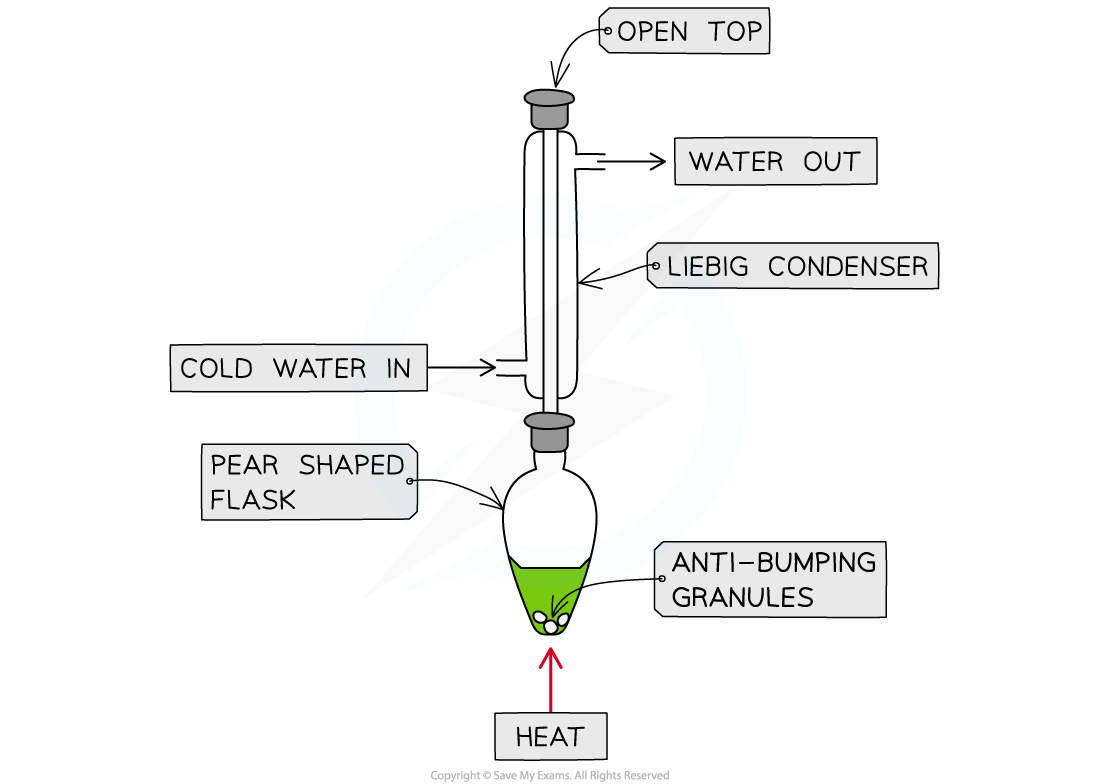
Reflux apparatus for the oxidation of propan-1-ol to propanoic acid
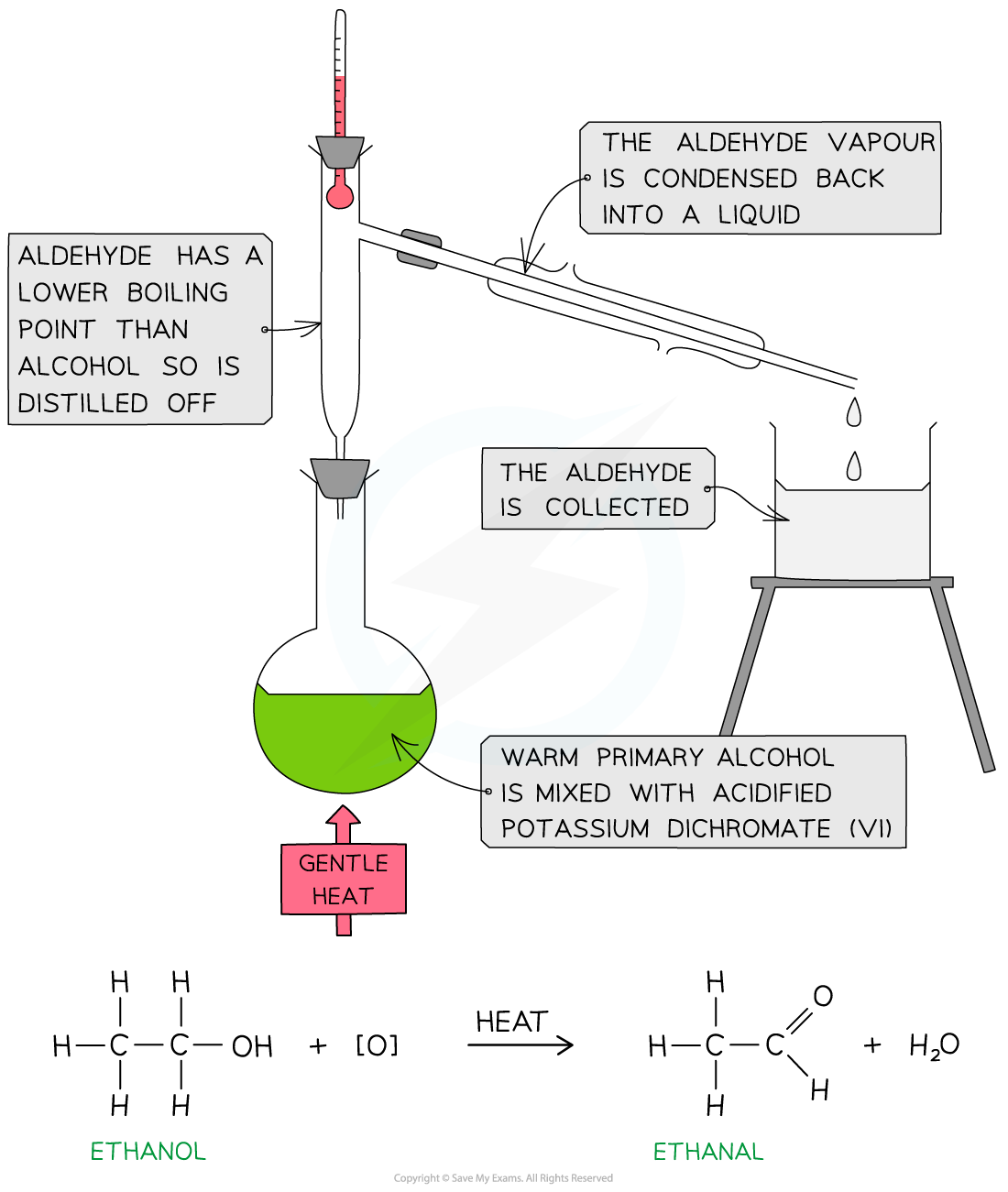
Oxidation of propan-1-ol by acidified K2Cr2O7to form propanal by distillation
Hazards, risks and precautions
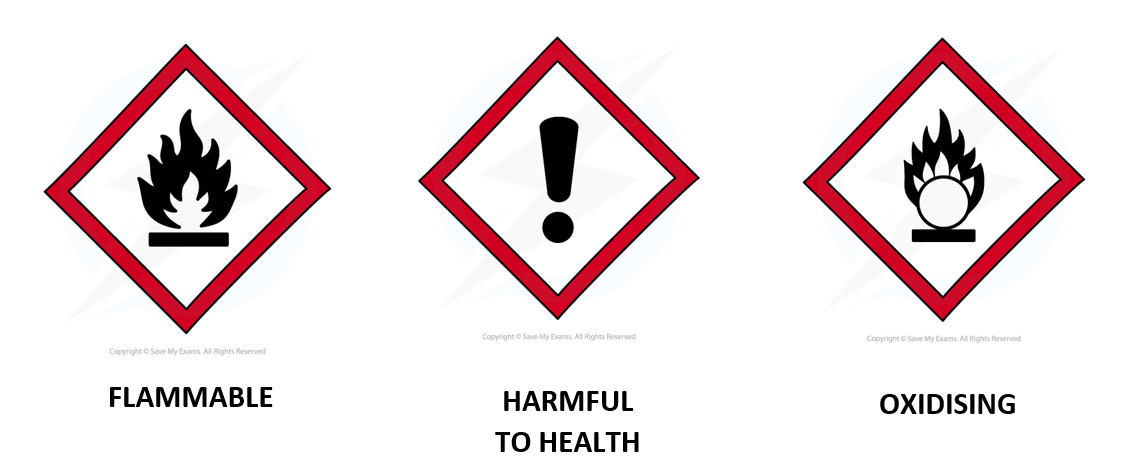
- The alcohols used are flammable and often harmful to health, e.g, propan‐1‐ol, butan‐1‐ol, pentan‐1‐ol
- The alcohols should be kept away from naked flames, e.g. a Bunsen burner
- Avoid contact with the skin and breathing in the vapour
- A fume cupboard can be used for harmful alcohols
- Potassium dichromate is a strong oxidising agent and should be handled with care
- Spillages should be mopped up right away with plenty of water
Was this revision note helpful?