Synapses & Neurotransmitters (Edexcel IAL Biology)
Spec point —
8.6
Synapses & Neurotransmitters
-
Structures known as synapses are found at the junctions between cells in the nervous system e.g.
- In the sense organs there are synapses between sensory receptor cells and sensory neurones
- In muscles there are synapses between motor neurones and muscle fibres
-
The structure of a synapse includes the following features
-
A gap between the neurones known as the synaptic cleft
-
The neurone before the synapse is known as the **presynaptic neurone **and has a rounded end known as the synaptic knob
-
The neurone after the synapse is known as the postsynaptic neurone
-
Nerve impulses are passed across the synaptic cleft by the** diffusion of chemicals** known as neurotransmitters e.g. acetylcholine
- Neurotransmitters are contained within vesicles in the synaptic knob
-
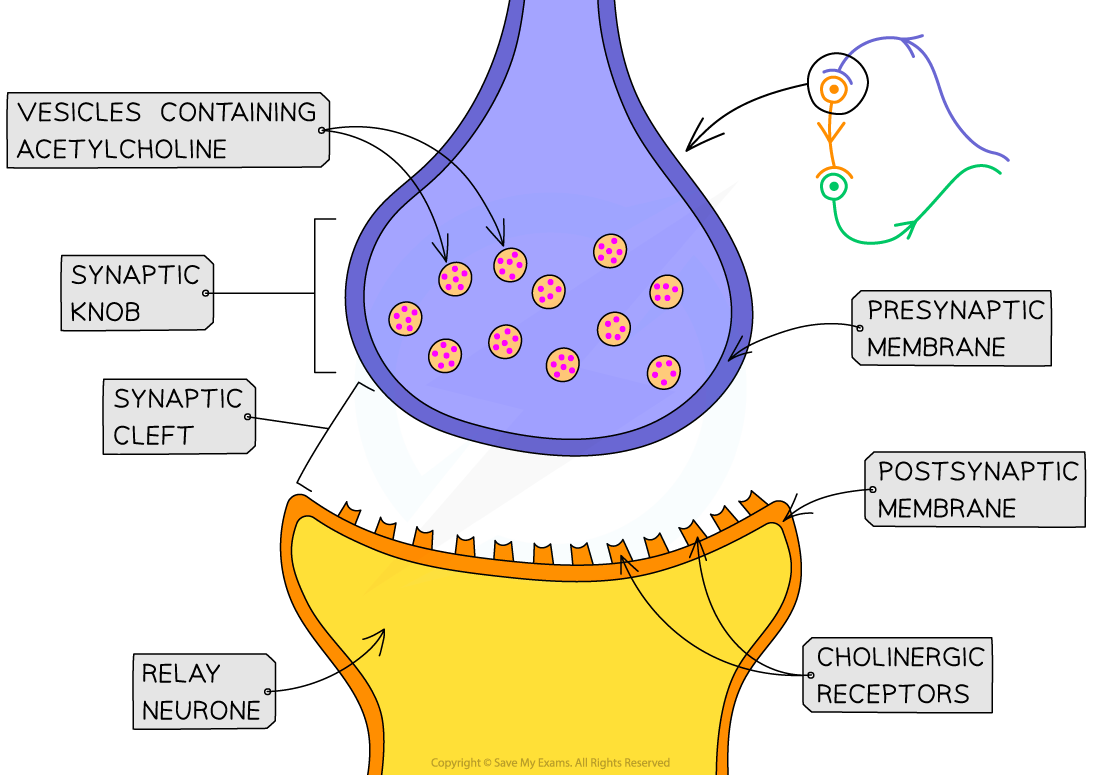
Synapses are the junctions between neurones e.g. between a sensory neurone and a relay neurone
Synaptic transmission
-
Electrical impulses cannot ‘jump’ across the synaptic cleft
-
When an action potential arrives at the end of the axon of the presynaptic neurone the membrane becomes depolarised, causing voltage gated calcium ion channels to open
-
Calcium ions diffuse into the synaptic knob via calcium ion channels in the membrane
-
The calcium ions cause vesicles in the synaptic knob to move towards the presynaptic membrane where they fuse with it and release chemical messengers called neurotransmitters into the synaptic cleft by exocytosis
- A common neurotransmitter is acetylcholine, or ACh
-
The neurotransmitters diffuse across the synaptic cleft and bind with receptor molecules on the postsynaptic membrane; this causes associated sodium ion channels on the postsynaptic membrane to open, allowing sodium ions to diffuse into the postsynaptic cell
-
If enough neurotransmitter molecules bind with receptors on the postsynaptic membrane, then an action potential is generated, which then travels down the axon of the postsynaptic neurone
-
Whether or not an action potential is generated depends on whether or not threshold potential is reached, which in turn depends on the number of action potentials arriving at the presynaptic knob
- Many action potentials will cause more neurotransmitter to be released by exocytosis
- A large amount of neurotransmitter will cause many sodium ion channels to open
- Many sodium ion channels opening will allow a large influx of sodium ions, increasing the likelihood of threshold being reached
-
-
The neurotransmitters are then broken down to prevent continued stimulation of the postsynaptic neurone
- The enzyme that breaks down acetylcholine is acetylcholinesterase
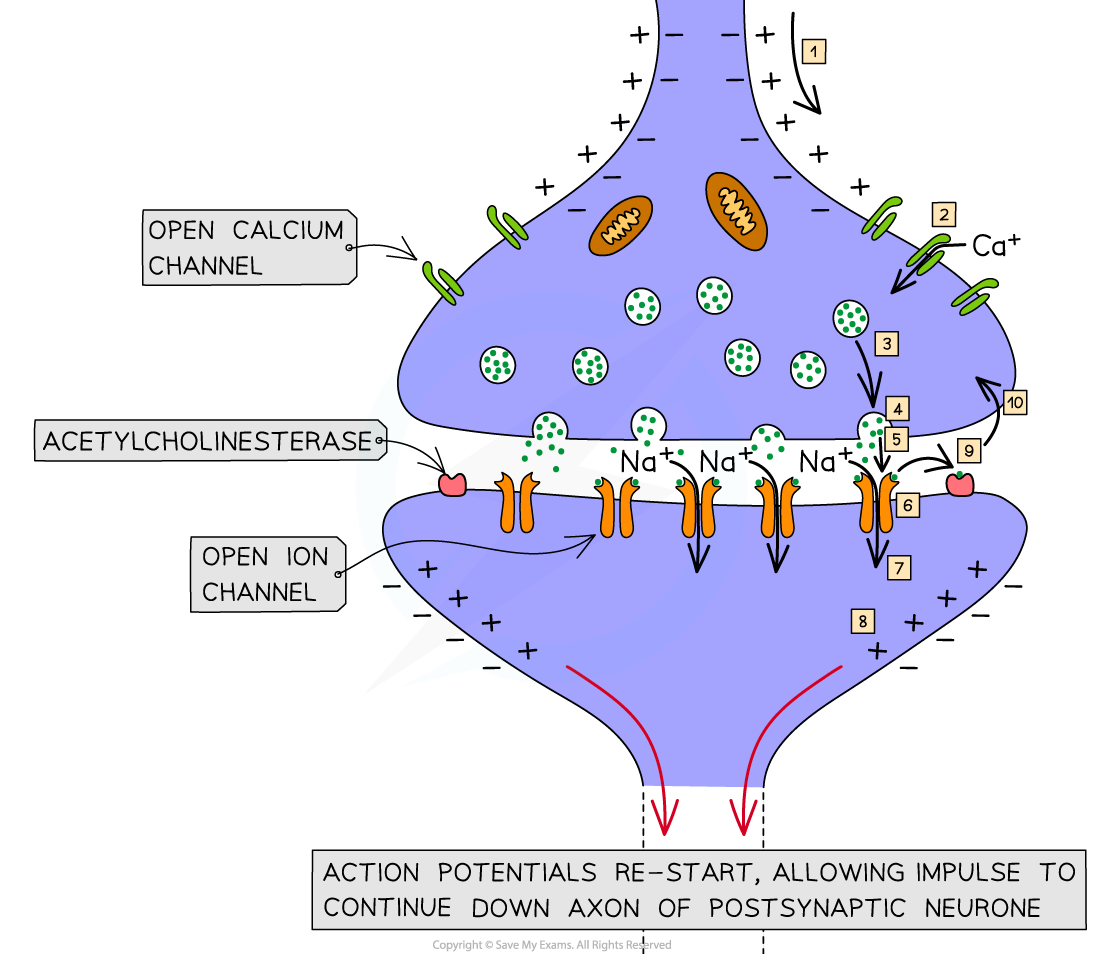
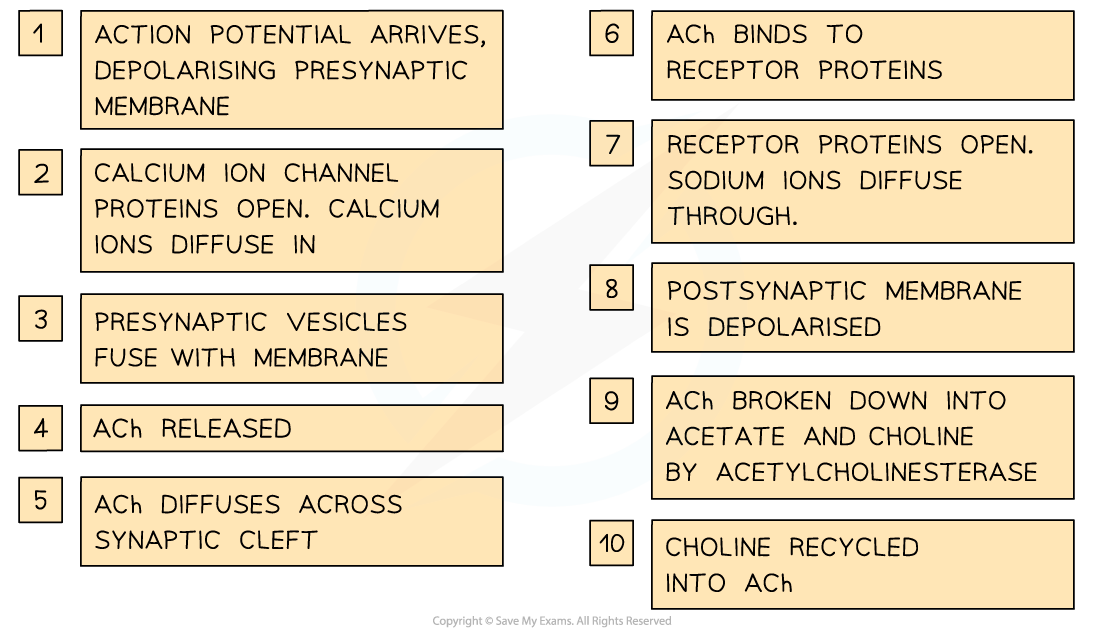
Impulses are transmitted across the synaptic cleft by the diffusion of neurotransmitters such as acetylcholine
Additional roles of synapses
-
Synapses enable
-
Unidirectionality of impulse transmission
- Synapses ensure the one-way transmission of impulses
- Impulses can only pass in one direction at synapses because neurotransmitter is released on one side and its receptors are on the other; chemical transmission cannot occur in the opposite direction
-
Divergence of nerve impulses
- One neurone can connect to several other neurones at a synapse, allowing nerve signals to be sent in several directions from a single presynaptic neurone
-
Amplification of nerve signals by summation
-
When an impulse arrives at a synapse it does not always cause an impulse to be generated in the next neurone; a single impulse that arrives at a synaptic knob may be insufficient to generate an action potential in the post-synaptic neurone
- Only a small amount of acetylcholine may release into the synaptic cleft
- A small number of sodium ion channels are opened in the postsynaptic axon membrane
- An insufficient number of sodium ions pass through the membrane
- The threshold potential is not reached
-
The effect of multiple impulses can be added together to overcome this in a process known as summation
-
Summation can be achieved by
-
Several presynaptic neurones converging to meet a single postsynaptic neurone
- This is known as synaptic convergence
-
Many action potentials arriving at a postsynaptic knob in quick succession
-
-
-
The Pupil Reflex
Spec point —
8.6
-
The connections between neurones at synapses enable the sequence of events that leads to a change in the diameter of the pupil in the eye; this is known as the pupil reflex
- Changing pupil diameter enables the eye to control the amount of light hitting the retina, avoiding damage that could be caused by bright light
-
The diameter of the pupil in the eye is determined by two sets of muscles
- The circular muscles contract to constrict the pupil
- The radial muscles contract to dilate the pupil
-
The two sets of muscles work antagonistically, meaning that when one set of muscles contracts the other relaxes, and vice versa
-
In bright light the following events occur
bright lightlight receptors in eyessensory neuroneCNSmotor neuronecircular muscles in iris
-
Contraction of the circular muscles in the iris of the eye causes the pupil to constrict
- This limits the amount of light entering the eye and prevents damage to the retina
-
In low light the following events occur
low lightlight receptors in eyessensory neuroneCNSmotor neuroneradial muscles in iris
-
Contraction of the radial muscles in the iris of the eye causes the pupil to dilate
- This maximises the amount of light entering the eye, improving vision
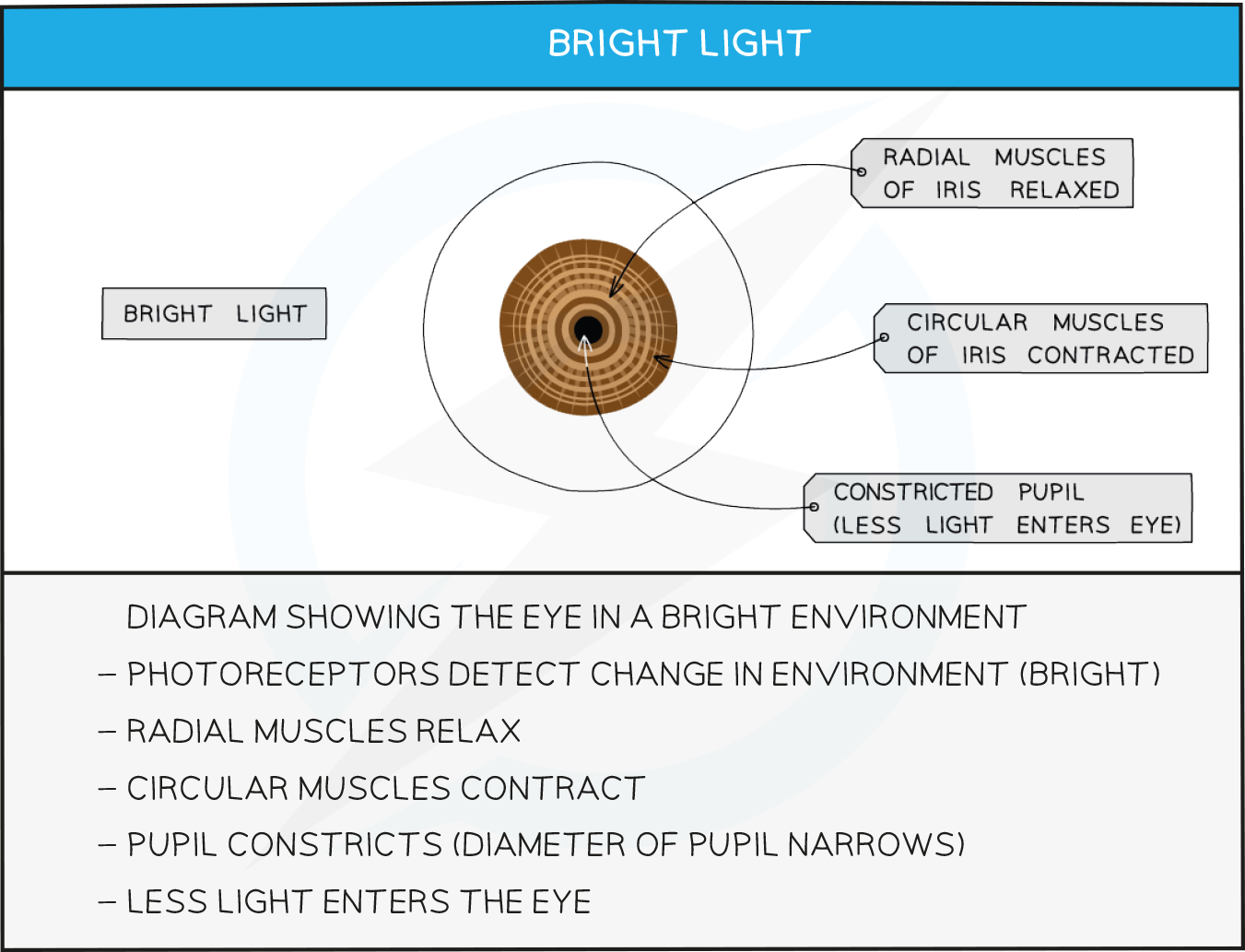
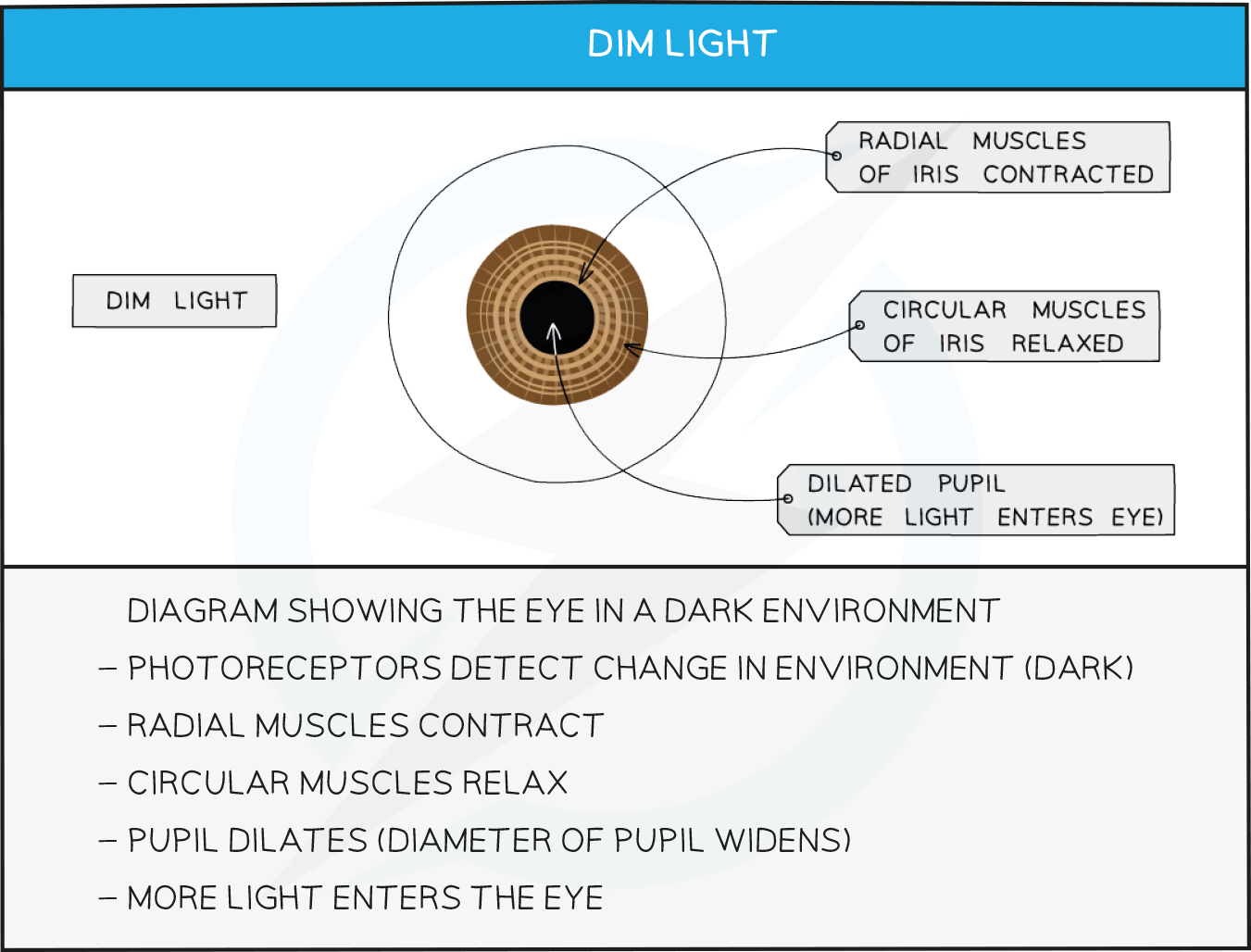
The pupil reflex allows unconscious control of the amount of light entering the eye; this prevents damage to the retina by bright light
Was this revision note helpful?