Comparison of Bacterial & Viral Structure (Edexcel IAL Biology)
Spec point —
6.5
Comparison of Bacterial & Viral Structure
Bacteria
-
Bacteria are single-celled prokaryotes
-
Prokaryotic cells are much smaller than eukaryotic cells
-
They also differ from eukaryotic cells in having
-
A cytoplasm that lacks membrane-bound organelles
-
Ribosomes that are smaller (70 S) than those found in eukaryotic cells (80 S)
-
No nucleus, instead having a single circular bacterial chromosome that is free in the cytoplasm and is not associated with proteins
-
A cell wall that contains the glycoprotein murein
- Murein is sometimes known as peptidoglycan
-
-
In addition, many prokaryotic cells also have the following structures
-
Loops of DNA known as plasmids
-
Capsules
- This is sometimes called the slime capsule
- It helps to protect bacteria from drying out and from attack by cells of the immune system of the host organism
-
Flagella (singular flagellum)
- Long, tail-like structures that rotate, enabling the prokaryote to move
- Some prokaryotes have more than one
-
Pili (singular pilus)
-
Thread-like structures on the surface of some bacteria that enable the bacteria to attach to other cells or surfaces
- Involved in gene transfer during sexual reproduction
-
-
A cell membrane that contains folds known as mesosomes; these infolded regions can be the site of respiration
-
-
Some bacteria are disease-causing, or pathogenic, but not all bacteria cause harm to other organisms
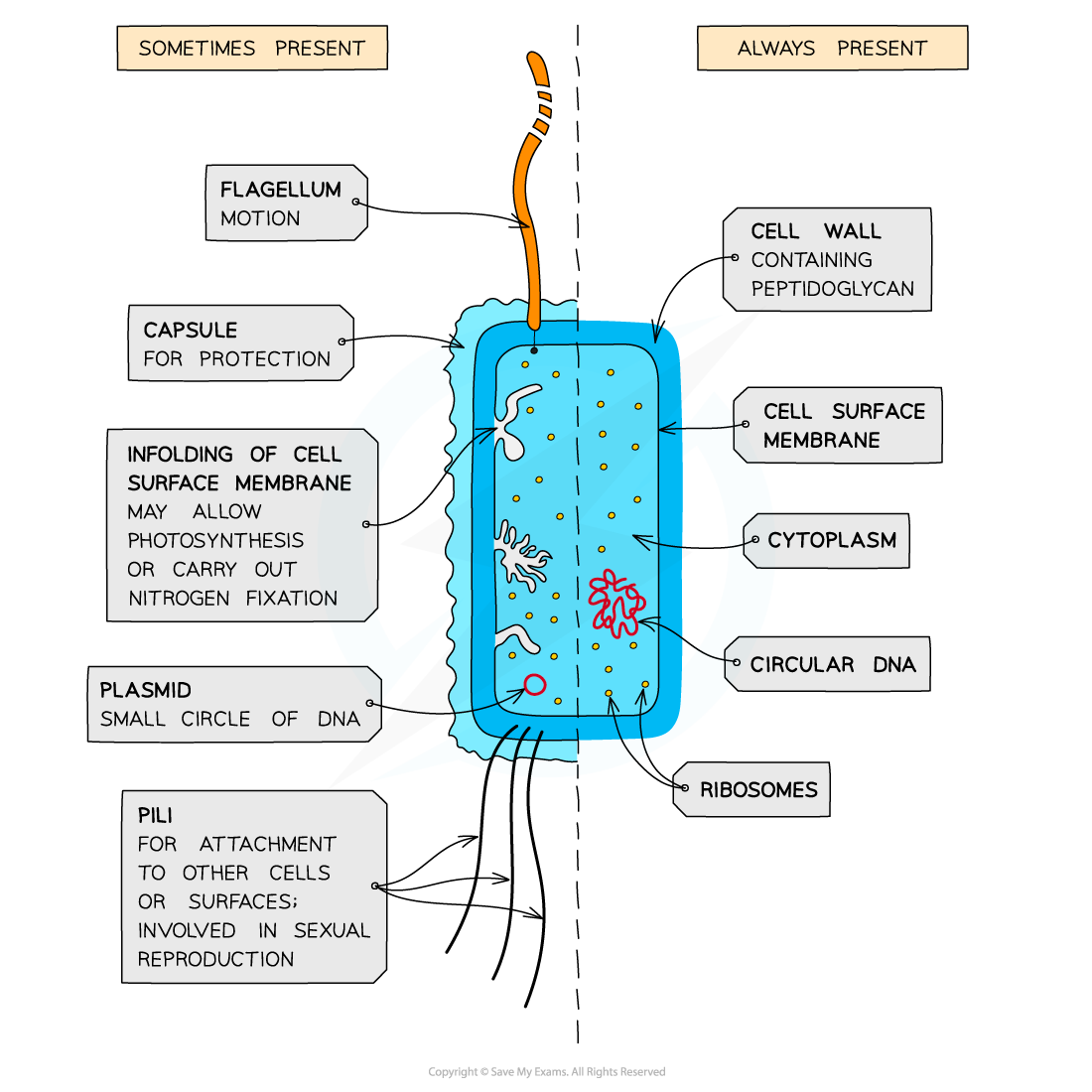
Prokaryotic cells have a peptidoglycan cell wall, no membrane-bound organelles, a circular chromosome, and 70S ribosomes
Viruses
-
Viruses are non-cellular infectious particles
-
They are relatively simple in structure, and much smaller than prokaryotic cells
-
Structurally they have
-
A nucleic acid core
- Their genomes are either DNA or RNA, and can be single or double-stranded
-
A protein coat called a ‘capsid’ made of repeating units known as capsomeres
-
-
They do not possess a plasma membrane, cytoplasm, or ribosomes
-
Some viruses have an outer layer called an envelope formed from the membrane-phospholipids of the cell they were made in
- The fact that lipid envelopes are formed from the membrane of a viral host cell means that very few plant viruses have lipid envelopes
-
Some contain proteins inside the capsid which perform a variety of functions
- E.g. HIV contains the enzyme reverse transcriptase which converts its RNA into DNA once it has infected a cell
-
Viruses also contain attachment proteins, also known as virus attachment particles, that stick out from the capsid or envelope
- These enable the virus to attach itself to a host cell
-
Viruses can only reproduce by infecting living cells and using the protein-building machinery of their host cells to produce new viral particles
-
Viruses are classified on the basis of the genetic material they contain and how they replicate
-
They can be classified into the following categories
- DNA viruses
- RNA viruses
- Retroviruses
-
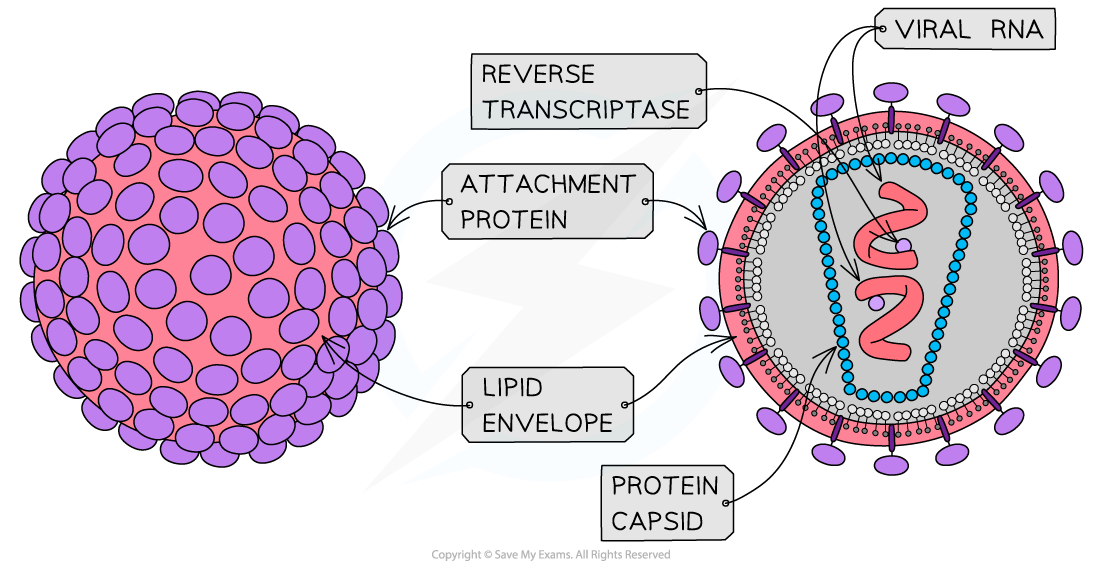
HIV contains RNA as its genetic material. It is surrounded by a protein capsid, as well as having an outer lipid envelope and attachment proteins
DNA viruses
-
They contain DNA as genetic material
-
Viral DNA acts as a direct template for producing new viral DNA and mRNA for the synthesis of viral proteins
-
Examples: smallpox, adenoviruses, and bacteriophages
- Bacteriophages are viruses that infect bacteria, such as the λ (lambda) phage
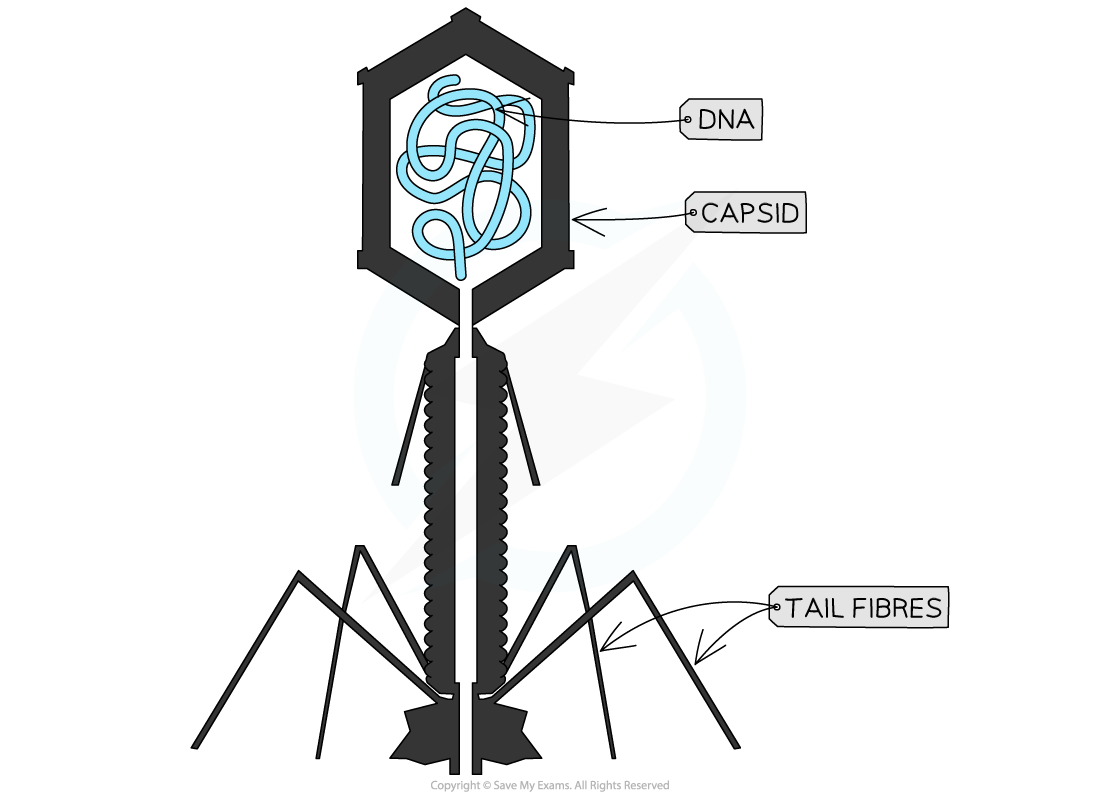
Bacteriophage viruses, such as the λ phage, are examples of DNA viruses
RNA viruses
-
They contain RNA as genetic material
- Most have a single strand of RNA
- They **do not **produce DNA at all
-
Mutations are more likely to occur in RNA viruses than DNA viruses
-
Examples:** tobacco mosaic virus (TMV)**, ebola virus
Retroviruses
- Special type of RNA virus that does produce DNA
- They contain a single strand of RNA surrounded by a protein capsid and lipid envelope
- Viral RNA controls the production of an enzyme called reverse transcriptase
- This enzyme catalyses production of viral DNA from the single strand of RNA
- The new viral DNA is incorporated into the host DNA using integrase enzymes where it acts as a template to produce viral proteins and RNA
- Example: HIV (Human Immunodeficiency Virus)
Lytic & Latency
Spec point —
6.5
-
Viruses can only reproduce within a host cell as they lack the cellular machinery to do so on their own
-
They can enter a host cell in a variety of different ways
- Bacteriophages inject their genetic material into bacteria
- Some animal viruses enter the cell via endocytosis by fusing their viral envelope with the host cell surface membrane
- Plant viruses will often use a vector such as an insect to breach the cell wall
-
Once inside the host cell one of the following pathways can occur
- Lysogenic
- Lytic
Lysogenic pathway
-
Some viruses will not immediately cause disease once they infect a host cell
-
Viral DNA known as a provirus is inserted into the host DNA, but a viral gene coding for a repressor protein prevents the viral DNA from being transcribed and translated
- Every time the host DNA copies itself, the inserted viral DNA will also be copied
-
This is called latency and the time during which it occurs is known as a period of lysogeny
-
Viruses in a lysogenic state may become activated and enter the lytic pathway
- Activation may occur as a result of, e.g. host cell damage or low nutrient levels inside a cell
Lytic pathway
-
The viral genetic material is transcribed and translated to produce new viral components
-
These components are assembled into mature viruses that accumulates inside the host cell
-
Eventually the host cell bursts which releases large numbers of viruses, each of which can infect a new host cell
- Cell bursting is known as cell lysis
-
This typically results in disease
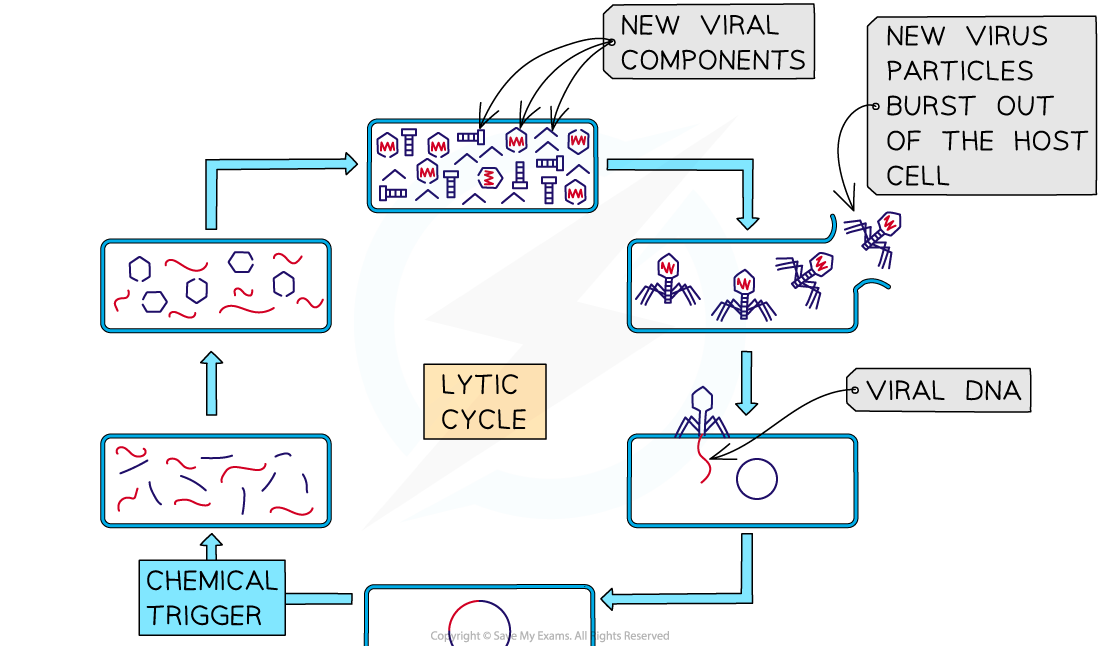
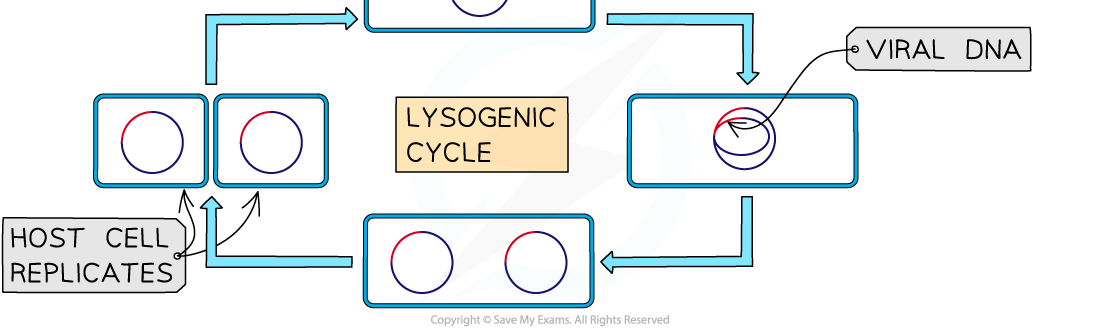
The life cycle of the λ bacteriophage includes a lysogenic and a lytic pathway
Was this revision note helpful?