DNA Profiling (Edexcel IAL Biology)
Spec point —
6.19
DNA Profiling
-
A DNA profile can be produced using the process of gel electrophoresis; the result is a series of bands of DNA of different length which can be seen due to the addition of radioactive or fluorescent labels
-
DNA profiles can be used to determine the genetic relationships between people, e.g. in paternity tests
-
During a paternity test the DNA profile of a child is compared with a variety of candidates that could be the potential father
-
If many bands of the child's DNA profile match with the bands in a paternity candidate's profile, this could indicate that they are the most likely biological father
- During fertilisation half of the DNA comes from each parent, so a child will share half of their DNA with a parent
- When comparing DNA profiles the more bands that match between the profiles, the greater the genetic similarity between those individuals and the closer the relationship
-
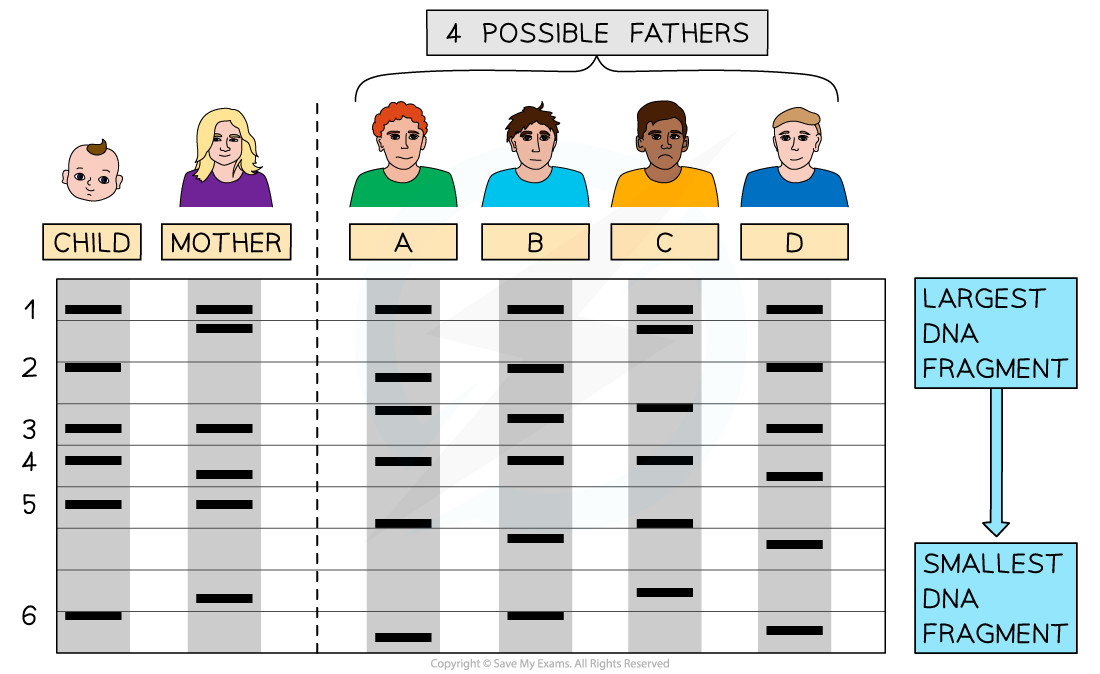
DNA profiles can be compared to determine relationships in paternity testing. Here the child shares bands 1, 3 and 5 with the mother and bands 2, 4 and 6 with candidate B, so he is the most likely father
-
DNA profiling is a useful tool in forensic science where it can be used to link possible suspects to a crime scene
-
Regions of DNA, known as short tandem repeats, are examined
- These short tandem repeats are a type of non-coding, repeated sequence of bases known as a variable number tandem repeat, or VNTR; short tandem repeats consist of short repeating sections, and are also known as micro-satellites
-
The greater the number of these regions examined, the more reliable the evidence provided
- If only a few regions are analysed then there is a greater chance that closely related individuals will have an identical profile; an analysis of 11 or more sites is considered to be reliable evidence in a law court
-
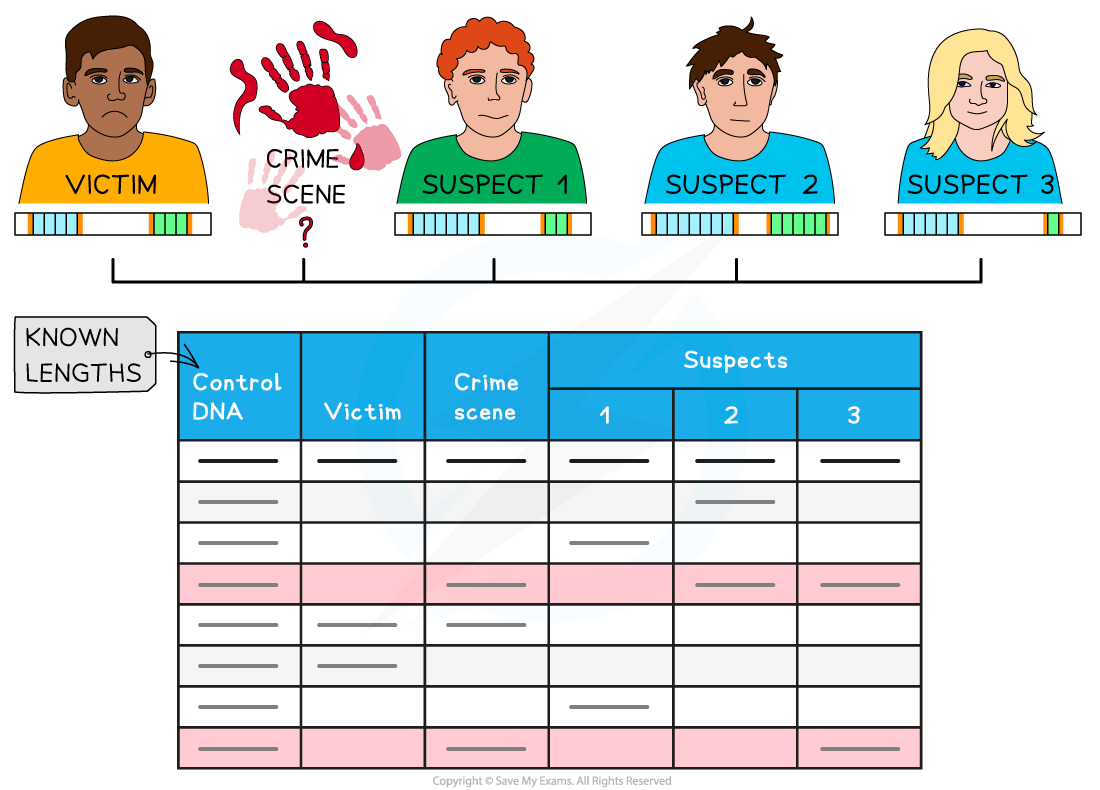
DNA profiles can be created using DNA samples found at crime scenes and then compared with the profiles of suspects to show who was present at a crime scene. VNTRs are shown beneath each individual in blue and green; different individuals have different numbers of VNTRS. In this example the DNA profile of suspect 3 is the closest match with the DNA found at the crime scene, though none of the suspects is a perfect match.
-
DNA profiling can also be useful in selective or captive breeding programmes of animals or cultivation of plants
-
DNA profiles of the particular organisms can be compared to determine which are genetically the most different from each other
-
These organisms will then be crossbred, ensuring that the individuals that breed together are not closely related
-
Breeding between closely related individuals is known as inbreeding, and can cause genetic problems at an individual and population level
- In individuals there can be an accumulation of harmful recessive alleles that might otherwise have been masked by healthy dominant alleles
- Inbreeding leads to a smaller gene pool within a population, which can reduce a population's ability to adapt to change
-
-
Was this revision note helpful?