Control of Gene Expression (Edexcel IAL Biology)
Spec point —
3.18
Control of Gene Expression
-
Hormones can alter the events inside a cell by influencing gene expression*
-
Eukaryotes use transcription factors to control gene expression
-
A transcription factor is a protein that controls the transcription* of genes by binding to a specific region of DNA
-
It is estimated that ~10 % of human genes code for transcription factors
-
There are several types of transcription factors that have varying effects on gene expression
- E.g. transcription factors that increase the rate at which a gene is expressed are known as activators, while those that decrease gene expression are known as repressors
-
Transcription factors ensure that genes are being expressed in the correct cells, at the correct time and to the right level
-
Transcription factors allow organisms to respond to their environment
-
-
-
Some hormones achieve their effect by acting upon transcription factors
Effect of hormones inside cells
-
Hormones that can cross the cell surface membrane, e.g. steroid hormones and thyroid hormones, are able to enter the nucleus and bind to transcription factors that are present there
- Steroid hormones are lipid soluble, allowing them to pass between the phospholipids of the cell surface membrane
-
An example of this is the hormonal regulation of body temperature
-
At normal body temperature a transcription factor known as the thyroid hormone receptor binds to a section of DNA at the start of a gene
- This gene codes for a protein that increases the metabolic rate, generating more heat and therefore increasing body temperature
-
As long as the thyroid hormone receptor is bound to the region of DNA at the start of the gene, the gene will not be expressed; it can be said to be switched off
- In reality it is more likely that expression of the gene will be reduced rather than switched off entirely
-
However, in cold temperatures the body will release the hormone thyroxine which binds to the thyroid hormone receptor
-
Once the hormone and the receptor are bound together the thyroid hormone receptor allows RNA polymerase to bind to the start of the gene; the gene is said to be switched on and its rate of expression will increase
-
The protein which increases the metabolic rate is produced in larger quantities, leading to an increase in body temperature
-
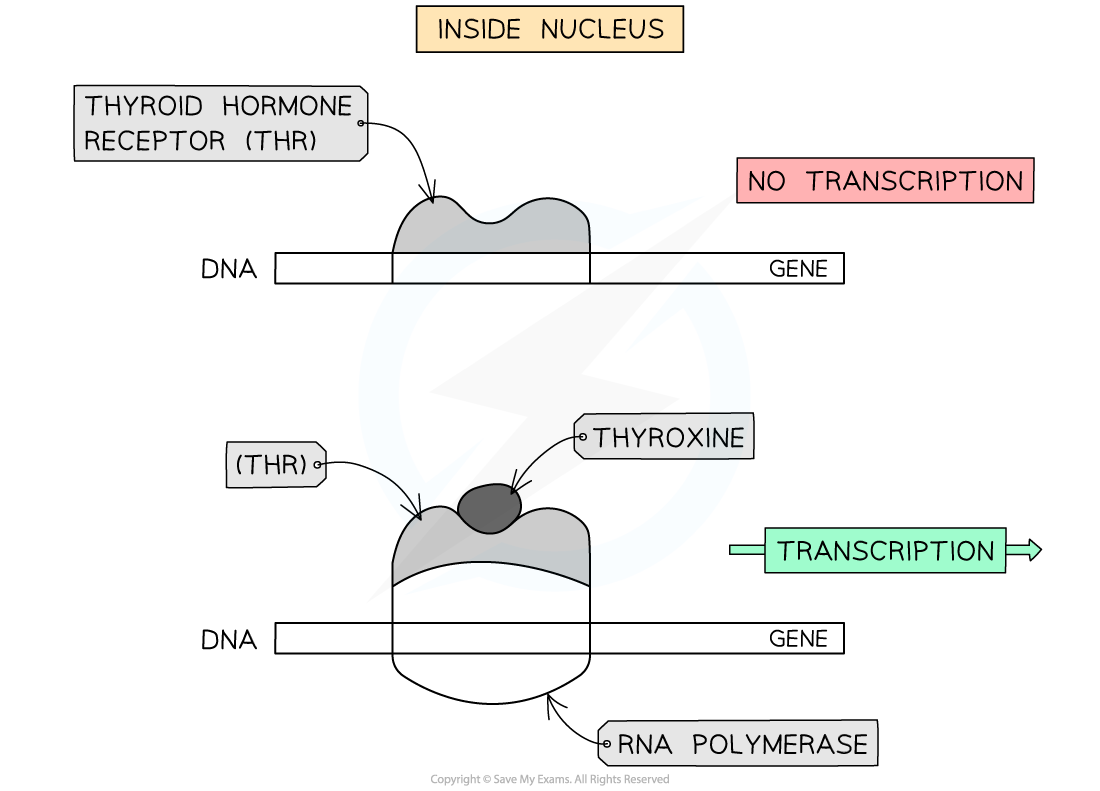
The hormone thyroxine acts as a transcription factor by binding to the thyroid hormone receptor; this switches on the gene, allowing it to be transcribed by RNA polymerase
Effect of hormones from outside cells
-
Hormones that cannot cross the cell membrane, e.g. protein and peptide hormones, bind to receptors in the cell surface membrane
-
Examples of such hormones include
- Adrenaline
- Insulin
- Glucagon
- ADH
-
-
The binding of these hormones to cell surface membrane receptors initiates a process that activates messenger molecules in the cytoplasm of the cell known as second messengers
- A common second messenger molecule is cyclic AMP (cAMP), formed from ATP
-
The activated second messenger molecules activate enzymes called protein kinases
-
Active protein kinase enzymes trigger a chain of reactions, known as a cascade, inside the cell
-
The cascade may result in changes to the activity of transcription factors which may then affect gene expression in the cell
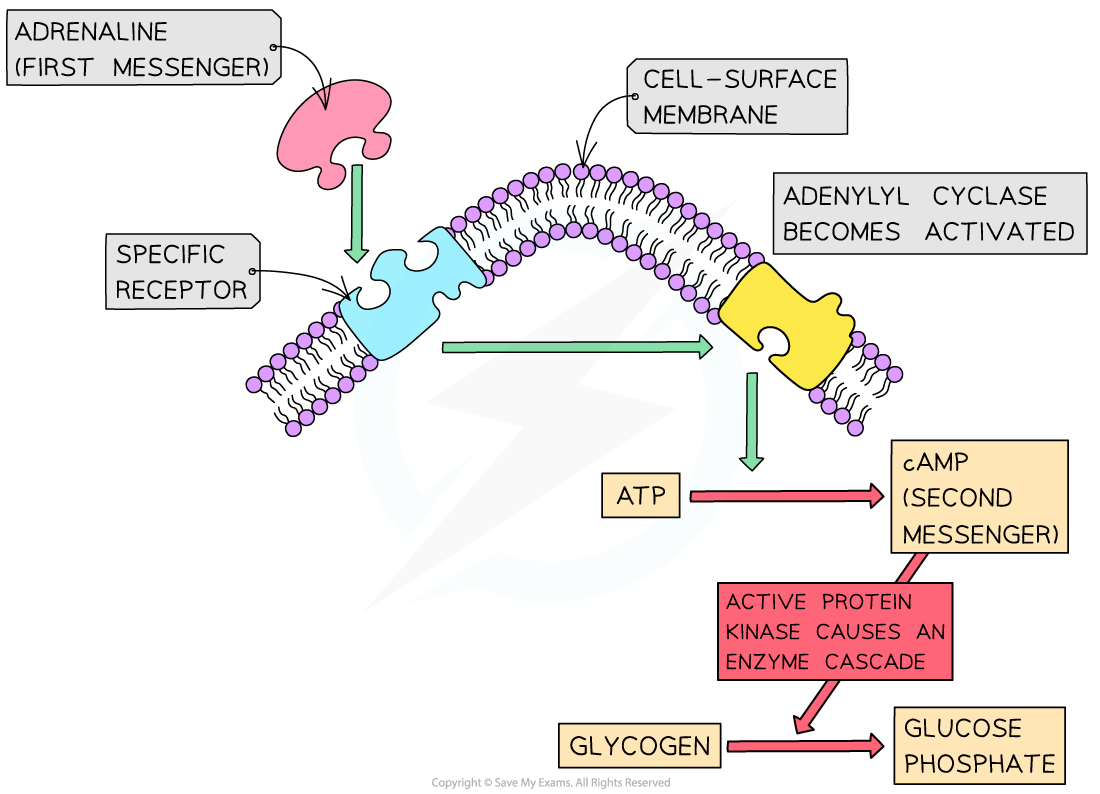
Adrenaline acts by binding to a receptor on cell surface membranes; this activates the second messenger cAMP, leading to a cascade of reactions that affects the activity of the cell, e.g. by influencing transcription factors
Was this revision note helpful?