Non-Specific Immune Responses (Edexcel IAL Biology)
Spec point —
6.8
Non-specific Immune Responses
-
There are two types of immune response in the body once a pathogen enters
-
Non-specific
- This response is the same, regardless of the pathogen that invades the body
-
Specific
-
This is a response specific to a particular pathogen
-
The immune system is able to recognise specific pathogens due to the presence of antigens on their cell surface
-
Antigens are molecules such as proteins or glycoproteins located on the surface of cells; their role is to act as an ID tag, identifying a cell as being 'self' or 'non-self'
- Pathogens have non-self antigens, so the immune system recognises them as not belonging to the body
-
-
-
-
When a pathogen invades tissue the non-specific immune response begins immediately; this includes
- Inflammation
- Interferons
- Phagocytosis
Inflammation
-
The surrounding area of a wound can sometimes become swollen, warm and painful to touch; this is inflammation
-
Body cells called mast cells respond to tissue damage by secreting the molecule histamine
- Histamine is a chemical signalling molecule that enables cell signalling, or communication between cells
-
Histamine stimulates the following responses
-
Vasodilation increases blood flow through capillaries
-
Capillary walls become 'leaky', or more permeable, allowing fluid to enter the tissues and creating swelling
- Some plasma proteins leave the blood when the capillaries become more permeable
-
Phagocytes leave the blood and enter the tissue to engulf foreign particles
-
Cells release cytokines, another cell signalling molecule that triggers an immune response in the infected area
-
Interferons
-
Cells infected by viruses produce anti-viral proteins called interferons
-
Interferons prevent viruses from spreading to uninfected cells
- They inhibit the production of viral proteins, preventing the virus from replicating
- They activate white blood cells involved with the specific immune response to destroy infected cells
- They increase the non-specific immune response e.g. by promoting inflammation
Phagocytosis
-
Phagocytes are a type of white blood cell responsible for removing dead cells and invasive microorganisms; they do this by engulfing and digesting them
- The process of engulfing and digesting is known as phagocytosis
-
Phagocytes travel throughout the body and can leave the blood by squeezing through capillary walls
-
During an infection they are released in large numbers
-
Mode of action
-
Chemicals released by pathogens, as well as chemicals released by the body cells under attack, e.g. histamine,attract phagocytes to the site where the pathogens are located
-
They move towards pathogens and recognise the antigens on the surface of the pathogen as being non-self
-
The cell surface membrane of a phagocyte extends out and around the pathogen, engulfing it and trapping the pathogen within a phagocytic vacuole
- This part of the process is known as endocytosis
-
Enzymes are released into the phagocytic vacuole when lysosomes fuse with it
-
These digestive enzymes, which includes lysozyme, digest the pathogen
-
After digesting the pathogen, the phagocyte will present the antigens of the pathogen on its cell surface membrane
- The phagocyte becomes what is known as an antigen presenting cell
-
The presentation of antigens initiates the specific immune response
-
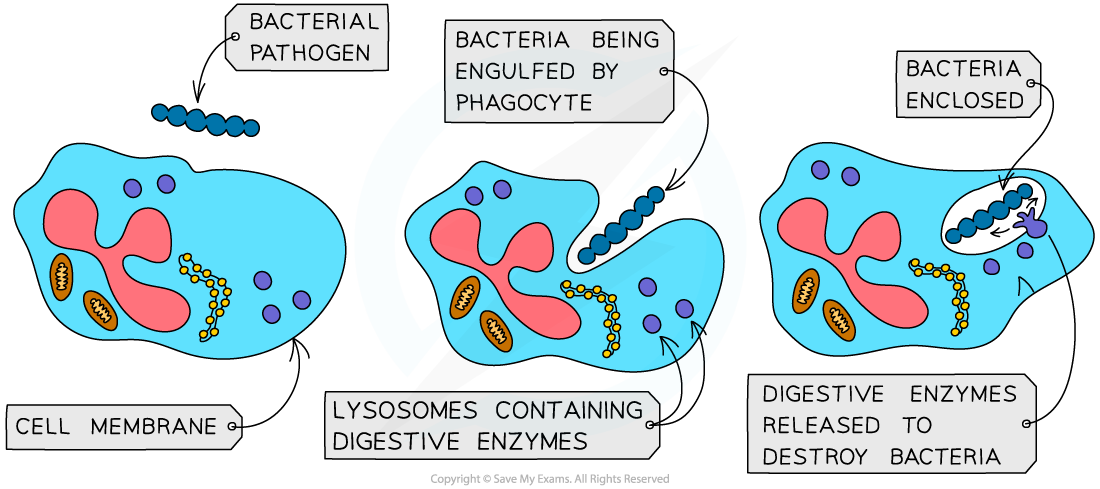
Phagocytes engulf pathogens in the process of phagocytosis, enclosing them in a phagocytic vacuole. Lysosomes fuse with the vacuole, releasing enzymes which digest the pathogen
Was this revision note helpful?