Potential Difference (Cambridge International IGCSE Science)
Potential difference
Extended Tier Only
-
Potential difference is defined as: The work done by a unit charge passing between two points in a circuit
-
Potential difference is measured in units of volts (V)
-
The potential difference between two points in a circuit is related to the amount of energy transferred between those points
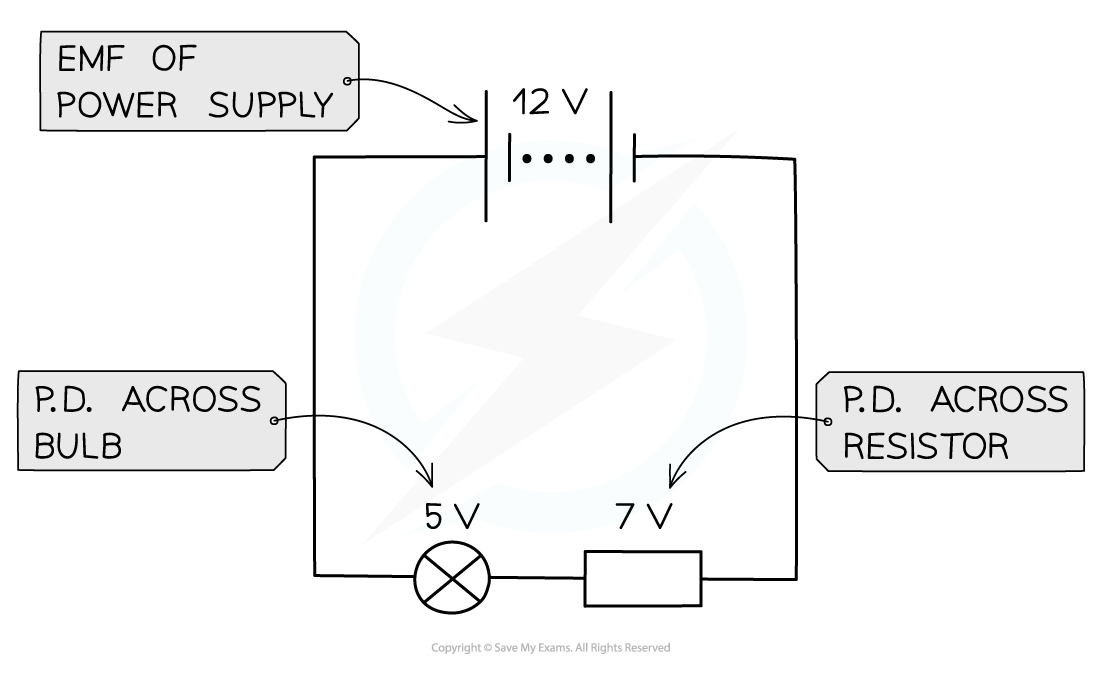
The potential difference is the difference in the electrical potential across each component: 5 volts for the bulb (on the left) and 7 volts for the resistor (on the right)
-
As electrons flow through a cell, they gain energy
- For example, in a 12 V cell, every coulomb of charge passing through gains 12 J of energy
-
As electrons flow through a circuit, they lose energy
- For example, after leaving the 12 V cell, each coulomb of charge will transfer 12 J of energy to the wires and components in the circuit
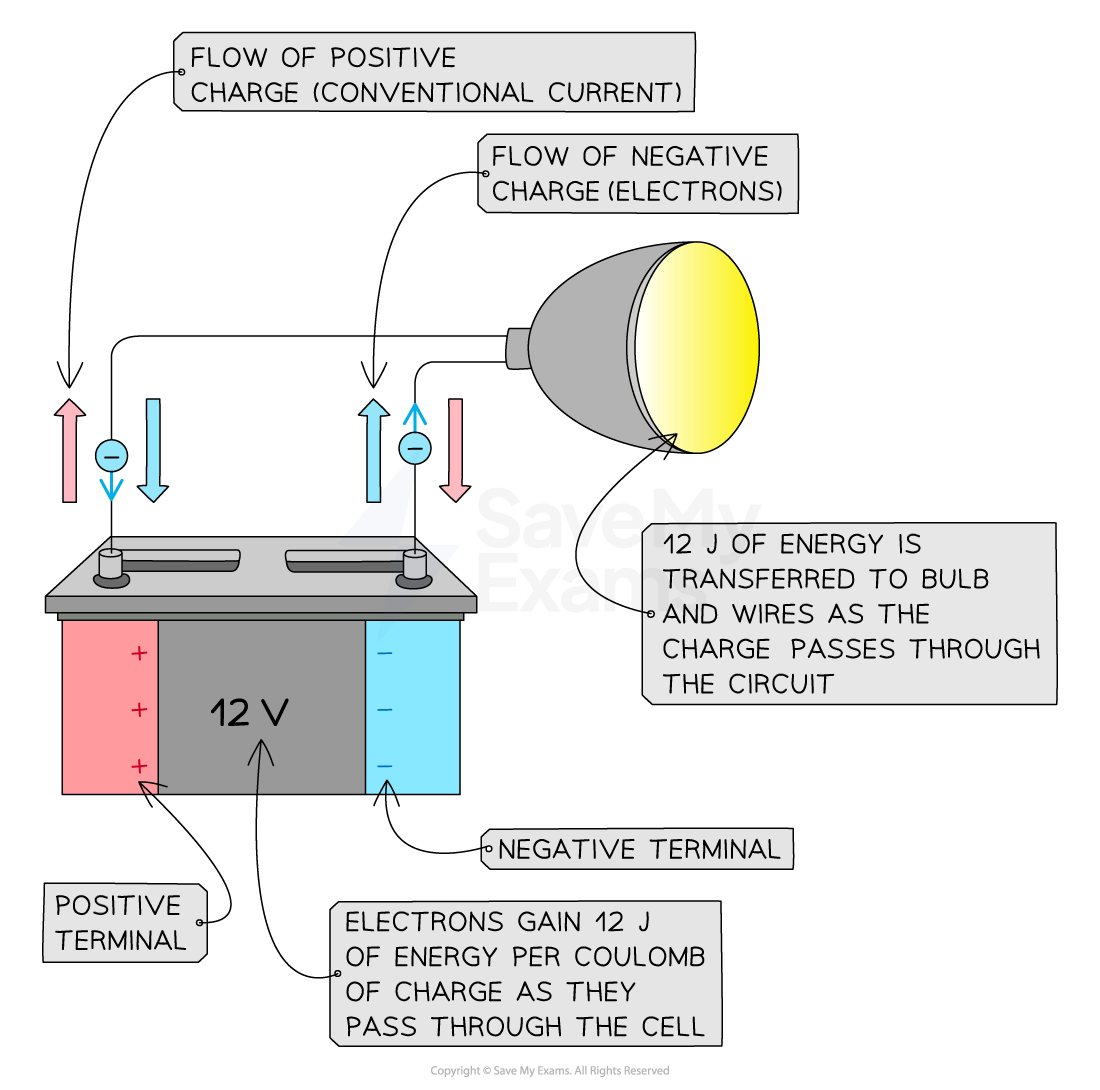
Electrons gain energy as they pass through a cell. As they flow through the light bulb, energy is transferred to the surroundings by heating and radiation
Video of Potential Difference
Was this revision note helpful?
Build on this topic