Energy from Fuels (Cambridge International IGCSE Science)
Fossil fuels
-
Fossil fuels are:
- Coal
- Natural gas (mostly methane)
- Crude oil which is refined into petrol, diesel, and other fuels
Fossil fuels
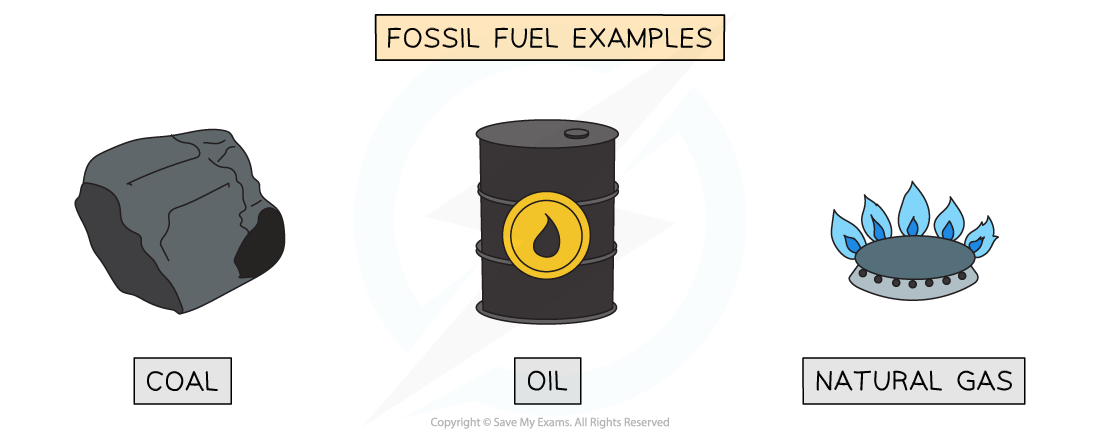
Fossil fuels: coal, oil and natural gas
- Fossil fuels are formed from the remains of plants and animals
Uses of fossil fuels
-
Fossil fuels are used for:
- Transport
- Generating electricity
- Heating
Transport
-
The majority of vehicles in the world are powered by petroleum products such as petrol, diesel and kerosene
- These resources all originate from crude oil, which is a fossil fuel
-
A growing number of vehicles are now being powered by electricity
- The advantage of this is that while the vehicle is being driven, it produces zero carbon emissions
- The disadvantage is that when the vehicle is being charged, it is connected to the National Grid, which currently uses a combination of renewable and non-renewable energy sources
Electricity generation
-
Fossil fuels, such as gas and coal, are used to produce energy on-demand when energy is needed
- The fossil fuel is burned (combusted) and used to heat water to produce steam
- The steam turns a turbine
- The turbine turns a generator, which generates electricity
- The current produced is transmitted via the National Grid
- The steam is condensed into water to be used again
Electricity generation in a coal-fired power station
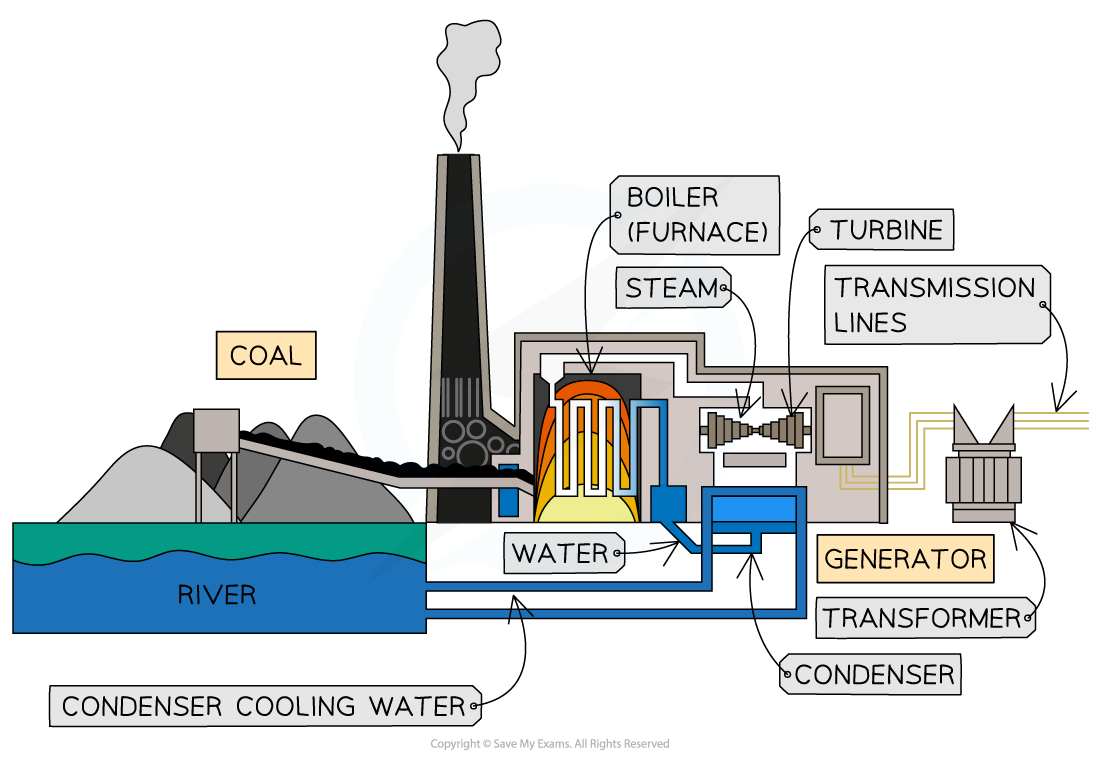
Fossil fuels are burned to heat water to produce steam. The steam turns the turbine, which turns the generator, which produces electricity.
-
Electricity plays a bigger role in people's lives than ever before
- With almost 8 billion people in the world, this means the demand for electricity is extremely high
- To keep up with this demand, a combination of all the energy resources available is needed
Global energy consumption
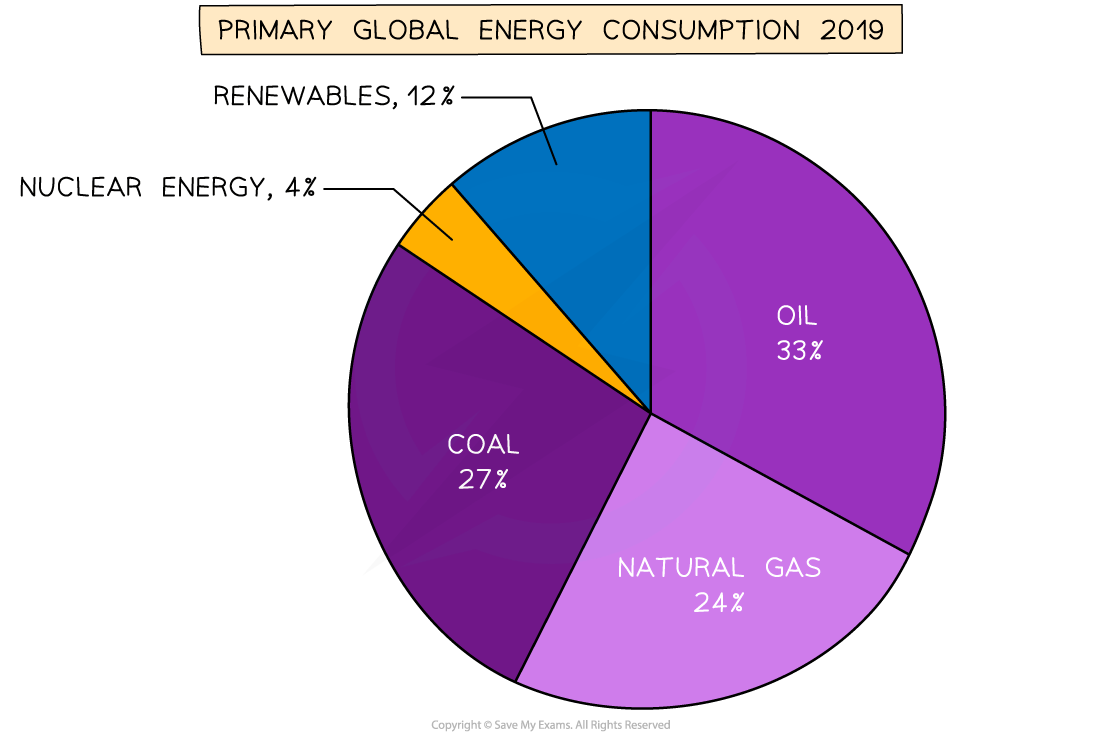
Currently, more than three quarters of the global electricity production uses fossil fuels; this is increasing the levels of atmospheric carbon dioxide, which leads to global warming
Heating
-
The majority of heating systems run on fossil fuels
- Gas central heating systems are the most common, with a gas boiler that heats water through a system of pipes and radiators throughout the building
- Boilers can also be powered by oil or biofuels
- Open fireplaces burn wood or coal
-
Electric heaters run on electricity
-
Bottled gas can also be used in portable heaters
- Bottled gas is either propane or butane which are also produced from fossil fuels
Biofuels
- Biofuels are made from plant matter
- Ethanol or methane can be produced and used in place of fossil fuels
Cycle of biofuel production and use
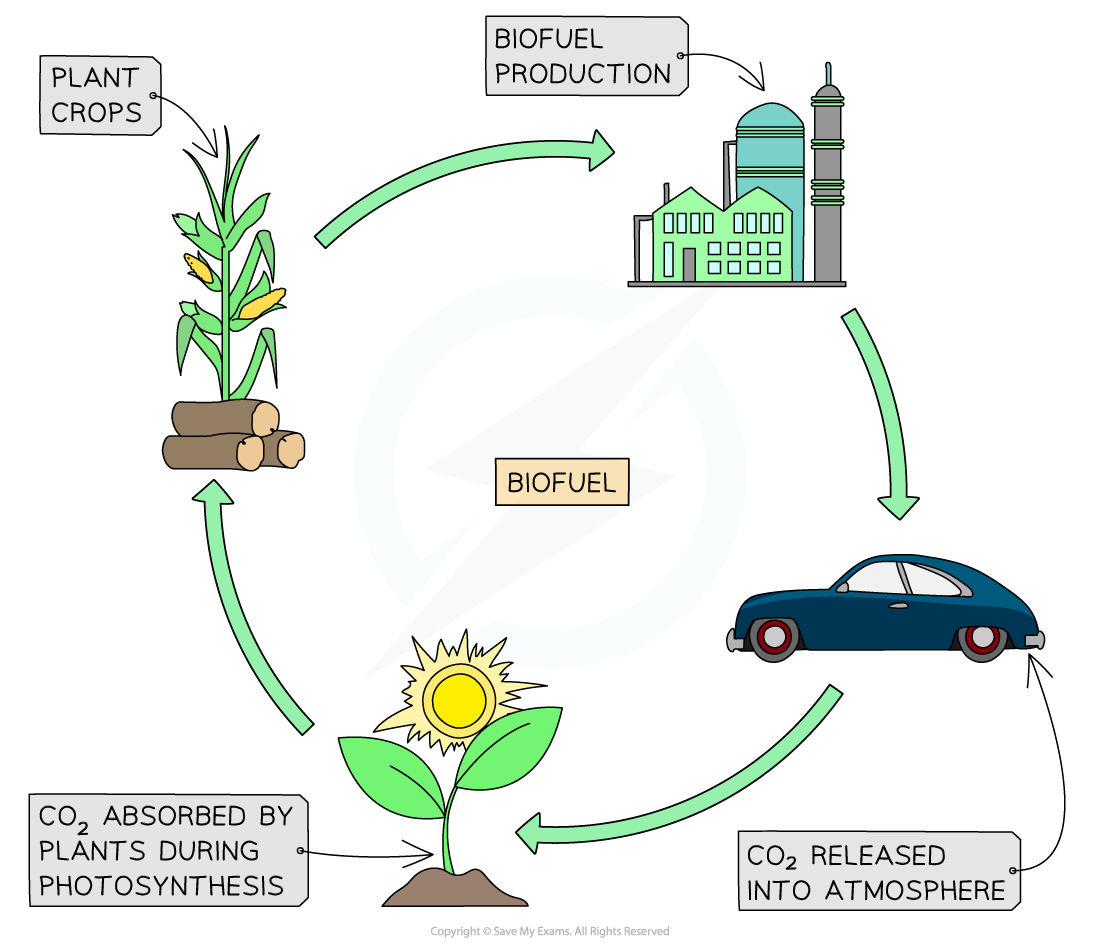
Plants take in carbon dioxide during photosynthesis, but carbon dioxide is released back into the atmosphere when biofuels are burned
Nuclear fuel
-
Energy stored in the nucleus of atoms can be released when the nucleus is broken in two
- This is known as nuclear fission
Nuclear fission
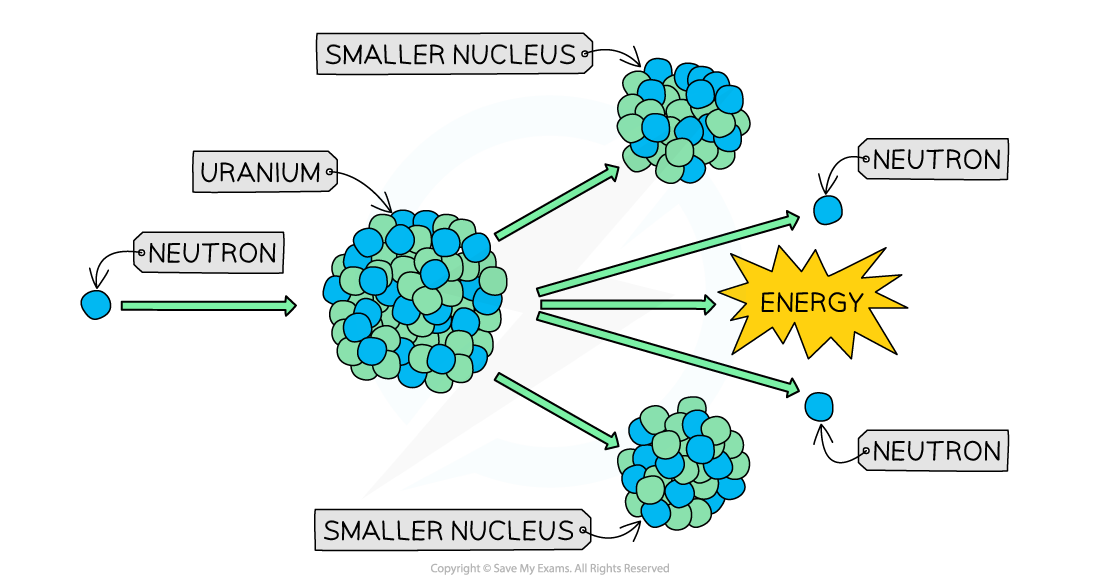
Nuclear Fission: when a large nucleus is broken into two smaller nuclei, energy is released
- Nuclear power stations use fission reactions to heat water to produce steam, to turn turbines that turn generators which generate electricity
Was this revision note helpful?
Build on this topic