Dispersion of Light (Cambridge International IGCSE Science)
Dispersion of light
-
The dispersion of light is illustrated by the refraction of white light by a glass prism
-
White light contains the wavelengths of all the colours of the spectrum
- Each colour has a different wavelength (and frequency), making up a very narrow part of the electromagnetic spectrum
-
White light may be separated into all its colours by passing it through a glass prism
- This is done by refraction
- Violet light is refracted the most, whilst red light is refracted the least
- This splits up the colours to form a spectrum
-
This process is similar to how a rainbow is created
Dispersion of light through a prism
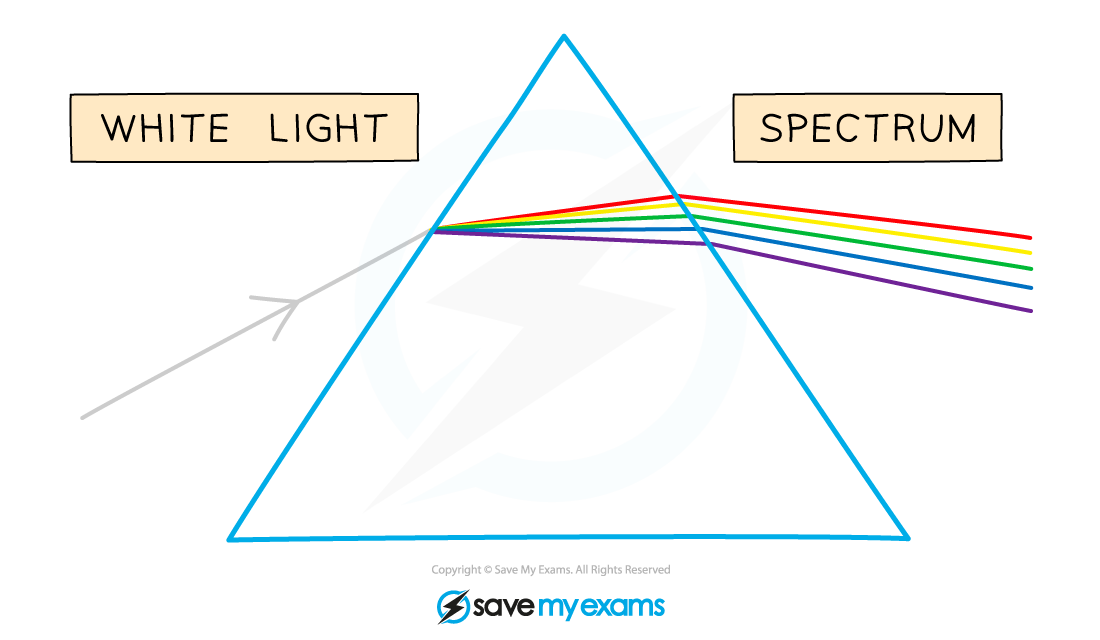
White light may be separated into all its colours by passing it through a prism
The visible spectrum of light
-
Visible light is the only part of the spectrum detectable by the human eye
- In the natural world, many animals, such as birds, bees and certain fish, can perceive beyond visible light and can see infra-red and UV wavelengths of light
-
The seven different colours of visible light waves correspond to different wavelengths
-
In order of longest wavelength and lowest frequency to shortest wavelength and highest frequency :
- Red
- Orange
- Yellow
- Green
- Blue
- Indigo
- Violet
The dispersion of light creates the seven colours of the visible spectrum
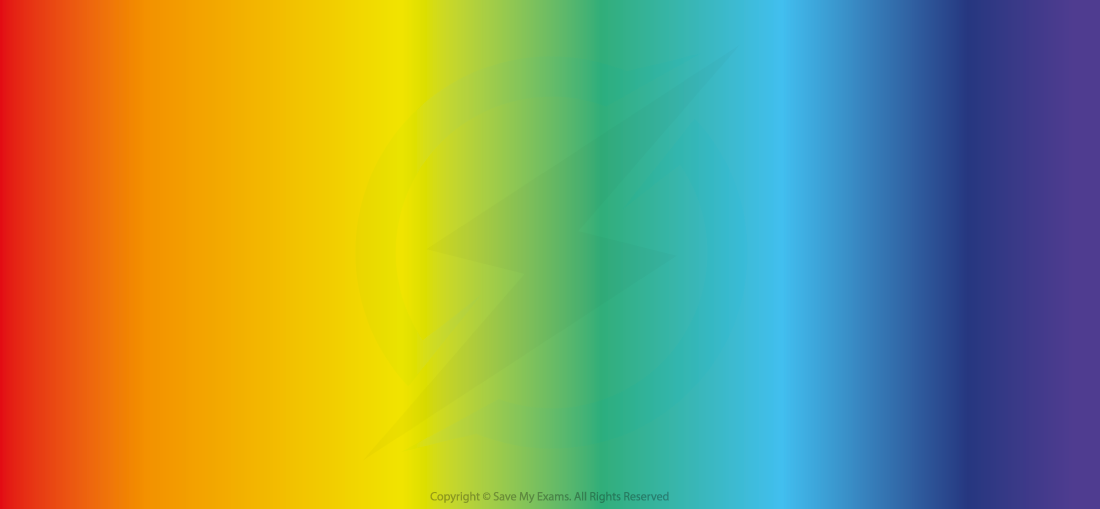

The colours of the visible spectrum: red has the longest wavelength; violet has the shortest
Exam Hint To remember the colours of the visible spectrum you could remember either:
- The name “Roy G. Biv”
- Or the saying “Richard Of York Gave Battle In Vain”
Was this revision note helpful?
Build on this topic