11 markeasy
When solid sodium chloride is mixed with water, sodium chloride solution forms.
What name is given to the process of mixing a solid with water to form a solution?
| A | Crystallising |
|---|---|
| B | Diluting |
| C | Dissolving |
| D | Melting |
Choose your answer
60 questions · 60 marks · ≈ 60 min · spans 26 of 26 topics
Assembled from the topic question banks — not an official Cambridge International paperWhen solid sodium chloride is mixed with water, sodium chloride solution forms.
What name is given to the process of mixing a solid with water to form a solution?
| A | Crystallising |
|---|---|
| B | Diluting |
| C | Dissolving |
| D | Melting |
Choose your answer
Which of the following statements is not correct?
Choose your answer
Ammonia is released when a base reacts with an ammonium salt.
Neutralisation occurs when an acid and an alkali react together.
Carbon dioxide is released when an acid and a carbonate react together.
The higher the pH of a solution, the higher its acidity.
The atomic number of element Q is 9 and its mass number is 19.
In which group of the Periodic Table should element Q be placed?
Choose your answer
Group 0
Group I
Group VII
Group II
The structures of two solids X and Y are shown below.
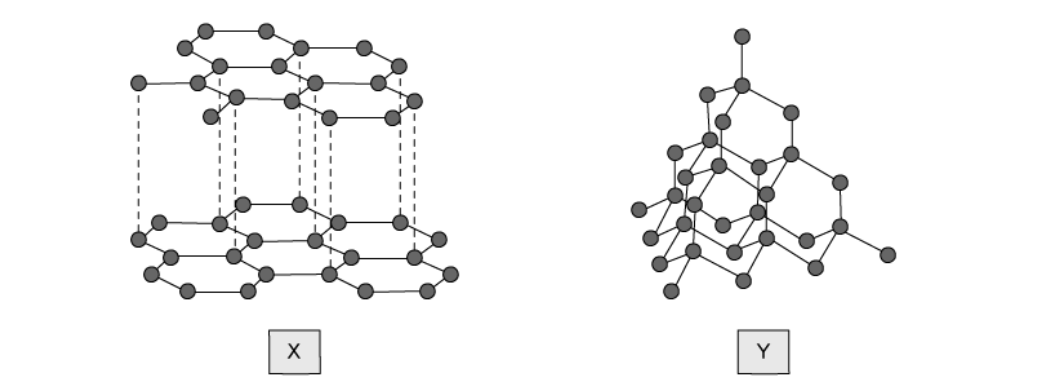
What are the correct uses of these structures?
| X | Y | |
|---|---|---|
| A | industrial lubricating | glass cutters |
| B | industrial lubricating | industrial lubricating |
| C | glass cutters | industrial lubricating |
| D | glass cutters | glass cutters |
Choose your answer
Ionic compounds are formed when metals react with nonmetals.
Which row correctly describes the electron transfer when an ionic bond is formed and the nature of the bond?
| Electron transfer | Nature of bond | |
|---|---|---|
| A | Metal to nonmetal | Opposite ions attract |
| B | Metal to nonmetal | Opposite ions repel |
| C | Metal to metal | Same ions repel |
| D | Nonmetal to metal | Opposite ions attract |
Choose your answer
Which of the following compounds are formed by covalent bonding?
| 1 | Potassium fluoride |
|---|---|
| 2 | Propane |
| 3 | Carbon dioxide |
| 4 | Lithium bromide |
Choose your answer
2 and 3
2 and 4
1, 2 and 3
1 and 4
The table shows the change in temperature of four different reactions W, X, Y and Z.
| initial temperature / °C | final temperature / °C | |
|---|---|---|
| W | 10 | 20 |
| X | 23 | 25 |
| Y | 15 | 13 |
| Z | 22 | 12 |
Which row is correct?
Choose your answer
W is the most exothermic reaction.
W and X are endothermic reactions.
Z is the most exothermic reaction.
Y and Z are exothermic reactions.
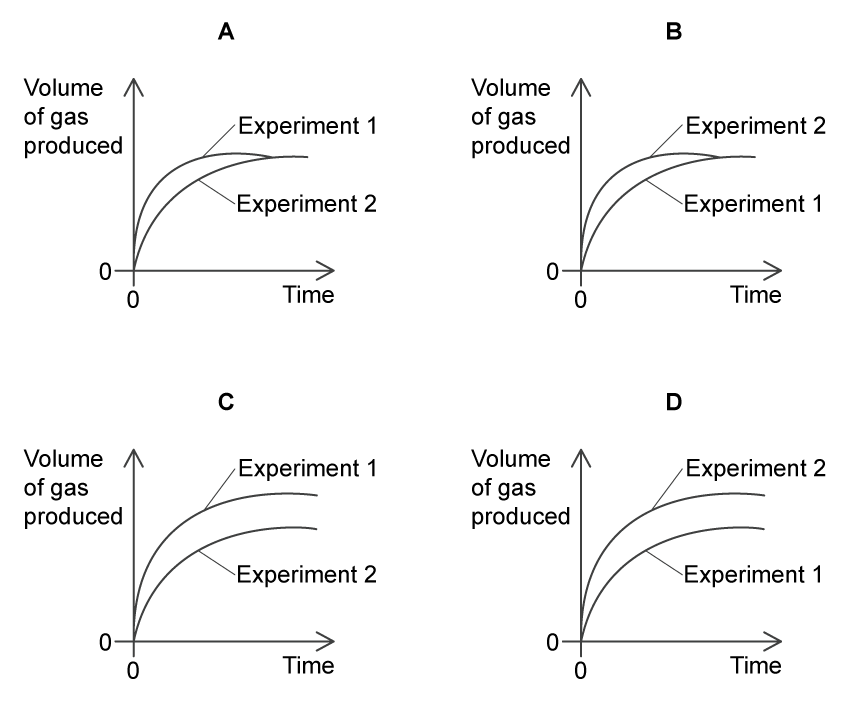
A student investigates the effect of temperature on the rate of a reaction.
In Experiment 1, the reaction is performed at 10 °C. In Experiment 2, the reaction is repeated at 20 °C. All other conditions stay the same.
Which graph shows the results for the volume of gas produced against time?
Choose your answer
c
A series of redox reactions are shown. What is the oxide that undergoes oxidation?
| 1 | 2CO + 2NO → 2CO2 + N2 |
|---|---|
| 2 | Fe2O3 + 2Al → Al2O3 + 2Fe |
| 3 | 2ZnO + C → 2Zn + CO2 |
| 4 | Fe2O3 + 3CO → 2Fe + 3CO2 |
Choose your answer
CO
C
NO
Fe2O3
Which strategy for reducing the effect of environmental issues would not help reduce climate change?
Choose your answer
Reduce the amount of livestock farming
Plant more trees
Fit catalytic convertors on vehicles
Use renewable energy resources
Which row correctly identifies the substance based on the experiment and observations carried out?
| Experiment | Observations | Identity of bold substance | |
|---|---|---|---|
| A | Pink crystals are heated | The crystals turn blue and steam is given off | anhydrous cobalt(II) chloride |
| B | Water is added to a white solid | The white solid turns blue | anhydrous copper(II) sulfate |
| C | Blue crystals are heated | The crystals turn white and steam is given off | anhydrous cobalt(II) chloride |
| D | Water is added to a blue solid | The blue solid turns pink | hydrated copper(II) sulfate |
Choose your answer
Three statements about the electrolysis of molten lead (II) bromide are listed.
Which statements are correct?
Choose your answer
1, 2 and 3
2 only
2 and 3 only
3 only
A student dissolved ammonium chloride in water when investigating energy changes in reactions.
Which terms best describes each substance?
| ammonium chloride | water | |
|---|---|---|
| A | solute | solvent |
| B | solvent | solution |
| C | solution | solvent |
| D | solute | solution |
Choose your answer
A student analysed a solution and found it to contain ions of silver and barium. What could the identity of the anion be?
Choose your answer
Nitrate
Sulfate
Chloride
Carbonate
The diagram below shows the apparatus a student used to separate a product from a reaction mixture.
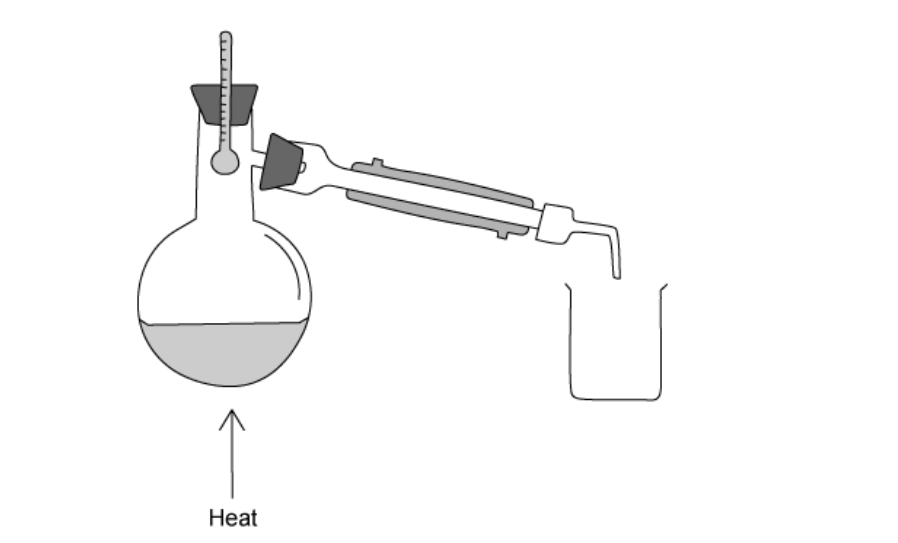
What did the mixture contain?
Choose your answer
Aqueous sodium chloride and unreacted solid catalyst
Water and ethanol
Water and oil
Aqueous sodium chloride and oil
Extended tier only
The blast furnace is used to extract iron from haematite.
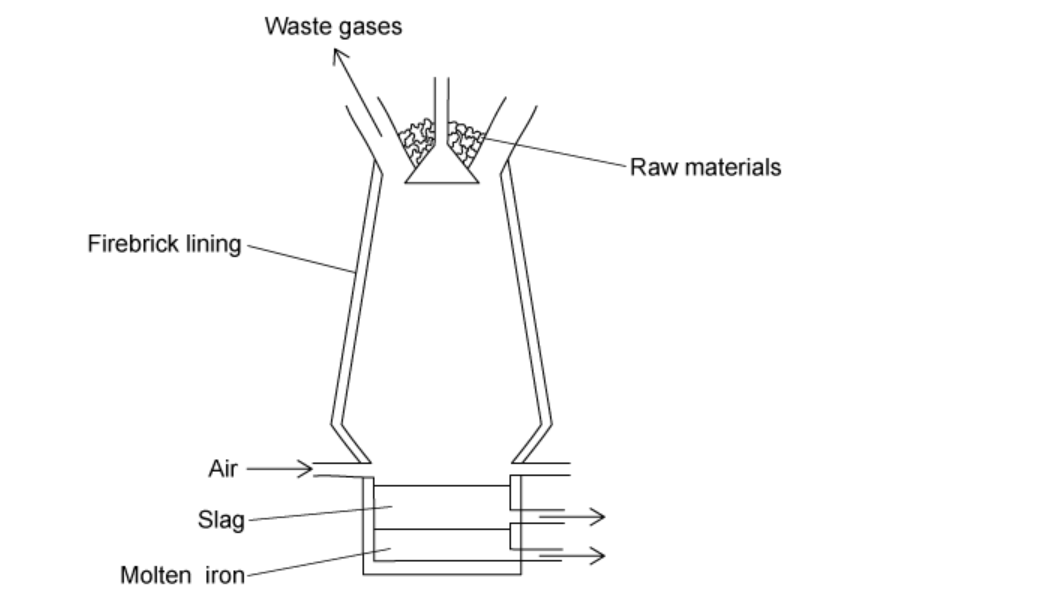
The haematite contains silica as an impurity
What is used to react with the impurity and remove it?
Choose your answer
Carbon
Calcium oxide
Carbon dioxide
Oxygen
Brass is an alloy of two metals.
Which row describes the correct use of the two metals that brass is made from?
| metal 1 | metal 2 | |
|---|---|---|
| A | galvanising steel | making aircraft |
| B | electrical wiring | galvanising steel |
| C | making aircraft | making cutlery |
| D | making cooking pans | electrical wiring |
Choose your answer
Q, R and S are metals.
| Metal | Reacts with cold water | Reacts with steam | Reacts with dilute hydrochloric acid |
|---|---|---|---|
| Q | yes | yes | violently |
| R | very slowly | slowly | less strongly |
| S | no | no | no |
What are the possible identities of the metals Q, R and S?
| Q | R | S | |
|---|---|---|---|
| A | Potassium | Iron | Magnesium |
| B | Sodium | Zinc | Copper |
| C | Silver | Aluminium | Iron |
| D | Calcium | Copper | Gold |
Choose your answer
The diagram shows the structure of ethene.

Which of these compounds has similar chemical properties of ethene?
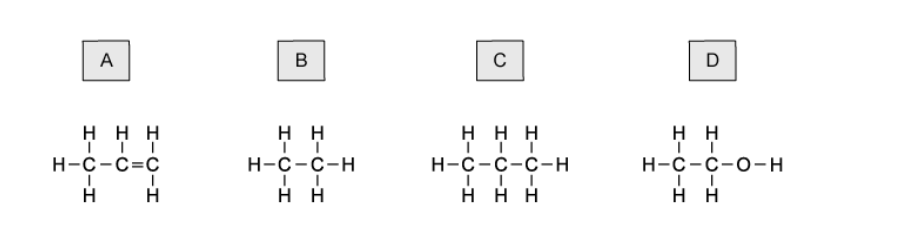
Choose your answer
Which of the following statements about ethanol is not correct?
Choose your answer
It is formed by a reaction between steam and ethane.
It can be used as a fuel.
It can be used as a solvent.
Its functional group is -OH.
Extended tier only
The structure of a synthetic polymer is shown.
The structure shows the synthetic polymer is a ......1...... . It is formed by ......2...... polymerisation.

Which words complete gaps 1 and 2?
| 1 | 2 | |
|---|---|---|
| A | polyamide | addition |
| B | polyamide | condensation |
| C | polyester | addition |
| D | polyester | condensation |
Choose your answer
Extended tier only
The rate of diffusion of two gases, methane, CH4, and propene, C3H6, is measured using the apparatus shown.
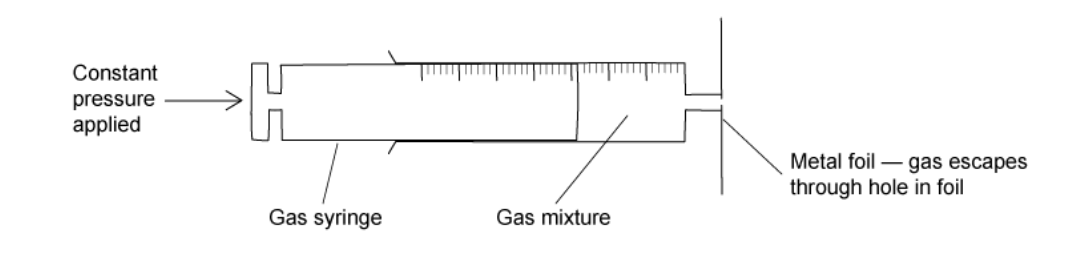
Which gas diffuses at a faster rate and why?
| Fastest gas | Reason | |
|---|---|---|
| A | Propene | Propene molecules are heavier and so move faster. |
| B | Methane | Methane is a lighter molecule. |
| C | Propene | Propene is unsaturated so is more reactive. |
| D | Methane | Methane molecules are smaller so fit through the hole more easily. |
Choose your answer
Extended tier only
Nitric acid and potassium hydroxide react in a neutralisation reaction to produce salt and water, as shown by the equation below:
HNO3(aq) + KOH(aq) → KNO3(aq) + H2O(l)
Which row describes the spectator ions and the net ionic equation for the reaction?
| spectator ions | net ionic equation | |
|---|---|---|
| A | NO3- and K+ | NO3-(aq) + K+(aq) → KNO3(aq) |
| B | H+ and OH- | NO3-(aq) + K+(aq) → KNO3(aq) |
| C | NO3- and K+ | H+(aq) + OH-(aq) → H2O(l) |
| D | H+ and OH- | H+(aq) + OH-(aq) → H2O(l) |
Choose your answer
Extended tier only
Magnesium nitride and water react to produce a precipitate of magnesium hydroxide and ammonia gas.
Mg3N2 + 6 H2O → 3 Mg(OH)2 + 2 NH3
How much magnesium nitride is needed to produce 87 g of the precipitate in excess water?
Choose your answer
24 g
50 g
30 g
12 g
Which row describes the properties of fluorine?
| colour | state at r.t.p | more reactive than chlorine | |
|---|---|---|---|
| A | yellow | gas | yes |
| B | green | gas | no |
| C | brown | liquid | no |
| D | brown | gas | yes |
Choose your answer
Which row describes how the elements are positioned on the Periodic table and the names used?
| elements placed by | group | period | |
|---|---|---|---|
| A | atomic number | vertical column | horizontal row |
| B | mass number | vertical column | horizontal row |
| C | atomic number | horizontal row | vertical column |
| D | mass number | horizontal row | vertical column |
Choose your answer
A student wanted to prepare copper(II) sulfate crystals by reacting solid copper(II) oxide to a solution of hot sulfuric acid.
An extract from the method section of the experimental handout is shown below:
Add the copper(II) oxide in small amounts to the hot acid in the reaction flask and stir until it is …..1…... When the reaction has gone to completion the copper(II) oxide will no longer …..2……, …..3….. and …..4….. the solution to obtain the copper(II) sulfate crystals.
| 1 | 2 | 3 | 4 | |
|---|---|---|---|---|
| A | in excess | precipitate | cool | dissolve |
| B | in excess | dissolve | filter | cool |
| C | reacting | dissolve | cool | filter |
| D | reacting | precipitate | filter | cool |
Choose your answer
Most insect bites cause a stinging sensation because of the injection of a weak acid into the surface of the skin. Which substance could be used to neutralise the acid from an insect bite?
| substance | pH | |
|---|---|---|
| A | battery acid | 1 |
| B | toothpaste | 8 |
| C | grill cleaner | 13 |
| D | lime juice | 3 |
Choose your answer
Two atoms, X and Y can be represented as shown
X _ 3 ^ 7 Y _ 3 ^ 8
Which row is correct for both atoms?
| electron configuration of X | electron configuration of Y | Is Y an isotope of X? | |
|---|---|---|---|
| A | 2,1 | 2,1 | Yes |
| B | 2,1 | 2,6 | Yes |
| C | 2,5 | 2,1 | No |
| D | 2,5 | 2,6 | No |
Choose your answer
Statements 1, 2 and 3 are about diamond and graphite.
1 They have atoms that form three equally strong bonds
2 They each conduct electricity
3 They are both formed from the same element
Which statements are not correct?
Choose your answer
1 only
2 only
1 and 3
1 and 2
One magnesium atom reacts with two chlorine atoms to form the ionic compound, MgCl2.
Which row shows the correct electron change taking place for chlorine and the correct formula of the ion formed?
| electron change | formula of ion formed | |
|---|---|---|
| A | electron lost | Cl- |
| B | electron gained | Cl2- |
| C | electron gained | Cl- |
| D | electron lost | Cl2- |
Choose your answer
Extended tier only
A student has drawn a dot and cross diagram to represent a molecule of ethene, C2H4, as shown below.
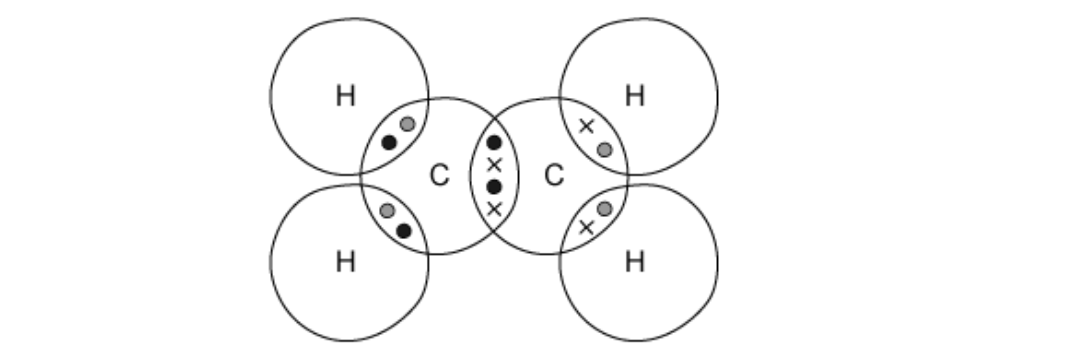
What is wrong with the students drawing?
Choose your answer
The number of electrons shared between the carbon atoms is incorrect.
The number of electrons shared between each carbon and hydrogen is incorrect.
There is nothing wrong with the drawing.
The total number of electrons shared is incorrect.
Extended tier only
In all chemical reactions, bonds in the reactant species are broken and new bonds are formed in the products. Which statement is correct?
Choose your answer
Bond breaking requires energy and is thus an exothermic process.
Bond breaking requires energy and is thus an endothermic process.
Bond breaking releases energy and is thus an exothermic process.
Bond breaking releases energy and is thus an endothermic process.
A student was investigating the rate of reaction between iron and a solution of sulfuric acid. Two experiments were performed, P and Q, in which the volume of hydrogen was recorded at regular intervals.
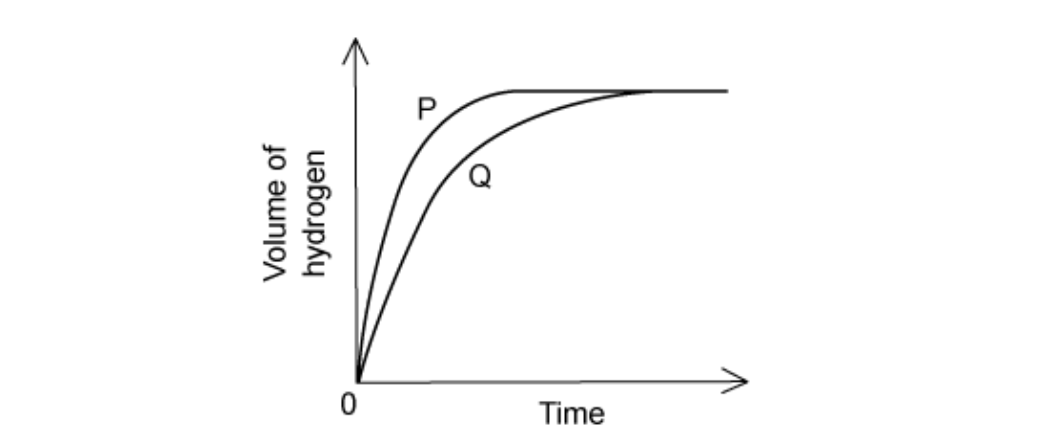
Which change could explain the difference in results between P and Q?
Choose your answer
The student added a catalyst in P.
Larger pieces of iron were used in P.
Less concentrated acid was used in P.
Larger quantities of both reactants are used P.
Lead(II) oxide undergoes a number of different redox reactions.
In which of the following reactions is lead(II) oxide, PbO, not reduced?
Choose your answer
PbO + Zn → Pb + ZnO
PbO + H2 → Pb + H2O
PbO + C → Pb + CO
2PbO + O2 → 2PbO2
Nitrogen dioxide, sulfur dioxide and carbon monoxide are all air pollutants. Which row correctly describes the major source of each pollutant?
| NO2 | SO2 | CO | |
|---|---|---|---|
| A | car engines | power stations | respiration |
| B | power stations | car engines | car engines |
| C | respiration | power stations | car engines |
| D | car engines | power stations | car engines |
Choose your answer
Which is the correct reason for carrying out each step when treating water?
| Adding carbon | Chlorination | Sedimentation | |
|---|---|---|---|
| A | kill microbes | remove salts | remove solids |
| B | remove salts | remove odours | kill microbes |
| C | remove odours | kill microbes | remove solids |
| D | remove odours | remove solids | remove salts |
Choose your answer
Dilute sulfuric acid is electrolysed using inert electrodes.
What are the products of this electrolysis?
| cathode | anode | |
|---|---|---|
| A | oxygen | sulfur |
| B | hydrogen | sulfur dioxide |
| C | oxygen | hydrogen |
| D | hydrogen | oxygen |
Choose your answer
Why is it important to fill the space below the tap in a burette with acid or alkali before beginning a titration?
Choose your answer
To give a more accurate result
The burette's scale does not include this volume
To give concordant results
An incorrect volume would be recorded
Halide ions in solution are detected using silver nitrate solution. Dilute nitric acid is used to acidify the solution first and then a few drops of silver nitrate solution are added. Each halide produces a different coloured silver halide precipitate.
Which row correctly describes the colour of the precipitate for each halide?
| chloride | bromide | iodide | |
|---|---|---|---|
| A | cream | white | silver |
| B | yellow | cream | white |
| C | white | cream | silver |
| D | white | cream | yellow |
Choose your answer
Solid P melts at exactly 60oC and boils at exactly 310oC. Solid Q dissolves in ethanol and shows a green colour and a yellow colour when analysed using paper chromatography.
Which row is correct?
| Contains only one substance | Contains more than one substance | |
|---|---|---|
| A | Q | P |
| B | Q | - |
| C | - | Q |
| D | P | Q |
Choose your answer
The three statements about aluminium are all correct.
| 1 | Aluminium has an oxide ore. |
|---|---|
| 2 | Aluminium is extracted from its ore by electrolysis. |
| 3 | Aluminium is used to make cooking utensils. |
Which of the statements would still be correct if aluminium was replaced with iron?
| 1 | 2 | 3 | |
|---|---|---|---|
| A | ✓ | ✓ | |
| B | ✓ | ✓ | |
| C | ✓ | ✓ | ✓ |
| D | ✓ |
Choose your answer
Which diagram shows an alloy?
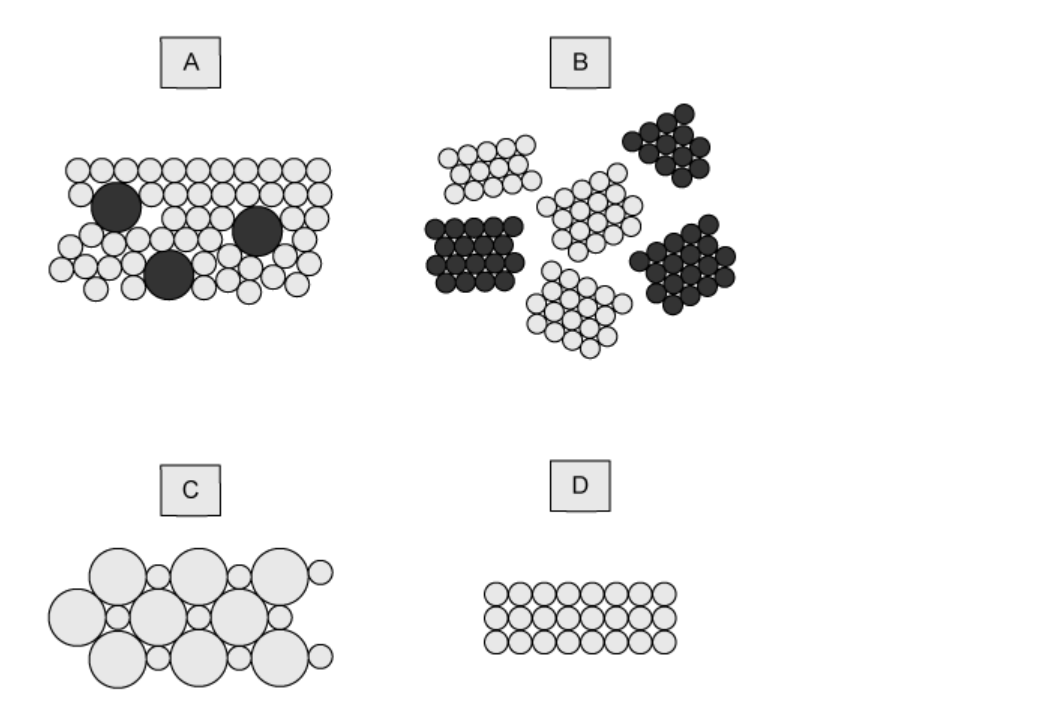
Choose your answer
Which word equation represents the rusting of iron?
Choose your answer
iron + water + hydrogen → hydrated iron(III) oxide
iron + water + oxygen → hydrated iron(III) oxide
iron + water + hydrogen → hydrated iron(II) oxide
iron + water + oxygen → hydrated iron(II) oxide
The diagram below shows some simple hydrocarbons and the products of two reactions.
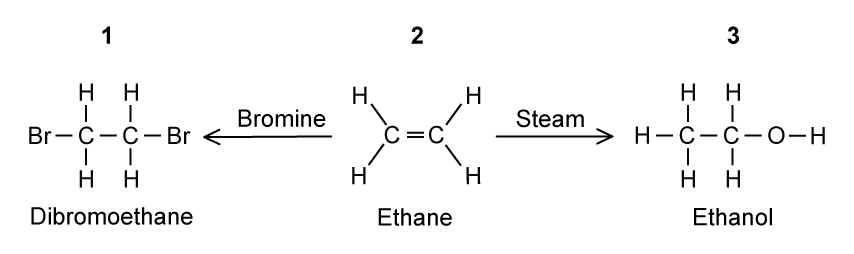
Which of these structures are named correctly?
| Structure 1 | Structure 2 | Structure 3 | |
|---|---|---|---|
| A | x | ✔ | ✔ |
| B | ✔ | ✔ | ✔ |
| C | x | ✔ | x |
| D | ✔ | x | ✔ |
Choose your answer
Petroleum is separated into fractions by fractional distillation.
Which statement about the properties of the fractions is correct?
Choose your answer
The boiling point of the fractions decreases as the number of carbon atoms in the molecules increases.
Fractions containing smaller molecules are collected at the bottom of the column where the temperature is highest.
The viscosity of the fractions increases as the chain length increases because the intermolecular forces become stronger.
Fractions with longer carbon chains are used as refinery gas because they are more volatile.
Extended tier only
Which process does not produce carbon dioxide?
Choose your answer
Combustion of methane
Fermentation of sugar
Polymerisation of ethene
Respiration
Extended tier only
Hydrogen chloride and ammonia are gases which are given off by cotton wool soaked in concentrated solutions and placed at either end of a glass tube as shown.
When the gases react together they produce ammonium chloride, a white solid.
Which line on the diagram correctly shows where the ammonium chloride is formed?
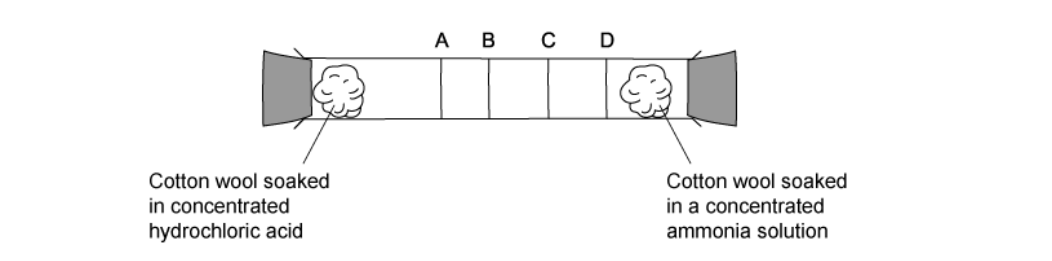
Choose your answer
Extended tier only
What is the balanced equation for the reaction of methane and oxygen?
Choose your answer
CH4(g) + 2 O2(g) → CO2(g) + H2O(g)
CH4(g) + O2(g) → CO2(g) + 2 H2O(g)
2 CH4(g) + 4 O2(g) → 2 CO2(g) + H2O(g)
CH4(g) + 2 O2(g) → CO2(g) + 2 H2O(g)
Calcium carbonate undergoes thermal decomposition at high temperatures to form calcium oxide and carbon dioxide.
CaCO3 → CaO + CO2
What mass of calcium oxide (Mr = 56) is formed when 60 g of calcium carbonate (Mr = 100) is completely decomposed?
Choose your answer
28 g
18.5 g
60 g
33.6 g
Which of the following observations does not apply to Group I elements?
Choose your answer
They are relatively soft metals.
They corrode quickly when exposed to air.
They react very quickly with water releasing hydrogen gas
They produce acidic solutions in reaction with water.
The table shows the densities at room temperature of halogens W, X, Y and Z
| halogens | density at room temperature / g/cm3 |
|---|---|
| W | 0.0017 |
| X | 3.1 |
| Y | 0.0032 |
| Z | 4.93 |
Which row correctly identifies W, X, Y and Z?
| W | X | Y | Z | |
|---|---|---|---|---|
| A | fluorine | chlorine | bromine | iodine |
| B | fluorine | bromine | chlorine | iodine |
| C | iodine | chlorine | bromine | fluorine |
| D | iodine | bromine | chlorine | fluorine |
Choose your answer
c
When an aqueous salt is crystallised, some water can be retained within the structure of the salt.
What is the name given to the type of salt that forms?
| A | anhydrous salt |
|---|---|
| B | dehydrated salt |
| C | hydrated salt |
| D | soluble salt |
Choose your answer
A student was given an unknown substance and asked to analyse it. The student decided to perform three tests and recorded the results as shown below.
| 1 | On heating with ammonium chloride a gas is released. |
|---|---|
| 2 | The substance turns methyl orange yellow. |
| 3 | The substance does not react with potassium carbonate. |
What kind of substance was the student given?
Choose your answer
A salt
A metal
A base
An acid
Element X contains 4 electrons in its outer shell and 125 neutrons in its nucleus. What is element X?
Choose your answer
Beryllium
Carbon
Tin
Lead
Silicon(IV) oxide and phosphorus oxide (P2O5) are oxides of elements in Period 3 of the Periodic Table.
Which row describes the correct properties of these two oxides?
| nature of the oxides | type of bonding | melting point of silicon(IV) oxide | melting point of phosphorus(V) oxide | |
|---|---|---|---|---|
| A | acidic | covalent | high | low |
| B | acidic | covalent | low | low |
| C | basic | ionic | high | low |
| D | basic | ionic | low | low |
Choose your answer
Magnesium is a Group II element and chlorine is a Group VII element.
These elements react together to form an ionic compound.
Which row is correct?
| Mg electron change | Mg ion formed | Formula of compound | |
|---|---|---|---|
| A | gain | Mg2+ | Mg2Cl |
| B | gain | Mg+ | MgCl2 |
| C | lost | Mg2+ | MgCl2 |
| D | lost | Mg+ | Mg2Cl2 |
Choose your answer
Extended tier only
The structure of propane is shown below
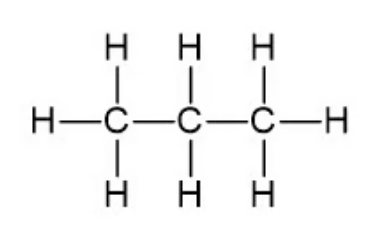
Which correctly explains why propane can not conduct electricity?
Choose your answer
There are weak intermolecular forces between molecules of propane
The covalent bonds in propane are strong
There are no free electrons able to move and carry a charge
Propane has a low boiling point
Endothermic reactions can be used in emergency sports injury treatment packs.
What is true about these packs?
Choose your answer
Absorb energy from the surroundings and transfer it to the injury
Can be re-used
Usually contain ammonium nitrate and water in separate compartments
Cause the temperature of the surroundings to increase
Extended tier only
Which of the following statements correctly describes the effects of increasing concentration on the rate of a reaction?
Choose your answer
Increasing the concentration increases the rate of reaction as there are more successful collisions between particles per unit time.
Increasing the concentration increases the rate of reaction as there is more space between particles.
Increasing the concentration increases the rate of reaction as there are more collisions between particles per unit time.
Increasing the concentration increases the rate of reaction as there are more collisions between particles at the beginning of the reaction.