Key Features of a Synagogue (Cambridge International IGCSE Religious Studies)
What is Aron ha-kodesh?
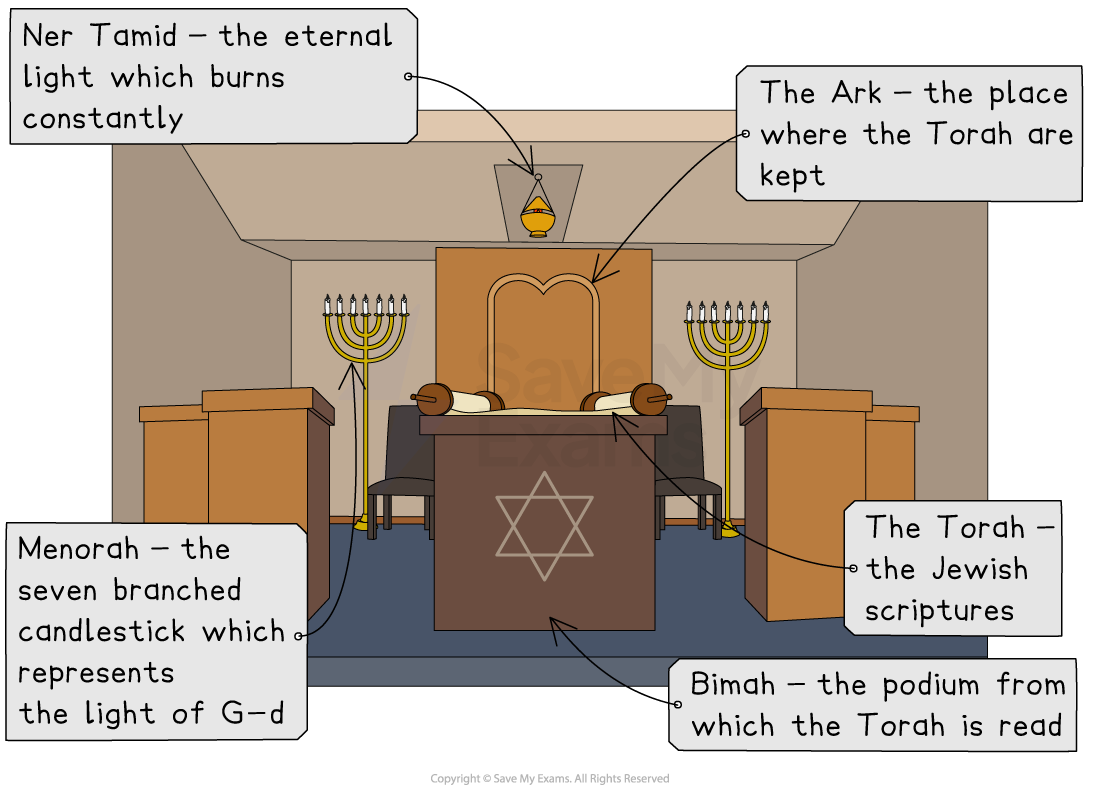
Features of a synagogue
Aron ha-kodesh
-
All synagogues have a large cupboard facing Jerusalem called the Aron ha-kodesh
-
This is the holiest place in the synagogue
- It is the centrepiece of the synagogue and holds the Torah scrolls that contain the first five books of the Hebrew Bible
- It is usually located on the eastern wall of the synagogue, facing Jerusalem
- It often has a curtain or door in front of it called the parochet, similar to the curtain in the ancient Temple in Jerusalem
Why is the Aron-ha-kodesh significant?
-
The Aron ha-kodesh is extremely significant within the Jewish faith
- It symbolises the Ark of the Covenant, which held the stone tablets of the Ten Commandments in the time of Moses
- It represents the holiness of the **Torah **and G-d’s presence
- It reminds Jews**** of the Temple in Jerusalem
- Standing and showing respect when the Ark is opened is an important part of many services
What is the Sefer Torah?
-
The Sefer Torah is a scroll kept inside the Aron ha-kodesh
- It is written by a sofer (scribe) on parchment made from animal skin, using a quill and special ink and covered with a mantle or cloth that is ornately decorated
- It can take over a year to complete a single scroll because even a single mistake can make it invalid
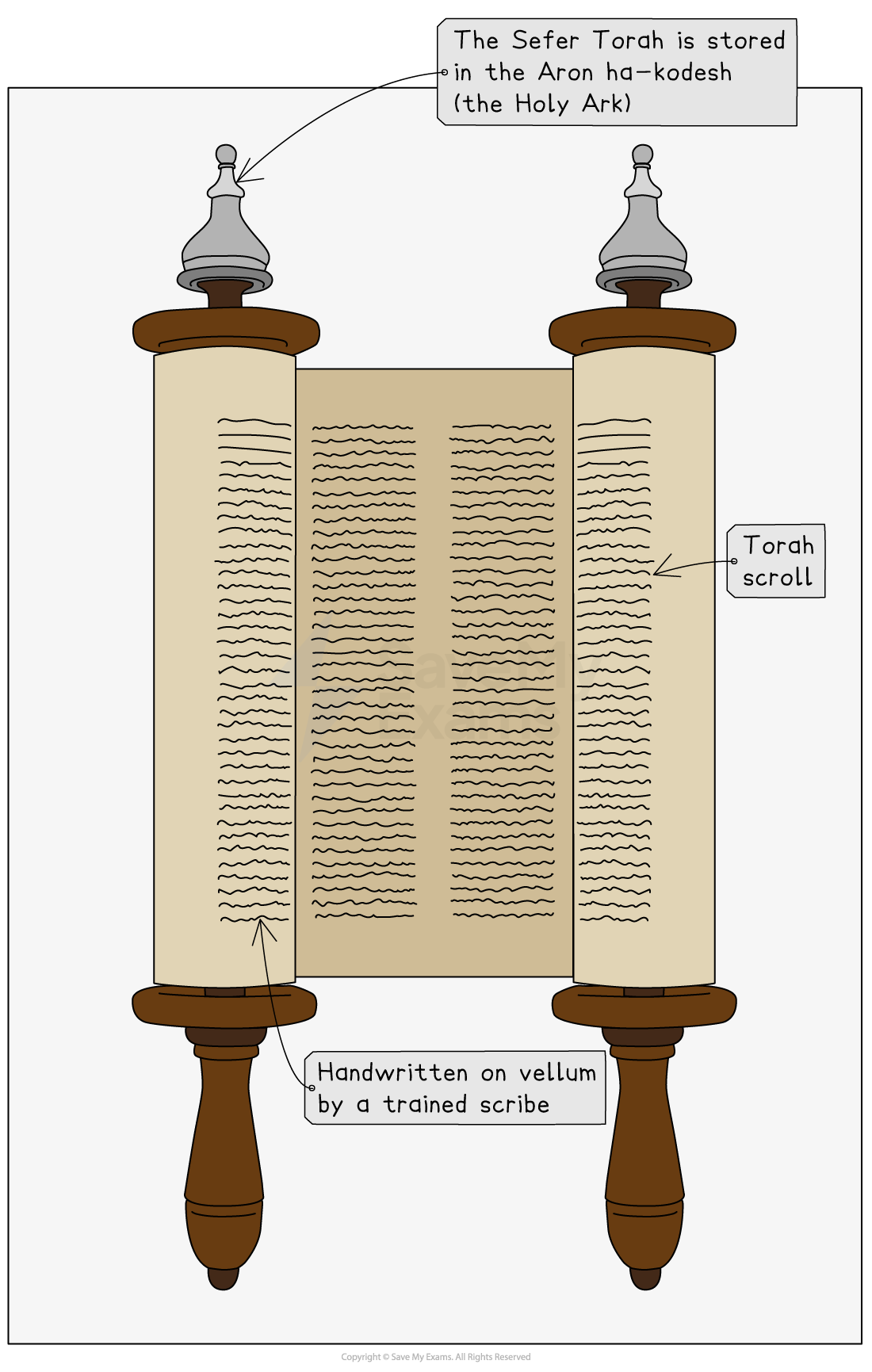
The Sefer Torah
Why is the Sefer Torah important?
-
The Sefer Torah is considered to be the word of G-d, given to Moses on Mount Sinai
-
It is used within Jewish worship on several occasions
-
The Sefer Torah is read publicly during synagogue services on certain days
- Shabbat (Saturday)
- Mondays and Thursdays
- Jewish festivals
-
-
Jews show great respect to the Torah
- They stand when it is carried
- It is dressed in a mantle (cloth cover) with decorations such as a crown (keter) and a breastplate
- Readers of the Torah use a yad because the Torah is never touched directly
- The yad is used by the reader to indicate their place during a reading of the Torah, which happens during prayer or on holy days such as Sukkot

A yad
The Bimah and the Ner Tamid
What is the bimah?
-
The bimah is a raised platform with a reading desk
- From here, the Sefer Torah is read
- The bimah represents the altar in the Temple
- The bimah is usually located in the centre of the synagogue in Orthodox synagogues and often closer to the **front **in Reform synagogues
- The Torah scroll is placed on a reading desk on the bimah**** during public readings (especially on Shabbat and festivals)
What is the importance of the bimah?
-
The bimah raises the Torah physically above the congregation, symbolising the authority of G-d’s word
- Reading from the bimah allows the congregation to see and hear the Torah being read, reinforcing communal worship
- It reflects the layout of the ancient Temple in Jerusalem, where readings were done from an elevated place
What is the Ner Tamid?
-
The Ner Tamid is a light above the Aron Hakodesh that never goes out
-
Ner Tamid means “eternal flame” in Hebrew
- It is never extinguished, showing that G-d’s presence is constant
-
-
It represents the order from scripture, which reads:
blockquote “And thou shalt command the children of Israel, that they bring thee pure oil olive beaten for the light, to cause the lamp to burn always” (Exodus 27:20)
What is the importance of the Ner Tamid?
-
The Ner Tamid is a symbol of G-d’s eternal presence
-
The light reminds Jews that G-d is always present, watching over them
-
It reflects the belief in an eternal and unchanging G-d
-
The Ner Tamid is also a reminder of the Temple in Jerusalem
- It represents the menorah that burned constantly in the Temple
- It keeps the memory of the Holy Temple alive in Jewish worship
-
It also has a spiritual focus for Jewish people
- It creates a holy atmosphere in the synagogue
- It also encourages respect, reverence and reflection during prayer
The Ten Commandments
What are the Ten Commandments?
-
After Moses led the Israelites out of Egypt, he took them through the desert
-
One day, Moses went alone up a mountain(Mount Sinai)
- This is when G-d revealed to Moses the 613 commandments that Jews are expected to follow, including the Ten Commandments
- G-d spoke to Moses through a burning bush
-
Many Jews(mainly Orthodox Jews) also believe that Moses was given the Oral Torah, which was passed down by word of mouth to help people interpret the Written Torah
- Moses was also given the Ten Commandments to teach the children of Israel about the most important rules to live by
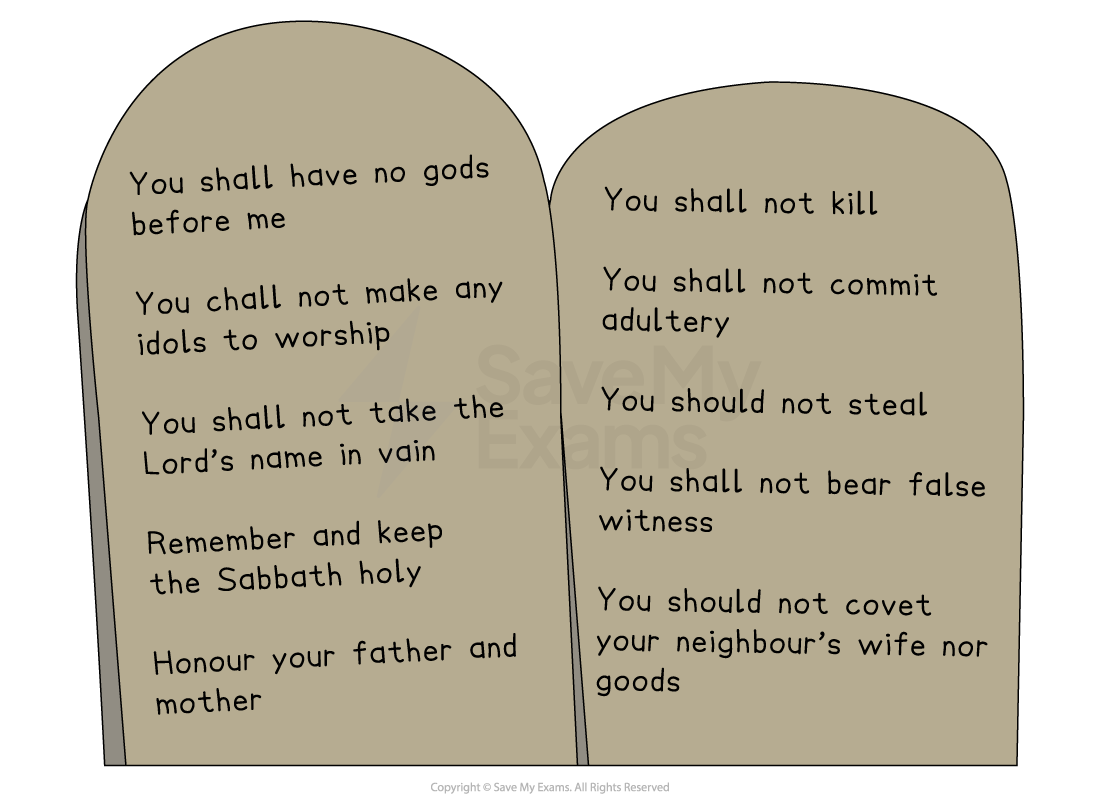
The Ten Commandments
- Moses formed a covenant with G-d that, as G-d’s chosen people, the Israelites would keep the commandments
What is the significance of the Ten Commandments?
-
The Ten Commandments are a central part of the Torah and hold deep religious and ethical importance in Judaism
-
Jews believe that the commandments were given directly by G-d to Moses on Mount Sinai
- They form part of the covenant between G-d ****and the Jewish people
-
The commandments** are a key** foundation of Jewish Law
- They represent the main principles and **laws **of Judaism
- They are part of the 613 mitzvot (commandments) found in the Torah but are seen as especially significant
-
They provide Jews**** with guidance for daily living
- They cover both duties to G-d (e.g. not worshipping* idols, keeping Shabbat) and duties to others (e.g. honouring parents, not stealing or lying)
- They also promote moral behaviour, justice and respect
-
How are the Ten Commandments used in the Synagogue?
-
The Ten Commandments appear in the books of Exodus and Deuteronomy
-
They are read aloud during synagogue services, especially on the festival of Shavuot, which celebrates the giving of the Torah
-
Many synagogues display the Ten Commandments above the Ark (Aron HaKodesh) or on decorative plaques
- This reminds worshippers of the central teachings of the Torah
-
Jewish children often learn the Ten Commandments in religious school (cheder) as part of their foundational knowledge of Judaism
- They are used to teach values and responsibility
What is the menorah?
-
The menorah in a synagogue is a seven-branched candelabrum that serves as a symbol of Jewish faith and identity
- It is one of the oldest symbols in Judaism and has deep religious and **cultural **meaning
-
The menorah** is inspired by the original menorah** in the ancient Temple in Jerusalem, described in the Torah(Exodus 25:31–40)
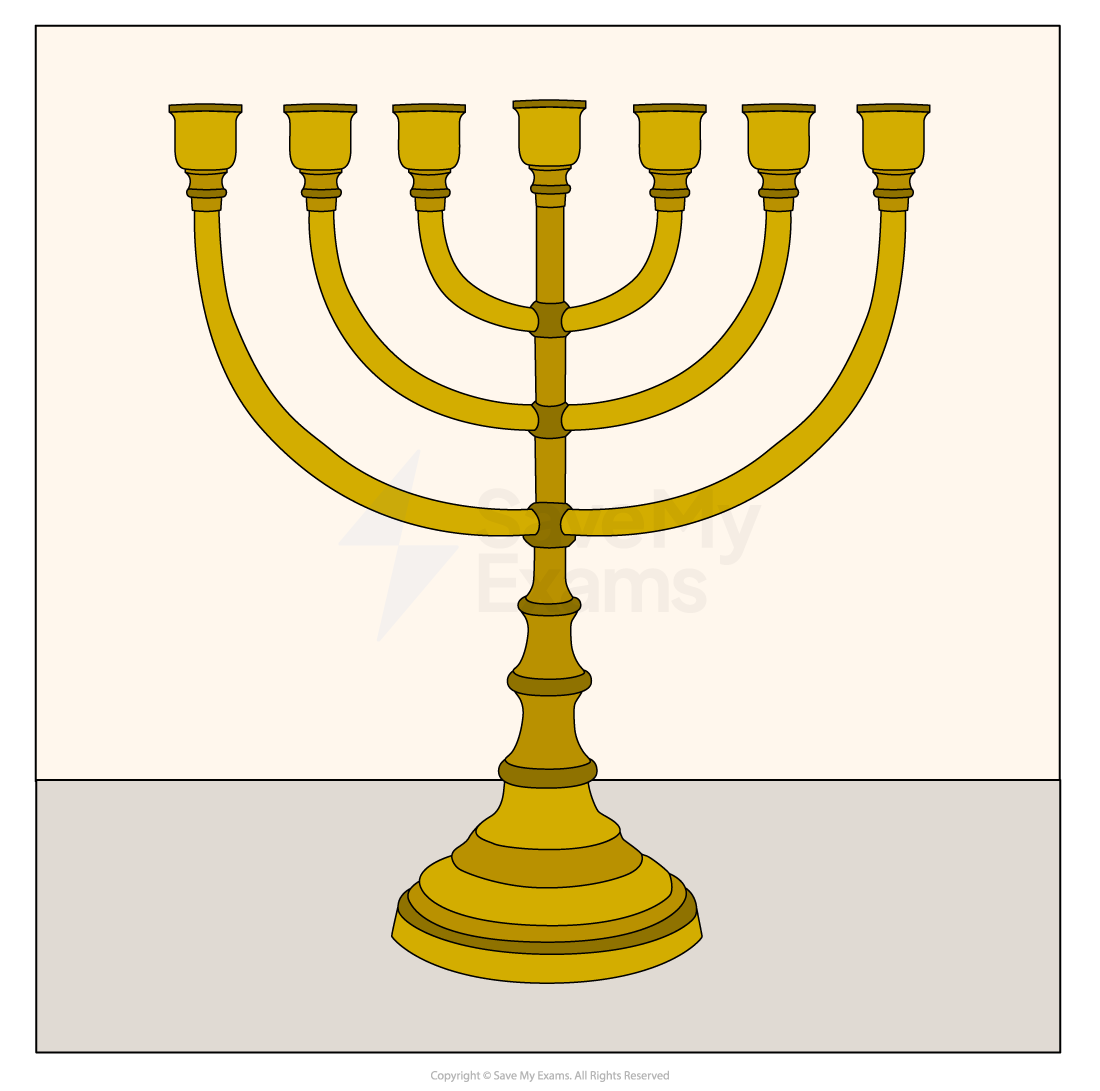
Menorah
Why is the menorah significant to Jews?
-
The menorah is significant to Jews for a number of different reasons
-
It acts as a symbol of G-d’s presence and light because the menorah represents divine light, wisdom and guidance
-
There is also the connection with the temple because it recalls the menorah used in the Temple in Jerusalem, making it a symbol of Jewish tradition
- It is also a reminder of the destruction of the Temple and the hope for future restoration
-
The seven branches can represent the seven days of creation, showing that G-d’s light shines through all time
-
What is the Star of David?
-
The Star of David is a six-pointed star made from two overlaid triangles and is a widely recognised symbol of Judaism and Jewish identity
- Some interpretations say the six points represent G-d’s rule over the universe in all directions: north, south, east, west, up and down
- The overlapping triangles may also symbolise the relationship between **G-d **and humanity
- On the outside of synagogues, there is a Star of David**** and often a menorah
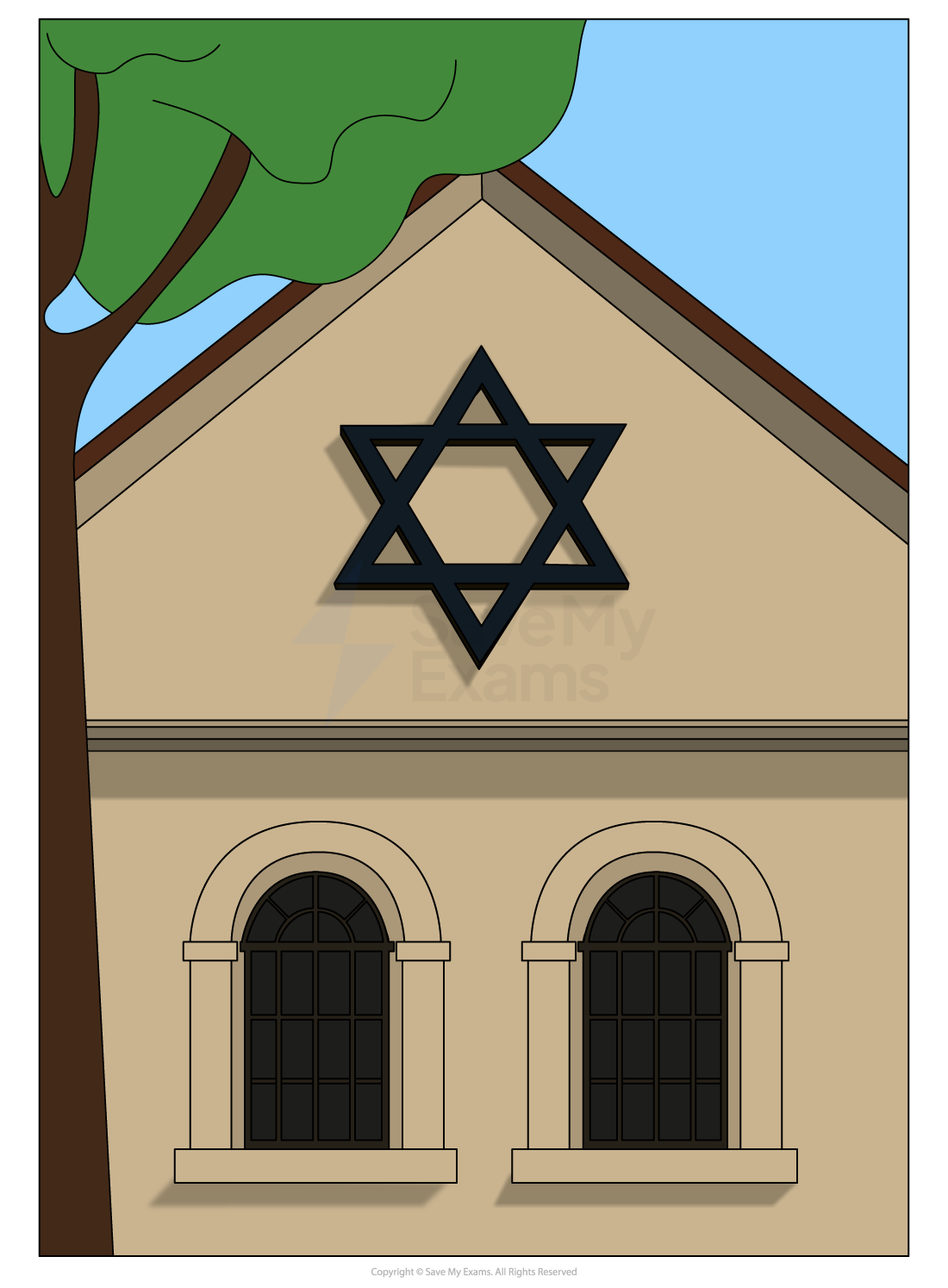
Star of David on a synagogue
What is the significance of the Star of David appearing on synagogues?
-
The Star of David appearing on synagogues identifies the building as a Jewish place of worship
- It signals to both Jews and non-Jews that the building is dedicated to Jewish prayer, learning and community life
-
The symbol represents Jewish unity and identity
- It helps to create a sense of belonging for the Jewish community
-
The Star of David is referred to in Hebrew as the “Magen David”, meaning “Shield of David”
- Its presence may be seen as a spiritual symbol of divine protection over the synagogue and those within it
Representations of G-d
Representations of G-d at the synagogue
-
The term “idolatry” means to worship an image or a created object, and this is considered a major sin in Judaism
-
One of the Ten Commandments says: “You shall not make for yourself a graven image” (Exodus 20:4)
- This commandment forbids making images or idols of G-d or anything that could be worshipped
-
Jews believe this helps prevent idolatry, which is to worship a physical object instead of the invisible, all-powerful G-d
-
For this reason, G-d will not be represented in any art form, and there are no images or statues of G-d in any synagogues or Jewish places of worship
-
Seating arrangements for men and women
What are the seating arrangements for men and women at the synagogue?
-
Traditionally in Judaism, men and women were not allowed to be seated together in the synagogue
-
The separate seating is still the case today for Orthodox Jews
- This is often done with a physical divider called a mechitzah
- The aim is to promote focus during prayer and spiritual reflection, without distraction
- It reflects traditional interpretations of Jewish law (halakhah) and gender roles in worship
-
However, men and women are allowed to sit together in Reform Jewish synagogues
- These branches believe in gender equality in worship
- They interpret the Torah and Jewish law more flexibly in response to modern values
- Women can often lead prayers, read from the Torah and become rabbis
Worked Example Name two features of a synagogue
[2 marks]
Final answer: Answer:
- The Ner Tamid is a light in the synagogue that never goes out
- The bimah is a platform where the Torah is read
Exam Hint Learn the features of the synagogue and also the significance of the features. Remember that the physical features often have a spiritual meaning. For example:
- Respect for G-d’s word (Torah)
- G-d’s eternal presence (Ner Tamid)
Try to use key terms confidently in your responses
Be prepared to compare how Orthodox and Reform synagogues differ in:
- Seating arrangements
- Role of women
- Language used in worship
Was this revision note helpful?