3D Shapes (Cambridge International IGCSE Mathematics)
Properties of 3D Shapes
What common 3D shapes do I need to know about?
-
There are a number of common 3D shapes
- You should know their names
- and their key properties
-
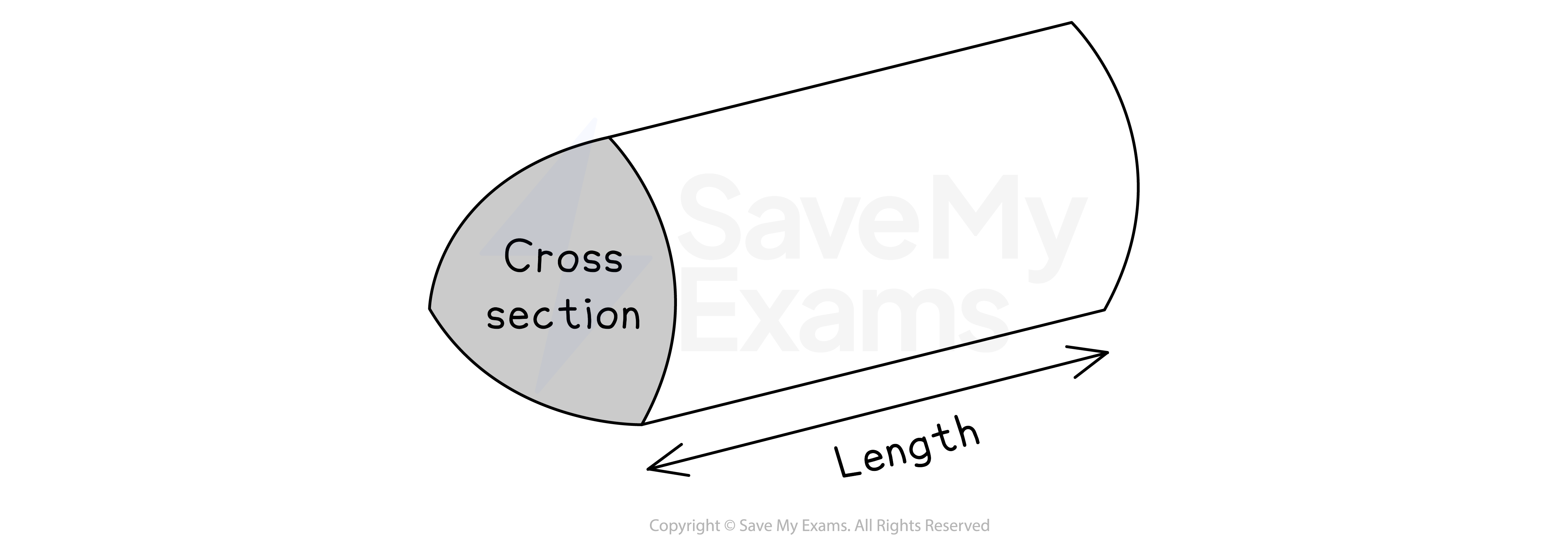
A prism is a 3D shape with the same cross-section throughout
-
The cross-section of a cube is a square
-
The cross-section of a cuboid is a rectangle
-
There are other prisms, such as triangular prisms or hexagonal prisms
- In these cases the exam question will make sure the shape of the cross-section is clear
-
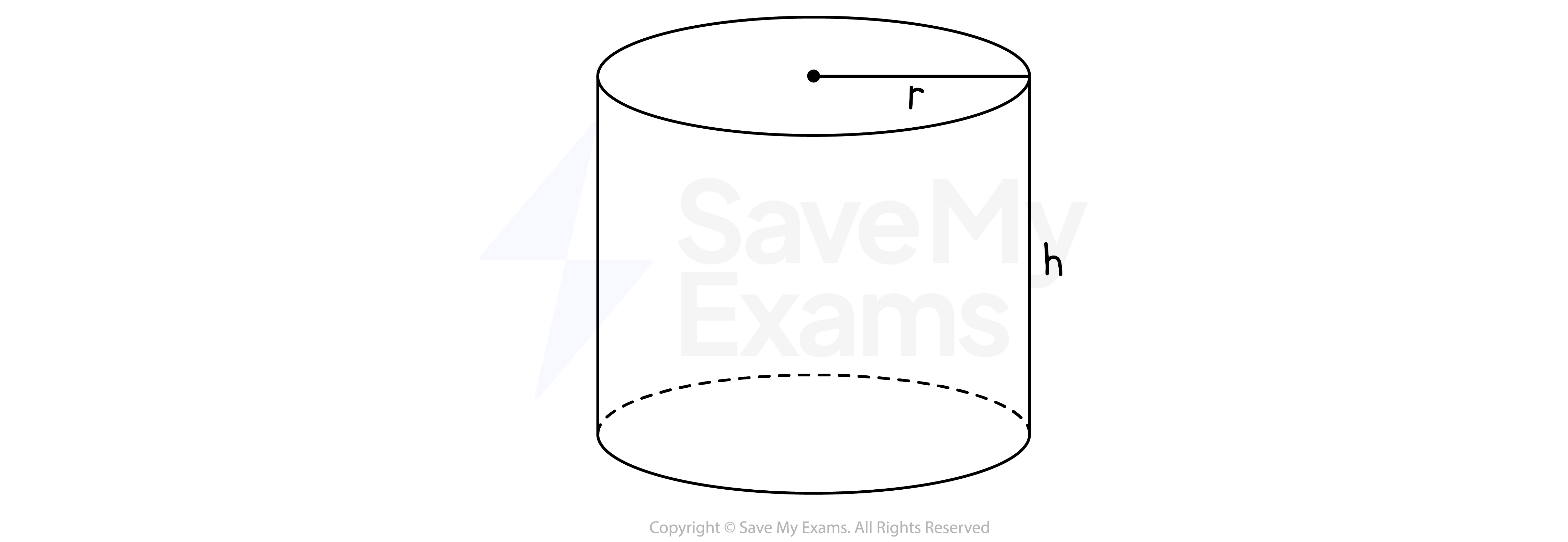
A cylinder is similar to a prism
- The cross-section of a cylinder is a circle
-
-
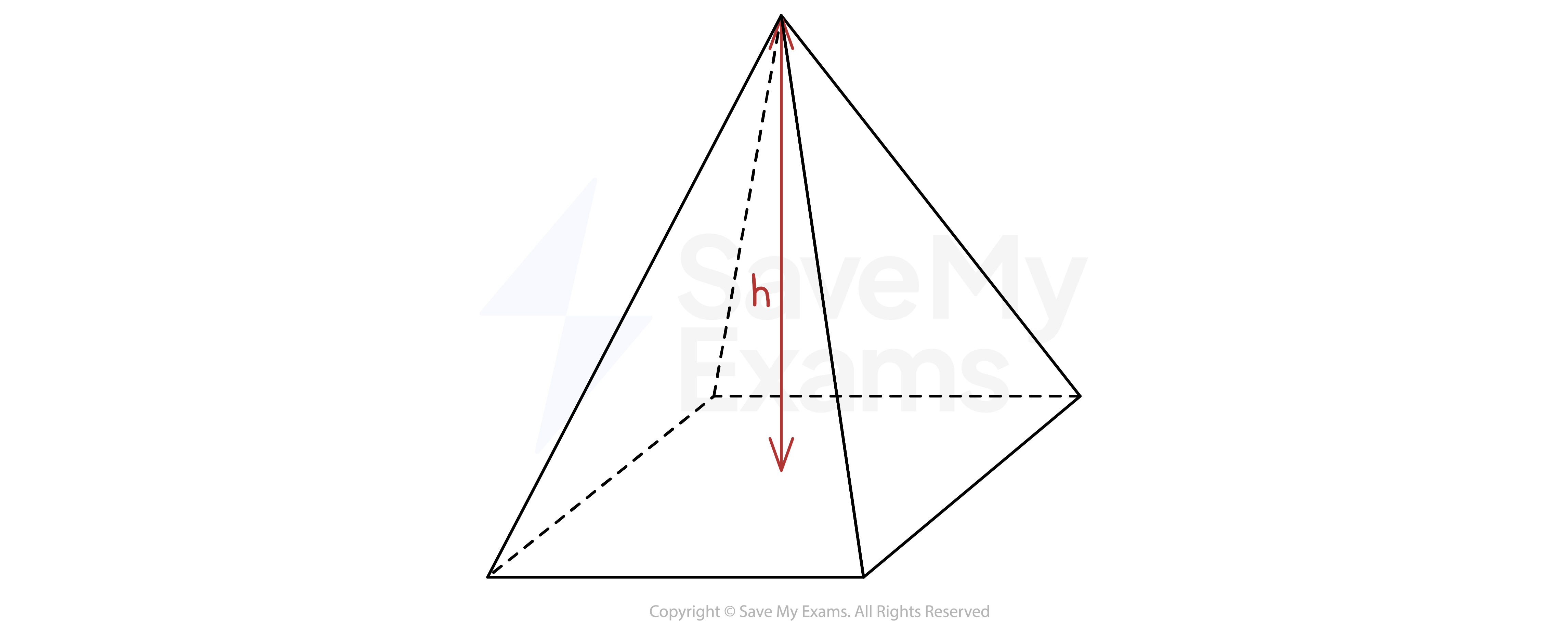
There are a number of different types of pyramid
-
A pyramid has a flat base and sloping sides that meet at a point
-
The pyramid may have a square, rectangular or triangular base
-
Some pyramids have special names you should know
- A triangular-based pyramid is called a tetrahedron
-
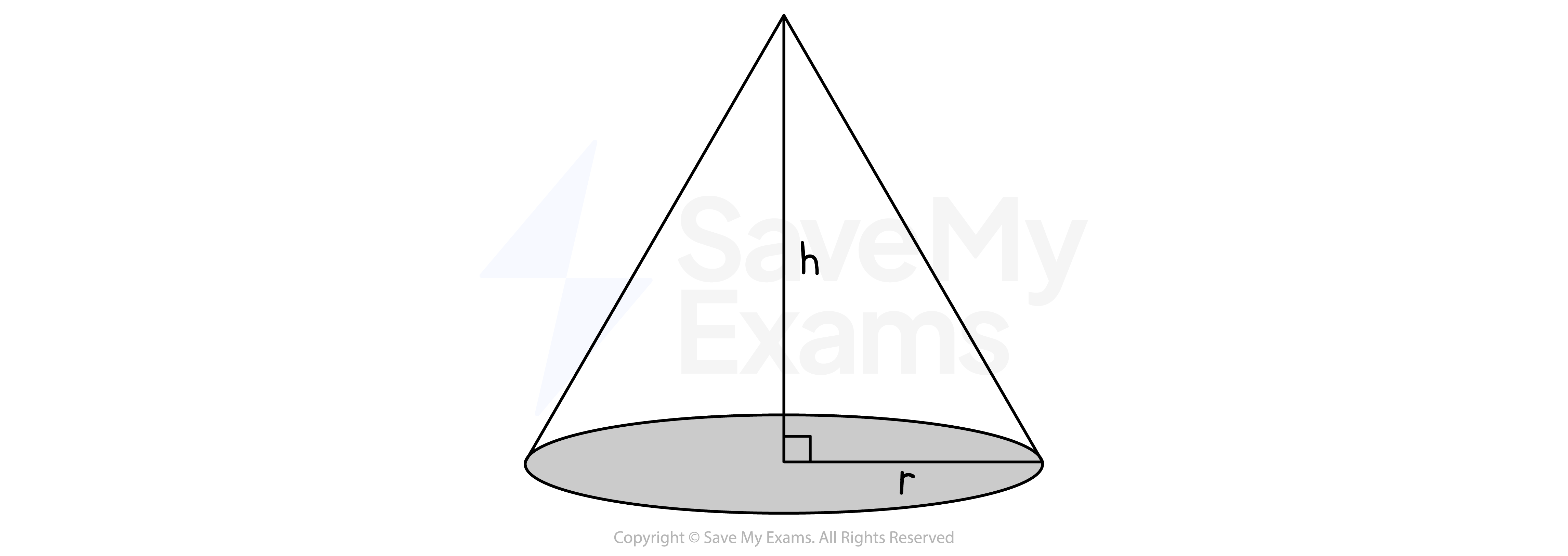
A cone is similar to a pyramid
- A cone has a circular base
-
- A sphere is a round solid ball shape
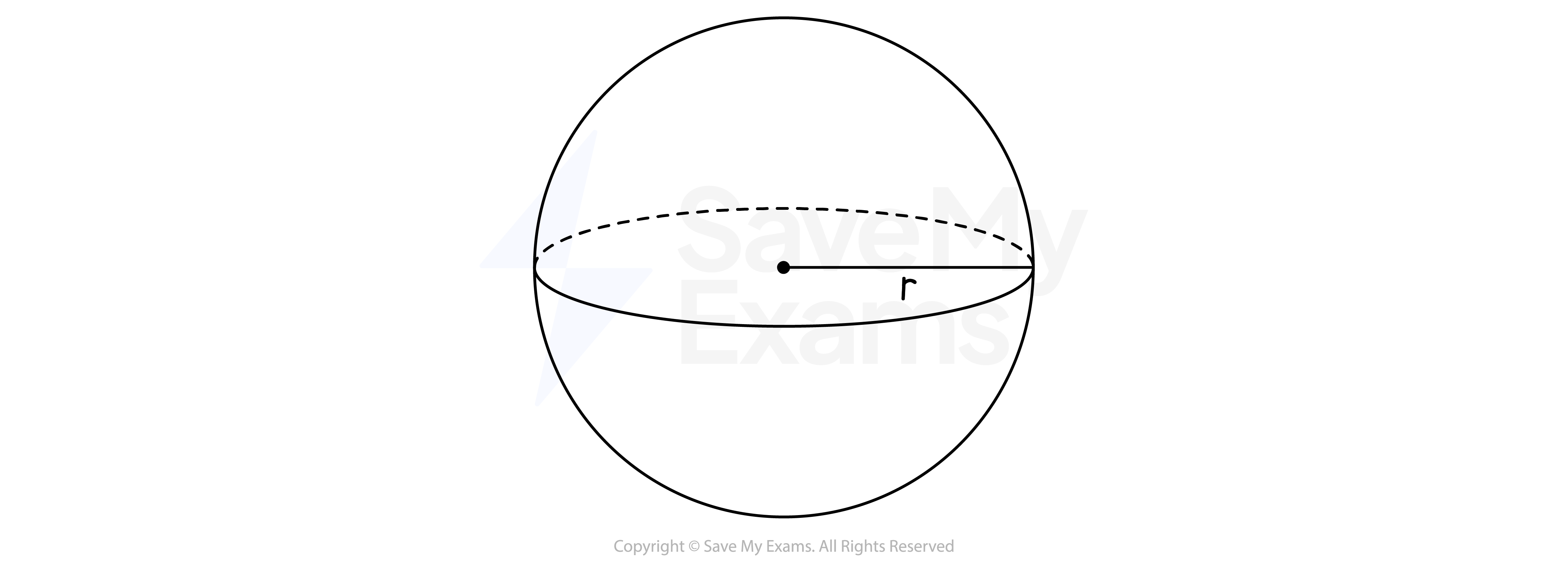
What are the properties of 3D shapes?
-
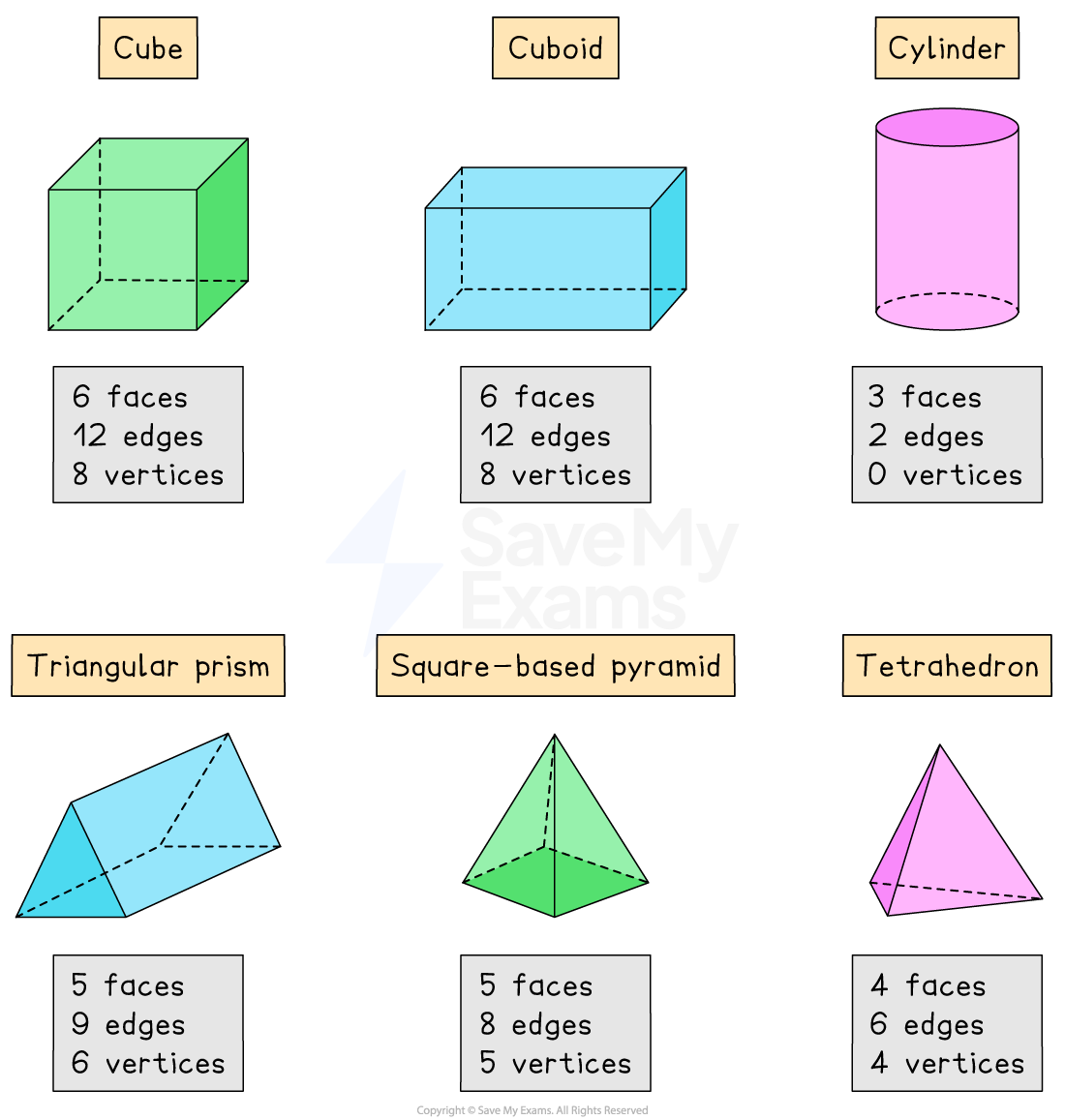
3D shapes have a number of faces, vertices and edges
- A face is a single flat surface of the 3D shape
- A vertex (plural, vertices) is a corner of the 3D shape
- An edge joins one vertex to another
-
You should know the number and shape of the faces (and other surfaces) for the common 3D shapes
-
A cube has 6 equal, square faces
-
A cuboid has 3 pairs of rectangular faces
-
A cylinder has 2 equal circular faces and 1 curved surface
- The curved surface has the shape of a rectangle if laid out flat
-
A triangular prism has 2 equal triangular faces and 3 rectangular faces
- If the triangular faces are equilateral then all of the rectangles will be equal
- If the triangular faces are isosceles then two of the rectangles will be equal
-
A square-based pyramid has 1 square face and 4 equal triangular faces
-
A tetrahedron has 4 triangular faces
-
A sphere has 1 curved surface; it is a ball shape
-
Exam Hint Remembering the properties of 3D shapes will help in particular with questions involving surface area.
What is a net of a solid?
-
A net of a solid is a 2D drawing that can be cut out and folded to make a 3D shape
-
Each of the faces of the 3D shape are arranged in a certain pattern
- Not every arrangement of the faces will create a net of that solid
- Solids can have more than one arrangement that will work to make the 3D shape
-
The area of the net of a 3D shape is the same as the surface area of the solid
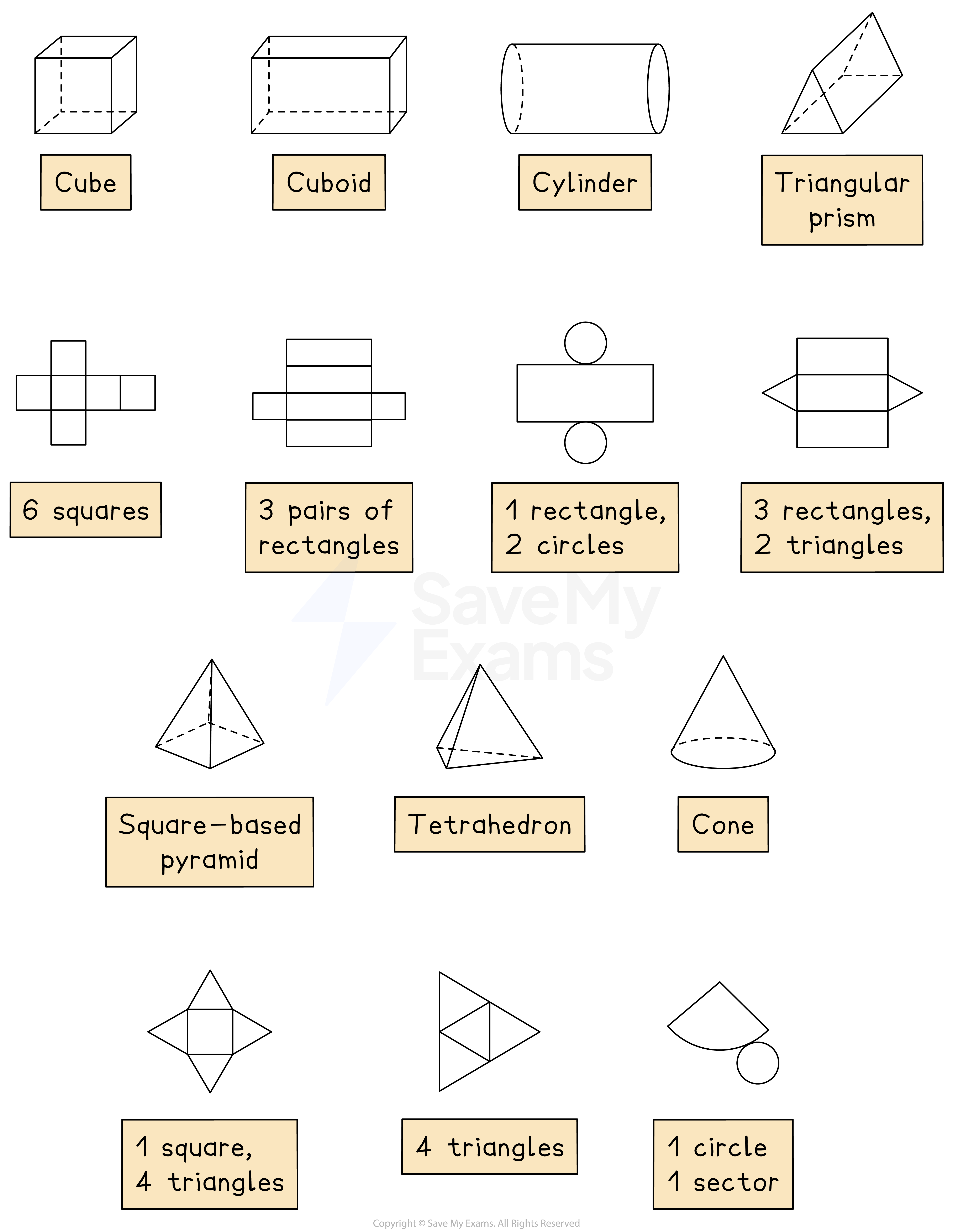
Nets of solids
What does the net of a cube or cuboid look like?
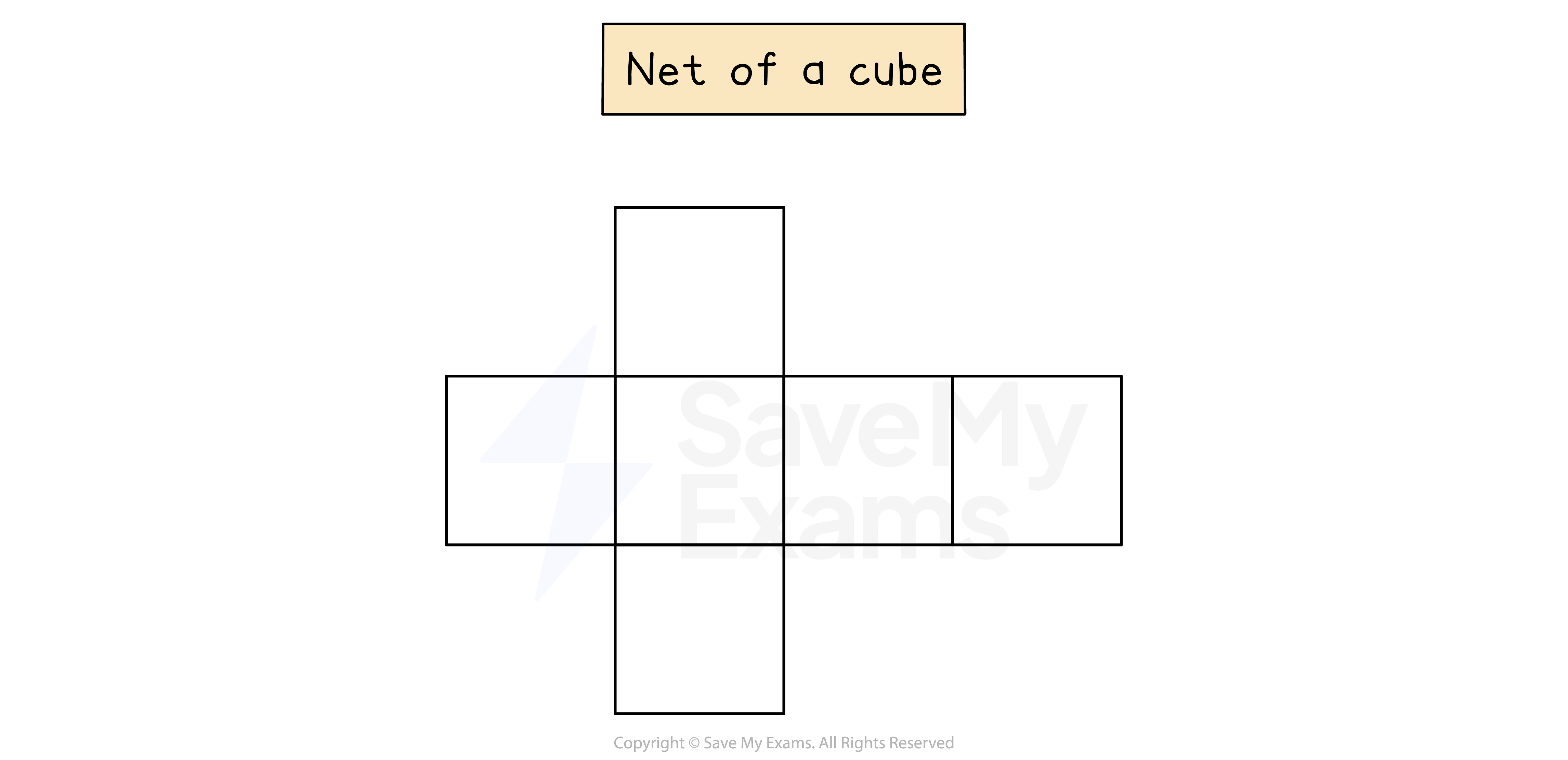
- The net of a cube has 6 squares connected at certain edges
- There are 11 different arrangements of the square faces that will form a net of a cube
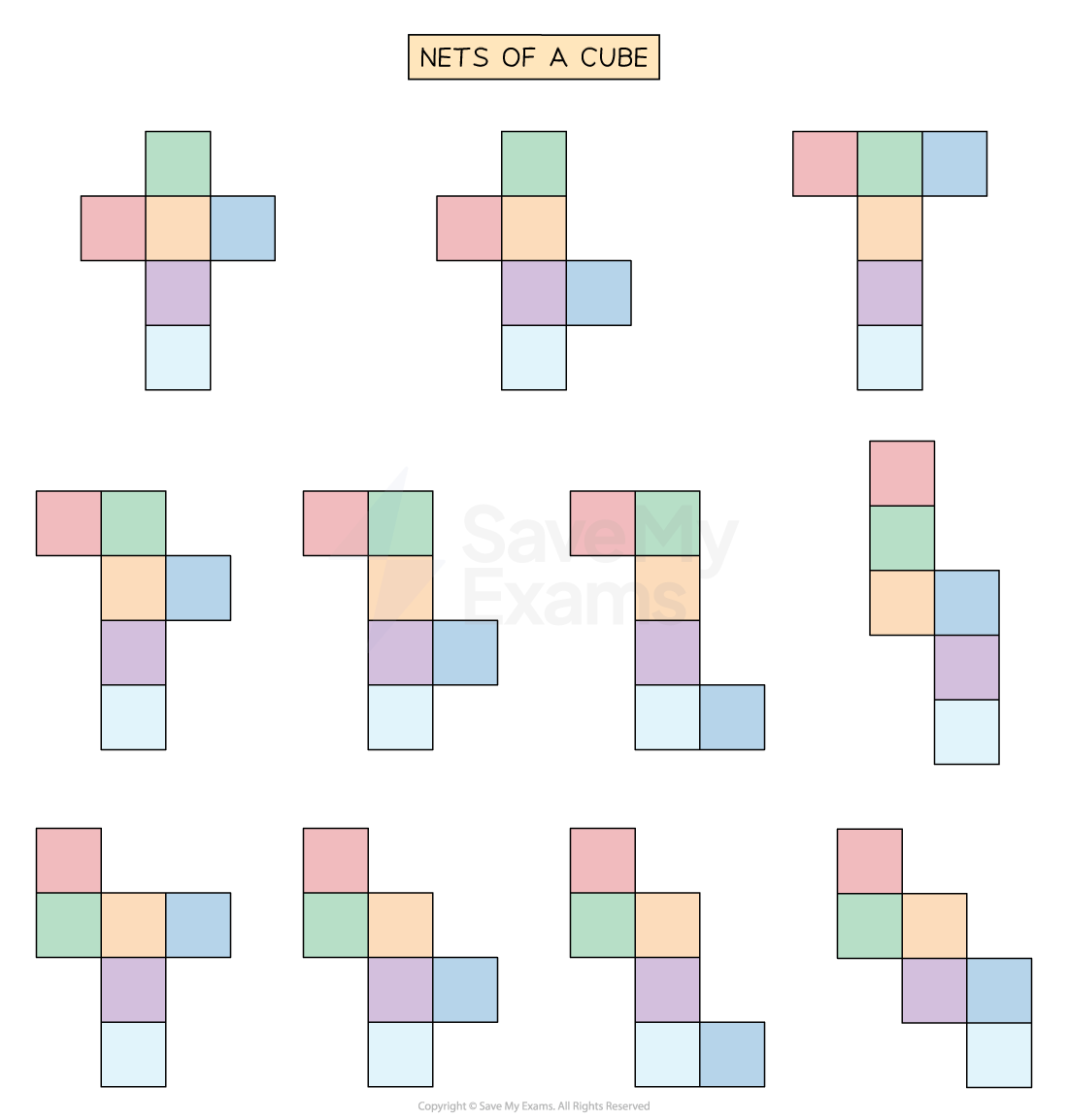
- The most common and easiest to remember is in the form of a cross
-
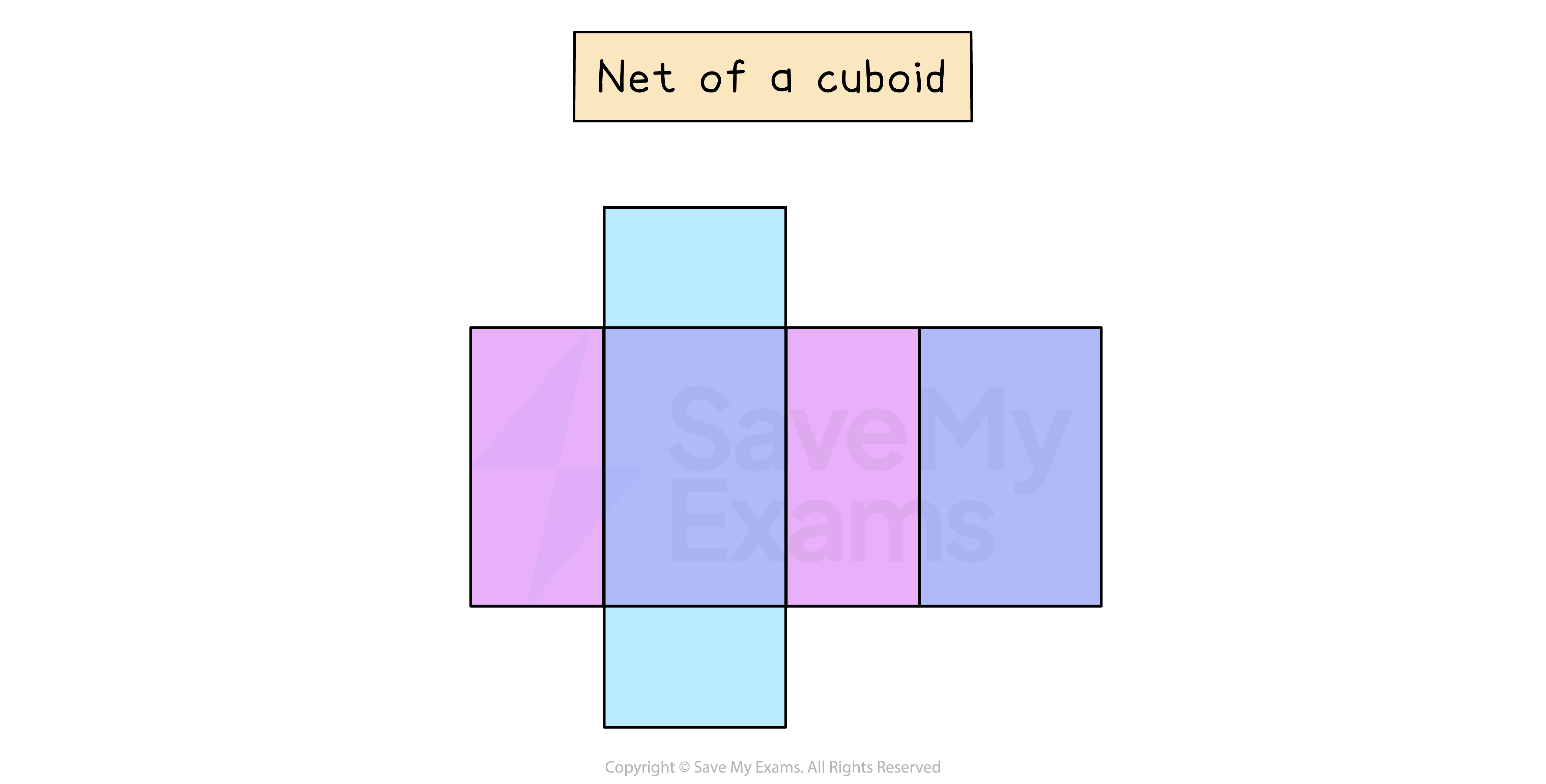
A cuboid has 6 rectangular faces, so its net consists of 6 rectangles
-
The most common and easiest net to remember is in the form of a cross
-
Pay attention to which rectangles are the same
- They are colour-coded in the diagram below
-
What does the net of a cylinder look like?
-
The net of a cylinder consists of two circles and a rectangle
-
The length of the rectangle is equal to the circumference of the circles
-
The width of the rectangle is equal to the height of the cylinder
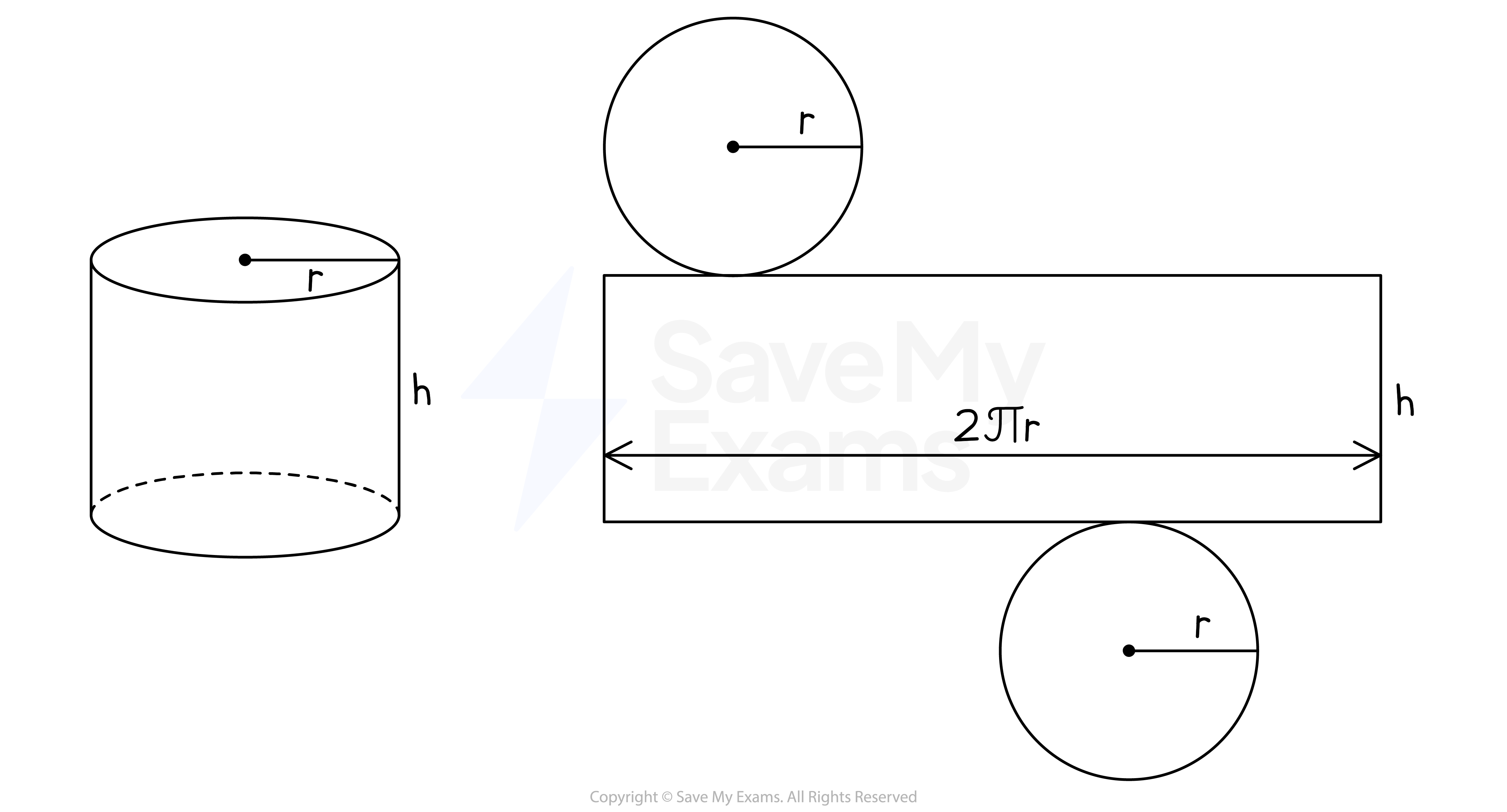
Net of a cylinder
What does the net of a pyramid look like?
-
The net of a pyramid consists of the base and a triangle attached to each edge of the base
-
For example, a square-based pyramid has a square base and four congruent (identical) triangles
- The perpendicular height of each triangle is equal to the slant height of the pyramid
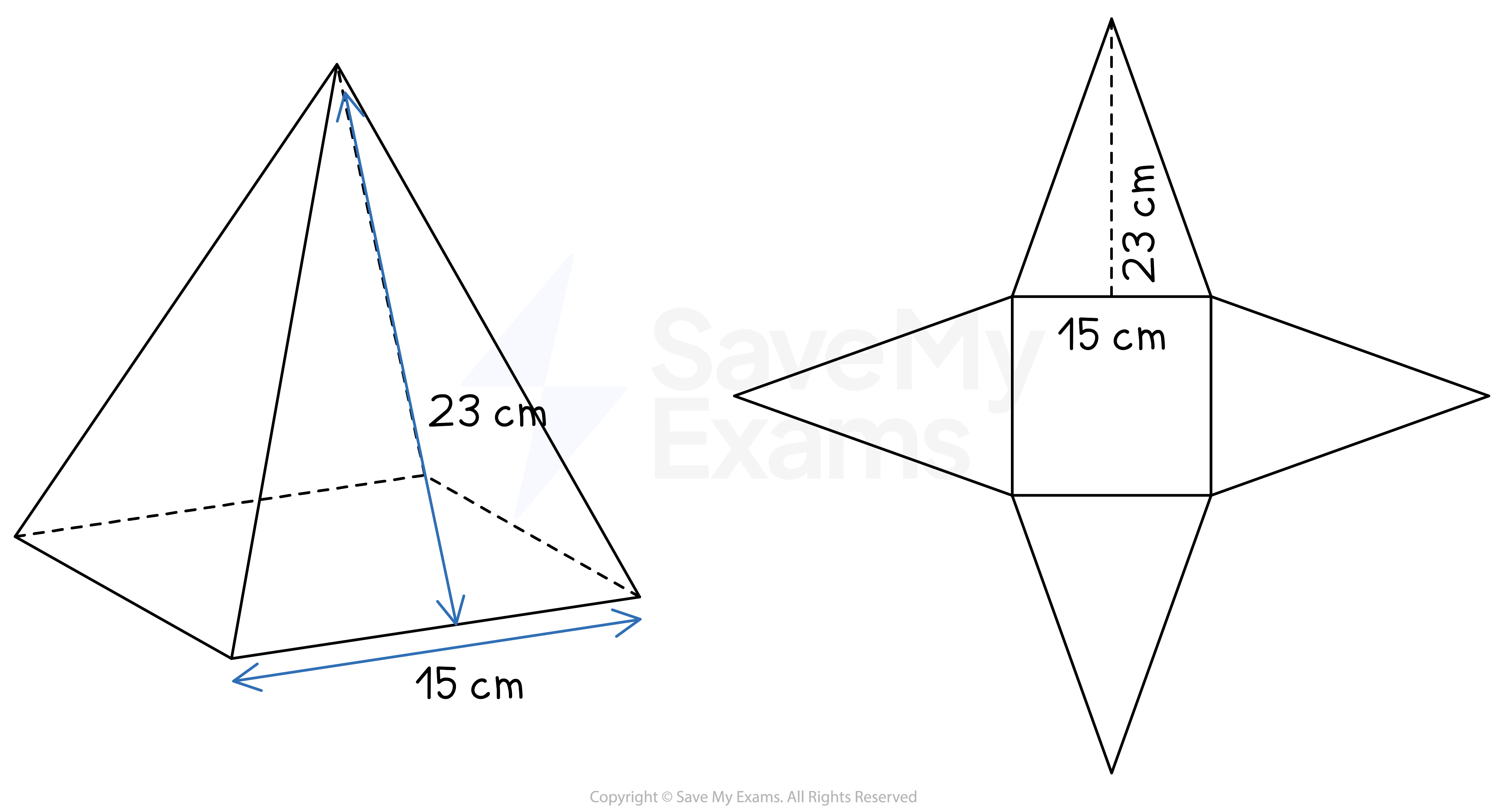
Example of a net of a pyramid
Exam Hint You may be given the dimensions of the solid when asked to draw a net
Make sure you put the correct lengths in the correct places by imagining cutting out and folding up the net.
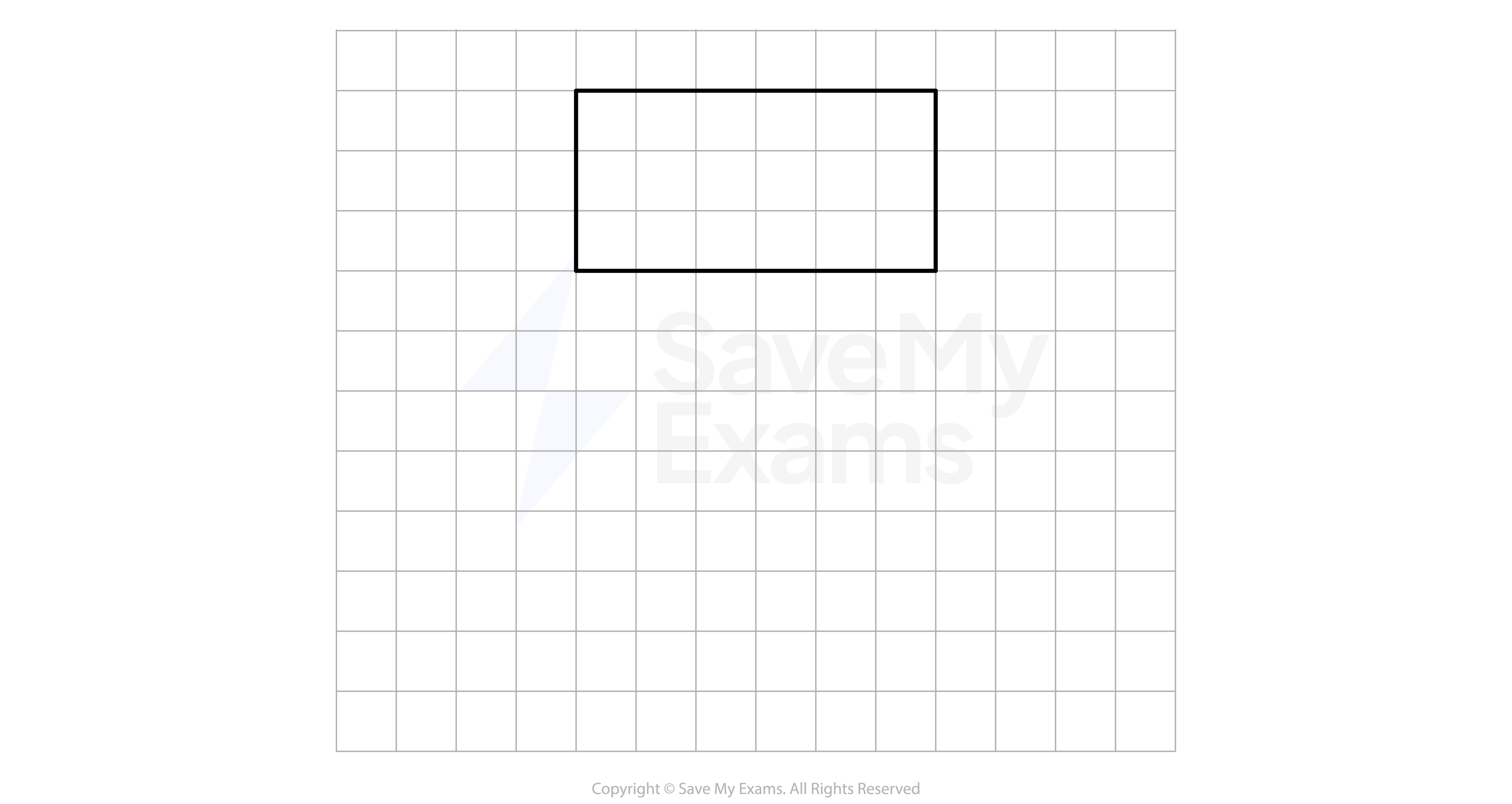
Worked Example A cuboid measures 6 cm by 3 cm by 2 cm.
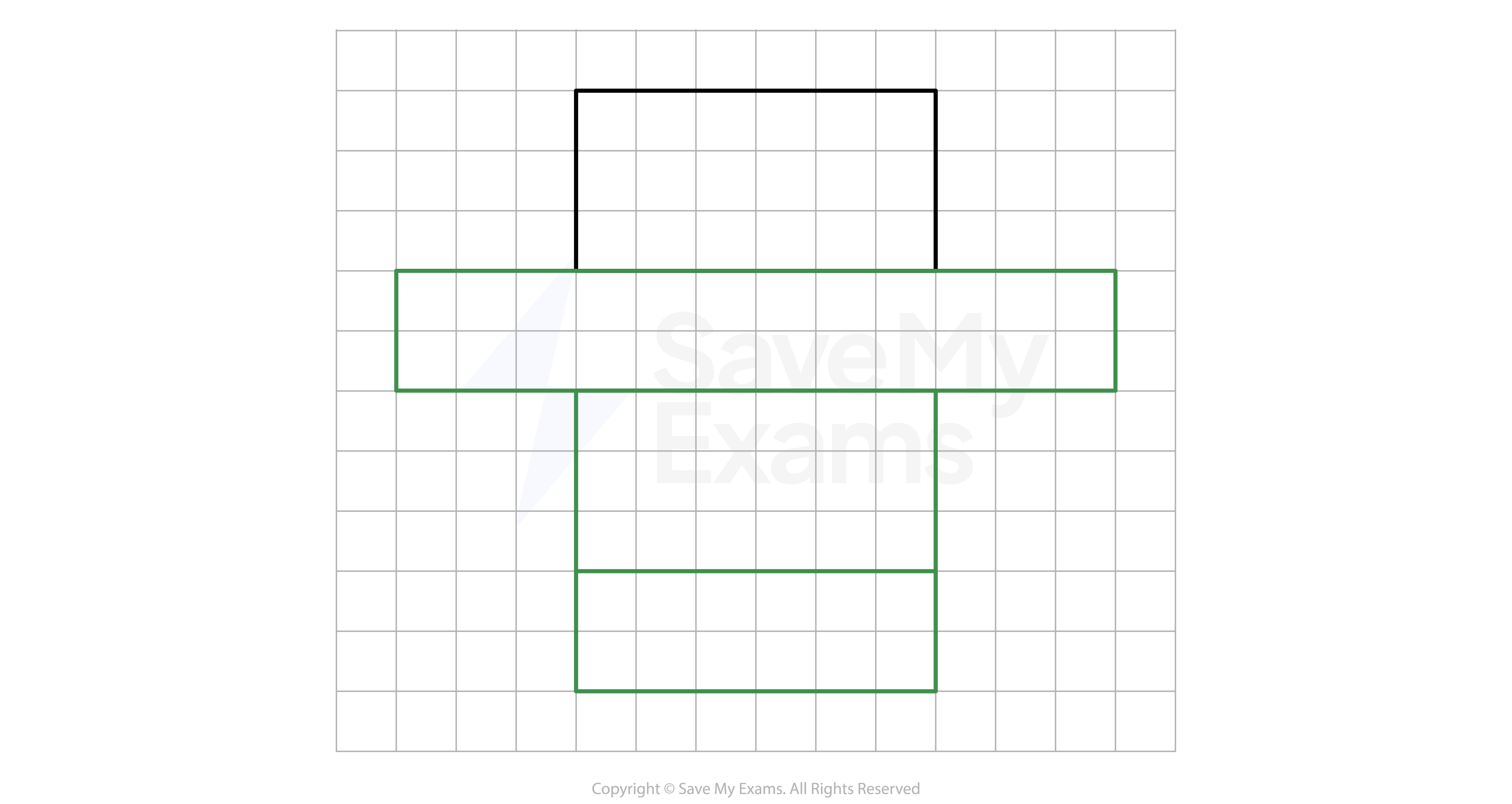
On the 1 cm2 grid, draw an accurate net of this cuboid. One face has been drawn for you.
Answer:
The cuboid has three pairs of rectangles; measuring 6 cm by 3 cm, 6 cm by 2 cm, and 3 cm by 2 cm
Make sure the net has two of each of these rectangles in the correct places
Was this revision note helpful?
Build on this topic