Area (Cambridge International IGCSE Mathematics)
Area Formulas
What is area?
-
Area is the amount of space within the perimeter of a 2D shape
- For example, the size of a sports field
-
Area is calculated using lengths in two dimensions
- Units of measure include mm2, cm2, m2 etc
How do I find the area of a shape on a square grid?
-
Count the total number of whole squares inside the shape
- You can shade or mark the squares you have counted so far
-
Parts of the shape may not contain whole squares
- Pair up half squares, or parts of squares, to form whole ones
-
There will be a scale telling you how much area one square represents
- Multiply the number of squares you have counted by this value to find the total area of the shape
Which area formulas do I need to know?
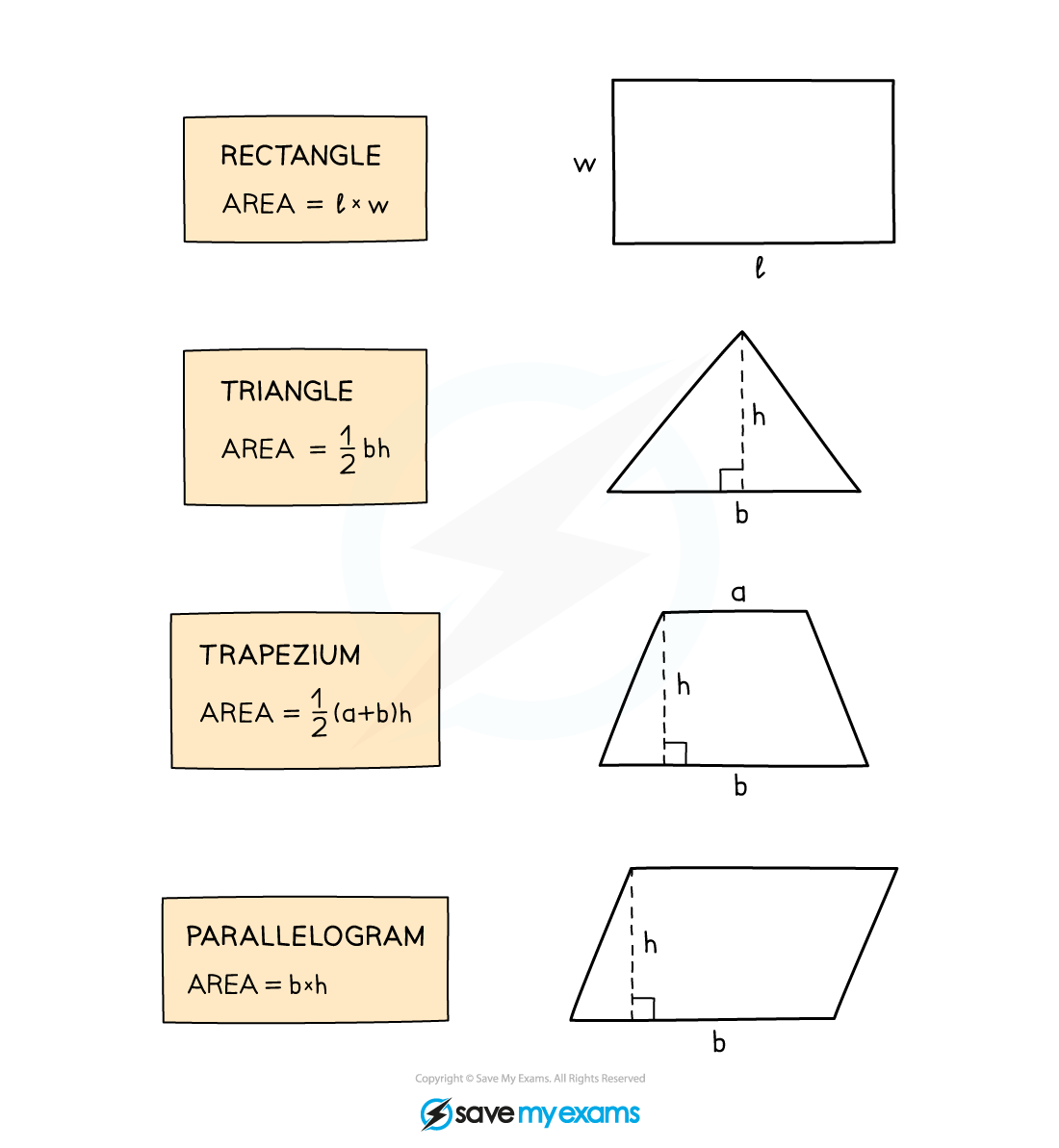
How do I find the area of a rectangle?
-
The area, A, of a rectangle of length, l, and width, w, using the formula
-
- Multiply together the length and the width
-
How do I find the area of a triangle?
-
The area, A, of a triangle with base, b, and length, l, can be found using the formula
-
- Multiply the length of the base (b) by the perpendicular height(h)
- Halve the answer
-
-
The formula for the area of a triangle is given to you in the exam
-
The perpendicular height may not be the length of one of the sides of the triangle
How do I find the area of a trapezium?
-
The area, A, of a trapezium with parallel lengths, a and b, and perpendicular height, h, can be found using the formula
-
A=1 half (a+b) h- Add together the lengths of the parallel sides
- Multiply the result by the distance between the parallel sides
- Halve the answer
-
-
You may be able to work out the area of a trapezium by splitting the shape into a rectangle and triangles if you can't remember the formula
How do I find the area of a parallelogram?
-
You can find the area, A, of a parallelogram of length, l, and perpendicular height, h, by using the formula
-
- Multiply the length of the base by the perpendicular height
-
-
The perpendicular height is not a length of the parallelogram
-
It is the distance between the base and its opposite side
-
You can work the area of a parallelogram out by splitting the shape into a rectangle and triangles if you can't remember the formula
Exam Hint
You may have to do some work to find missing lengths first
- For example, you may need to use Pythagoras' Theorem to find a missing length on a triangle
The area of a triangle is given to you in the exam but you will need to remember the other formulae
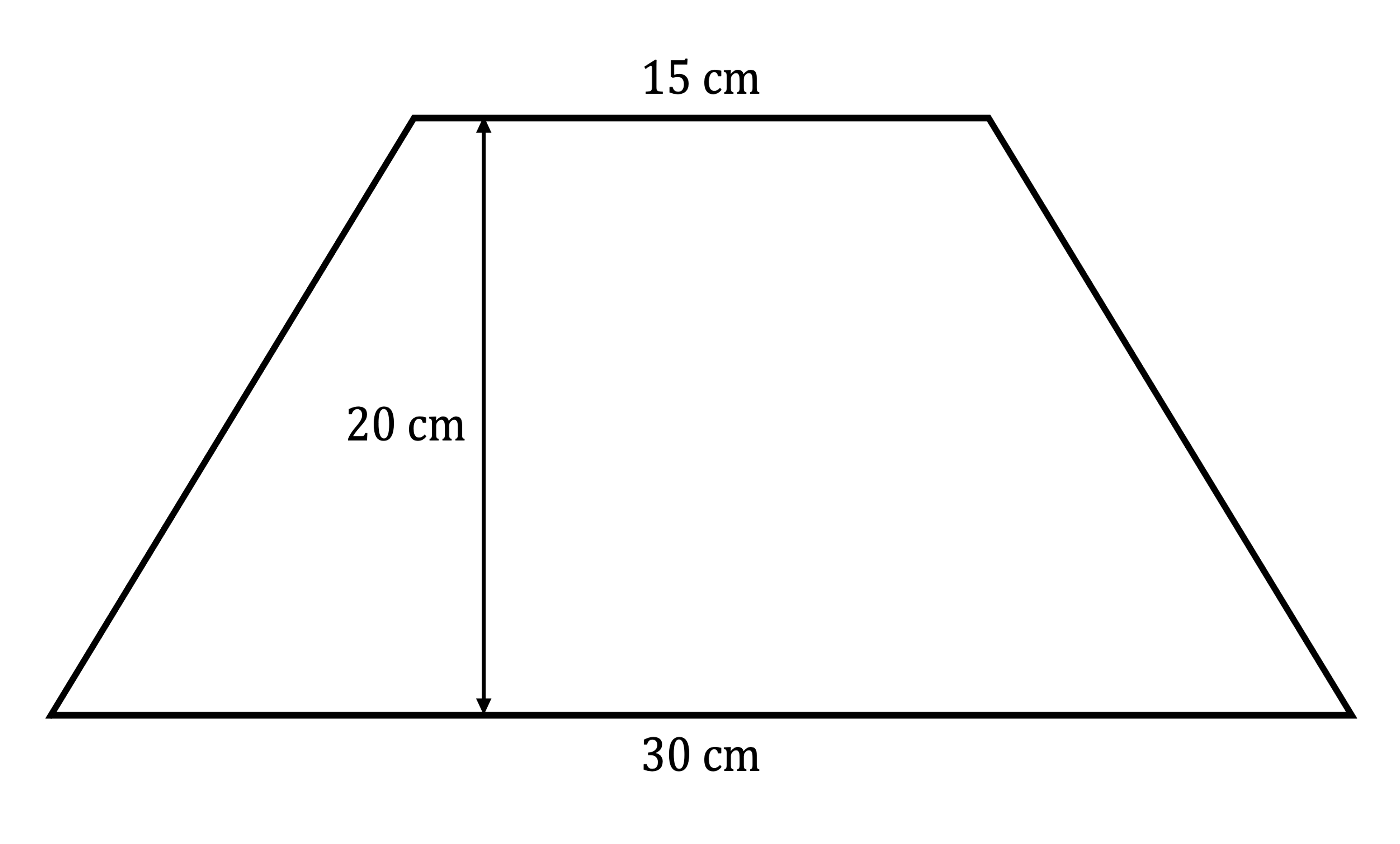
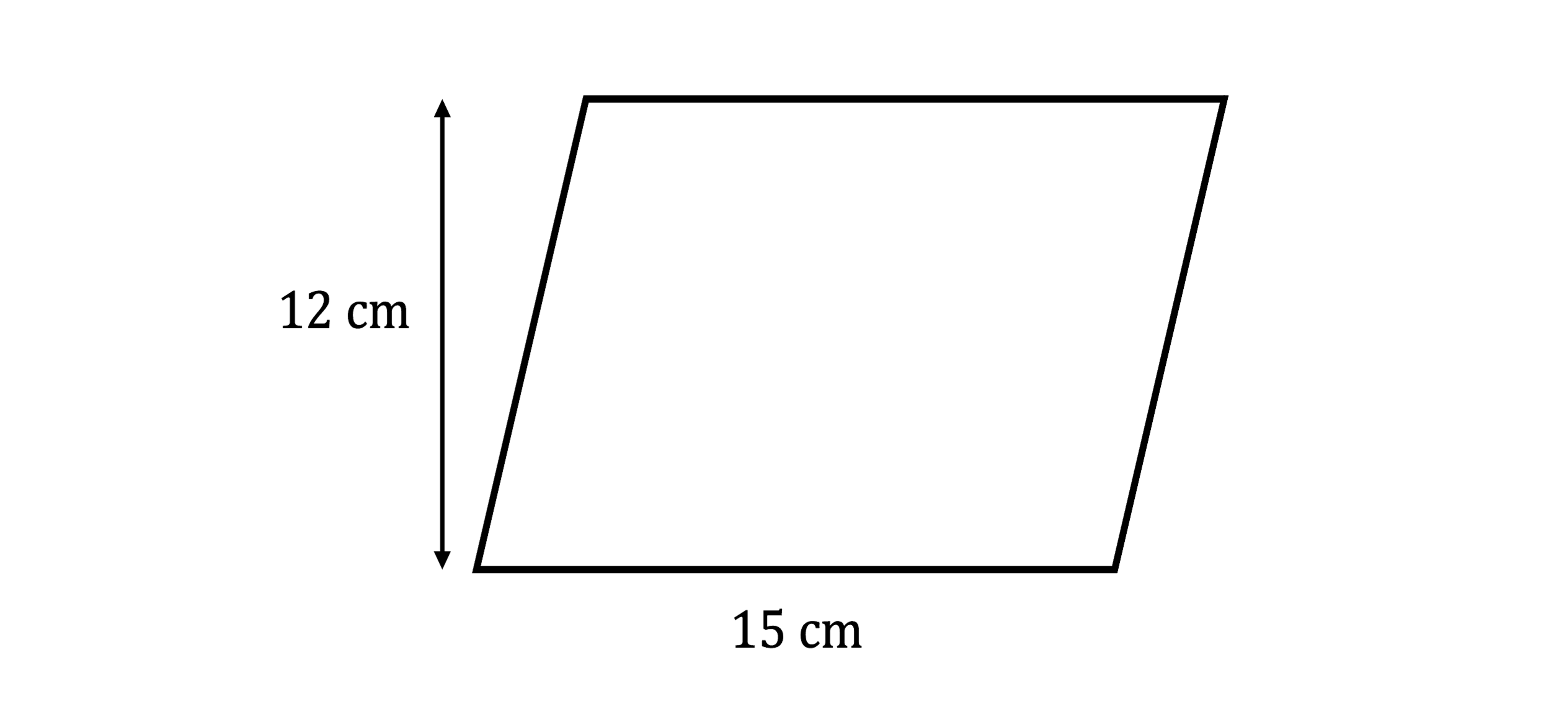
Worked Example Calculate the area of the following shapes.
(a)
Find the area of the trapezium using
A=1 half (a+b) h
Answer: Remember that a and b are the two parallel sides and h is the perpendicular height
A=1 half (30+15)×20Final answer: 450 cm2
(b)
Find the area of the parallelogram using
Answer:
Remember that b is the base and h is the perpendicular height
Final answer: 180 cm2
(c)
Find the area of the right-angled triangle using
Answer:
Remember that b is the base and h is the perpendicular height
Final answer: 28 cm2

Was this revision note helpful?
Build on this topic