12 markseasy
(a)
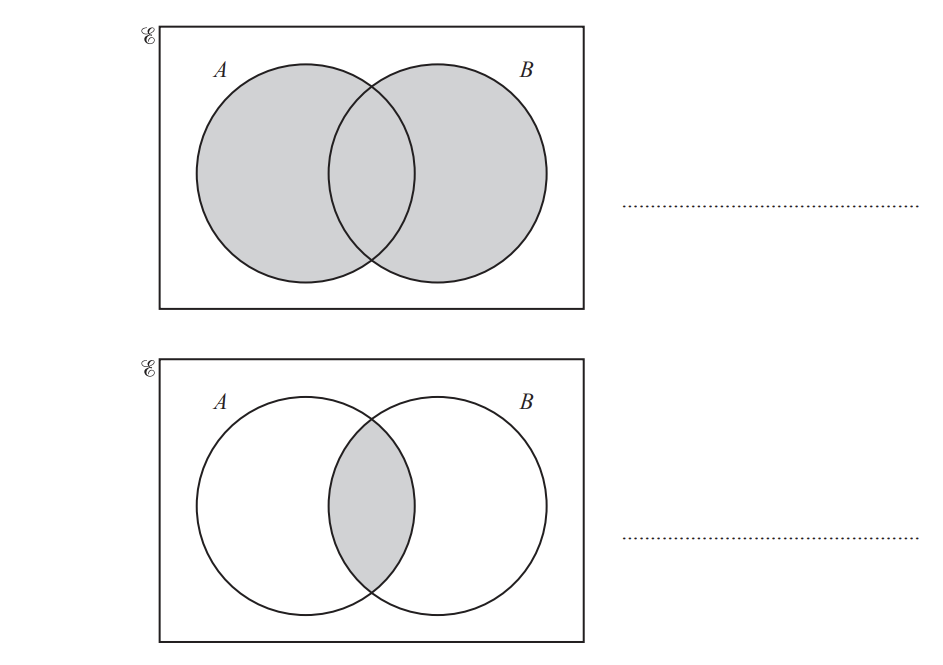
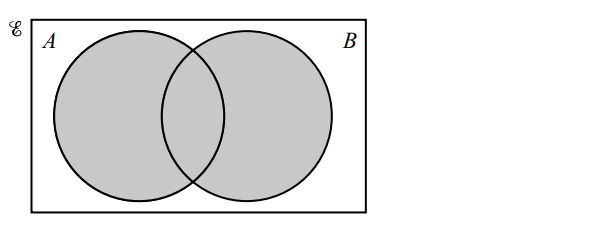
Use set notation to describe the shaded region in each Venn diagram.
19 questions · 81 marks · ≈ 1 hours
Use set notation to describe the shaded region in each Venn diagram.
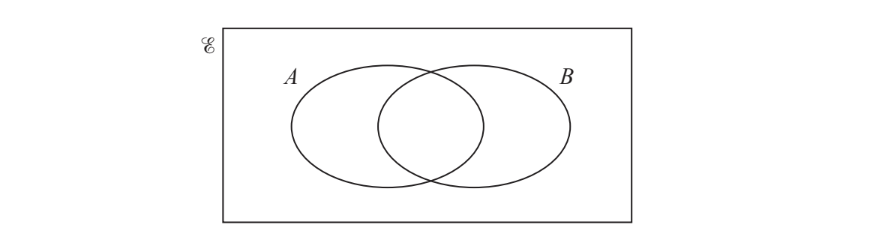
On the Venn diagram, shade the region .
= {1, 2, 3, 4, 5, 6}
= { : is an even number}
= { : is a prime number}
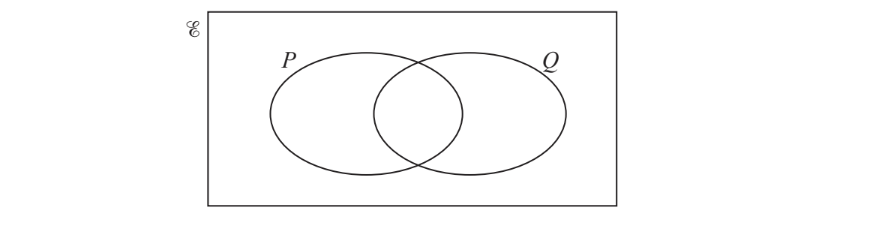
Complete the Venn diagram.
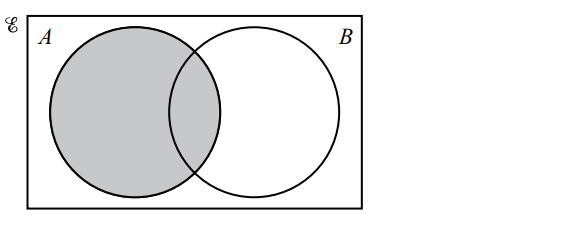
Use set notation to describe the shaded regions in each Venn diagram.
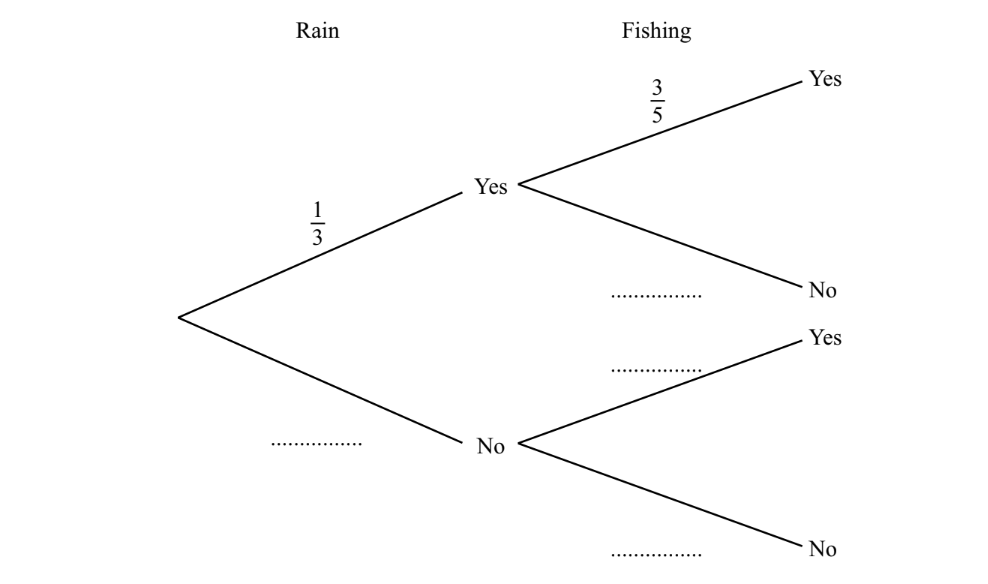
On any day the probability that it rains is .
When it rains the probability that Amira goes fishing is .
When it does not rain the probability that Amira goes fishing is .
Complete the tree diagram.
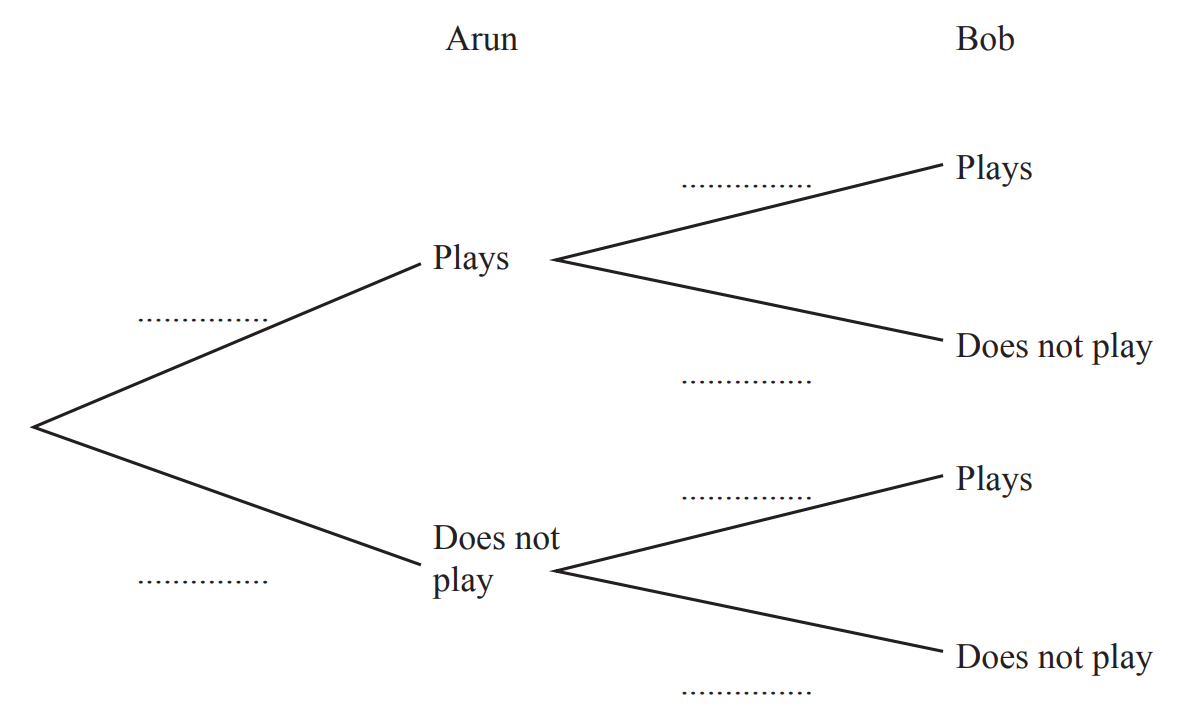
On any Saturday, the probability that Arun plays football is On any Saturday, the probability that Bob plays football is
i) Complete the tree diagram.
(2 marks)
ii) Calculate the probability that, one Saturday, Arun and Bob both play football.
(2 marks)
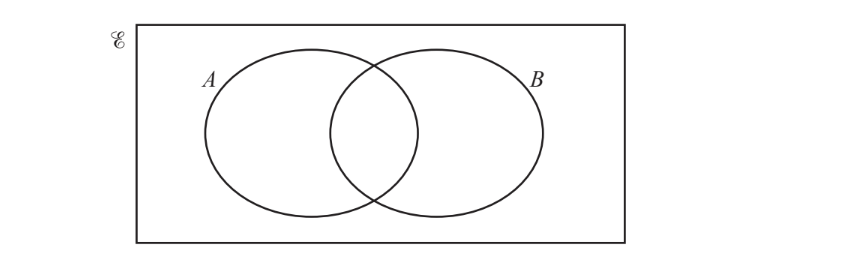
i) = {2, 4, 8, 16, 32, 64}
= {square numbers}
= {cube numbers}
Use this information to complete the Venn diagram.
(2 marks)
ii) On this Venn diagram, shade the region .
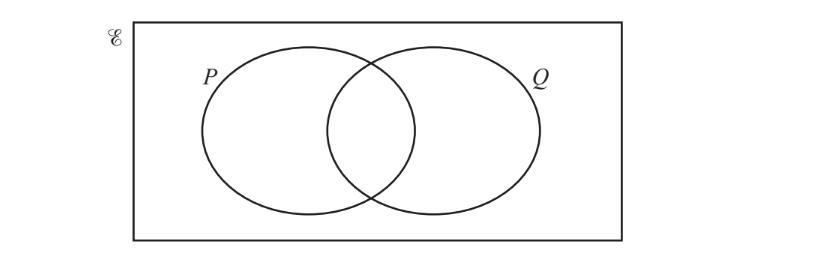
(1 mark)
In a group of 40 students,
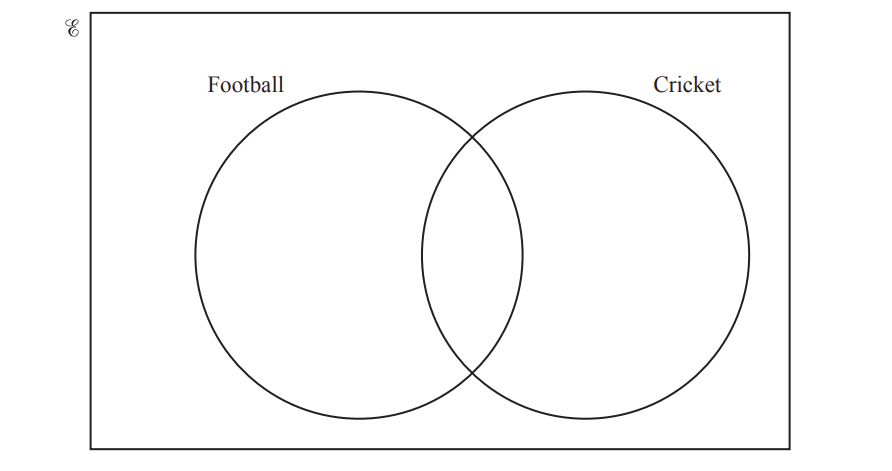
Complete the Venn diagram.
= {children in a group} = {children who own a rabbit} = {children who own a hamster}
There are 40 children in the group. 19 children own a rabbit. 27 children own a hamster.
Complete the Venn diagram.
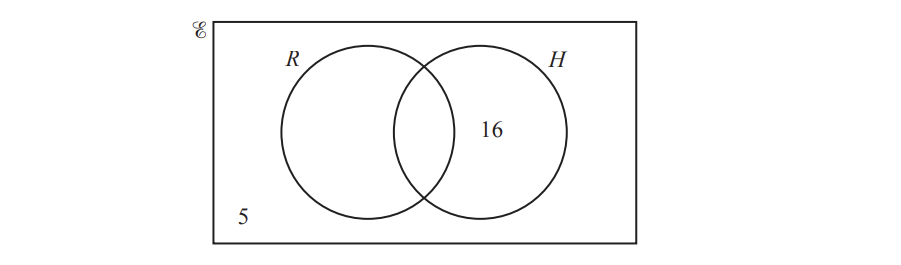
Extract:
![R space]= {children who own a rabbit}
![H] = {children who own a hamster}
Write down
The Venn diagram shows information about the number of students in a class who like apples () and bananas ().
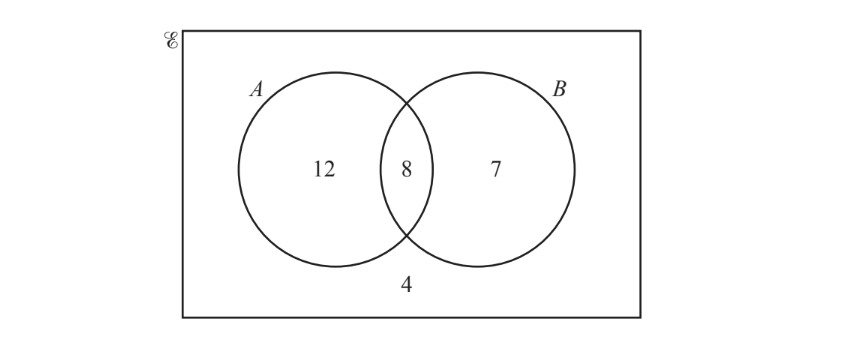
i) Work out the number of students in the class.
(1 mark)
ii) Work out the number of students who like bananas.
(1 mark)
iii) Work out .
(1 mark)
iv) How many more students like apples than like bananas?
(1 mark)
v) One of the students is chosen at random.
Find the probability that this student does not like apples and does not like bananas.
(1 mark)
The table gives some information about the numbers of visitors at a leisure centre one day.
| Adult | Child | Total | |
|---|---|---|---|
| Male | 144 | 240 | |
| Female | 129 | 260 | |
| Total | 225 | 275 | 500 |
i) Complete the table.
(1 mark)
ii) Work out how many more child visitors than adult visitors there are.
(1 mark)
iii) Write down the fraction of visitors that are adults. Give your answer in its lowest terms.
(2 marks)
iv) Write the ratio number of males : number of females. Give your answer in its simplest form.
..................... : ................... [2]
v) One of these visitors is selected at random. Find the probability that this visitor is a male child.
(1 mark)
= { is a natural number less than 15}
* *= {3, 6, 9, 10, 12}
= {2, 3, 4, 5, 9, 11, 13, 14}
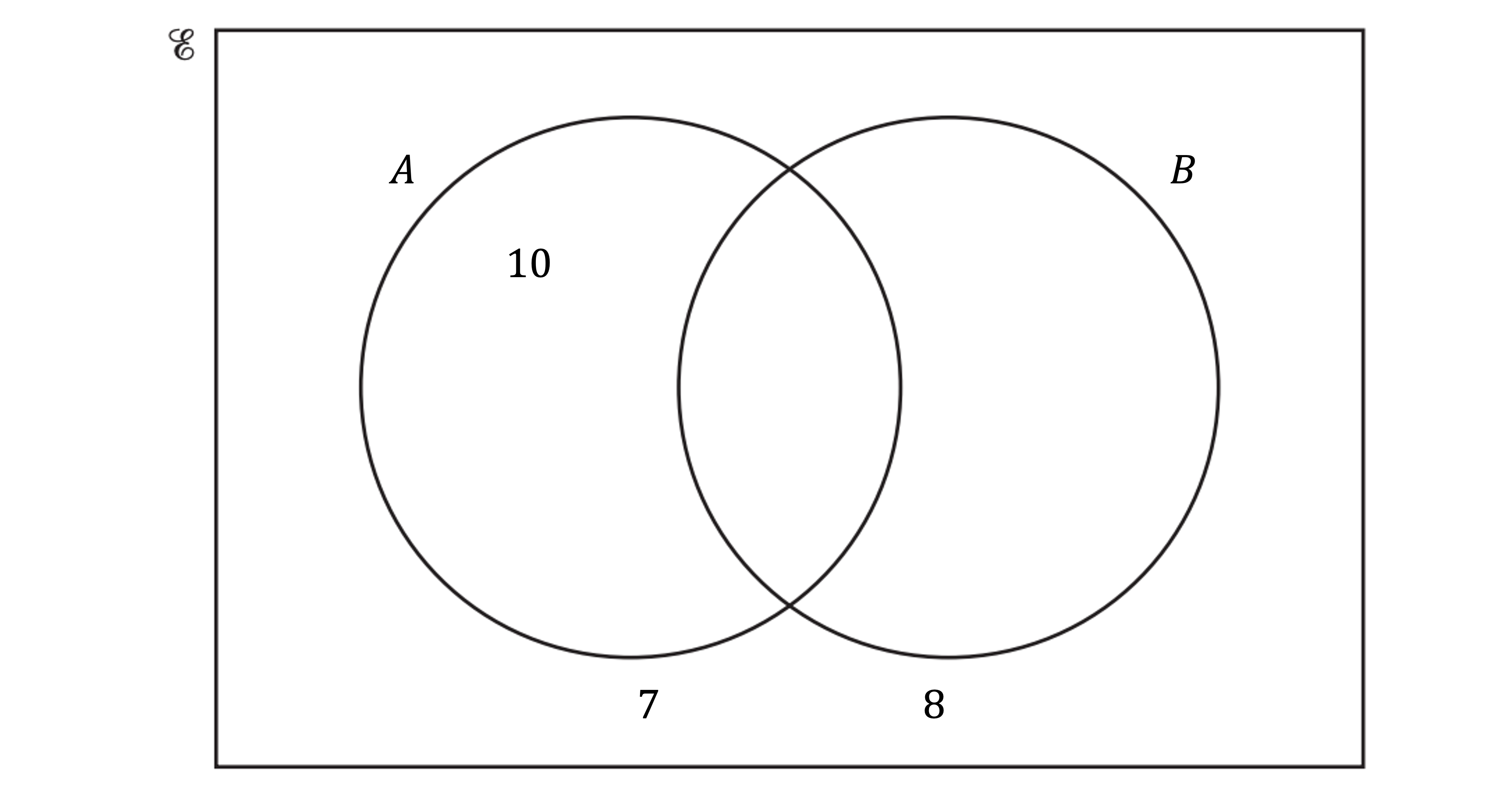
Complete the Venn diagram.
Find .
Find .
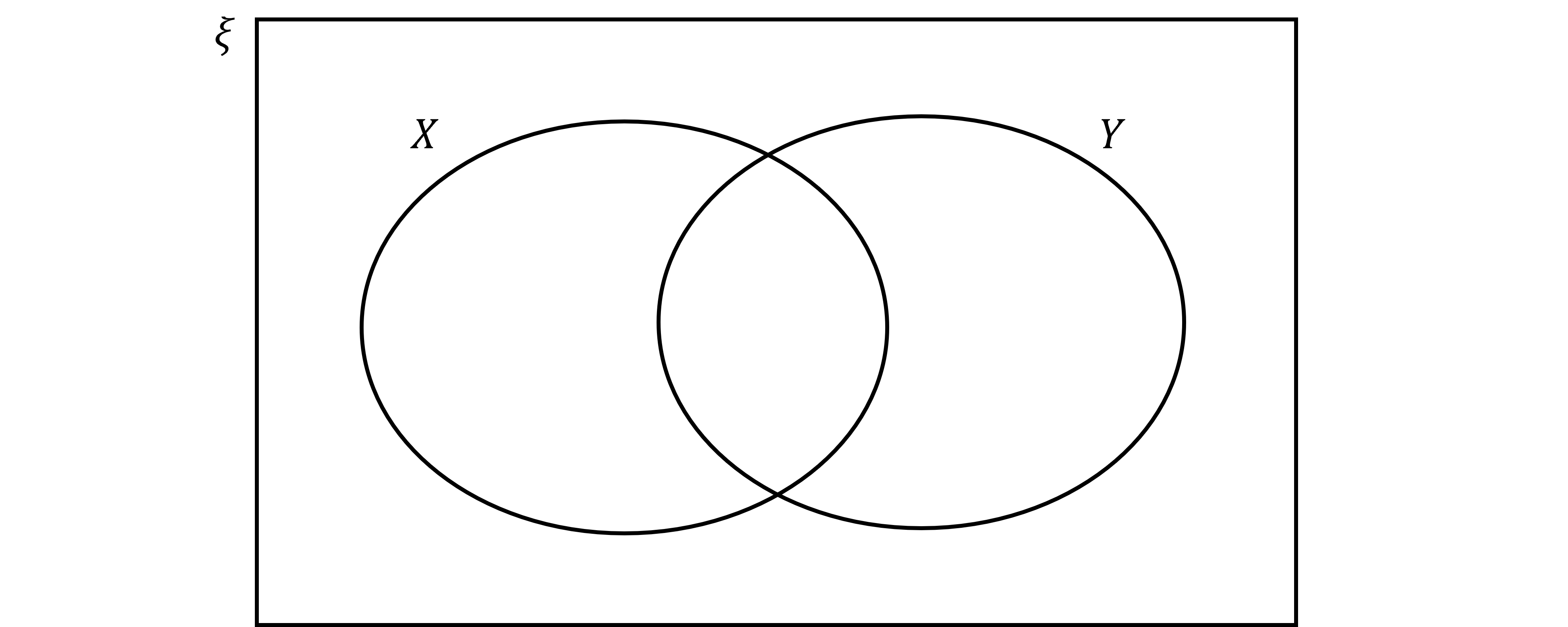
= {positive integers less than 16}
= {prime numbers}
={multiples of 3}
Use this information to complete the Venn diagram.
Extract:
= {positive integers less than 16}
= {prime numbers}
={multiples of 3}
List all the elements of
Extract:
ξ = {positive integers less than 16}
X = {prime numbers}
Y = {multiples of 3}
ξ = {1, 2, 3, 4, 5, 6, 7, 8, 9, 10, 11, 12, 13, 14, 15}
Y = {3, 6, 9, 12, 15}
Find
= { : is a positive integer less than 20} A = { : is an even number} B = { : is a multiple of 3}
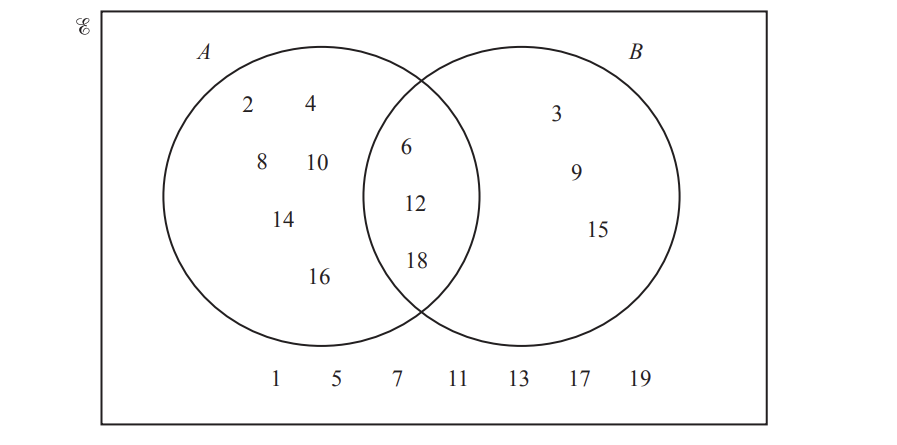
i) Write down .
(1 mark)
ii) List the elements of set .
= { ............................................... } [2]
One of these 19 numbers is picked at random.
Work out the probability that this number is
iiia) not in set and not in set ,
(1 mark)
iiib) in
(1 mark)
iv) Complete the statement.
(1 mark)
= { : is a natural number less-than or slanted equal to15}
= { : is a factor of 12}
= { : is an odd number}
i) Complete the Venn diagram to show the elements of these sets.
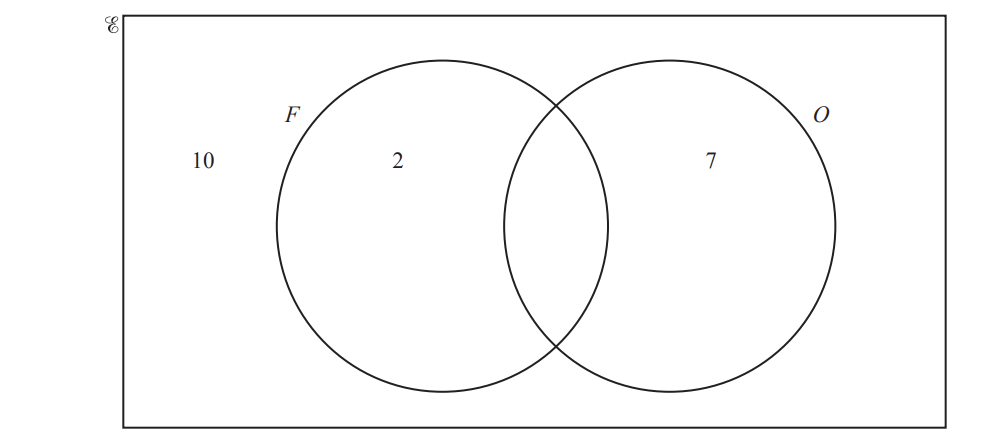
(2 marks)
ii) Write down one number that is in set , but not in set .
(1 mark)
iii) Find .
(1 mark)
iv) A number is chosen at random from .
Work out the probability that this number is in set .
(1 mark)
= {1, 2, 3, 4, 5, 6, 7, 8, 9, 10, 11, 12, 13, 14} = {: is a factor of 14} = {: is a prime number less than 14}
i) Write down the elements in set .
= { ................................................ } [2]
ii) Write down the elements in set .
= { ................................................ } [2]
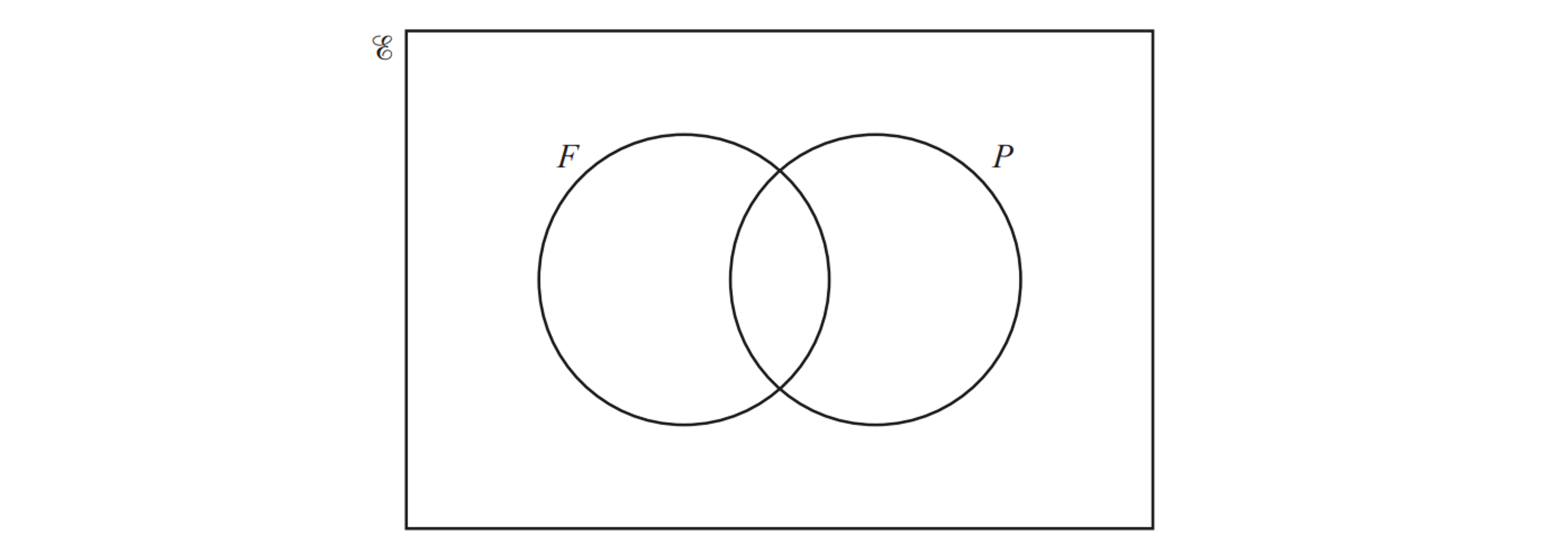
iiia) Complete the Venn diagram.
(2 marks)
iiib) Write down ()
(1 mark)
iiic) A number is chosen at random from the universal set .
Write down the probability that the number is in the set .
(2 marks)
= {children who go to the park} = {children who play tennis} = {children who play golf}
120 children go to the park. 50 play tennis. 75 play golf. 25 do not play tennis or golf.
Complete the Venn diagram.
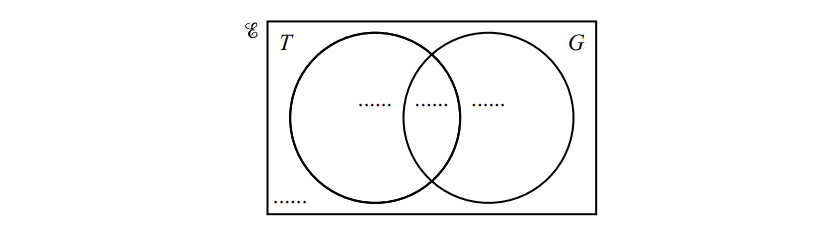
(2 marks)
Extract:
![calligraphic E]= {children who go to the park}
![space T space]= {children who play tennis}
![G] = {children who play golf}
120 children go to the park.
50 play tennis.
75 play golf.
25 do not play tennis or golf.
Find n().
The 262 students at a college each study one of the languages shown in the table.
| French | German | Spanish | Italian | Japanese | Total | |
|---|---|---|---|---|---|---|
| Boys | 27 | 48 | 19 | 123 | ||
| Girls | 32 | 54 | 12 | |||
| Total | 53 | 30 | 262 |
Complete the table.
(3 marks)
Extract:
The 262 students at a college each study one of the languages shown in the table.
| | French | German | Spanish | Italian | Japanese | Total | | Boys | 27 | | 48 | 19 | | 123 | | Girls | | 32 | 54 | | 12 | | | Total | | 53 | | 30 | | 262 | Complete the table.
Find the probability that
i) a girl, chosen at random, studies Spanish,
(1 mark)
ii)a boy, chosen at random, studies French or Italian,
(1 mark)
iii)a student, chosen at random, does not study German.
(1 mark)
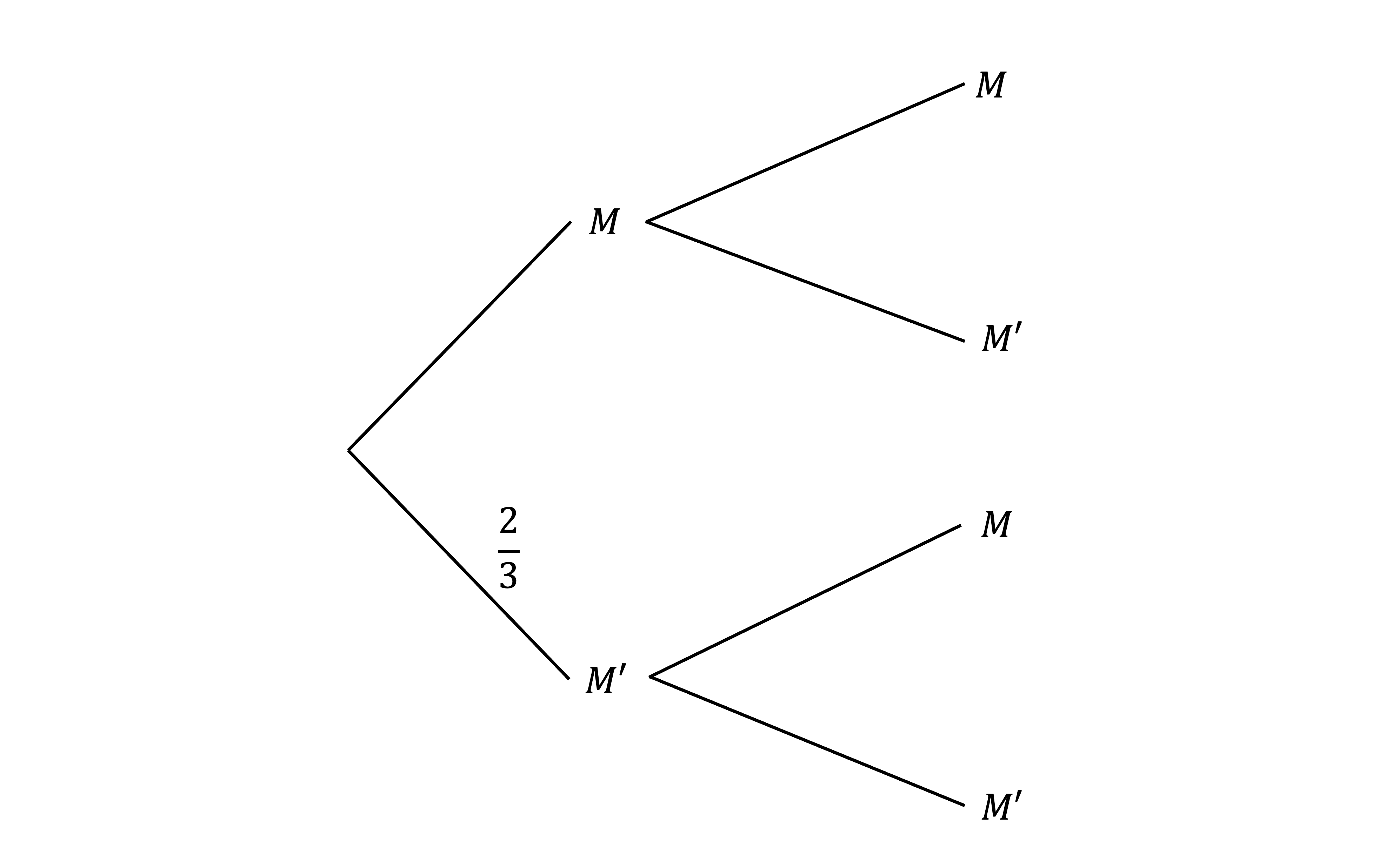
Ali rolls a fair six-sided dice labelled 1 to 6.
Ali gets a point when the dice lands on a number greater than 4.
Let denote the event that Ali's dice lands on a number greater than 4 when rolled.
He rolls the dice twice.
Complete the tree diagram.
Calculate the probability that he gets a point twice.
Calculate the probability that he lands on 4 or less at least once.
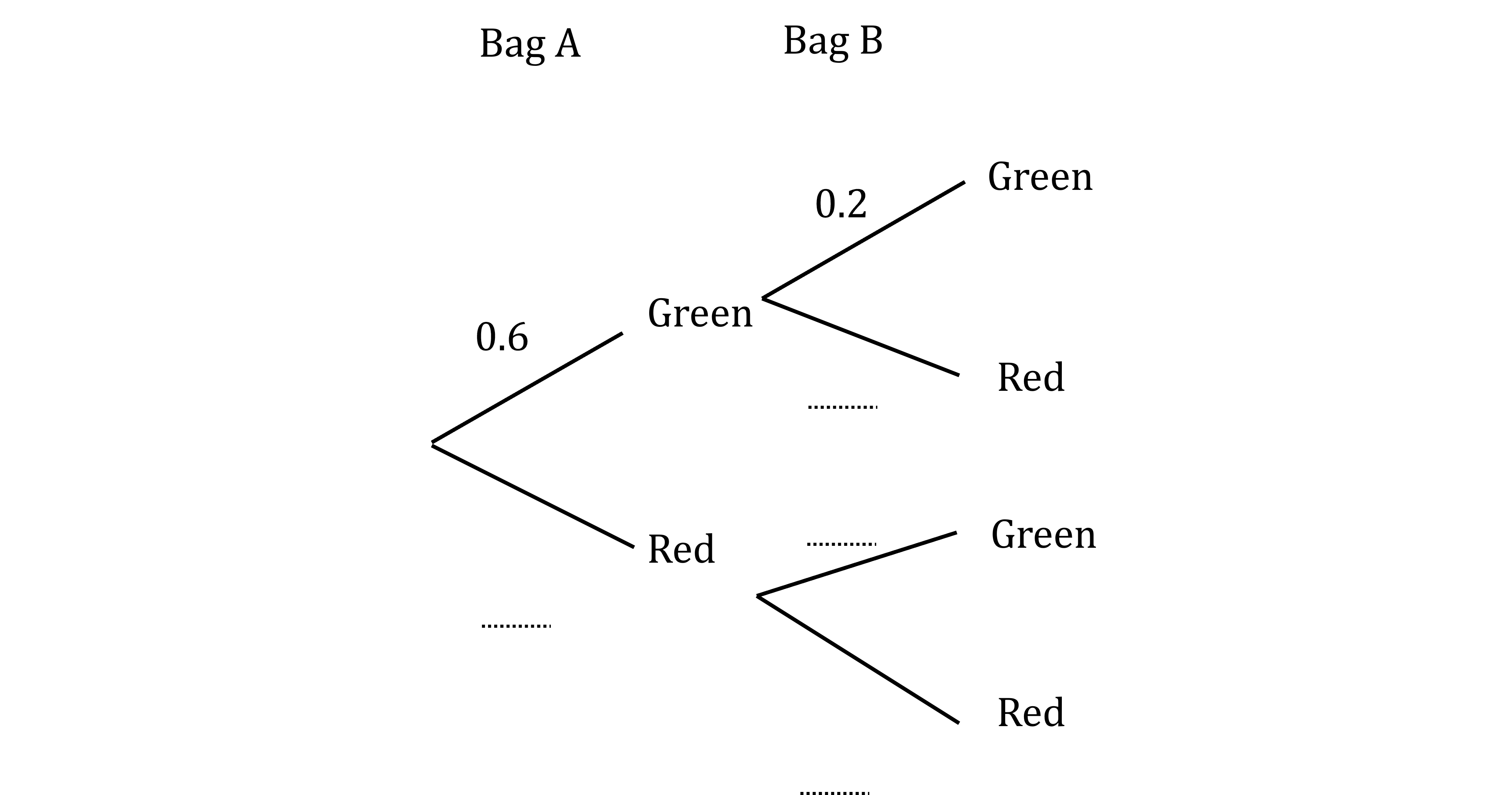
Two bags, A and B, each contain green beads and red beads only.
The probability of taking a green bead at random from bag A is 0.6.
The probability of taking a green bead at random from bag B is 0.2.
A student takes one bead at random from bag A and one bead from bag B.
Complete the tree diagram.
Extract:
Two bags, A and B, each contain green beads and red beads only.
The probability of taking a green bead at random from bag A is 0.6.
The probability of taking a green bead at random from bag B is 0.2.
A student takes one bead at random from bag A and one bead from bag B.
Find the probability he gets one of each colour.