Network Hardware (Cambridge International IGCSE ICT)
Exam board Cambridge International · IGCSEUpdated 2024-05-03
Router
Spec point —
4.1.1
What is a router?
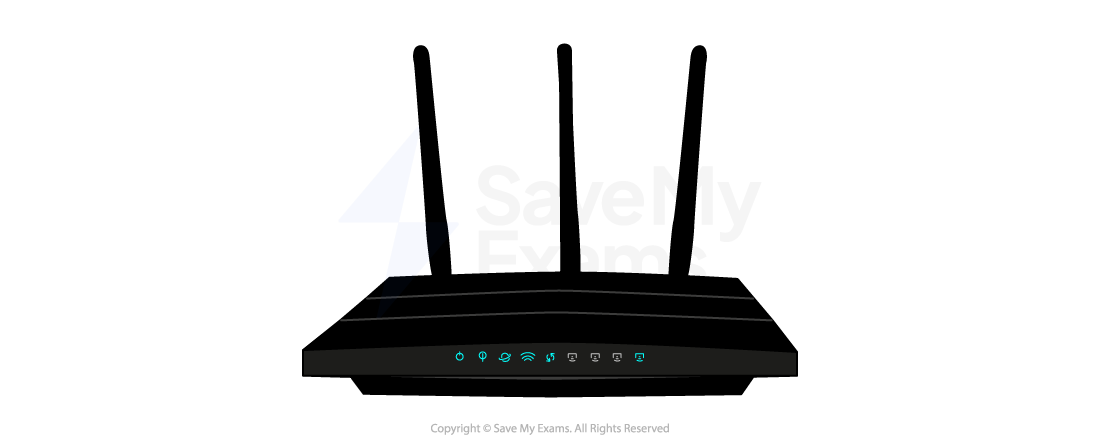
- The router is responsible for routing data packets between different networks
- An example of data the router can direct is, sending internet traffic to the correct destination/devices in your home network
- The router connects networks together, local area networks (LAN) to the wider internet which is a type of wide area network (WAN)
- The router can manage and prioritise data traffic, which can help to keep connections stable
- The router will assign IP addresses to the devices on the network
What are data packets?
- Data packets are small 'chunks' of data that make up a larger piece of data that has been broken down so that is can transmitted over the internet
- Data can include anything from text, images, audio, video, animations, etc, or any combination of these
- A data packet consists of:
| Header | Payload | Trailer |
|---|---|---|
| Source IP address | Actual data being transported | Additional security information (less common) |
| Destination IP address | End of packet notification | |
| Packet number (1 of 5 etc.) | ||
| Error checking (checksums) |
What is an IP address?
- An IP (Internet Protocol) address is a unique identifier given to devices which communicate over the Internet (WAN)
- IP addresses are dynamic, they can change
- IP addresses make it possible to deliver data to the right device
- A device connecting to a network will be given an IP address, if it moves to a different network then the IP address will change
IPv4
- Internet Protocol version 4 is represented as 4 blocks of denary numbers between 0 and 255, separated by full stops
- Each block is one byte (8 bits), each address is 4 bytes (32 bits)
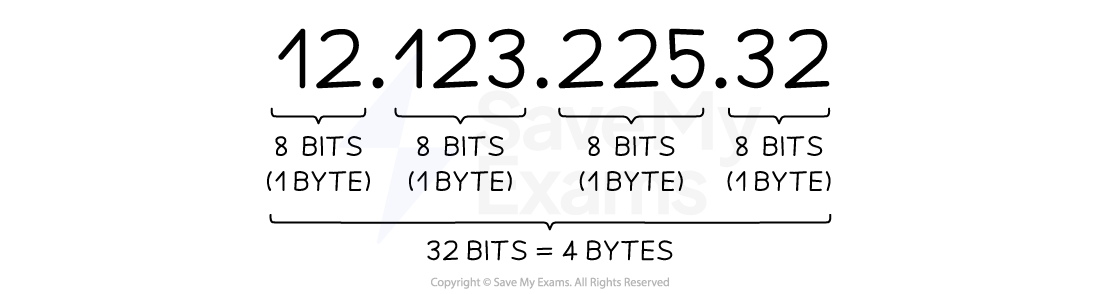
- IPv4 provides over 4 billion unique addresses(232), however, with over 7 billion people and countless devices per person, a solution was needed
IPv6
- Internet Protocol version 6 is represented as 8 blocks of 4 hexadecimal digits, separated by colons
- Each block is 2 bytes (16 bits), each address is 16 bytes (128 bits)
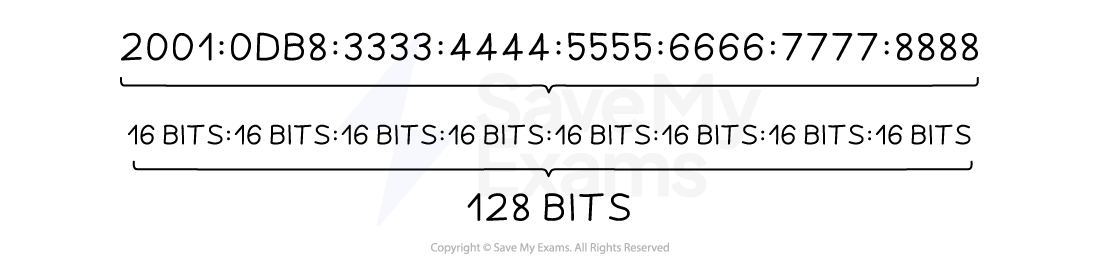
- IPv6 could provide over one billion unique addresses for every person on the planet (2128)
Network Interface Card (NIC)
What is a network interface card (NIC)?
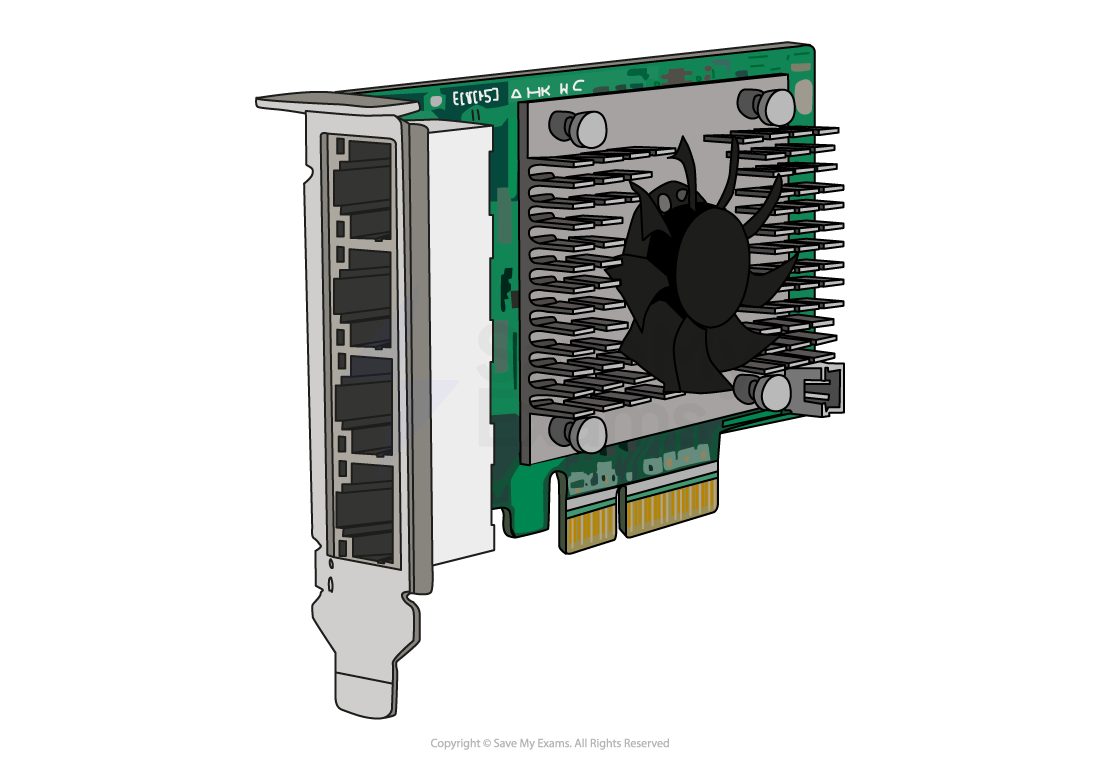
- The Network Interface Card (NIC) is required for a computer to connect to a network
- A NIC can be both wired and wireless and allows your computer to send and receive data over a network
Hub
What is a hub?
- A hub is a networking device which is used to connect multiple devices in a network
- Hubs are "dumb" devices that pass on anything received on one connection to all other connections
- All data is sent to all devices, this can lead to network inefficiencies and security issues
Switch
What is a switch?
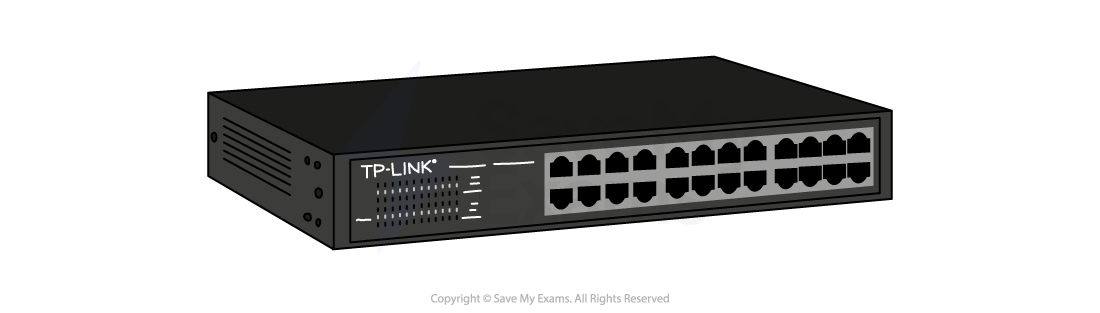
- A network switch is a device that connects multiple devices on a network together
- Unlike a hub, a switch only sends data to the device it was intended for, which improves network efficiency
- This is done by a switch ****having a lookup table
- When a switch receives a** data packet, it examines the destination MAC address** of the packet and looks up that address in the lookup table
- Once it has found the matching MAC address it will then forward the data packet to the corresponding device
What is a MAC address?
- A MAC (Media Access Control) address is a unique identifier given to devices which communicate over a local area network (LAN)
- MAC addresses are static, they can never change
- MAC addresses make it possible for switches to efficiently forward data to the intended recipient
- Any device that contains a Network Interface Card (NIC) has a MAC address assigned during manufacturing
- A device connecting to a local network already has a MAC address, if it moves to a different network then the MAC address will stay the same
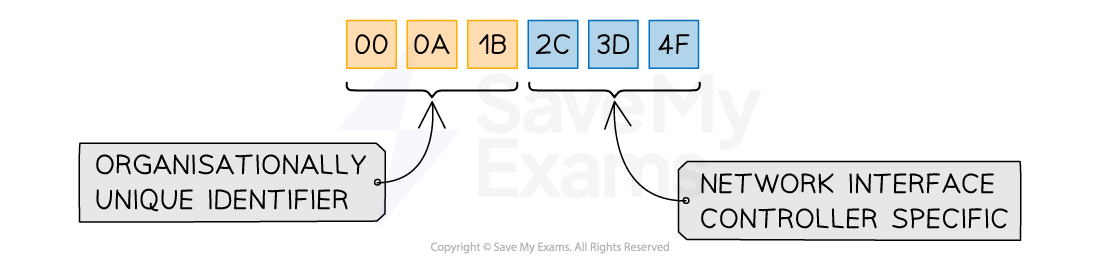
- A MAC address is represented as 12 hexadecimal digits (48 bits), usually grouped in pairs
- The first three pairs are the manufacturer ID number (OUI) and the last three pairs are the serial number of the network interface card (NIC)
- There are enough unique MAC addresses for roughly 281 trillion devices
Bridge
What is a bridge?
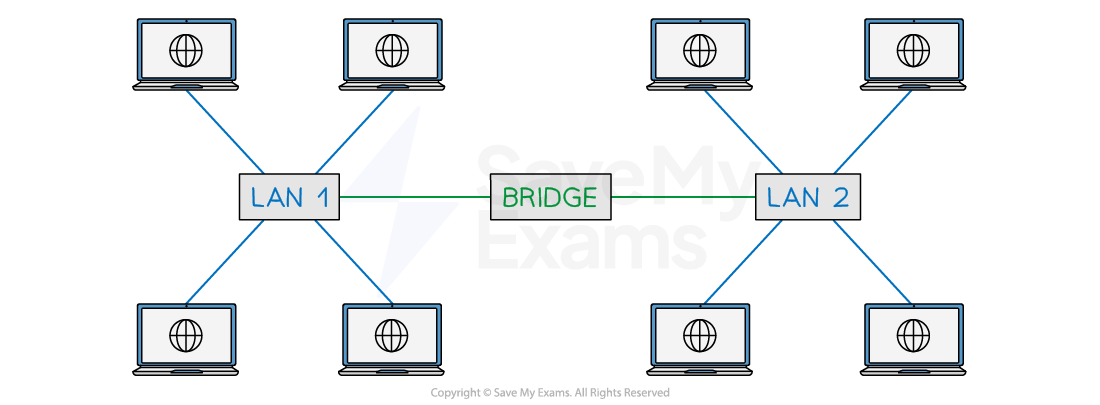
- A network bridge is a device used to connect two local area networks(LANs) together to create one larger network
- Unlike a switch/hub, bridges only connect local area networks together
Worked Example Explain the difference between a switch and a hub regarding data forwarding capabilities.
[2]
Answer
Final answer: A switch forwards data packets based on the destination MAC address and only sends data to the intended device [1]
Final answer: A hub broadcasts incoming data packets to all connected devices [1]
Was this revision note helpful?
Build on this topic