Pollution (Cambridge International IGCSE Geography)
Spec point —
3.7.3· Describe how economic activities may pose threats to the natural environment & people, locally & globally
Pollution
-
Pollution is the introduction of harmful contamination into the environment
-
As development has occurred in countries around the globe, levels of pollution have increased
-
There are five main types of pollution:
- Air
- Water
- Land
- Visual
- Noise
Air pollution causes and impacts
-
Air pollution is a combination of indoor and outdoor particulates
-
Sources of air pollution include:
- motor vehicles powered by petrol/diesel
- factories
- power stations burning fossil fuels
- forest fires
- open fires and wood-burning stoves
-
There are many impacts of air pollution, including:
-
It contributes to 12% of annual deaths worldwide
- This is highest in middle- and low-income countries
-
Indoor pollution in LEDCs due to the use of fuelwood for cooking and heating increases health impacts
-
Increased release of greenhouse gases contributes to the enhanced greenhouse effect
-
Water pollution causes and impacts
-
Water pollution occurs when harmful substances contaminate streams, rivers, aquifers, and oceans
-
The sources of water pollution include:
- fuel spillages
- agricultural waste/pesticides/fertilisers
- leaching of toxic materials from waste
- sewage disposal into rivers and seas
- boat oil/diesel waste
- deforestation leads to soil erosion and soil being washed into waterways
- plastic waste—becoming microplastics
- radioactive waste
-
The impacts of water pollution are widespread and include:
- Reduction in available clean drinking water
- Reduction in crop yields and death of crops
- Damage to ecosystems and habitats
- Death of wildlife
- Abnormalities in fish and other sea/water wildlife
- Accumulation of toxins in the food chain
- Spread of diseases such as cholera and typhoid
Land pollution causes and impacts
-
Land pollution is the presence of contaminants in the soil at high enough concentrations to pose a risk to humans and the environment
-
Sources of land pollution include:
- solid waste—from domestic and industrial sources
- agricultural waste/pesticides/fertilisers
- mining waste - toxic heavy metals such as mercury
- demolition and construction waste
-
The presence of land pollution can lead to:
- reduced crop yields
- leaching of toxins into the water system
- pollutants entering the food chain through plants
- ecosystem and habitat destruction
- economic losses
Visual pollution causes and impacts
-
Visual pollution is the impact of human-made constructions or pollution that affect the visual landscape
-
The main causes of visual pollution include:
- buildings
- energy production - power stations, wind turbines
- signs and advertising (billboards with lights)
- power lines and structures (pylons, mobile phone masts)
- waste
-
The impacts of visual pollution include:
- a lower quality of life
- stress and anxiety
- an impact on the economy
- distraction - may lead to accidents
Noise pollution causes and impacts
-
Noise pollution is defined as harmful or annoying levels of noise in an environment
-
The causes of noise pollution include:
- transport - roads and airports
- construction
- industry
- night activities—nightclubs, bars
- energy production - wind turbines, power stations
-
Noise pollution has a range of impacts, including:
- hearing loss
- scaring wildlife—affects feeding and breeding
- sleep disturbance
- stress and anxiety
- contributing to high blood pressure, heart disease
- negative effects on child development
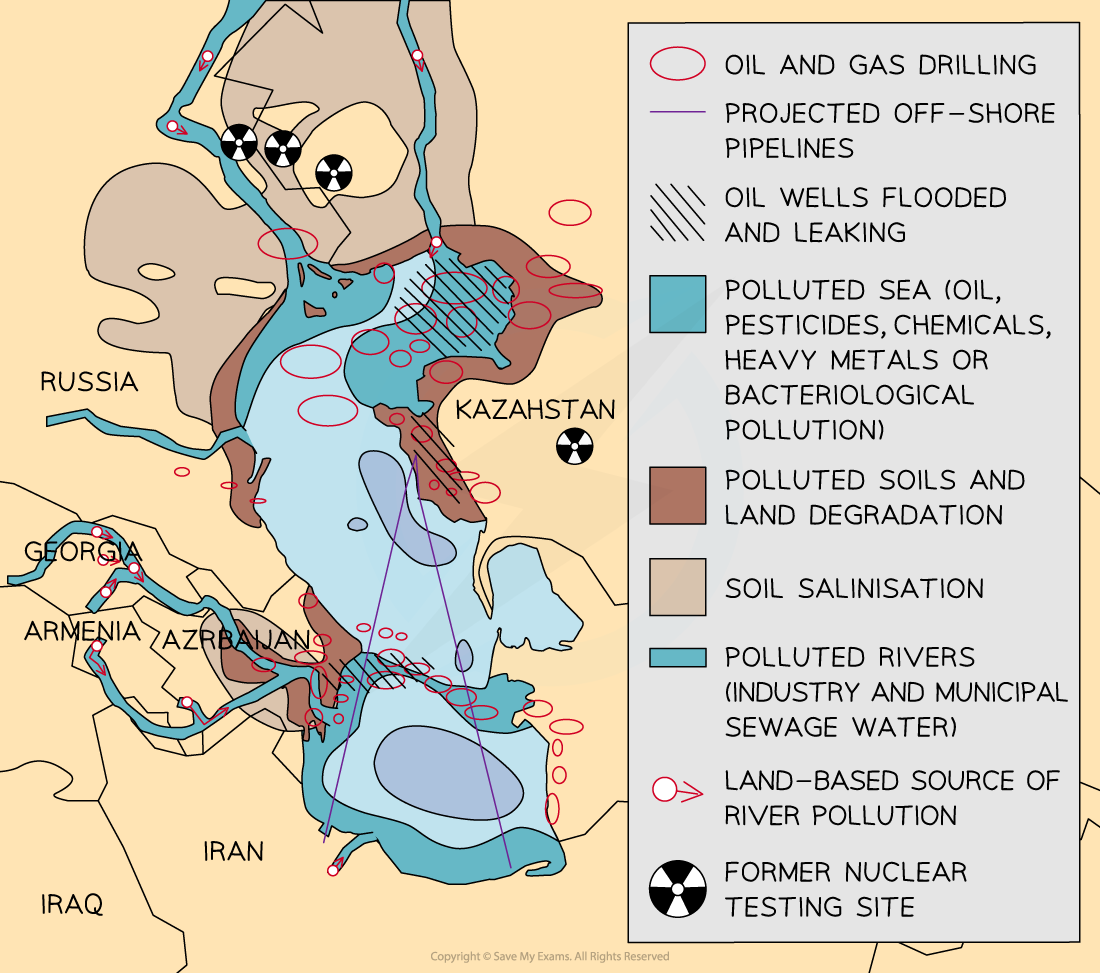
Worked Example Study Fig 1, which shows information about threats to the natural environment in the Caspian Sea.
Using evidence from Fig 1 only, suggest three likely impacts on the natural environment of pollution in the Caspian Sea.
[3 marks]
Answer:
- Damage to wetlands/river delta [1]
- Kills species in wetlands/river deltas/impacts food chains in wetlands/river deltas [1]
- Fish killed/numbers decrease/abnormalities [1]
- Fish unable to spawn/spawning/breed/breeding grounds destroyed [1]
- Habitats destroyed [1]
Sustainable management of pollution
- Sustainable management of pollution means ensuring that industries, urban growth, agriculture and domestic activities impact the soils, air, water, landscape and noise levels as little as possible
- There are many ways in which this can be achieved
Air
- Improved public transport and electric vehicles to reduce transport emissions
- Increase the use of renewable energy
- Congestion charges in large cities such as London to reduce the use of vehicles
- Use of unleaded and low-sulphur fuels
- Filters on the chimneys of factories and power stations
- Smokeless fuels
- International agreements (Paris and Kyoto) regarding gas emissions
- Reduced use of energy to reduce the need for fossil fuel power stations
Water
- Regulations on the amounts of fertilisers and pesticides used
- Increased use of water treatment works to treat sewage waste before releasing it back into the waterways
- Education regarding the disposal of plastic waste
- Fines for factories/industries discharging waste into waterways
Land
- Recycling and reuse of materials to reduce the amount of waste
- Separation of waste into compostable and recyclable waste by householders
- Regulations regarding the use of fertilisers and pesticides
- Targets set for local councils and authorities regarding recycling
Visual
- Reduction in the number of billboards/advertising boards that can be in an area
- Planting of trees to screen roads/quarries and other developments
- Buildings that blend into the environment
- Disguising mobile phone masts
- Putting electrical and telephone cables underground
- Regular waste collection and provision of bins
Noise
- Limiting hours of work for construction sites and factories
- Noise barriers between houses and main roads
- Siting activities away from population centres
Was this revision note helpful?