Introduction to Vectors (Cambridge International IGCSE Further Maths)
Basic Vectors
What is a vector?
-
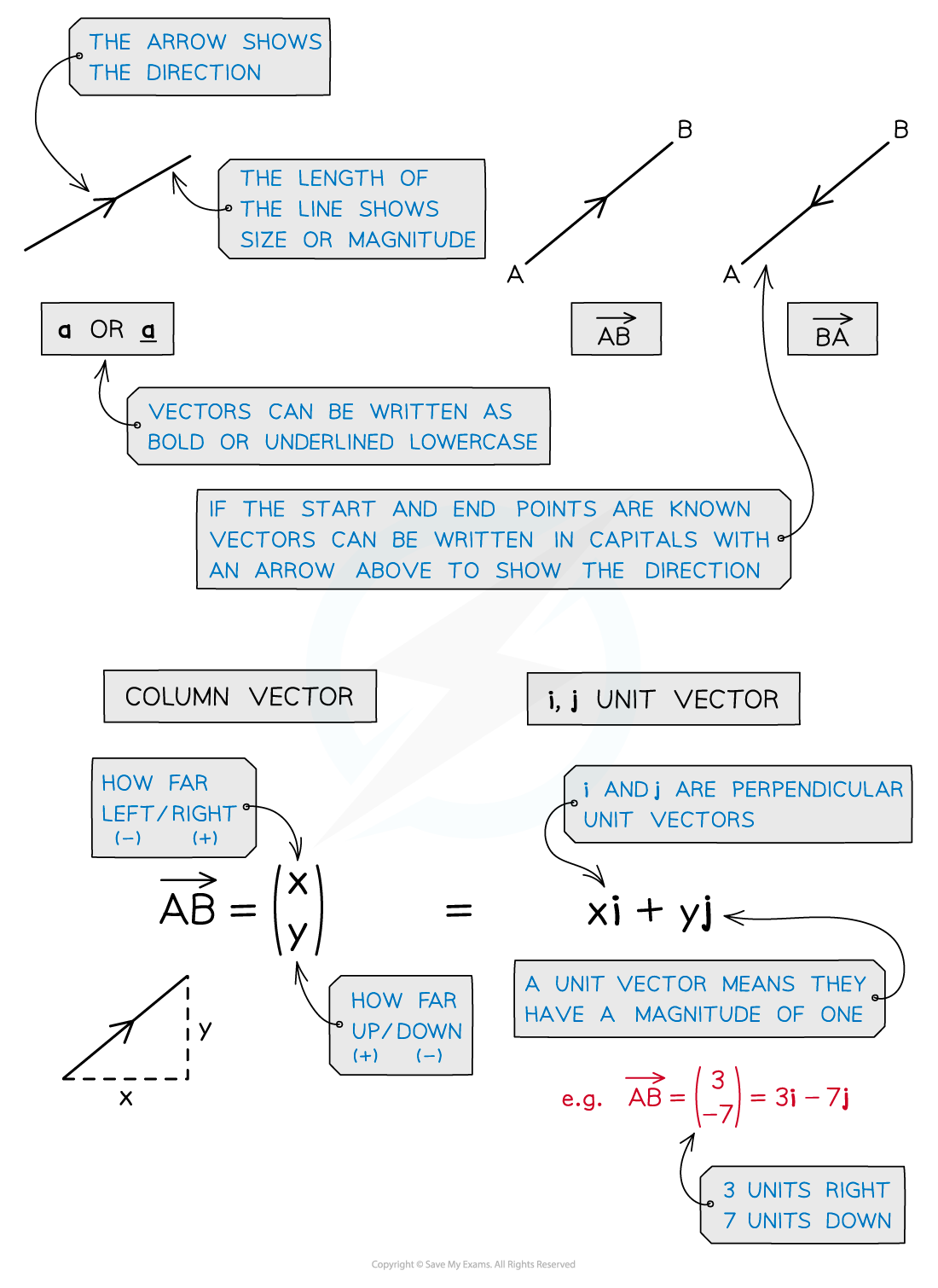
Vectors represent a movement of a certain magnitude (size) in a given direction
- For example: two objects with velocities of 7 m/s and ‑7 m/s are travelling at the same speed but in opposite directions
-
You should have already come across vectors when translating functions of graphs
-
They appear in many contexts of maths including mechanics for modelling forces
-
A vector in two directions has components in the direction of the x- and y- axes
- Vector quantities can have positive or negative components
-
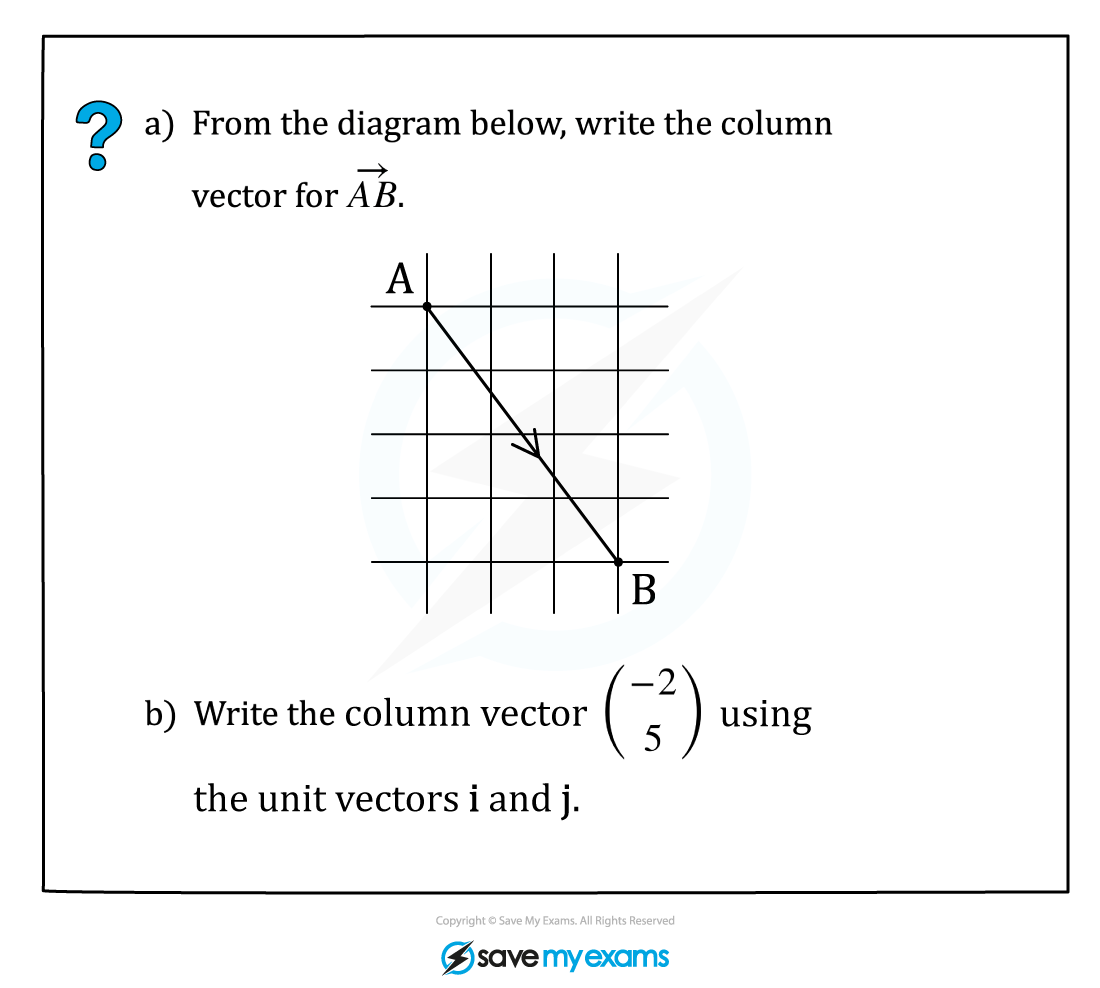
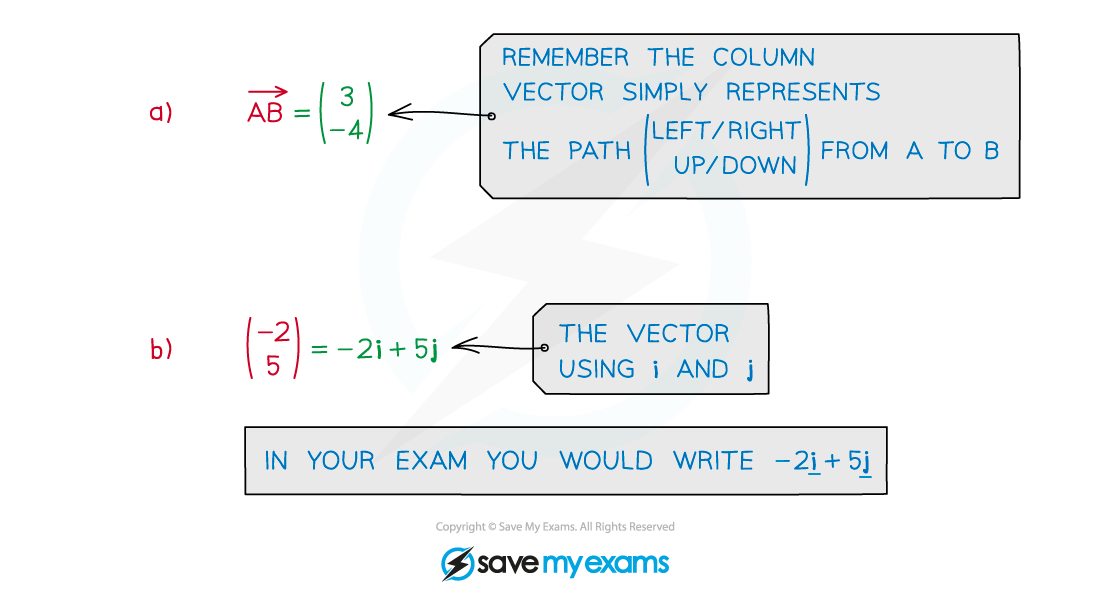
Vectors can be represented in different ways such as a column vector or as an i and j unit vector
-
Some examples of vector quantities you may come across are displacement, velocity or acceleration
Exam Hint
- Think of vectors like a journey from one place to another
- Diagrams can help, if there isn’t one, draw one
- In your exam you can’t write in bold so should underline your vector notation
Worked Example
Magnitude of a Vector
How do you find the magnitude of a vector?
-
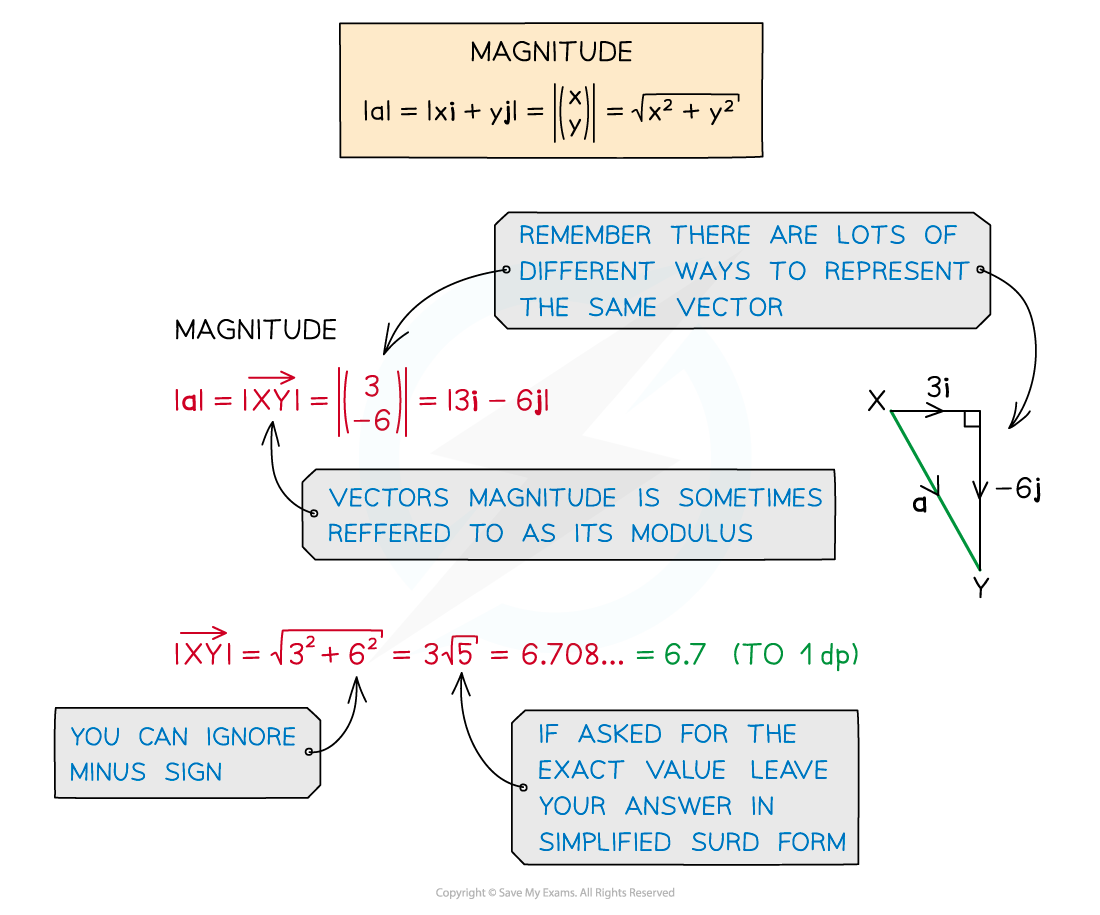
The magnitude of a vector tells us its size or length
-
The magnitude of the vector is denoted
- The magnitude of the vector a is denoted |a|
-
The magnitude of a vector can be found using Pythagoras’ theorem
-
The magnitude of a vector is found using
- where
What is a unit vector?
-
A unit vector has a magnitude of 1
-
The vectors and are unit vectors
- the direction of is in the positive -direction
- the direction of is in the positive -direction
-
To find a unit vector in the direction of a given vector divide the vector by its magnitude
Exam Hint
Finding the magnitude of a vector is the same as finding the distance between two coordinates
- Commit the formula to memory and be prepared to use it in the exam
Worked Example A vector .
a) Find .
is the magnitude of the vector, so use Pythagoras' theorem.
b) Find the unit vector in the direction of .
For a unit vector, divide the vector by its magnitude, which was found in part (a).
The unit vector in the direction ofis.
Position Vectors
What is a position vector?
-
Position vectors describe the position of a point in relation to the origin
-
They are different to displacement vectors which describe the direction and distance between any two points
-
The position vector of point A is written with the notation a =
- The origin is always denoted O
-
The individual components of a position vector are the coordinates of its end point
- For example the point with coordinates (3, -2) has position vector 3i – 2j
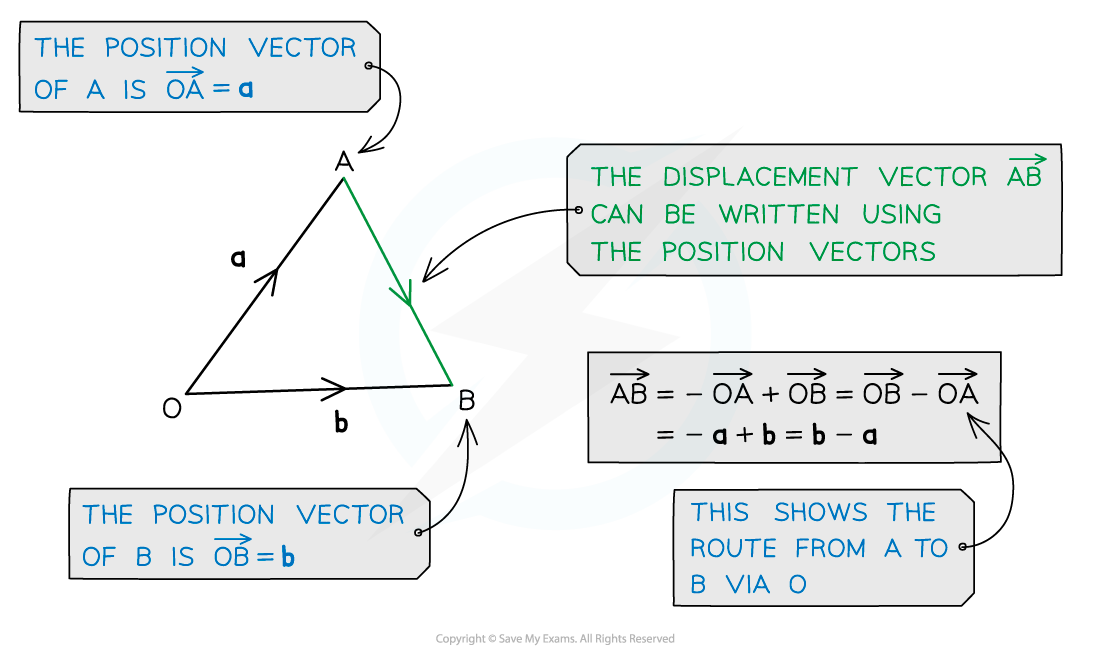
How do I find the distance between two points using vectors?
- The distance between two points is the magnitude of the vector between them
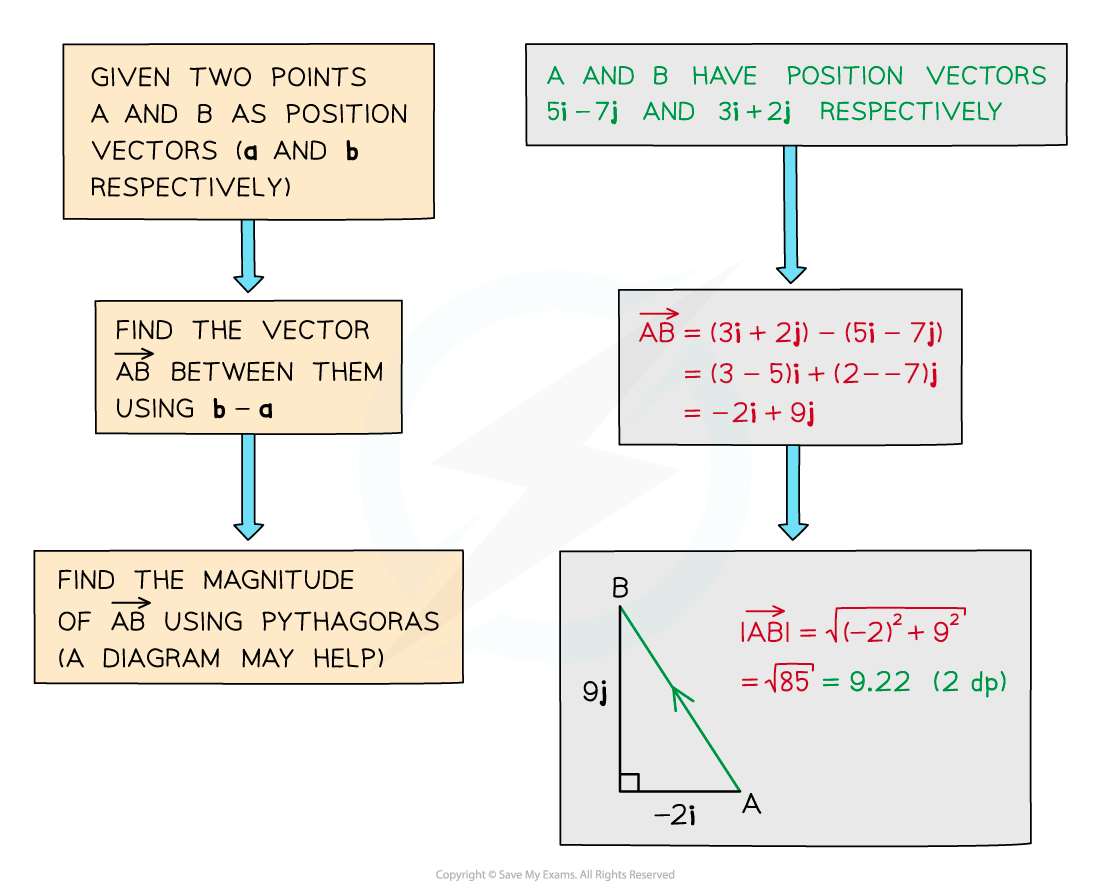
How do I find the magnitude of a displacement vector?
-
You can use coordinate geometry to find magnitudes of displacement vectors from A to B
-
From the position vectors of A and B you know their coordinates
- If , then point A has coordinates
- If , then point B has coordinates
-
The distance between two points is given by
- So
-
For example, if points A and B have position vectors and respectively
- then
-
-
Alternatively, you could find by
-
first using to find in vector form
- and then calculating its magnitude directly
-
See the Worked Example below
-
Exam Hint
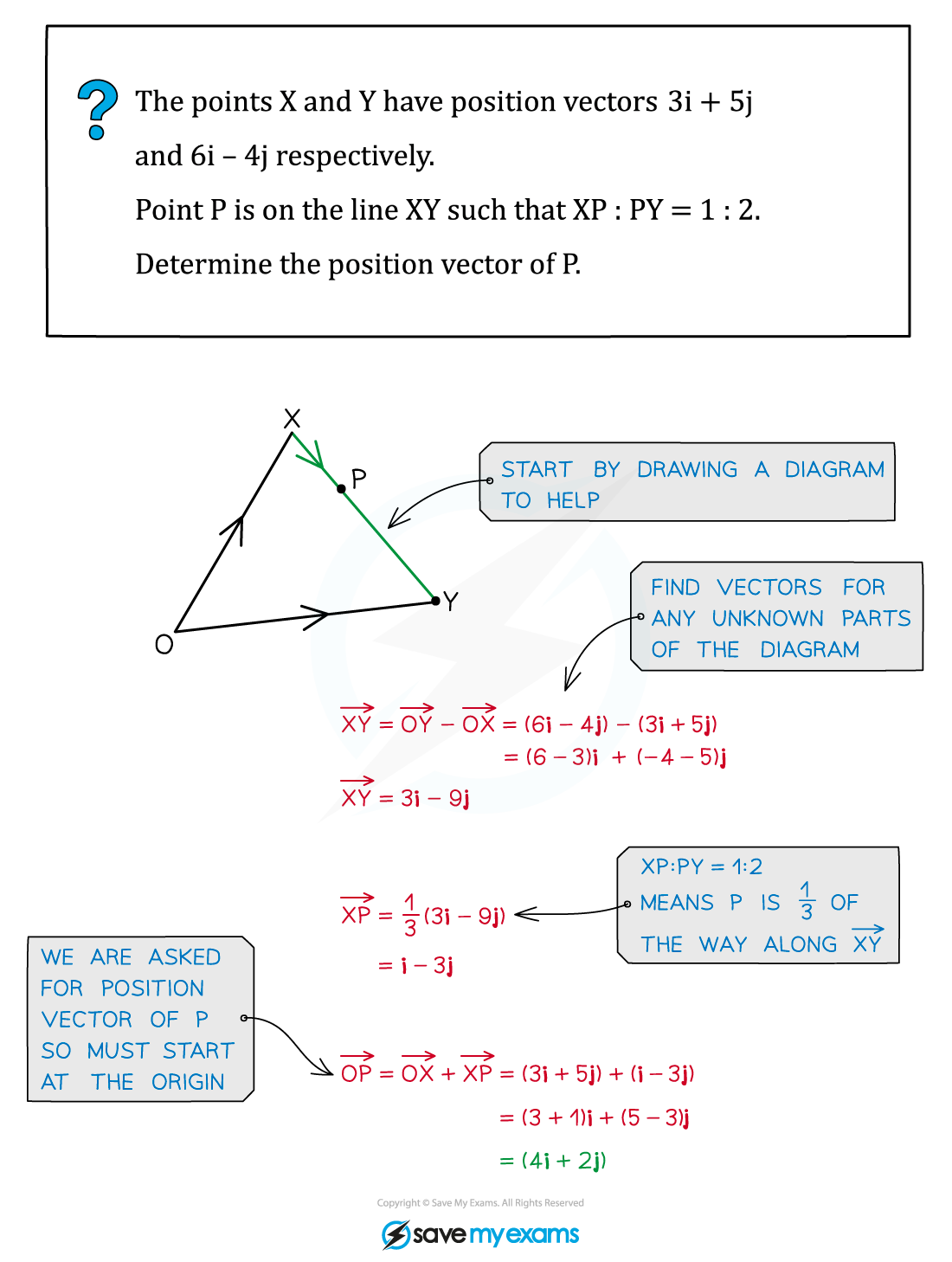
- Remember if asked for a position vector, you must find the vector all the way from the origin
- Diagrams can help, if there isn’t one, draw one
Worked Example
Was this revision note helpful?
Build on this topic