Climate & the Natural Greenhouse Effect (Cambridge International IGCSE Environmental Management)
What is climate?
-
Climate refers to the average weather conditions in a specific area over a long period of time, typically 30 years or more
- It includes patterns of temperature, humidity, and precipitation
-
The climate is influenced by various factors, such as:
- Solar radiation
- Atmospheric circulation patterns
- Ocean currents
- Land features
- Greenhouse gas concentrations
-
The global climate conditions of the Earth have changed over time, leading to colder and warmer periods
-
The last 2.6 million years are the Quaternary period, when there have been 60 cold periods and warmer interglacial periods
-
The last ice age ended approximately 25,000 years ago
What is the natural greenhouse effect?
-
The greenhouse effect is a naturally occurring phenomenon where solar radiation passes through the atmosphere to the Earth's surface
-
Some of this energy is absorbed by the land and oceans, heating the Earth
-
Some solar energy is reflected back into space
-
The remaining solar energy is absorbed by the greenhouse gases and clouds and then re-emitted in all directions back to Earth, causing the temperature of the surface to rise
-
This process is important to ensure that Earth is warm enough for life
-
Without the greenhouse effect, the average temperature would be much colder, making the planet uninhabitable
- For example, the average surface temperature of Earth is about 15 °C
- Without the greenhouse effect, it would be about -18 °C
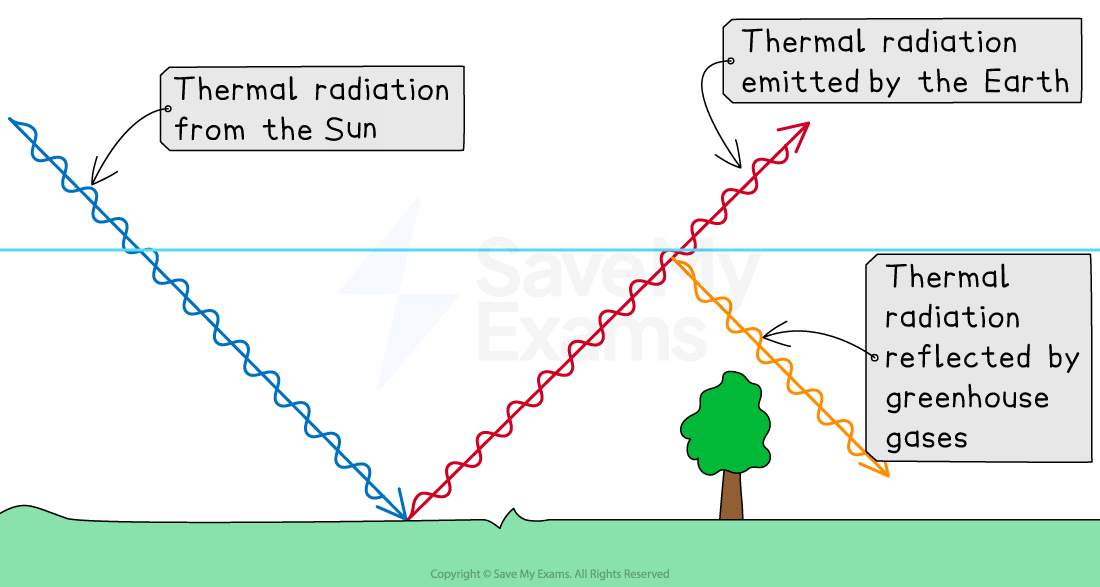
Natural greenhouse effect
Exam Hint Remember that weather is what you get on a day-to-day basis; climate is the conditions you expect a place to have. You expect the UK to be fairly cool and wet, Singapore to be warm and humid, and Egypt to be hot and dry.
Was this revision note helpful?
Build on this topic