The Types & Consequences of Unemployment (Cambridge International IGCSE Economics)
Types of unemployment
Spec point — "• frictional unemployment • structural unemployment • cyclical unemployment • seasonal unemployment"
Types of unemployment
- There are specific causes of unemployment
- Understanding the cause is helpful as each cause may require different solutions to be implemented
Types of unemployment
| Type | Explanation |
|---|---|
| Seasonal | - Seasonal unemployment occurs as certain seasons come to an end and labour is not required until the next season - E.g., fruit pickers, summer seaside resort workers, ski instructors |
| Frictional | - Frictional unemployment occurs when workers are between jobs - This is usually short-term unemployment - Workers have voluntarily left their previous job to search for another |
| Structural | - Structural unemployment occurs when there is a mismatch between jobs and skills in the economy - It usually happens as the structure of an economy changes, e.g. the secondary sector is declining and the tertiary sector is growing - There is no longer a need for a specific type of worker, e.g., shipbuilders in Glasgow - Many Western industries have relocated production to China, causing structural unemployment in their economies - Unless workers receive help to retrain, they are often left unemployed or underemployed |
| Cyclical | - Cyclical or demand-deficient unemployment is caused by a fall in total demand in an economy - This typically happens during a slowdown or recession - The demand for labour is a derived demand, as it stems from the demand for goods/services - As output falls in the economy, firms lay off workers |
The consequences of unemployment
Spec point —
4.6.4· "consequences of unemployment for the individual, producers/firms, the government and the economy"
The consequences of unemployment
-
Unemployment can have serious impacts on individuals, producers/firms, the government, and the wider economy
-
The effects are often connected
- For example, a loss of income for individuals reduces spending, which lowers firms’ sales, leading to lower tax revenue for the government
-
-
The effects of unemployment, especially long-term unemployment, are extremely damaging
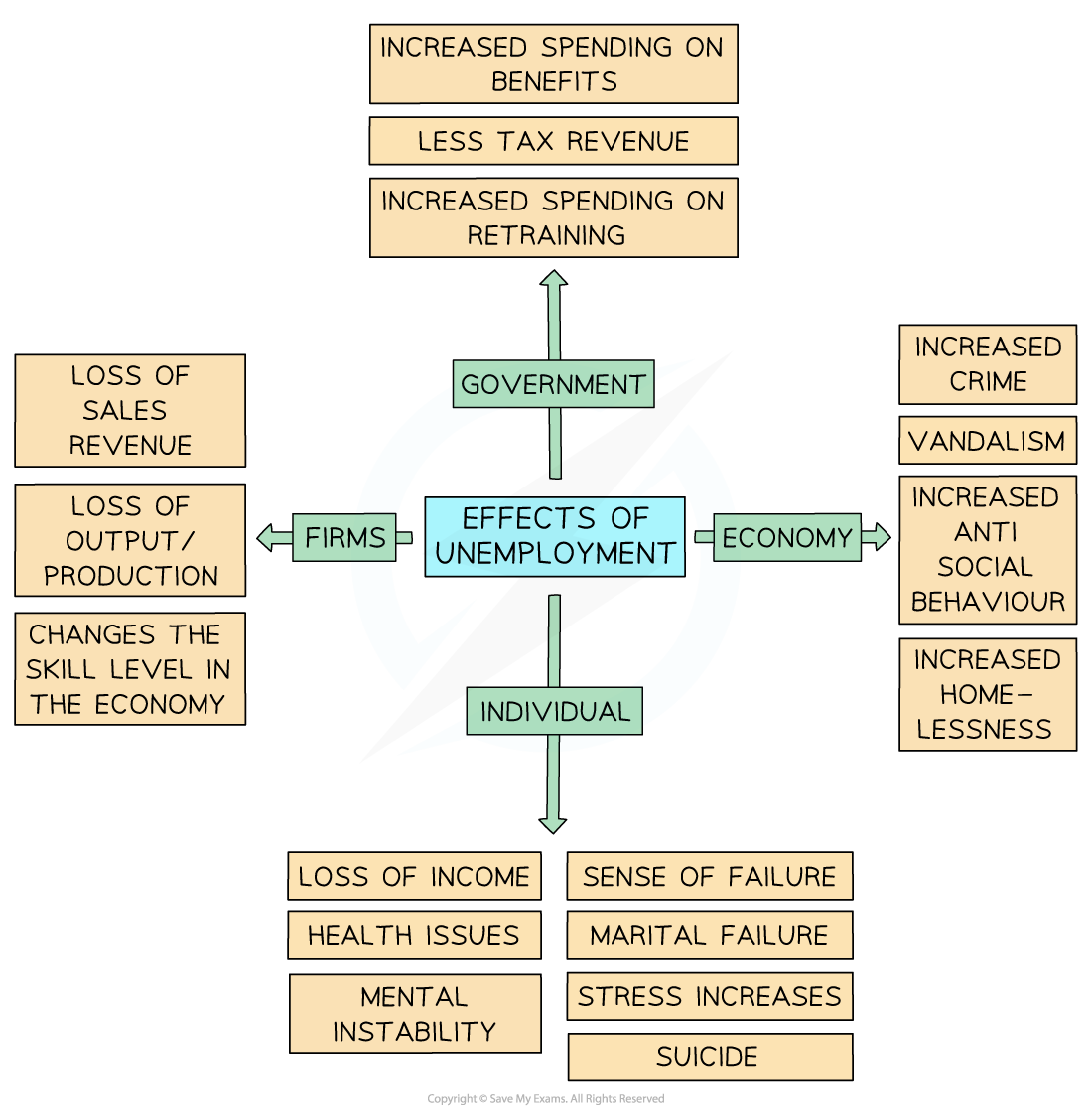
The consequences of unemployment
Impact on individuals
-
Loss of income
- Unemployed people cannot earn wages, reducing their ability to buy goods and services
-
Sense of failure
- Being without work can harm self-esteem and confidence
-
Health issues
- Physical and mental health can suffer due to financial pressure and inactivity
-
Mental instability
- Anxiety and depression can increase during long periods of unemployment
-
Marital breakdown
- Financial stress can lead to relationship problems
-
Stress and suicide
- Extreme cases of unemployment-related stress may lead to suicide
Impact on producers/firms
-
Loss of sales revenue
- Unemployed consumers spend less, reducing firms’ income
-
Loss of output
- Fewer workers mean lower production levels
-
Lower skill levels
- If unemployment lasts a long time, workers lose skills, reducing the quality of the labour force
Impact on government
-
Increased spending on benefits
- More people claiming unemployment or welfare payments
-
Lower tax revenue
- Less income tax, corporation tax and sales tax is collected
-
Increased spending on retraining
- Governments may need to fund programmes to help people back into work
Impact on the economy
-
Increased crime and vandalism
- Unemployment can lead to higher crime rates due to financial desperation or social unrest
-
Increased anti-social behaviour
- Frustration and exclusion from the labour market can cause social problems
-
Increased homelessness
- Without income, some people may lose their homes
Was this revision note helpful?