The Importance of a Motivated Workforce (Cambridge International IGCSE Business)
Exam board Cambridge International · IGCSEUpdated 2025-08-27
Why people work
Motivation and work
-
Motivation is the inner desire or willingness that drives a person to take action and achieve a specific goal or outcome
- Motivation can be intrinsic, coming from within a person (values, beliefs etc)
- Motivation can be extrinsic, coming from external factors (rewards or punishments)
Why do people work?
-
People work for many different reasons
- They need to earn money to fund their lifestyle and ensure they have the necessities required
- For some, work is voluntary or low-paid and done to give them a purpose
- Some people work for the opportunity to mix with other people
- For many, employment allows them to fulfil their aspirations
Why people work
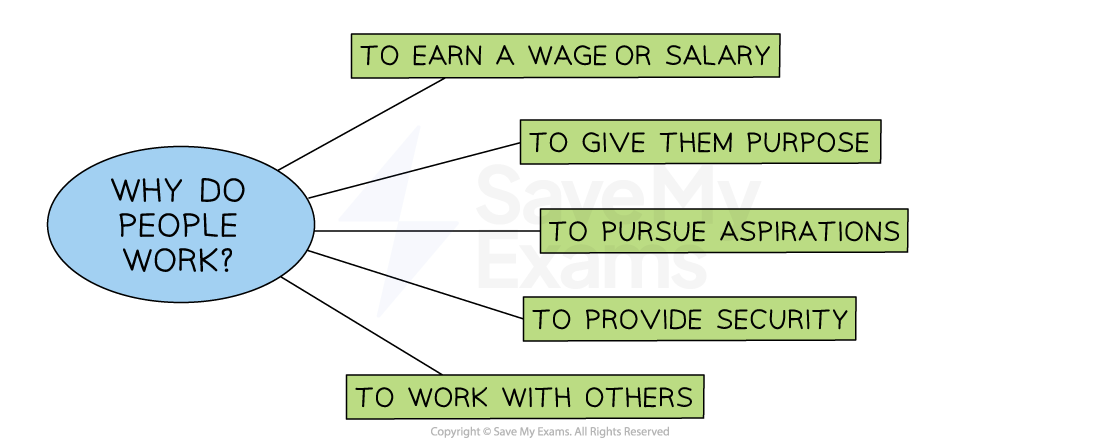
Individuals go to work for a variety of reasons, including earning a wage or salary and to give them a purpose
Benefits of a motivated workforce
Spec point — "improved labour productivity, reduced absenteeism, lower labour turnover and greater willingness to accept change/new methods of working"
Benefits of a motivated workforce
- A motivated workforce brings a range of important benefits that can improve performance, reduce costs and give a business a competitive advantage
| Benefit | Explanation |
|---|---|
| Increased productivity and efficiency | - Motivated employees are more productive, meaning they can produce more in less time - This often results in higher output and better quality, improving customer satisfaction - Greater productivity allows the business to increase profits without increasing labour costs |
| Lower labour turnover | - Motivated employees feel valued and are more likely to stay with the company - This leads to lower labour turnover, reducing the need for frequent recruitment and training - It also saves time and money while keeping experienced staff who help maintain consistent quality |
| Higher reliability and loyalty | - Motivated workers are more reliable - They arrive on time, meet deadlines and take fewer sick days - Their loyalty builds trust with the business and creates a more positive workplace culture |
Exam Hint Don’t just say motivation is “good for the business” – examiners want specific outcomes such as higher productivity, lower absenteeism, and reduced labour turnover
Was this revision note helpful?
Build on this topic