Business Success & Failure (Cambridge International IGCSE Business)
Why businesses succeed
Spec point — "reasons why businesses succeed or fail, e.g. management skills, availability of finance, suitability of product, demand for products, changes in the economy, level of competition"
Why businesses succeed
- Successful businesses often share similar strengths, such as good management, strong products and enough finance
- These factors help them grow, stay competitive, and meet customer needs in changing markets
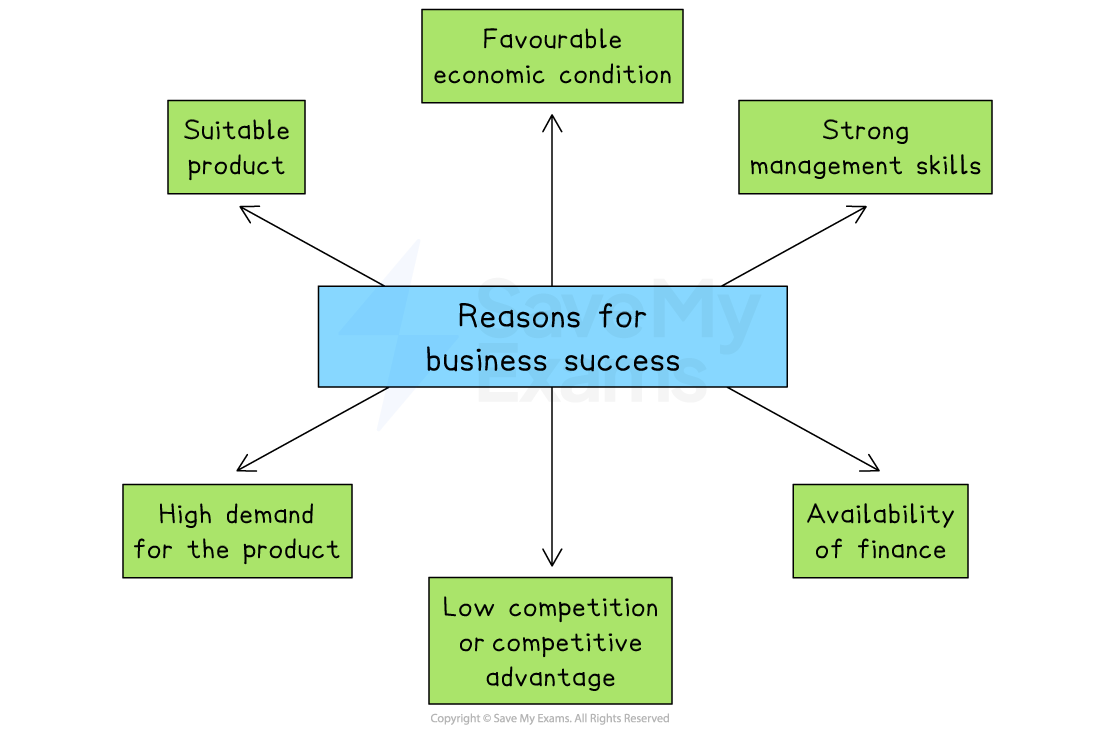
Key reasons for business success include strong management skills, the availability of finance and favourable economic conditions
Strong management skills
-
Good managers make effective decisions, organise resources well and motivate employees
-
They plan ahead, solve problems quickly, and lead the business towards its goals
- For example, Steve Jobs helped Apple succeed by making bold decisions and focusing on design and innovation
Availability of finance
-
Having enough money (capital) allows a business to invest in equipment, marketing, staff and product development
- For example, Amazon used early investment to grow its operations and dominate online shopping
Suitable product
-
A successful business offers a product that solves a problem, meets customer needs or has unique features
-
Products must be high quality and appealing to the target market
- For example, Dyson vacuum cleaners became popular by fixing problems like loss of suction
High demand for the product
-
When many people want the product, sales rise and the business earns more profit
-
Demand can increase due to trends, changes in lifestyle or special events
- For example, Zoom became a global success during the COVID-19 pandemic as remote working increased
Favourable economic conditions
-
In a strong economy, people have more money to spend, which increases sales
-
Low interest rates and low inflation can also help businesses grow
- For example, during economic growth periods, car manufacturers often see rising sales
Low competition or competitive advantage
-
Businesses succeed when they offer something better than their rivals
- For example, lower prices, better quality or a strong brand
-
Having few competitors also gives more control over pricing and customers
- For example, Nike stays successful by constantly innovating and using powerful branding
Why businesses fail
-
Business failure is a risk to both new and established businesses
-
In 2021, an average of 8% of businesses in EU countries failed
- In Estonia, almost one in four businesses failed
- However, in Greece, just over 2% of businesses failed
-
-
New businesses are often more at risk of failure than well-established businesses
- This is often due to lack of management skills, limited experience or cashflow problems during the initial start-up phase
- The volume and variety of tasks required of new business owners can be overwhelming
- Market research is unlikely to be detailed, as small business owners may lack the skills to understand findings and make effective decisions
The main reasons why some businesses fail
| Financial factors | Poor management |
|---|---|
| - A business may be unable to generate enough revenue to sustain its operations - Costs may rise sharply and eliminate profit margins - Cash shortages mean that creditors cannot be paid what they are owed - Limited access to finance, such as loans or trade credit can be particularly problematic for start-ups | - Lack of experience can lead to poor decisions related to product range, pricing or promotional activity - Making decisions based on hunches rather than market research - Ineffective coordination and **planning **of business operations, such as stock purchasing or staffing, can increase costs |
| External factors | Overtrading |
| - Ineffective or delayed response to new technology, powerful new competitors and major economic change - Changes in laws or taxation *can increase pressure on businesses to make difficult choices | - This occurs when a** business expands too quickly** - Poor coordination and planning of growth can lead to diseconomies of scale, which increases costs |
Exam Hint Don’t give vague answers like “the business failed because it was bad” – use specific factors such as poor management, lack of finance, or falling demand, and always link them to the impact on the business
Was this revision note helpful?
Build on this topic