Language of Functions (Cambridge International AS Mathematics)
Exam board Cambridge International · ASUpdated 2026-07-02
Language of functions
What language is used with functions?
- The language of functions has many keywords associated with it that need to be understood
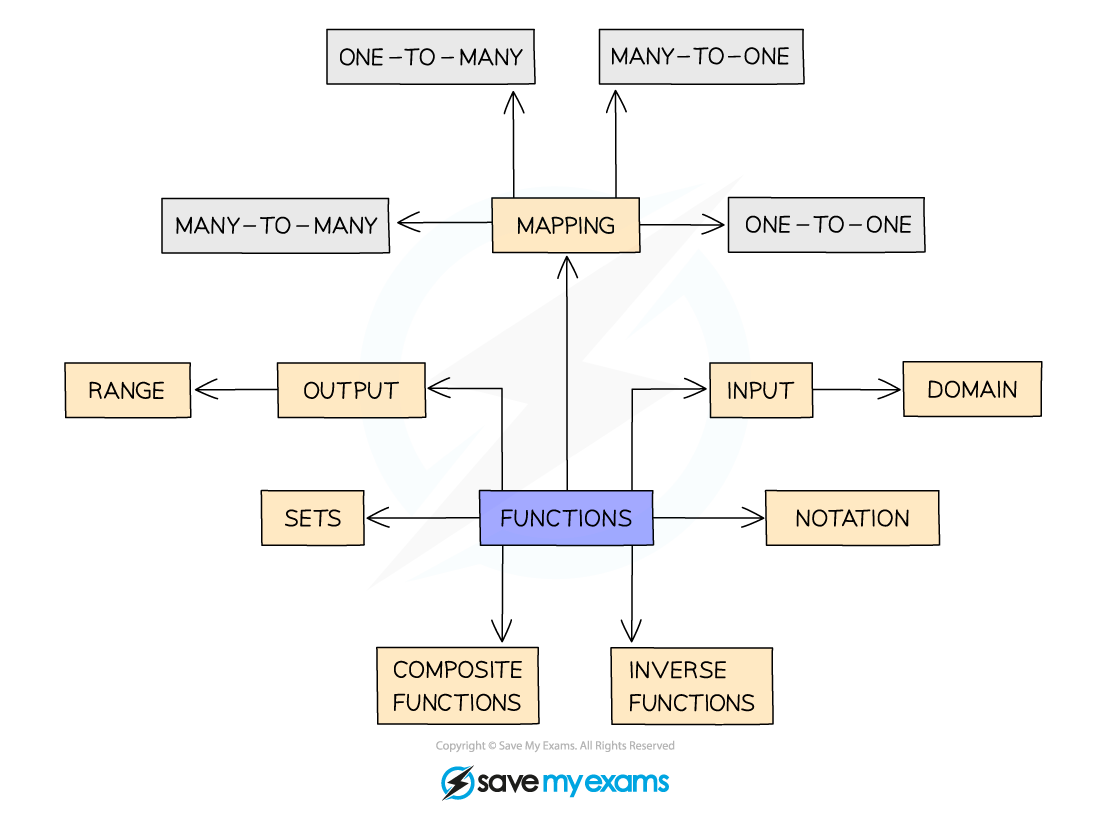
What are mappings?
- A mapping takes an ‘input’ from one set of values to an ‘output’ in another
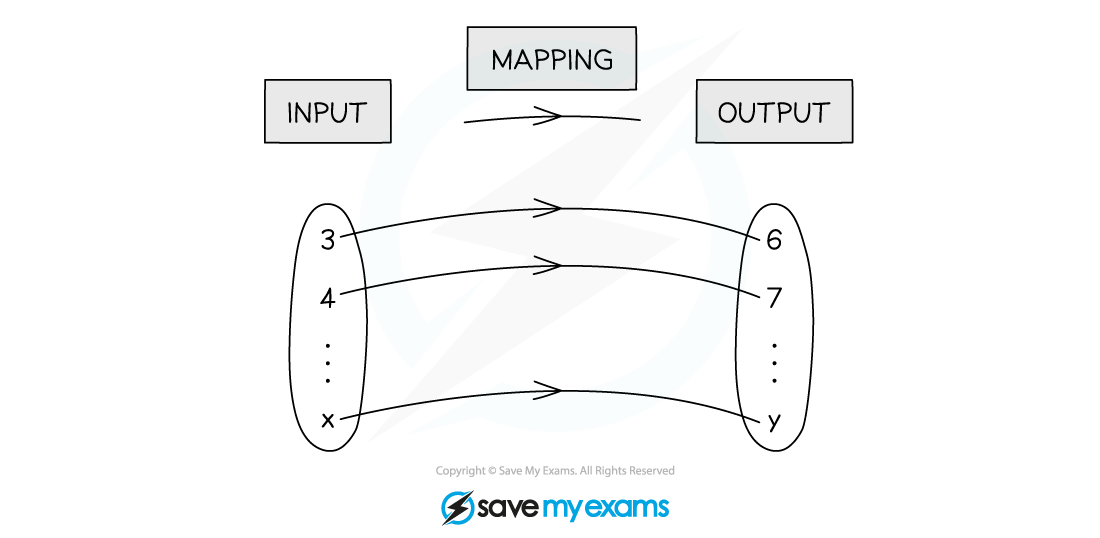
-
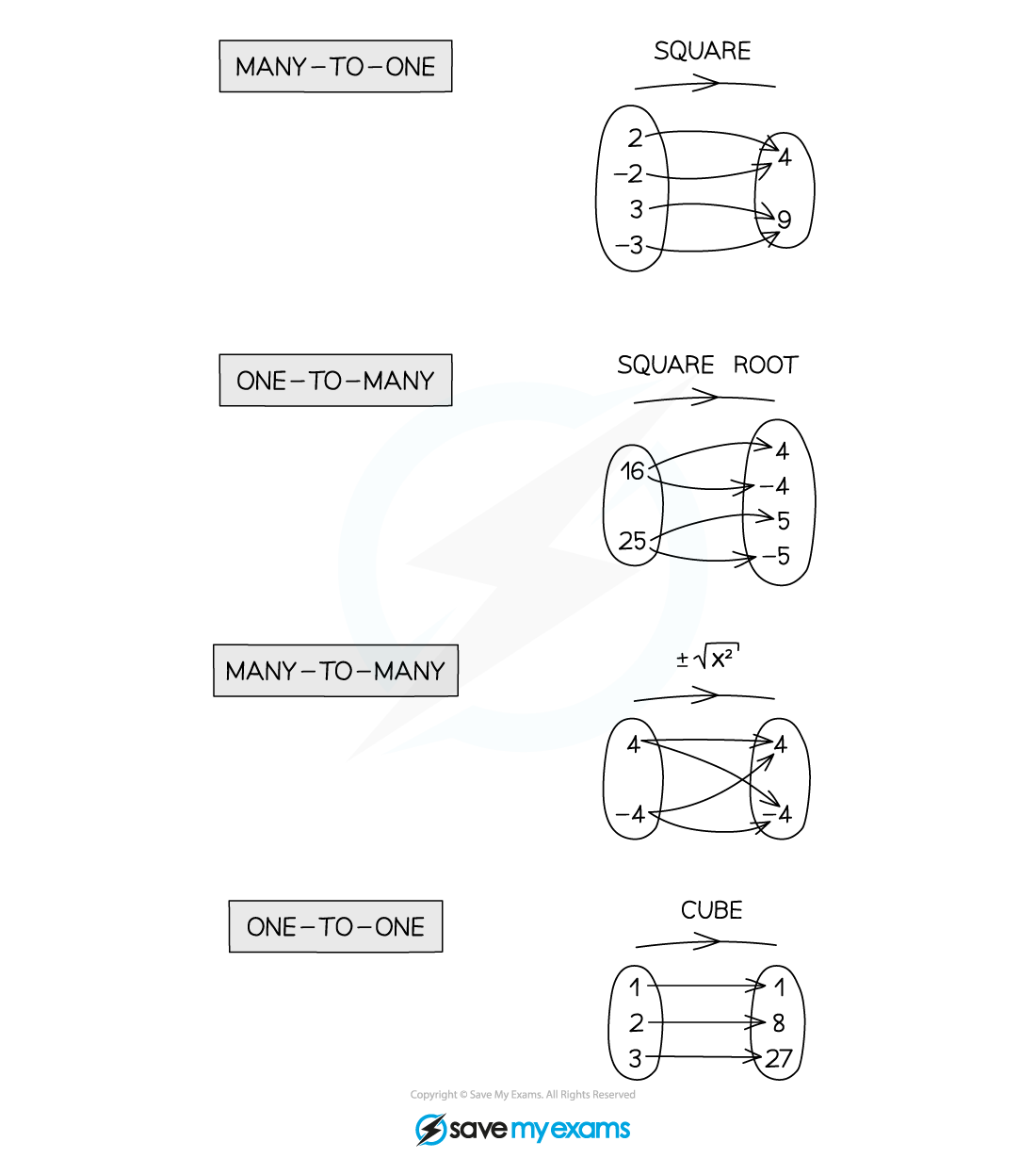
Mappings can be
- ‘many-to-one’ (many ‘input’ values go to one ‘output’ value)
- ‘one-to-many’
- ‘many-to-many’
- ‘one-to-one’
What is the difference between a mapping and a function?
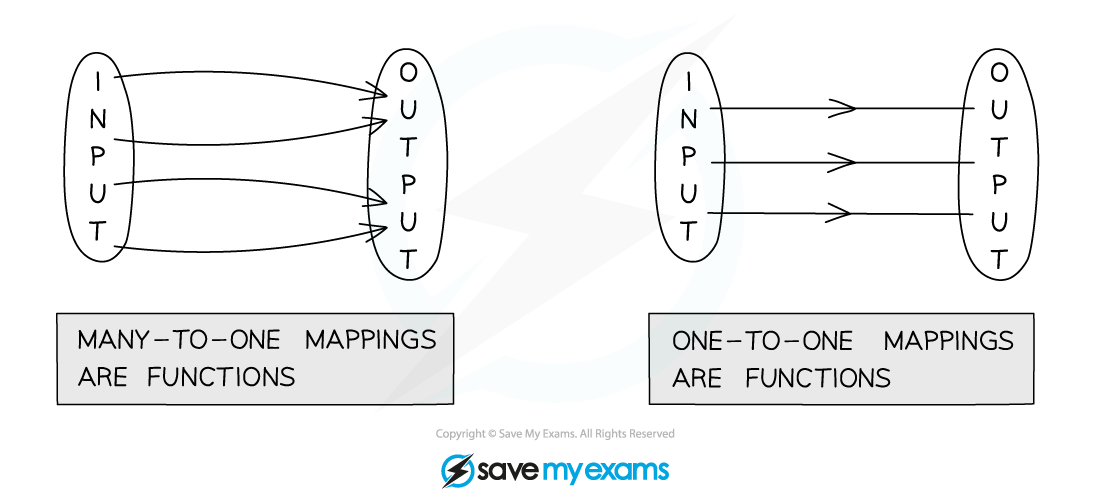
- A function is a mapping where every ‘input’ value maps to a single ‘output’
- Many-to-one and one-to-one mappings are functions
- Mappings which have many possible outputs are not functions
What is function notation?
-
Functions are denoted by the notation f(x), g(x), etc
- eg. f(x) = x2 - 3x + 2
-
Or the alternative notation
- eg. f : x ↦ x2 – 3x + 2
What sets of numbers do I need to know?
- Functions often involve domains and ranges for specific sets of numbers
- All numbers can be organised into different sets ℕ, ℤ, ℚ, ℝ
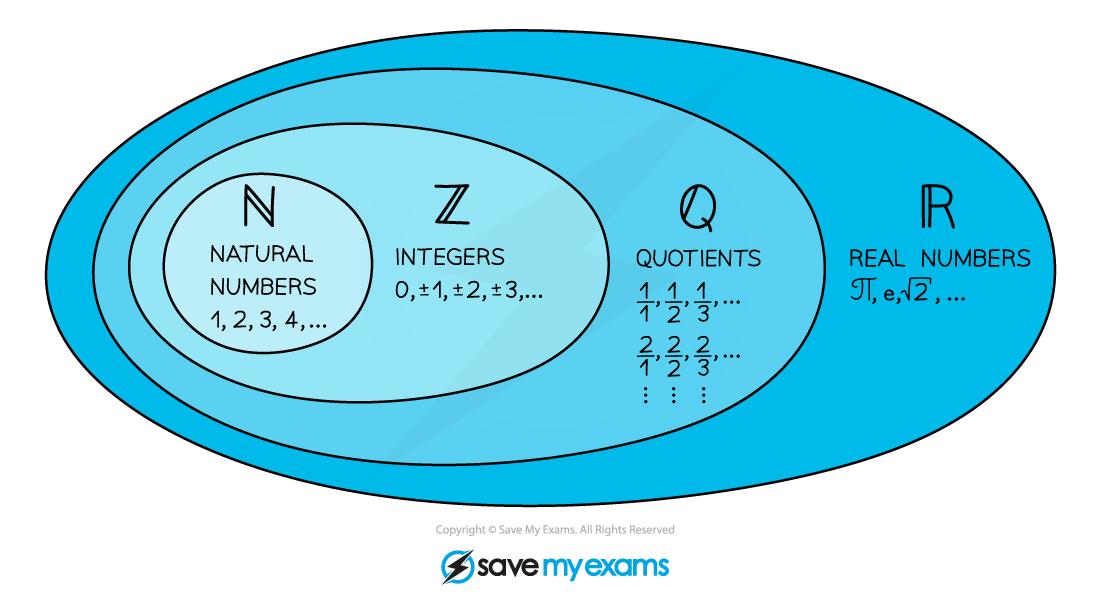
- So ℕ is a subset of ℤ etc
- ℤ- would be the set of negative integers only
What is the domain of a function?
- The domain of a function is the set of values that are allowed to be the ‘input’
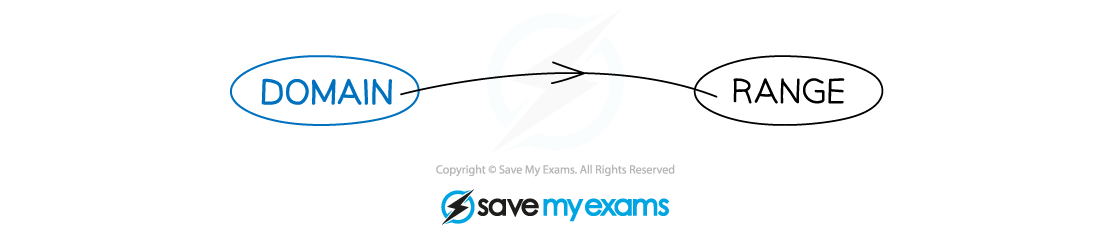
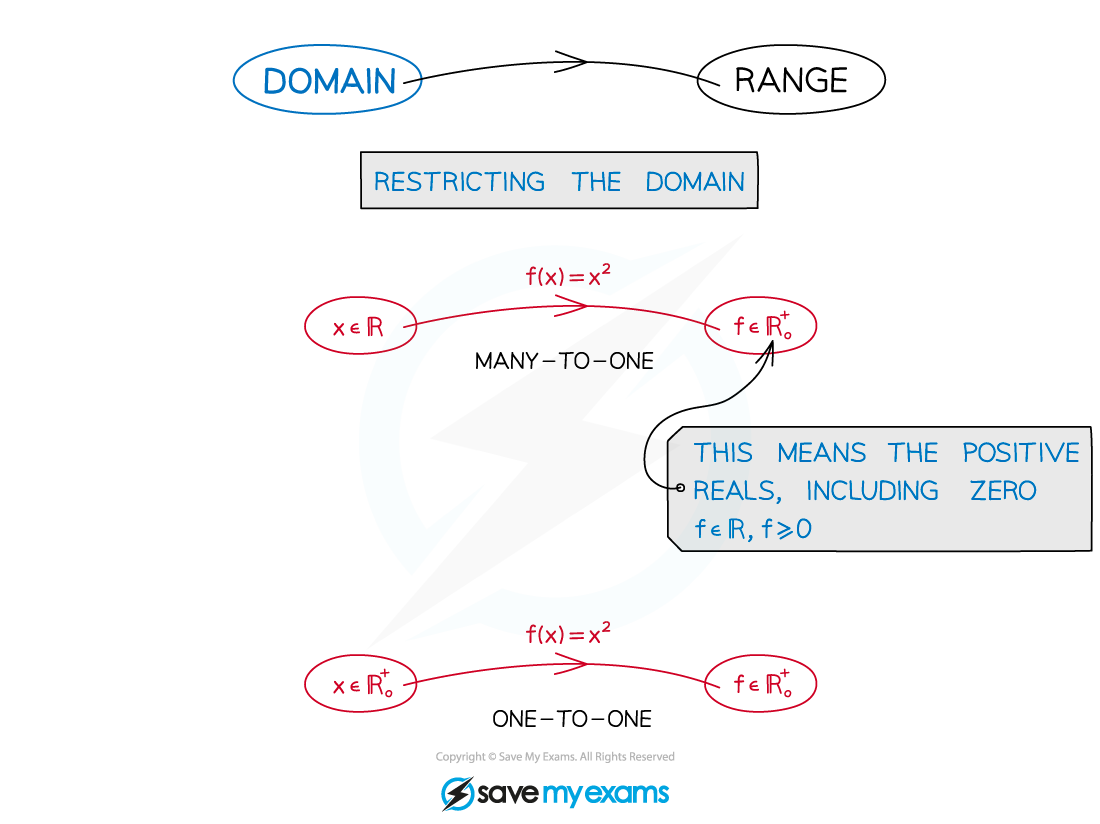
- A function is only fully defined once its domain has been stated
- Restrictions on a domain can turn many-to-one functions into one-to-one functions
What is the range of a function?
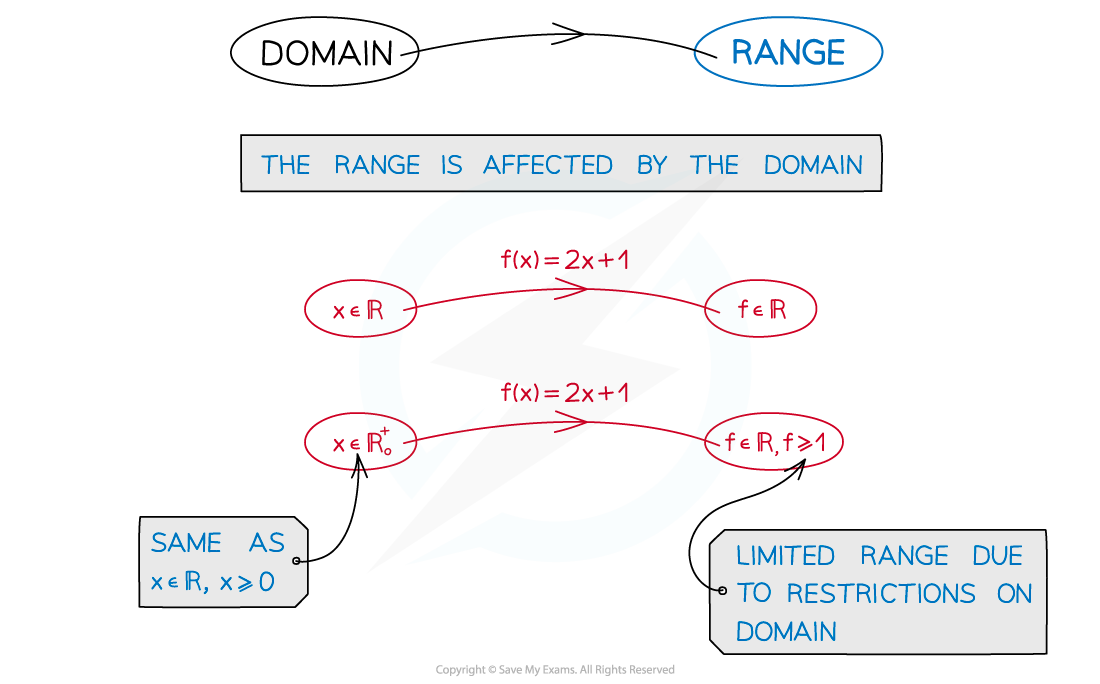
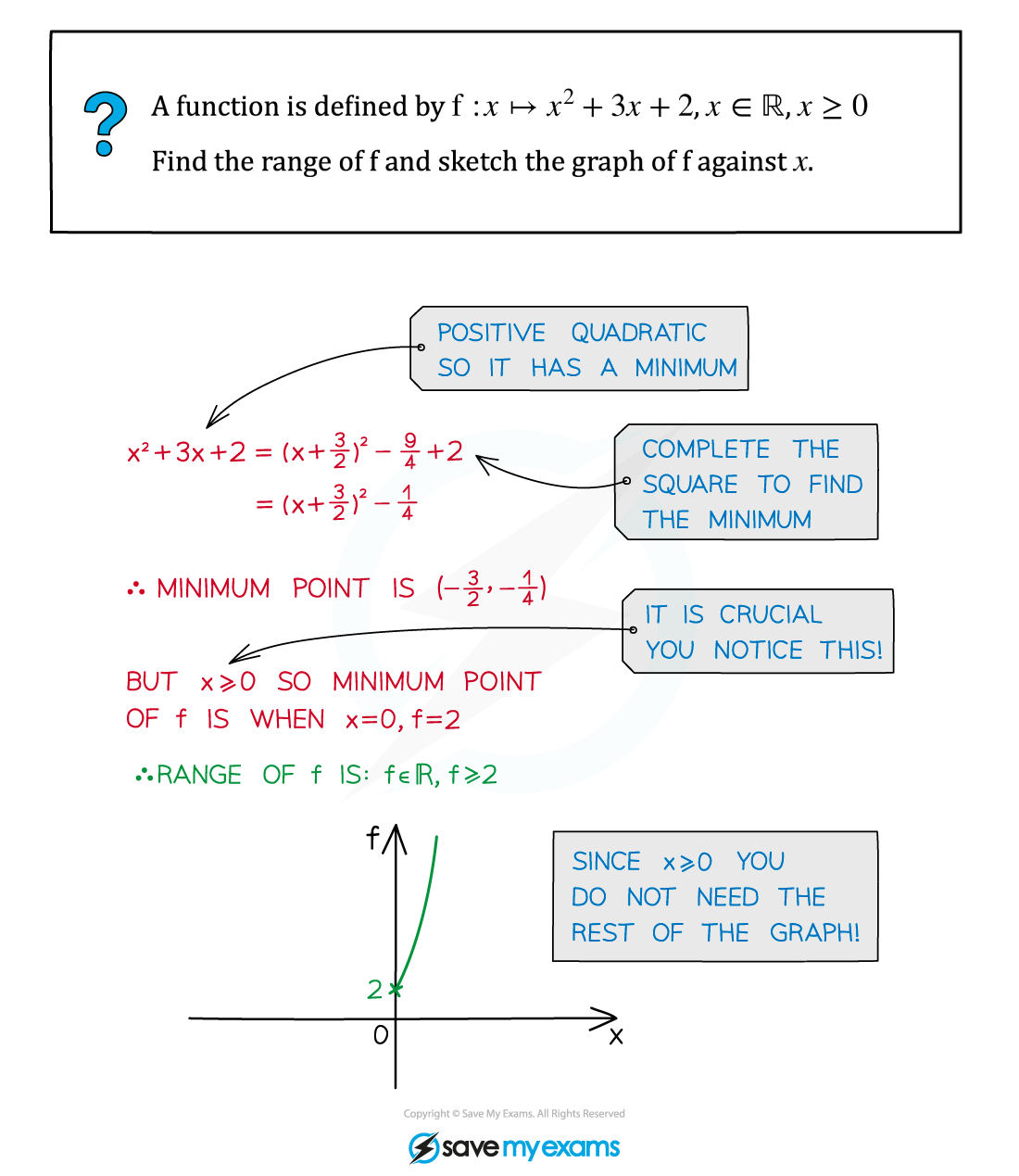
- The range of a function is the set of values of all possible ‘outputs’

- The type of values in the range depend on the domain
Worked Example
Was this revision note helpful?
Build on this topic