Sum of Geometric Progressions (Cambridge International AS Mathematics)
Exam board Cambridge International · ASUpdated 2026-07-02
Geometric Series
Sum of geometric progressions
How do I find the sum of a geometric progression?
- The sum of the terms of a geometric progression is sometimes called a geometric series

-
The following formulae will let you find the sum of the first n terms of a geometric progression: or
- *a *is the first term
- *r *is the common ratio
-
The one on the left is more convenient if r < 1, the one on the right is more convenient if r > 1
-
The a and the r in those formulae are exactly the same as the ones used with geometric progression
How do I prove the formula for the sum of a geometric progression?
-
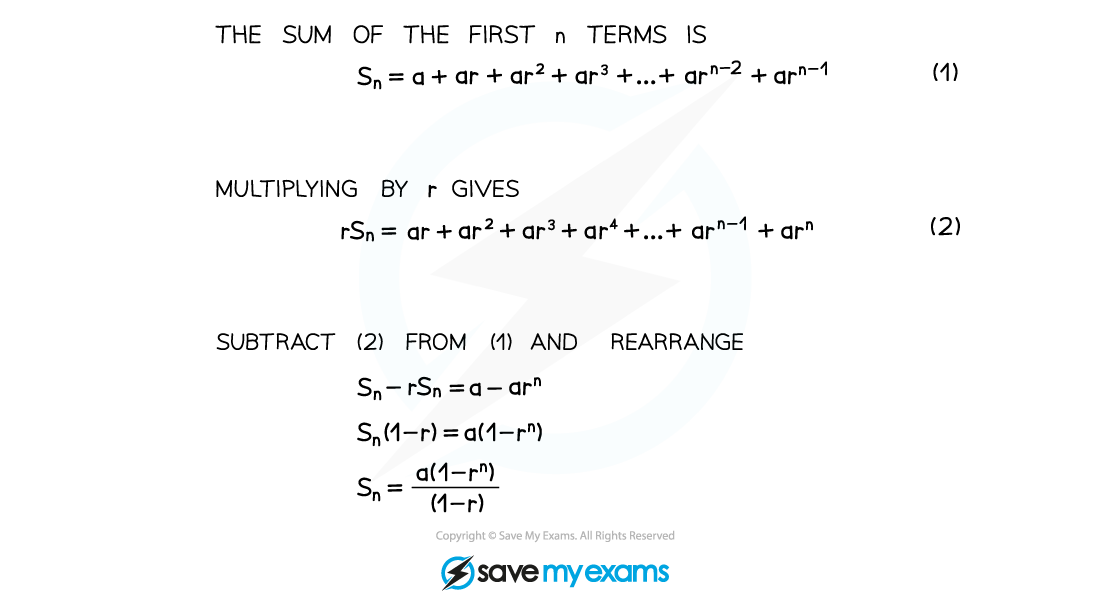
Learn this proof of the sum of a geometric progression formula – you can be asked to give it in the exam:
-
Write out the sum once
-
Write out the sum again but multiply each term by r
-
Subtract the second sum from the first
- All the terms except the two should cancel out
-
Factorise and rearrange to make *S *the subject
-
What is the sum to infinity of a geometric progression?
- If (and only if!) |r| < 1, then the sum of a geometric progression converges to a finite value given by the formula
- S∞ is known as the sum to infinity
- If |r| ≥ 1 the sum of a geometric progression is divergent and the sum to infinity does not exist
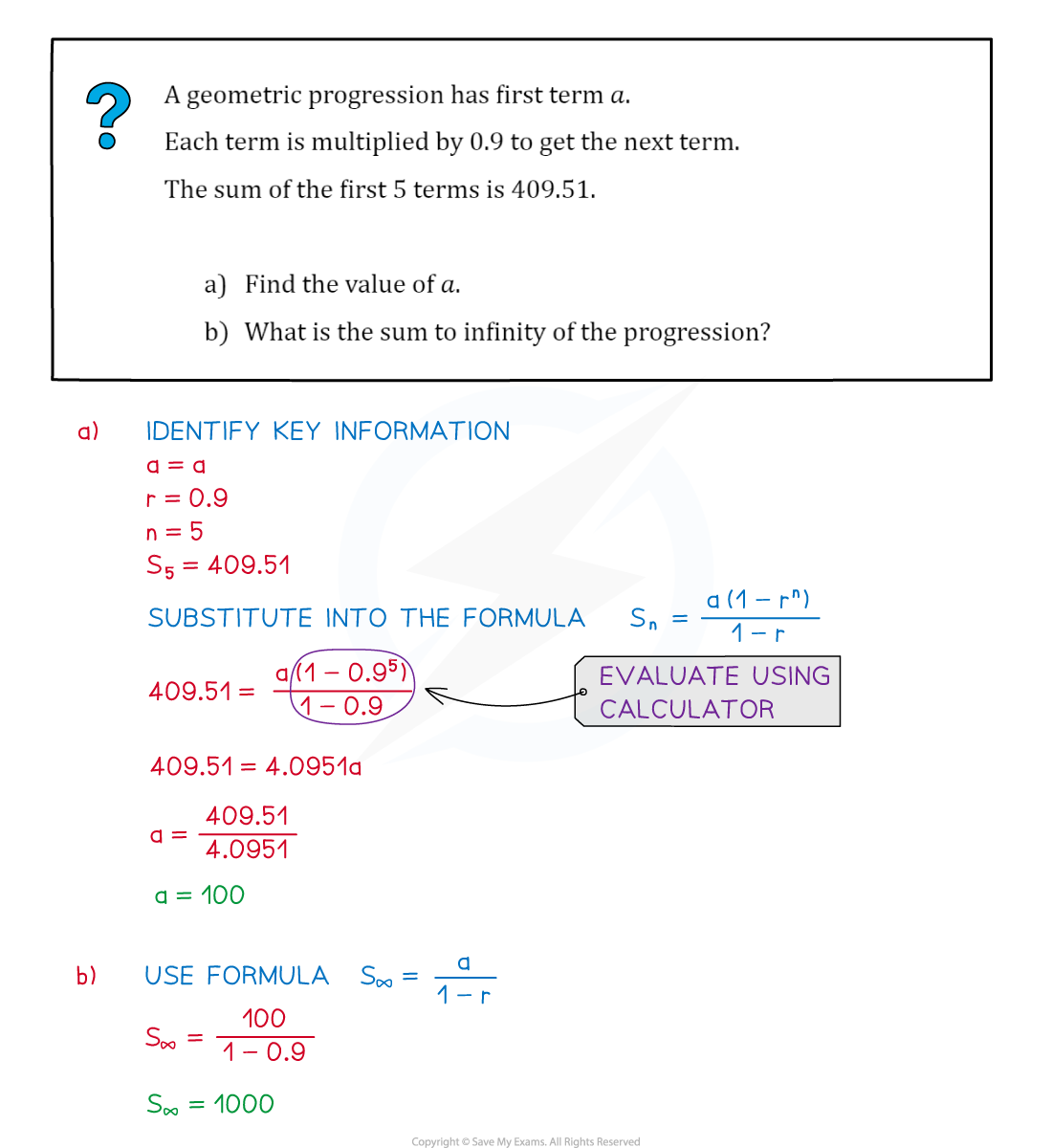
Worked Example
Exam Hint The geometric series formulae are in the formulae booklet – you don't need to memorise them.
Was this revision note helpful?
Build on this topic