3.3.1 Managing Human Population Change (Cambridge International AS Environmental Management)
Managing Human Population Change
Spec point —
3.3.1
-
Population management involves intentional actions taken by governments and societies to influence the size, structure, and distribution of their populations
-
Reasons for population management include:
- Ensuring economic stability by balancing labour supply and demand
- Efficient allocation of resources to support sustainable development
- Addressing demographic challenges like overpopulation or underpopulation
- Enhancing overall well-being and the quality of life for individuals, families, and communities
Population Increase
-
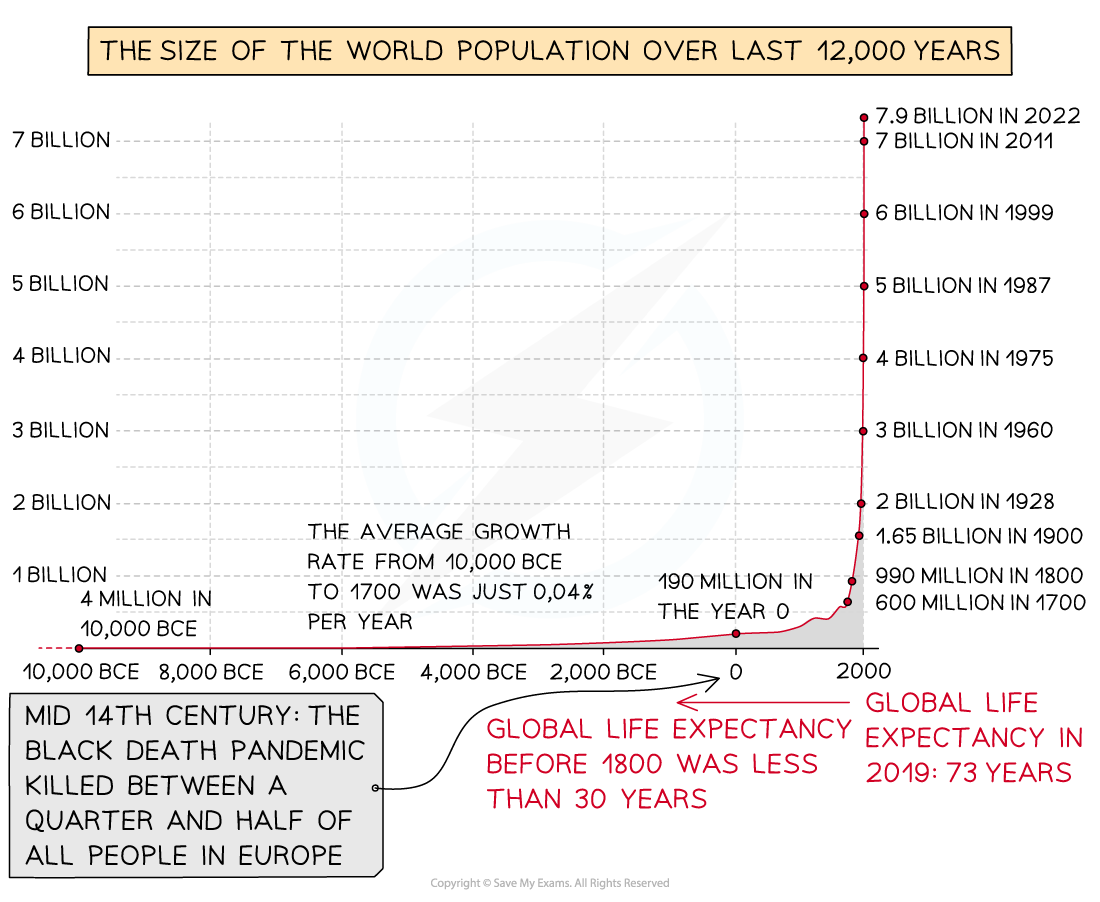
The world's population is increasing by approximately 80 million people a year
-
In 1804 the world population was 1 billion
- Population growth at this point was steady and low
- It took just over 100 years for the population to double to 2 billion
Time taken for the world population to increase by 1 billion people
-
The rate of increase after 1930 was then more rapid and led to a population explosion
-
The fastest increase in population happened during the 1980s and 1990s
-
Population growth rate is the average annual change of the population size during a set period of time, usually a year
- The population is still increasing but at a slower rate
- In 1970 the growth rate was 2%
- In 2022 the growth rate was under 1%
-
It is predicted by the UN that the population will stabilise at around 11 billion in 2100
-
Some strategies for managing a changing population include:
- Improved availability of contraception
- Improved education about contraception
- Improved education and opportunities for women
- Improved health care
- Local, national and global policies (e.g. pronatalist and antinatalist policies)
Improved Availability of Contraception
-
Increased access:
- Establishing comprehensive programs to make contraceptives widely accessible
- Ensuring availability in both rural and urban areas
-
Reduced birth rates:
- Empowering individuals to make informed choices about family size (promotes family planning)
- Limiting unintended pregnancies, leading to controlled and intentional birth rates
-
Limitations:
- Cultural or religious opposition may hinder widespread acceptance of contraception use
Improved Education about Contraception
-
Awareness campaigns:
- Conducting educational campaigns to inform communities about diverse contraceptive methods and how they can be used most effectively
- Addressing myths and misconceptions related to contraception
-
Family planning education:
- Promoting understanding of the significance of family planning for individual and community well-being.
- Integrating family planning education into school curricula and community programs.
-
Destigmatisation:
- Education about contraception can help to foster open conversations to reduce societal stigma surrounding contraception
-
Limitations:
- In some countries or areas, cultural and social norms may still create barriers despite awareness
Improved Education & Opportunities for Women
-
Education = empowerment:
- Providing educational opportunities for women to enhance their decision-making capacity
- Encouraging women to pursue education beyond traditional roles
-
Economic opportunities:
- Creating policies that promote equal economic opportunities for women
- Supporting women in balancing career and family responsibilities
- For example, the improvement of women's education and job opportunities in Japan has contributed to delayed marriages and childbirth
-
Empowering women's choices:
- Offering programs that support women in making informed decisions about family planning
- Addressing cultural norms that may limit women's choices
-
Limitations:
- Societal expectations and cultural norms may still influence decisions
Improved Health Care
-
Maternal and child health:
- Enhancing healthcare services with a specific focus on maternal and child health
- Ensuring accessible and quality healthcare during pregnancy and childbirth
-
Access to healthcare:
- Implementing policies to make healthcare affordable and accessible to all
-
Preventive measures:
- Implementing healthcare strategies that improve overall health and reduce mortality rates
- Encouraging regular check-ups and other preventive healthcare measures
-
Limitations:
- Some countries may experience resource constraints that make the implementation of comprehensive healthcare services difficult
Local, National, & Global Policies
Pronatalist Policies
-
Introducing incentives like family bonuses and tax benefits to encourage higher birth rates
-
Supporting programs that promote larger families and recognise them as contributors to economic growth
-
Benefits include:
- Encourages population growth, ensuring a sufficient workforce
- Boosts economic productivity through increased consumer spending
-
Limitations include:
- May strain resources and infrastructure with a rapidly growing population
- Potential challenges in maintaining a balance between population growth and sustainability
Antinatalist Policies
-
Implementing measures, such as family planning programs and population control initiatives, to discourage high birth rates
-
Benefits include:
- Addresses overpopulation concerns, ensuring sustainable resource use
- May contribute to improved quality of life with a more manageable population size.
-
Limitations include:
-
Ethical concerns related to individual freedoms and reproductive rights
-
Potential negative impact on the labour force and economic productivity
- Example: China's one-child policy, though successful in curbing population growth, faced criticism for violating individual freedoms. In addition, Thailand's antinatalist policies, while contributing to lower birth rates, have raised ethical concerns
-
United Nations (UN) Agenda 21
- A global action plan adopted in 1992 to promote sustainable development
- Emphasises environmental protection, social equity, and economic development
The Club of Rome
- An organisation advocating for sustainable development, including comprehensive approaches to population challenges
- For example, the "Limits to Growth" report produced by the Club of Rome in 1972 highlights the environmental constraints of unchecked population growth
Was this revision note helpful?