The Role of Human Resource Management (Cambridge International AS Business)
Exam board Cambridge International · ASUpdated 2025-07-14
The role of HRM in meeting organisational objectives
- Human Resource Management (HRM) is the business function that focuses on managing the people who work there
- It involves recruiting, training, motivating and retaining employees so that the business can run efficiently and meet its goals
How HRM helps meet organisational objectives
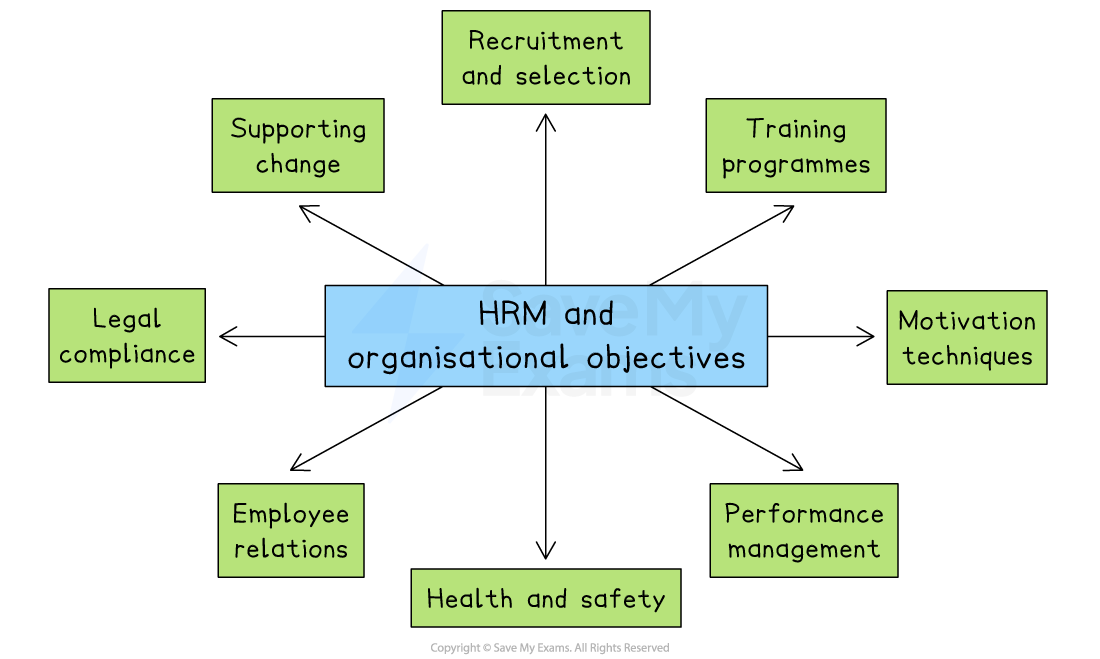
HRM supports operational objectives through recruitment and selection, training, performance management and employee relations
-
Recruitment and selection
- HRM designs job adverts, interviews candidates, and chooses the best person for each job
- This helps the business run efficiently with the right staff
-
Training programmes
- HRM organises training and development activities for workers
- This helps them improve their skills and contribute more effectively
-
Motivation techniques
- HRM can introduce financial (bonuses, pay rises) and non-financial rewards(promotion opportunities, job rotation)
- This helps keep workers happy and productive
-
Performance management
- HRM monitors performance through *appraisals *and gives feedback to help employees improve and feel valued
-
Health and safety
- HRM ensures that legal requirements are met and the workplace is safe
- This helps reduce accidents and absenteeism
-
Employee relations
- HRM works with trade unions and staff to solve conflicts and maintain a positive work atmosphere
-
Legal compliance
- HRM makes sure the business follows the law on employment contracts, dismissal and discrimination, reducing the risk of fines or lawsuits
-
Supporting change
- HRM helps manage change, such as *mergers *or the introduction of technology by retraining staff and communicating clearly
- This should help to reduce employee resistance and speed up the change process
Was this revision note helpful?
Build on this topic