Power (Cambridge International A-Level Physics)
Defining Power
- Power is defined as:
The rate of energy transfer
- Since work done is equal to the energy transferred, power can also be defined as:
Work done per unit time
- Power can be calculated using the following equations:
-
Where:
- P = power in watts (W)
- E = energy in joules (J)
- W = work done in joules (J) or newton metres (N m)
- t = time in seconds (s)
-
You may be familiar with power ratings on household appliances, such as 60 W or 1000 W
-
These power ratings tell you the amount of energy transferred electrically from the mains supply per second
Solving Problems Involving Power
- Since power describes the energy transferred or the work done per unit time, power calculations commonly include energy or work calculations, which can also include efficiency
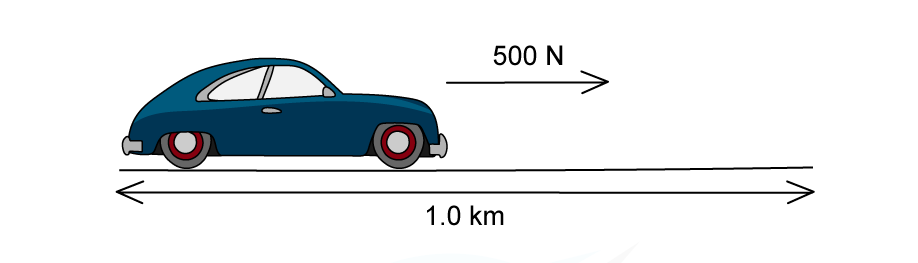
Worked Example A car engine exerts a force of 500 N for 1.0 km over 200 s.
What is the average power developed by the engine?
Answer:
Step 1: List the known quantities and convert to SI units
- Force, F = 500 N
- Displacement, s = 1.0×10³ m
- Time, t = 200 s
Step 2: Substitute the work done equation into the power equation
Step 3: Substitute the known values to calculate
Exam Hint Think of power as “energy per second”. Thinking of it this way will help you to remember the relationship between power and energy: “Watt is the unit of power?”
Was this revision note helpful?
Build on this topic