Resistors in Parallel (Cambridge International A-Level Physics)
Deriving the Equation for Resistors in Parallel
-
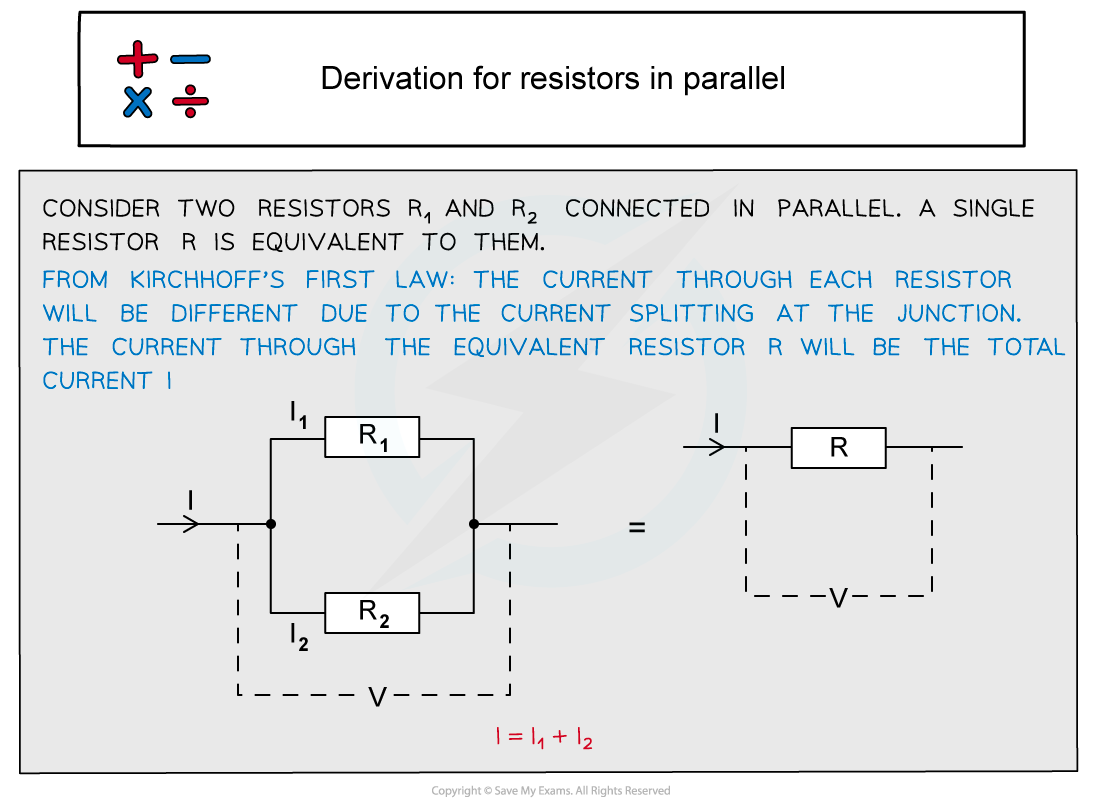
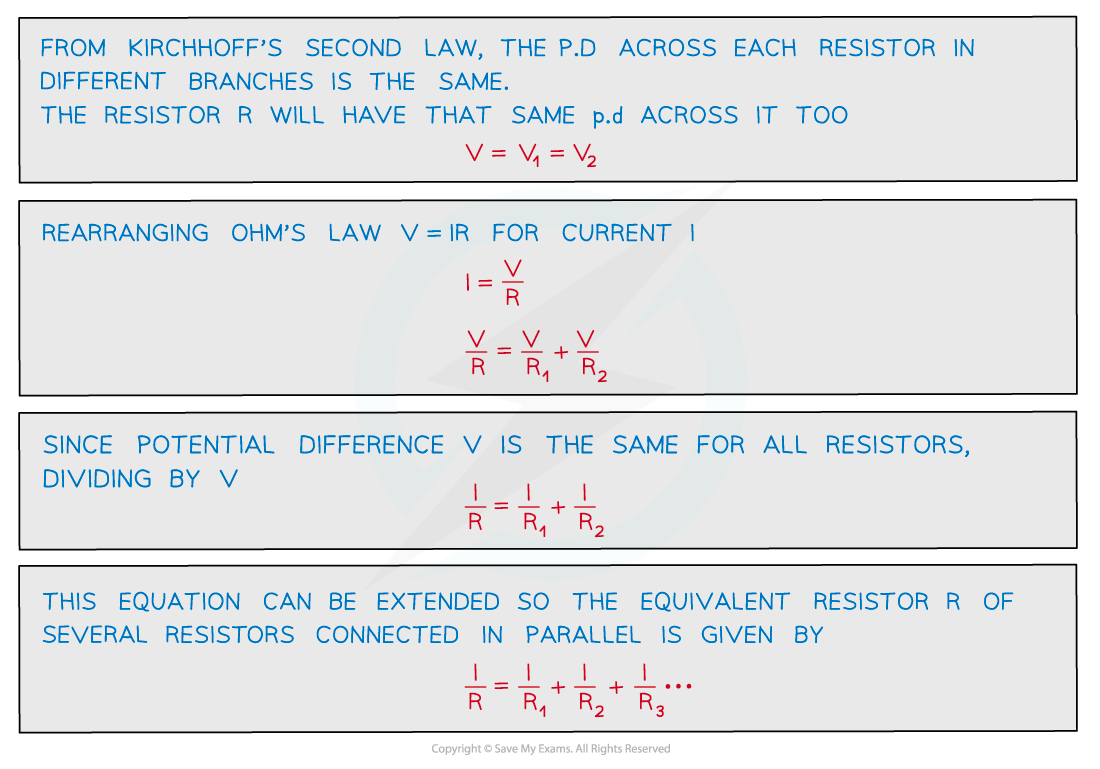
In a parallel circuit, the reciprocal of the combined resistance of two or more resistors is the sum of the reciprocal of the individual resistances
-
In a parallel circuit:
- The current is split at the junction (and therefore between resistors)
- The potential difference is the same through all resistors
-
The equation for combined resistors in parallel is derived using Kirchhoff’s laws:
Resistors in Parallel
- When two or components are connected in parallel: The reciprocal of the combined resistance is the sum of the reciprocals of the individual resistances
Resistors in parallel
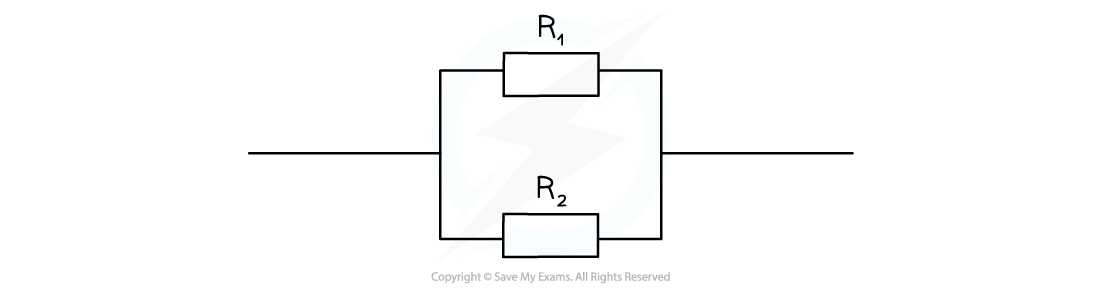
Resistors connected in parallel have the same voltage
- The equation for the combined resistance, R of resistors in parallel is:
- This means the combined resistance decreases and is less than the resistance of any of the individual components
- For example, If two resistors of equal resistance are connected in parallel, then the combined resistance will halve
Maths tip
-
The reciprocal of a value is
-
For example, the reciprocal of a whole number such as 2 equals
- The reciprocal of is 2
-
If the number is already a fraction, the numerator and denominator are ‘flipped’ round
Reciprocals
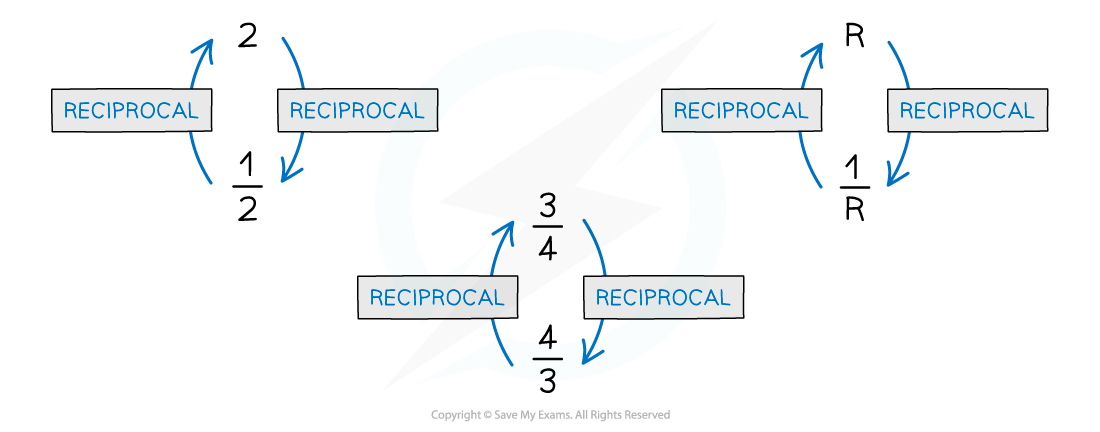
The reciprocal of a number is 1 ÷ number
- In the case for the resistance R, this becomes . To get the value of R from , you must calculate
- You can also use the reciprocal button on your calculator (labelled either x-1 or , depending on your calculator
Worked Example The circuit below shows 3 resistors connected in parallel.
Which value gives the combined resistance of all the resistors in this circuit?
A.
B.
C.
D.
Answer: D
Step 1: Resistors in parallel equation
Step 2: Substitute in the values given from the equation
Step 3: Calculate the total resistance

Exam Hint The most common mistake is to leave the answer as 1/RT. Remember to calculate to get the value of RT.
Was this revision note helpful?
Build on this topic