Calculating Centripetal Force (Cambridge International A-Level Physics)
Exam board Cambridge International · A-LevelUpdated 2025-02-28
Calculating centripetal force
- Centripetal force can be calculated using the equation:
-
Where:
- = magnitude of the centripetal force, measured in newtons (N)
- = mass of object, measured in kilograms (kg)
- = velocity, measured in meters per second (m s-1)
- = radius of circular path, measured in metres (m)
-
Another form of the equation can be written using the equation linking linear and angular velocity:
-
Where
- = angular velocity measured in radians per second (rad s-1)
-
Substituting into the first centripetal force equation
- Simplify the equation
Centripetal force in circular motion
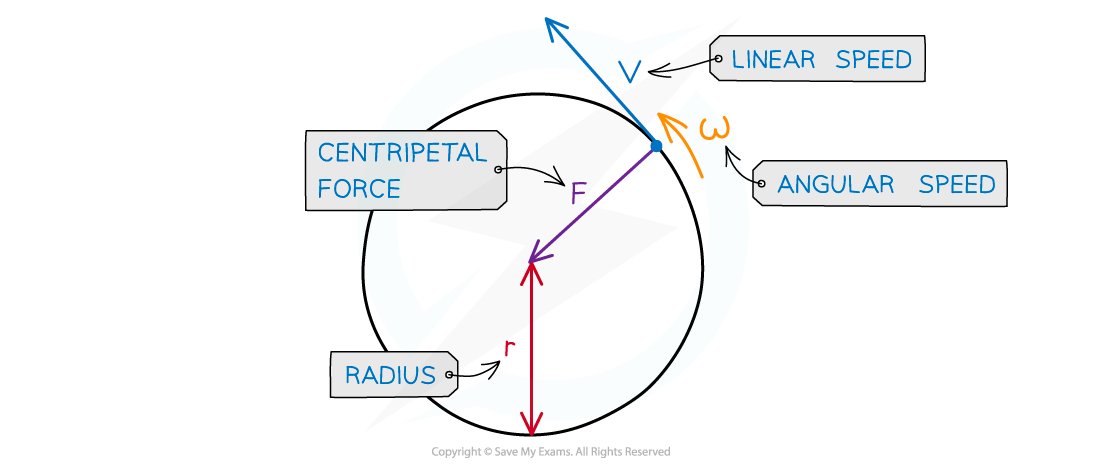
Centripetal force is always perpendicular to the direction of travel
Worked Example A bucket of mass 8.0 kg is filled with water is attached to a string of length 0.5 m.
What is the minimum speed the bucket must have at the top of the circle so no water spills out?
Answer:
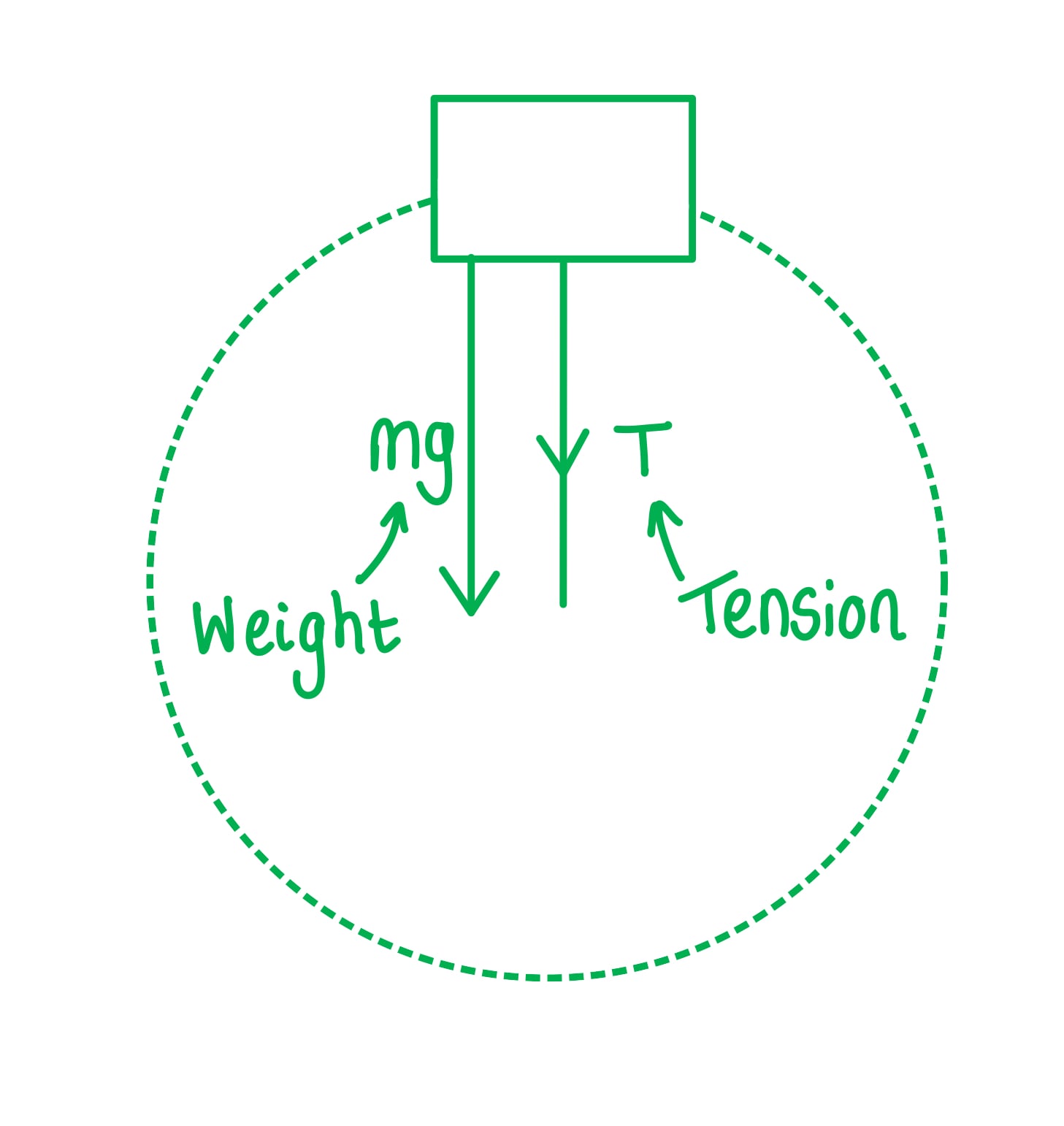
Step 1: Draw the forces on the bucket at the top
Step 2: Calculate the centripetal force
- The weight of the bucket = mg
- This is equal to the centripetal force since it is directed towards the centre of the circle
Step 3: Rearrange for velocity v
- m cancels from both sides
Step 4: Substitute in values

Was this revision note helpful?
Build on this topic