The Wave Equation (Cambridge International A-Level Physics)
Derivation of v = f λ
- Using the definitions of speed, frequency and wavelength, the wave equation v = fλ can be derived
- This is an important relationship between three key properties of a wave
- The derivation for this is shown below
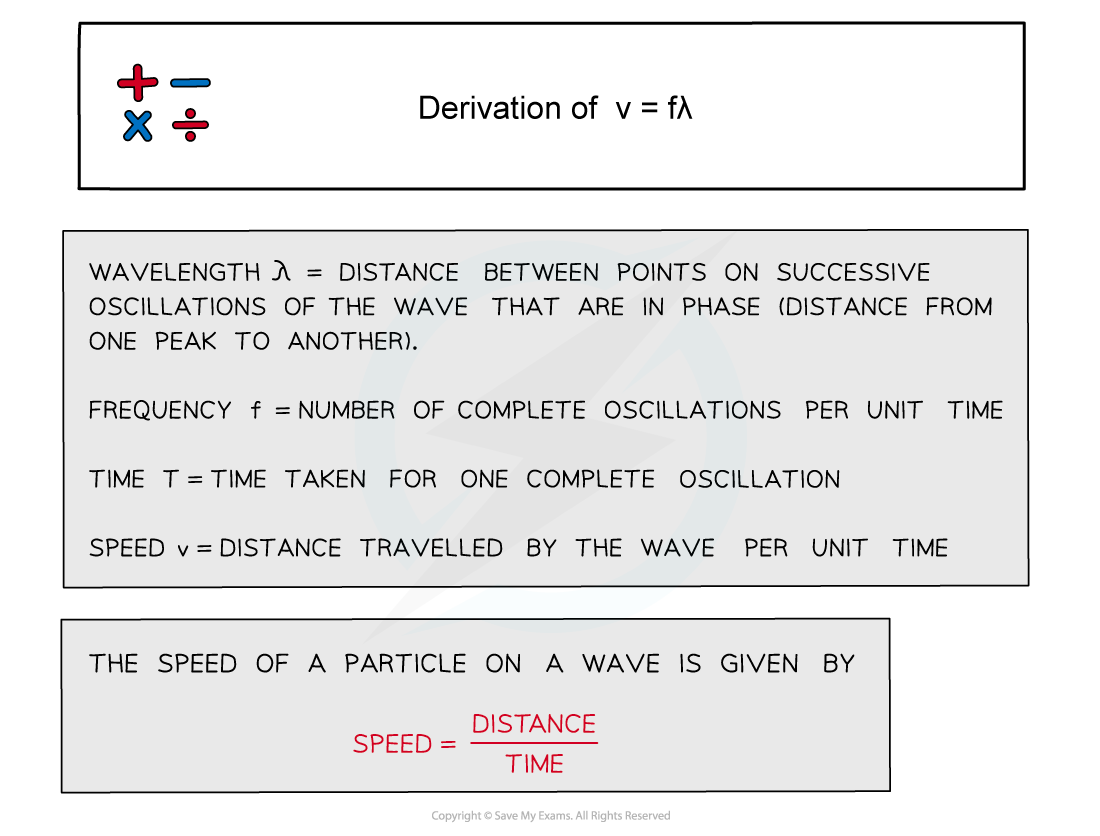
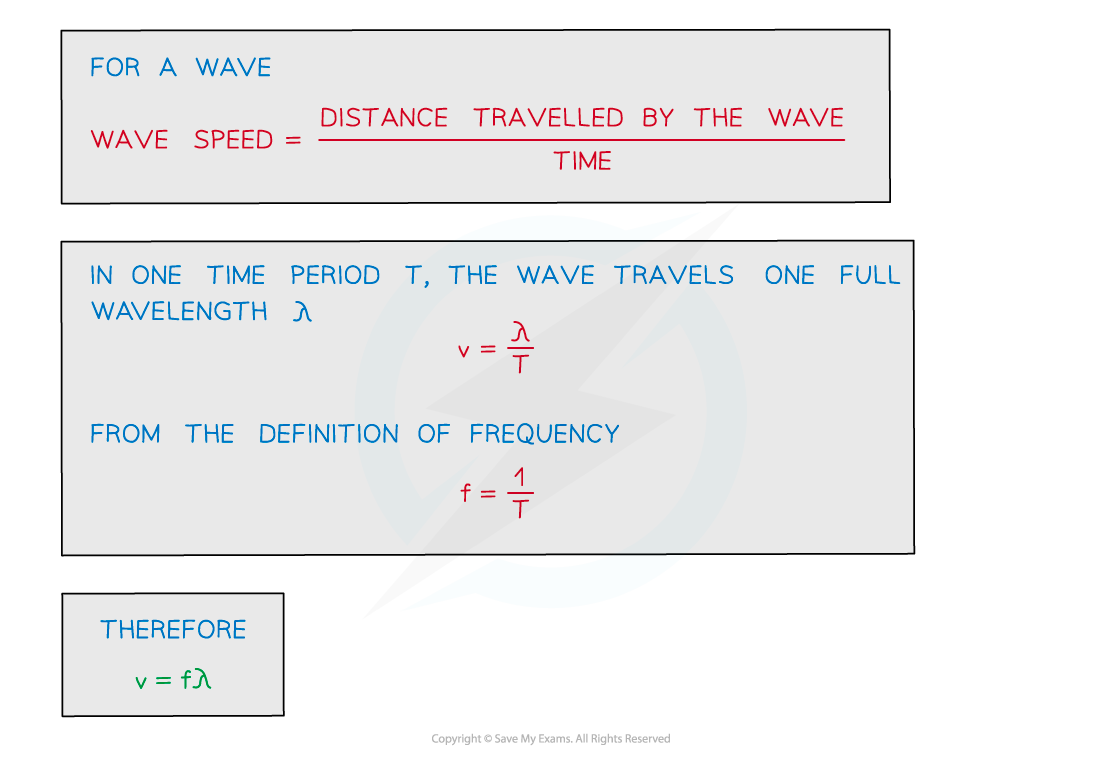
Derivation of v = fλ
Exam Hint You will be expected to remember all the steps for this derivation (but do not need to write the full definition for each variable). If you are unsure as to where speed = distance/time comes from, make sure to revisit chapter “2. Kinematics”.
The Wave Equation
Spec point —
7.1.4
- The wave equation links the speed, frequency and wavelength of a wave
- This is relevant for both transverse and longitudinal waves
-
Where
- v is wave speed in m s−1
- f is frequency in Hz
- λ is wavelength in m
-
The wave equation tells us that for a wave at constant speed:
- As the wavelength increases, the frequency decreases
- As the wavelength decreases, the frequency increases
-
So wavelength and frequency are inversely proportional to each other
Wavelength and frequency are inversely proportional
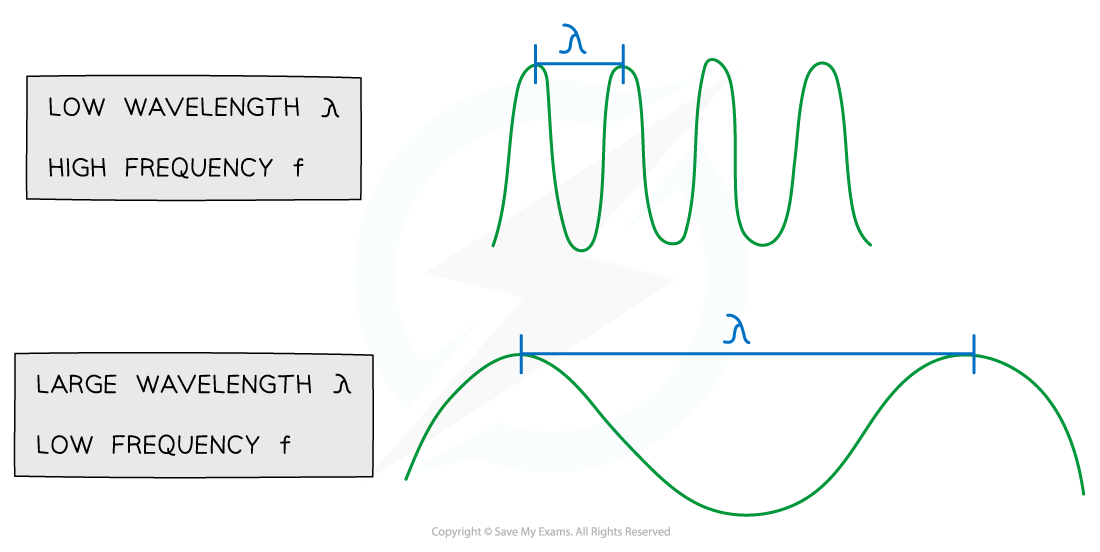
The relationship between frequency and wavelength of a wave
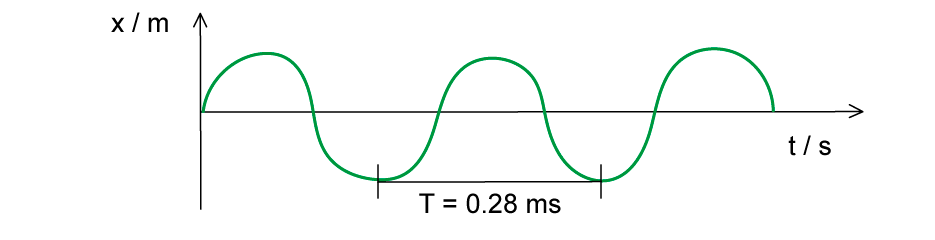
Worked Example The wave in the diagram below has a speed of 340 m s–1.
What is the wavelength of the wave?
Answer:
Step 1: Determine the frequency of the wave:
- Convert the period T into seconds and substitute into the frequency equation
Step 2: Determine wavelength:
- Rearrange the wavelength equation and substitute speed and frequency
Exam Hint You may also see the wave equation be written as c = fλ where c is the wave speed. However, c is often used to represent the speed of light (3 x 10⁸ ms-1). Only electromagnetic waves travel at this speed, therefore it’s best practice to use v for any speed that isn’t the speed of light instead.
Was this revision note helpful?
Build on this topic