Atomic Energy Levels (Cambridge International A-Level Physics)
Atomic energy levels
-
Electrons in an atom can have only certain specific (discrete) energies
- These energies are called electron energy levels
-
They can be represented as a series of stacked horizontal lines increasing in energy
-
Normally, electrons occupy the lowest energy level available, this is known as the ground state
-
Electrons can gain energy and move up the energy levels if they absorb energy by:
- Collisions with other atoms or electrons
- Absorbing a photon
- A physical source, such as heat
-
This is known as excitation, and when electrons move up an energy level, they are said to be in an excited state
-
If the electron gains enough energy to be removed from the atom entirely, this is known as ionisation
-
When an electron returns to a lower energy state from a higher excited state, it releases energy in the form of a photon
Electron energy levels in atomic hydrogen
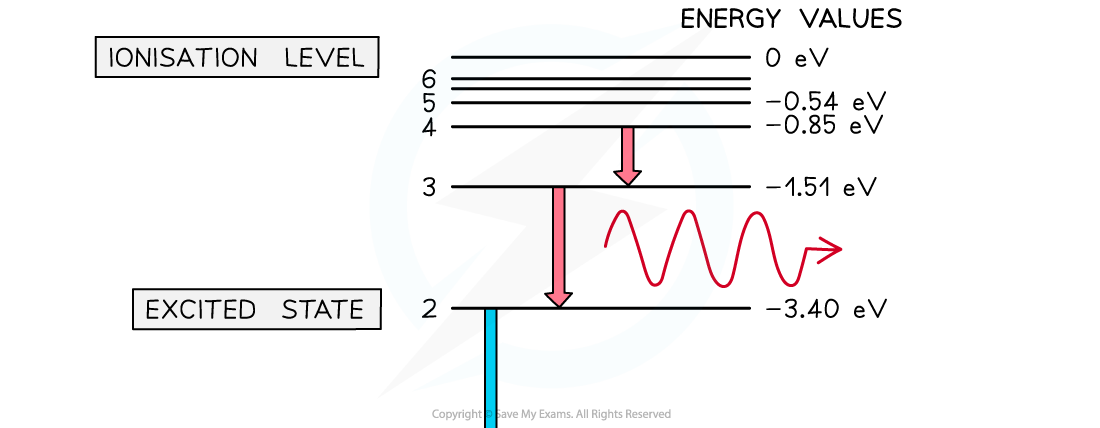
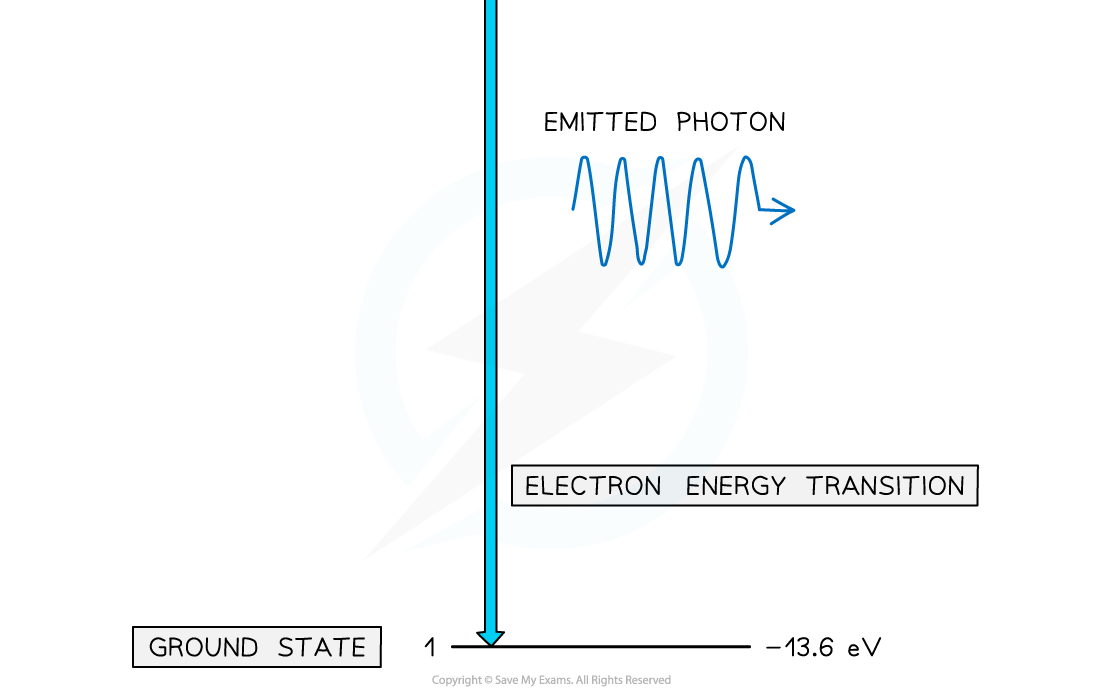
Photons are emitted when an electron moves from a higher energy state to a lower energy state
Was this revision note helpful?
Build on this topic