Thermal Equilibrium (Cambridge International A-Level Physics)
Exam board Cambridge International · A-LevelUpdated 2026-07-02
Defining Thermal Equilibrium
- Objects or regions at the same temperature are said to be in thermal equilibrium with each other
- For two objects in physical contact, thermal equilibrium occurs:
When there is no net transfer of thermal energy between regions, and both regions reach an equal temperature
Illustrating thermal equilibrium
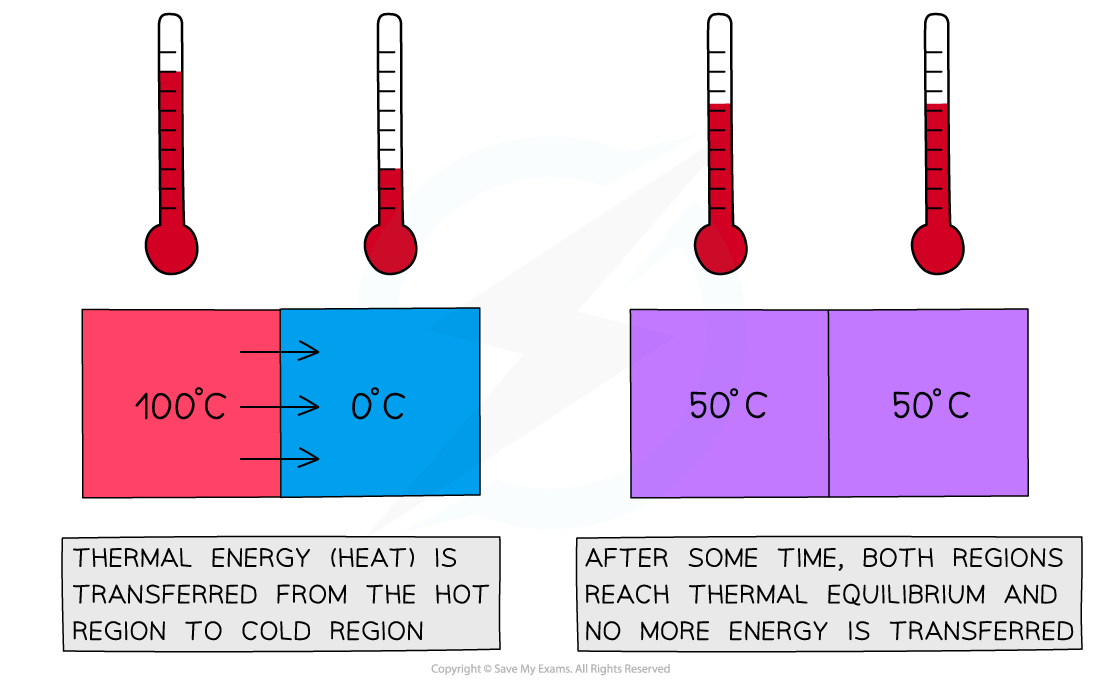
Two regions of different temperatures reach thermal equilibrium after some time
-
The hotter region will cool down, and the cooler region will heat up until they reach thermal equilibrium
-
The final temperature of a system depends on the initial temperature difference between the two regions
-
For example, ice cubes placed in a glass of room-temperature water
- The ice cubes heat up as energy is transferred from the water
- The water cools down, due to the energy transferred away, until they both reach the same temperature
- Thermal equilibrium is achieved when the ice has melted and the water reaches a temperature somewhere between the initial temperatures of the ice and room-temperature water
Was this revision note helpful?
Build on this topic