Vector Addition (Cambridge International A-Level Mathematics)
Exam board Cambridge International · A-LevelUpdated 2026-07-02
Vector addition
What is vector addition?
- Adding vectors together lets us describe the movement between two points
- The single vector this creates is called the resultant vector
- Subtracting a vector is the same as adding the negative vector
- Adding the vectors PQ and QP gives the zero vector, denoted by a bold zero 0
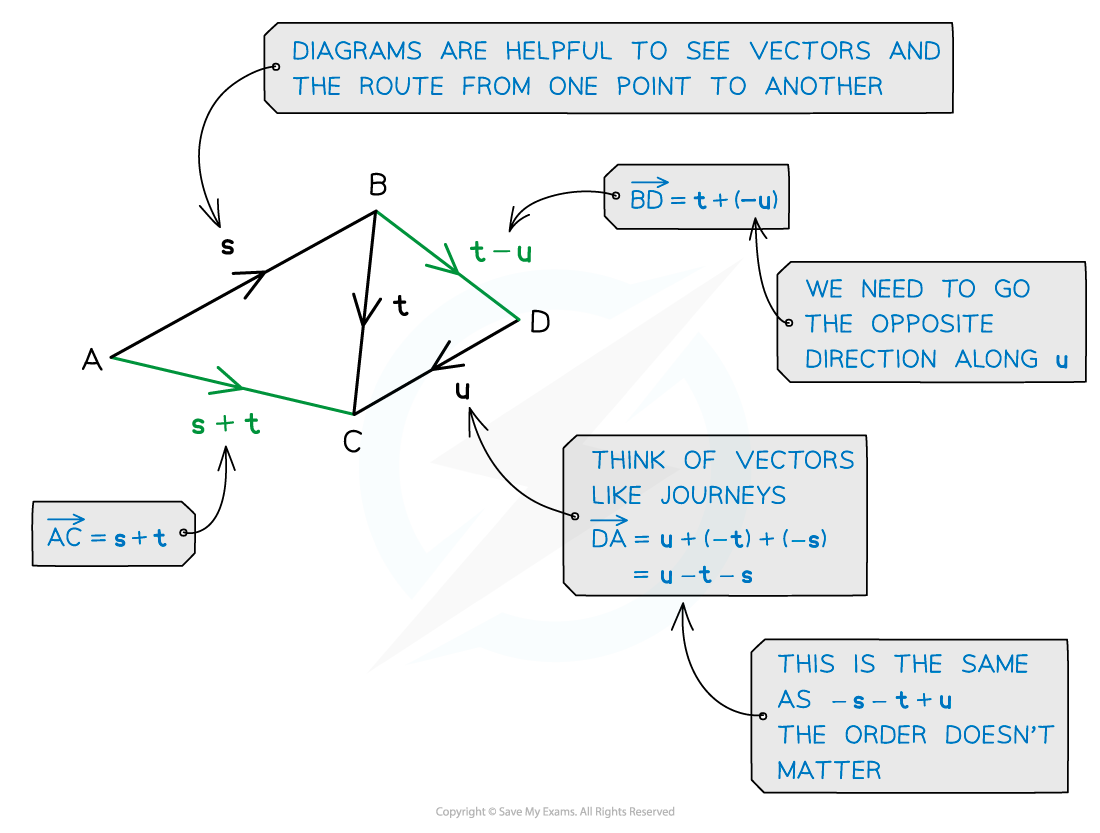
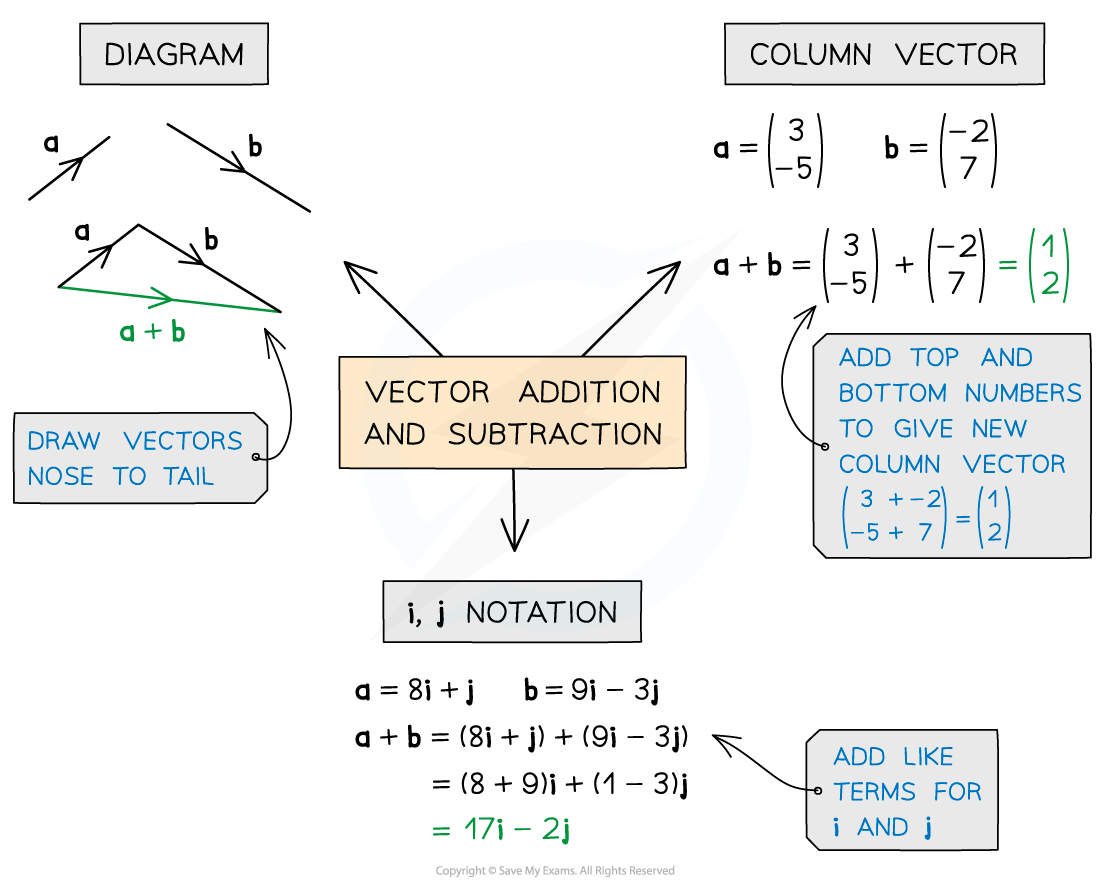
- You can add and subtract vectors in any of the forms previously described:
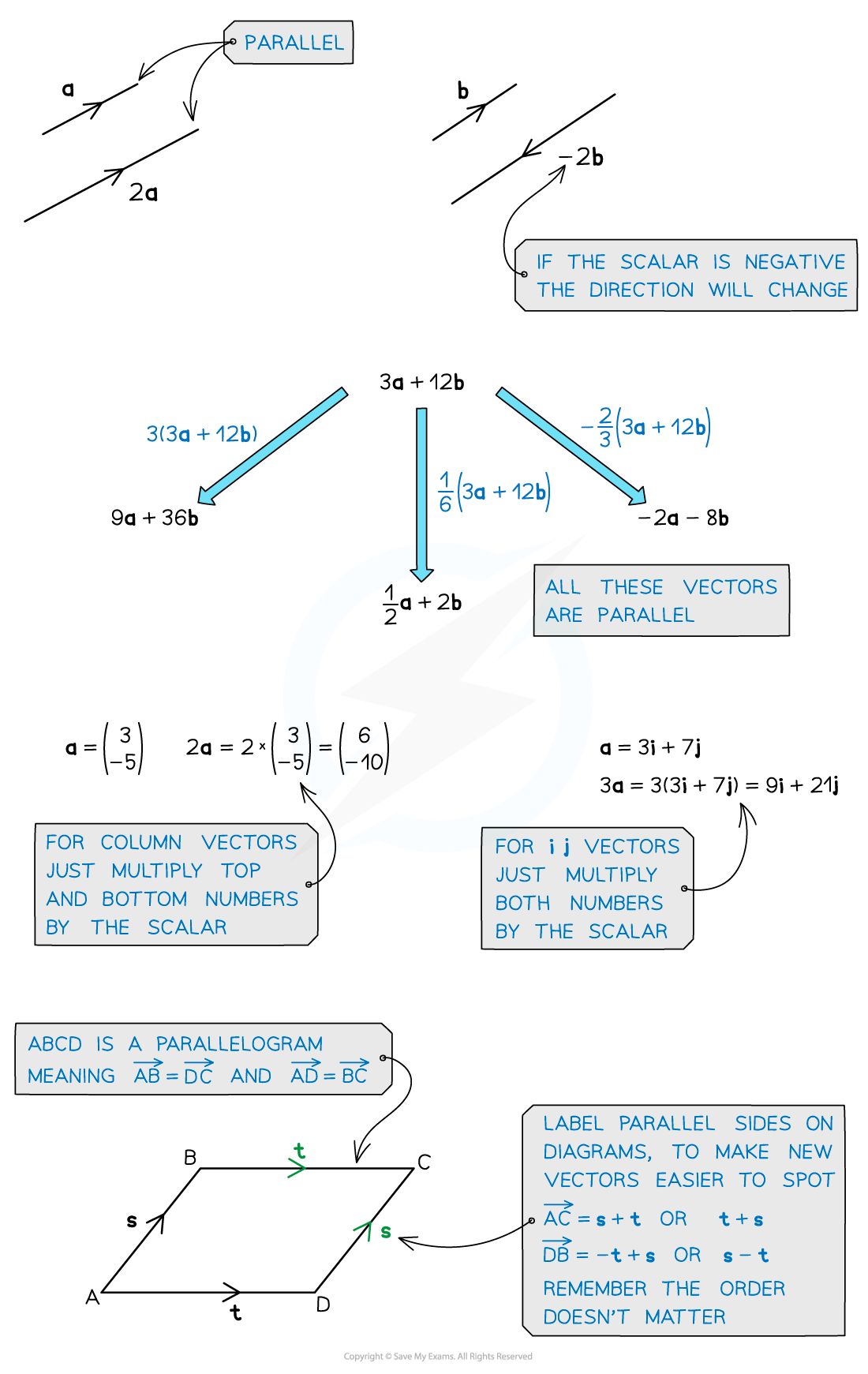
Scalars and parallel vectors
- Multiplying by a positive scalar only changes the size of a vector, not its direction
- Two vectors are parallel if and only if one is a scalar multiple of the other
Exam Hint
- Think of vectors like a journey from one place to another – you may have to take a detour eg. A to B might be A to O then O to B.
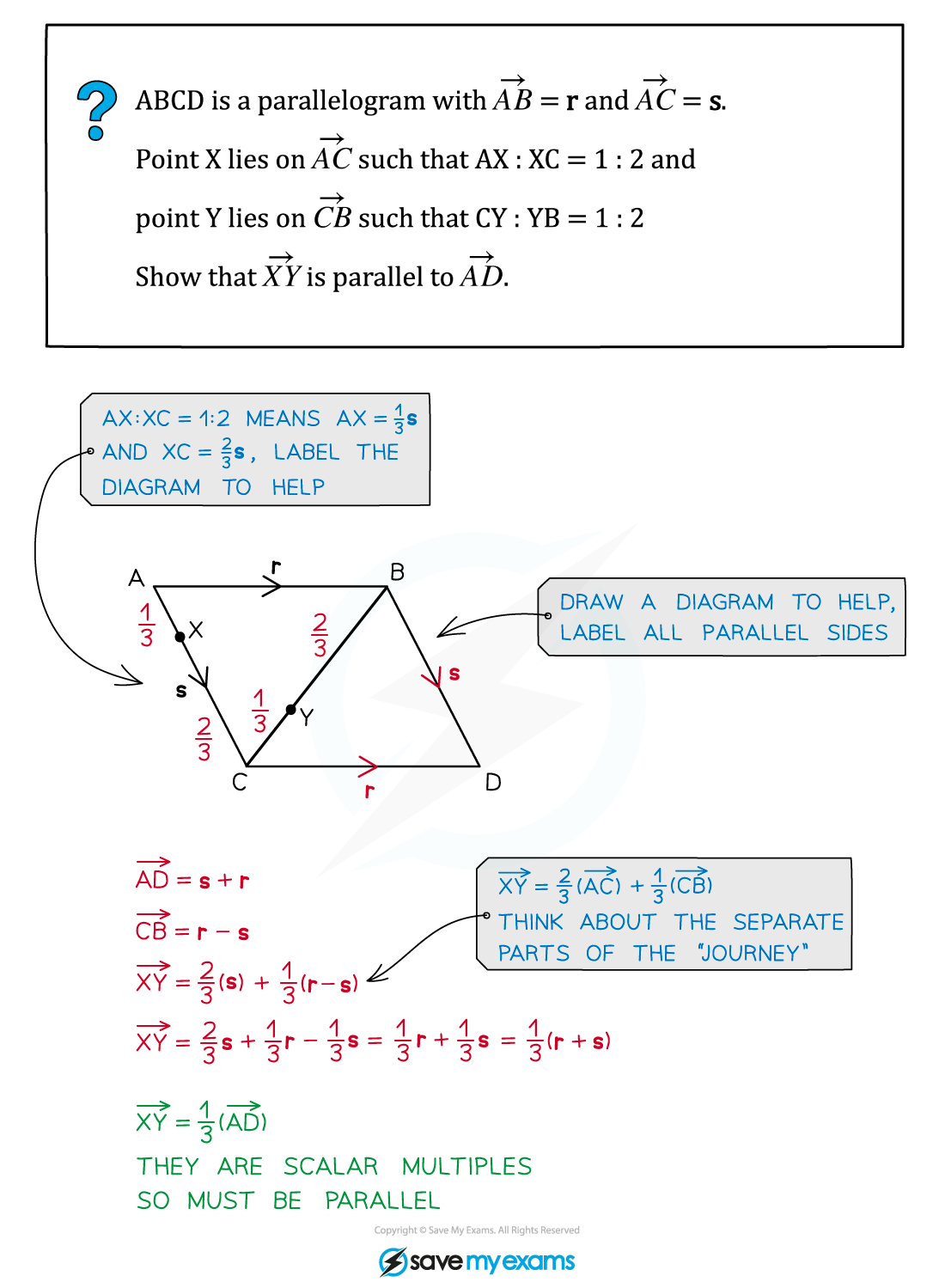
- Diagrams can help, so if there isn’t one, draw one. If there are any, labelling parallel vectors will help.
Worked Example
Was this revision note helpful?
Build on this topic