Problem Solving using 3D Vectors (Cambridge International A-Level Mathematics)
Exam board Cambridge International · A-LevelUpdated 2026-07-02
Problem solving using 3D vectors
How are 3D vectors used for problem solving?
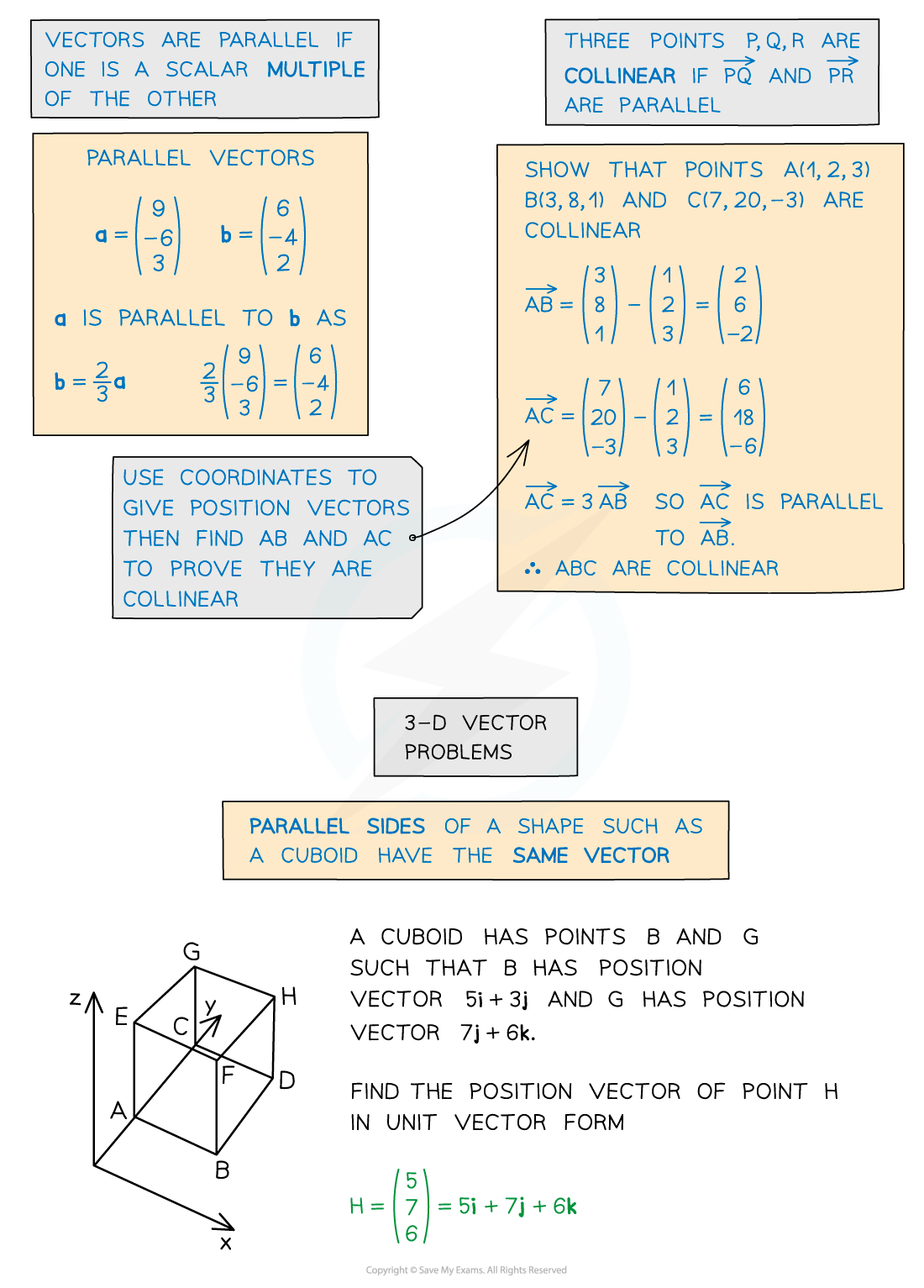
- 3D vector problems can be solved using the same principles as 2D vector problems(see Problem Solving using Vectors)
- Vectors can be used to prove two lines are parallel, to show points are collinear (lie on the same straight line) or to find missing vertices of a given shape
When do I use trigonometry in 3D vector problems?
-
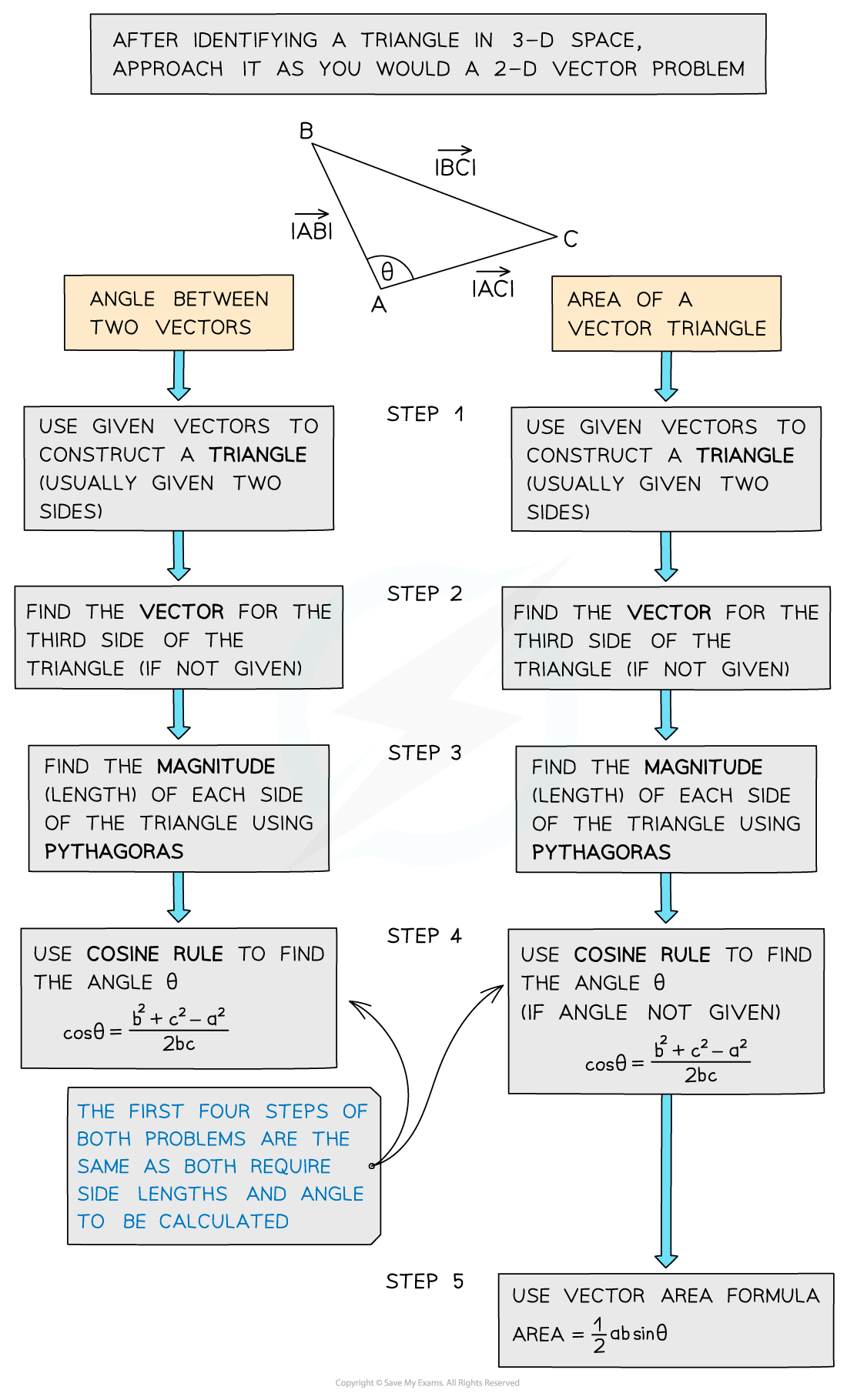
3D vector problems can also involve using trigonometry to:
- find the angle between two vectors using Cosine Rule
- find the area of a triangle using a variation of Area Formula
- You can find the angle between a vector and any one of the coordinate axes by using the following formulae
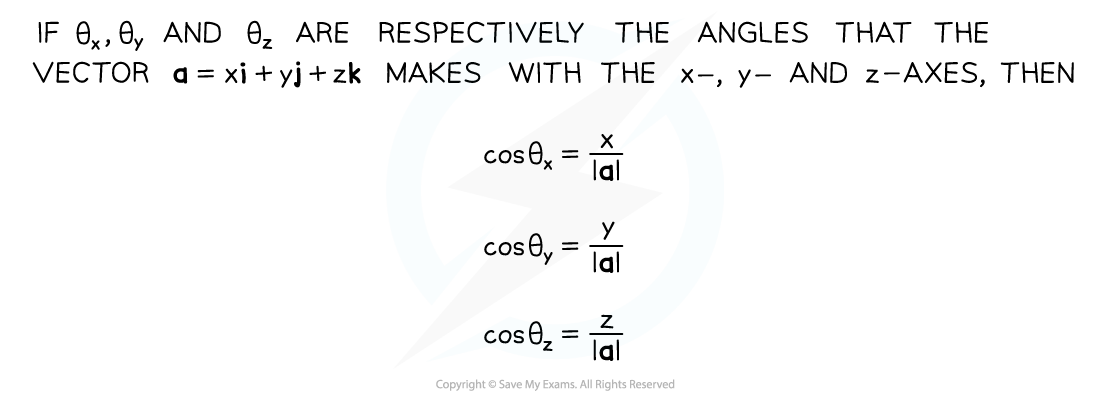
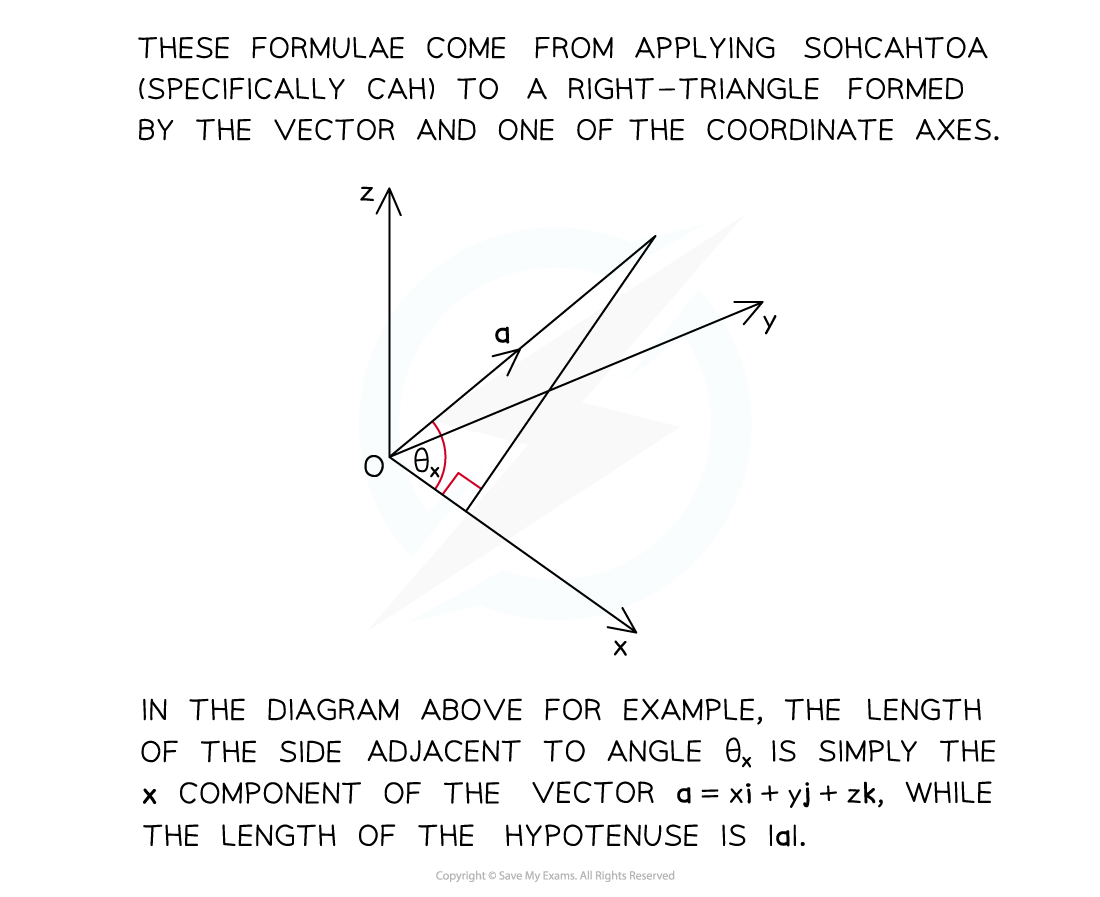
- These formulae are not in the exam formulae book
- However, they may be derived using SOHCAHTOA as shown in the diagram
- The formulae also work for vectors in two dimensions
Exam Hint
- If there is a diagram, labelling all known vectors and quantities will help, and don’t worry about trying to make your diagram 3-D, as long as you label it well.
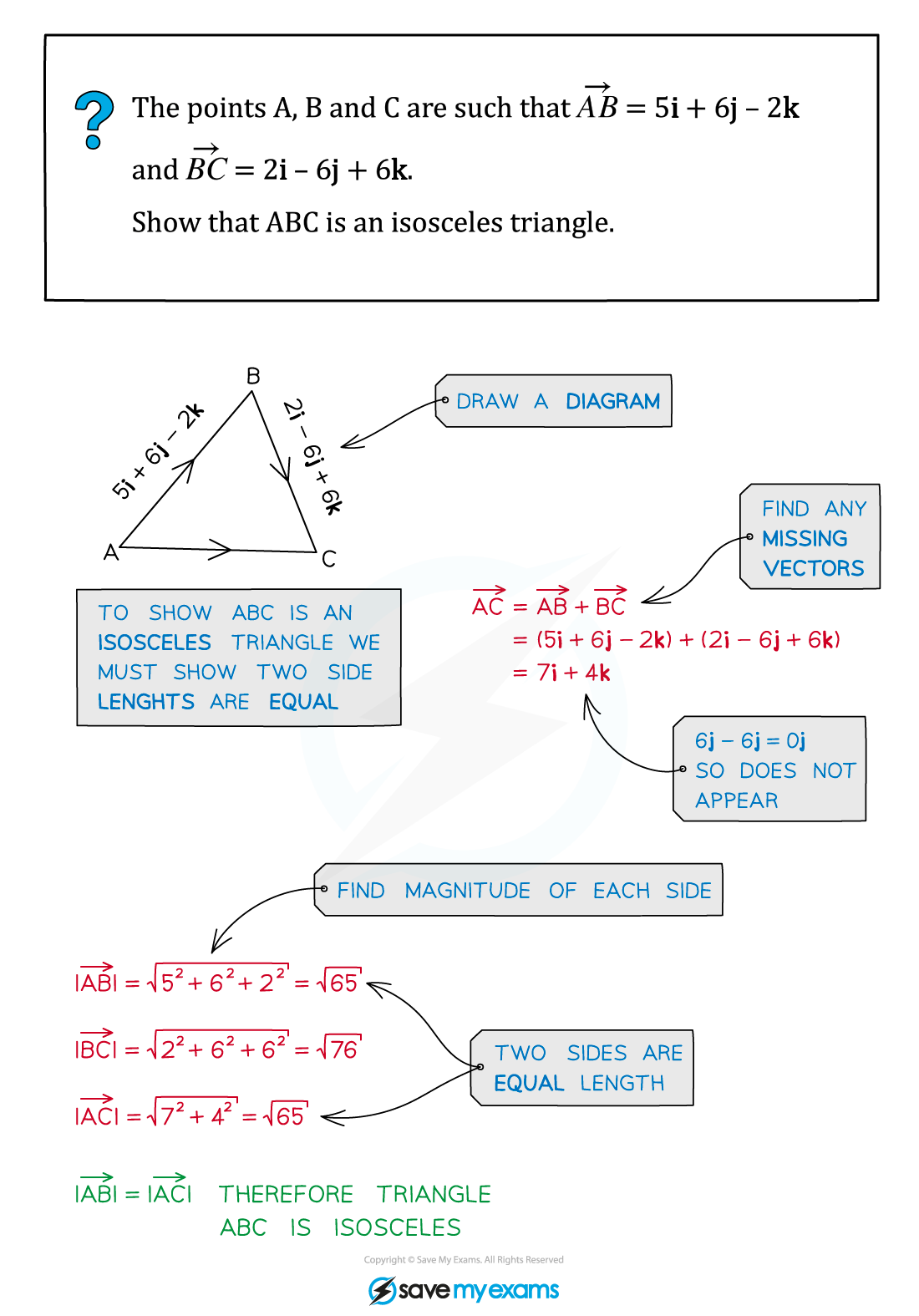
Worked Example
Was this revision note helpful?
Build on this topic