Discriminants (Cambridge International A-Level Mathematics)
Exam board Cambridge International · A-LevelUpdated 2026-10-01
Discriminants
What is a discriminant?
- The discriminant is the part of the quadratic formula that is under the square root sign
- It is sometimes denoted by the Greek letter (capital delta)
How does the discriminant relate to graphs and roots?
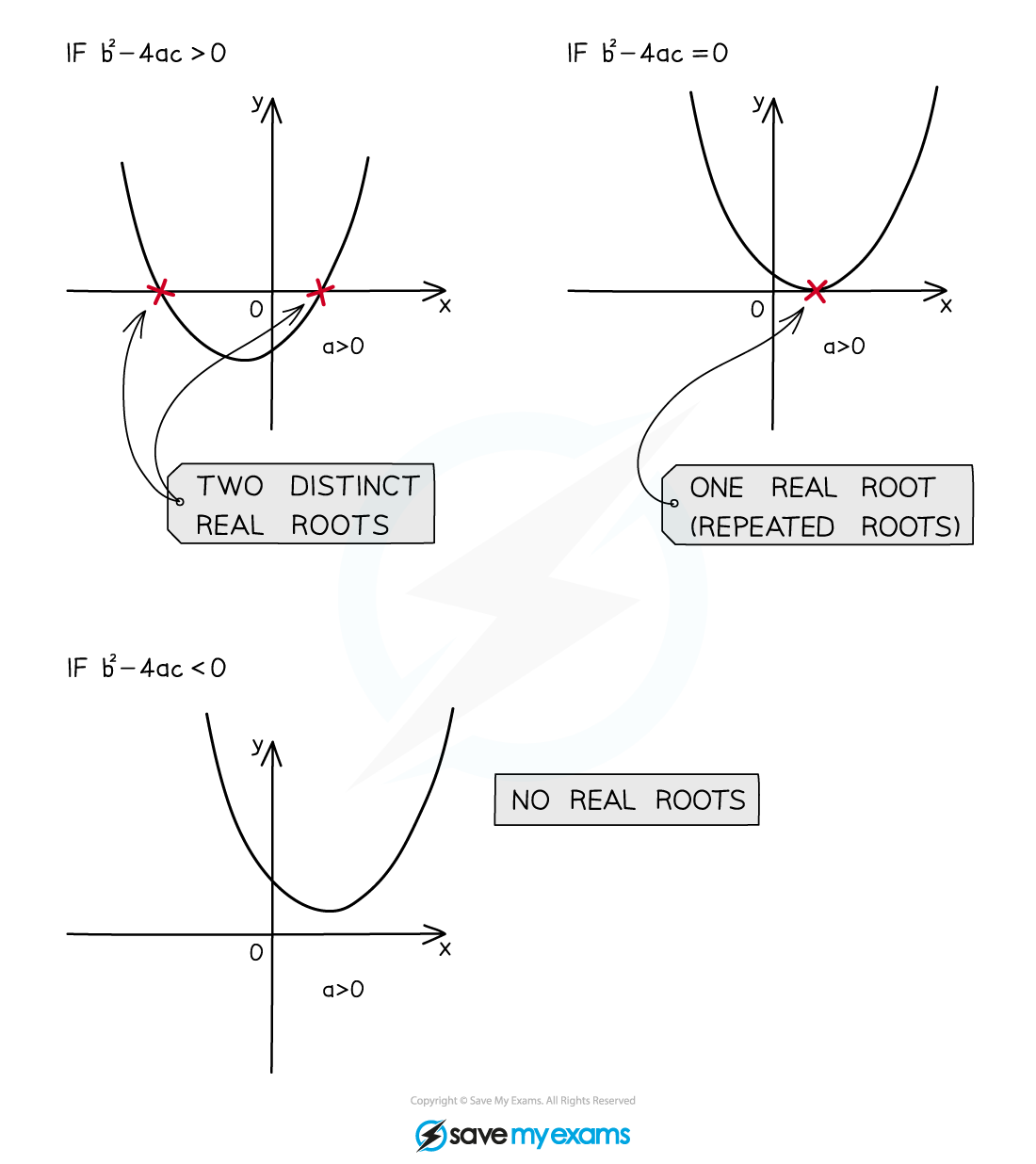
There are three options for the outcome of the discriminant:
- If the quadratic crosses the x-axis twice meaning there are two distinct real roots
- If the quadratic touches the x-axis once meaning there is one real root (also called repeated roots)
- If the quadratic does not cross the x-axis meaning there are no real roots
Discriminant and inequalities
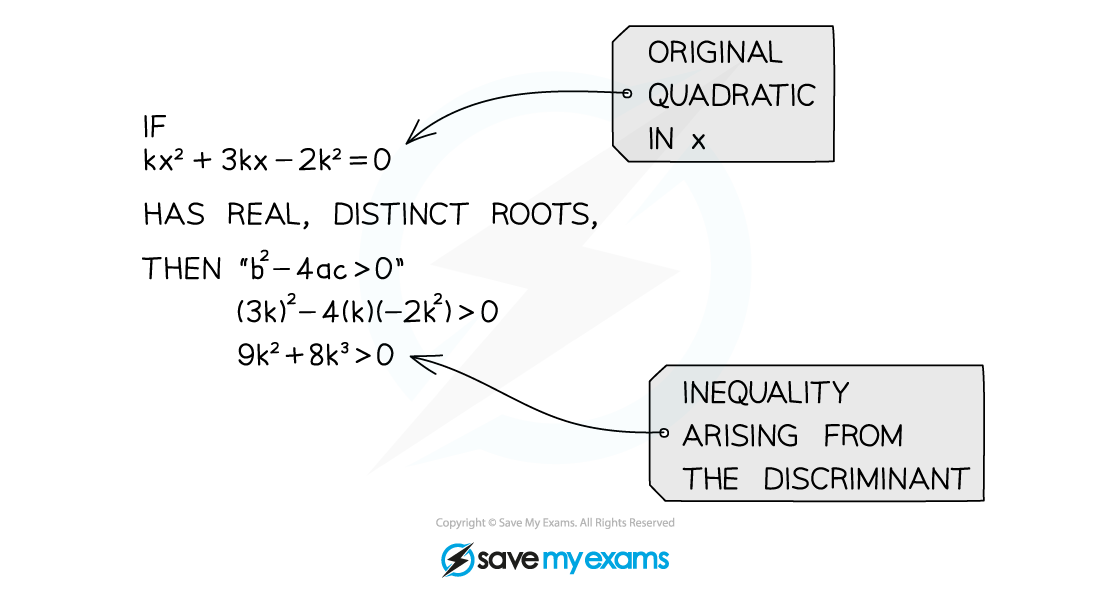
- You need to be able to set up and solve equations and inequalities (often quadratic) arising from the discriminant
- Sketch the quadratic and decide whether you're looking above or below zero to write your solutions correctly
Exam Hint
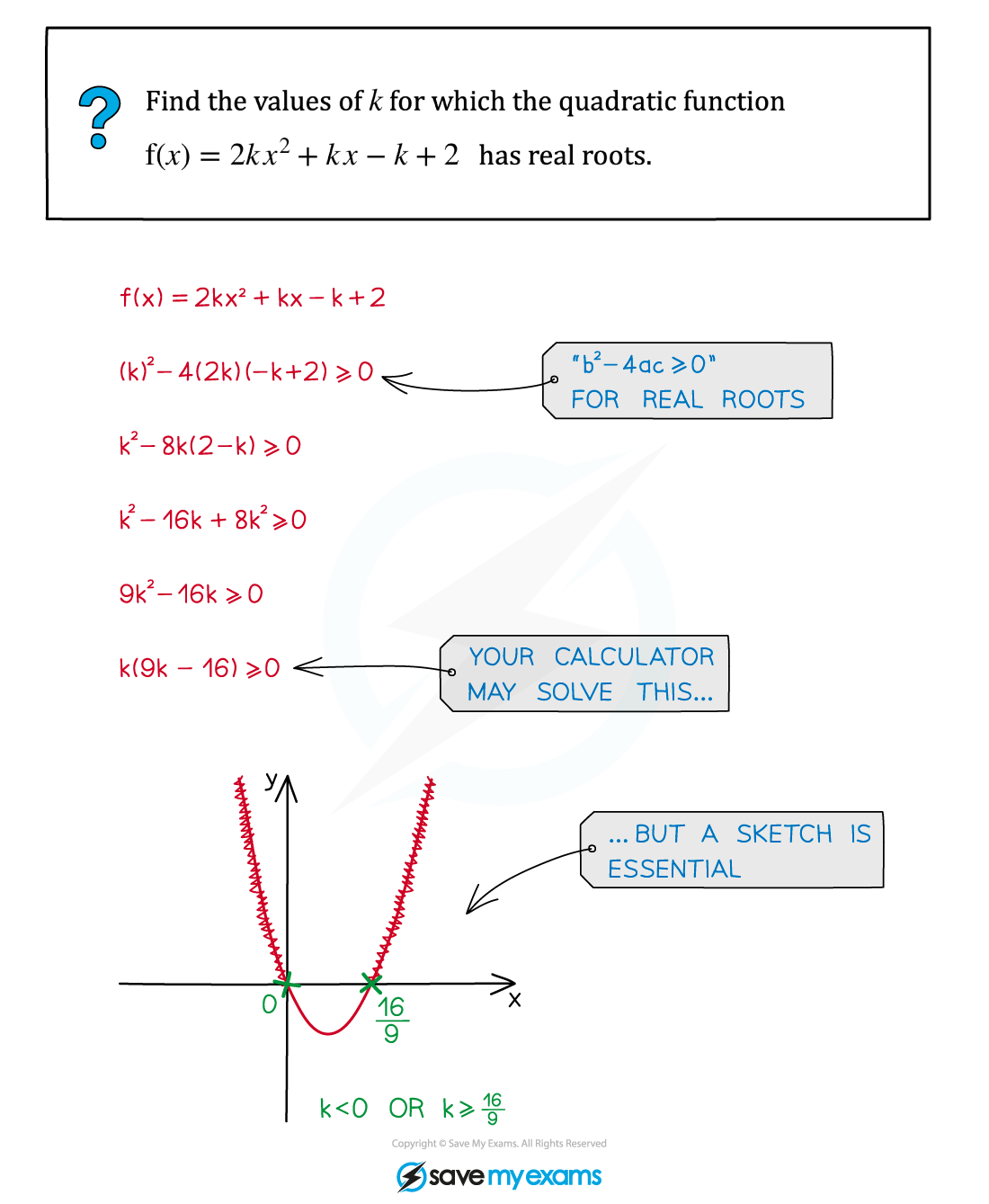
- When questions just mention “real roots”, the roots could be distinct or repeated (i.e. they aren't talking about complex numbers!)
- In these cases, you only need to worry about solving
- When solving using inequalities, always sketch the quadratic and decide whether you're looking above or below zero to help write your solutions correctly
Worked Example
is excluded here because at , the equation becomes which has no roots.
Was this revision note helpful?
Build on this topic