Productive & Allocative Efficiency (Cambridge International A-Level Economics)
Exam board Cambridge International · A-LevelUpdated 2026-03-03
What efficiency means
Introduction to economic efficiency
- 'Economic efficiency' refers to the optimal use of scarce resources
- It involves producing the right goods at the lowest possible cost
- There are two main types: productive efficiency and allocative efficiency
1. Productive efficiency
- Occurs when firms produce at the lowest possible average cost
- This happens where MC = AC
- At this point, average costs are minimised
- There is no waste of scarce resources
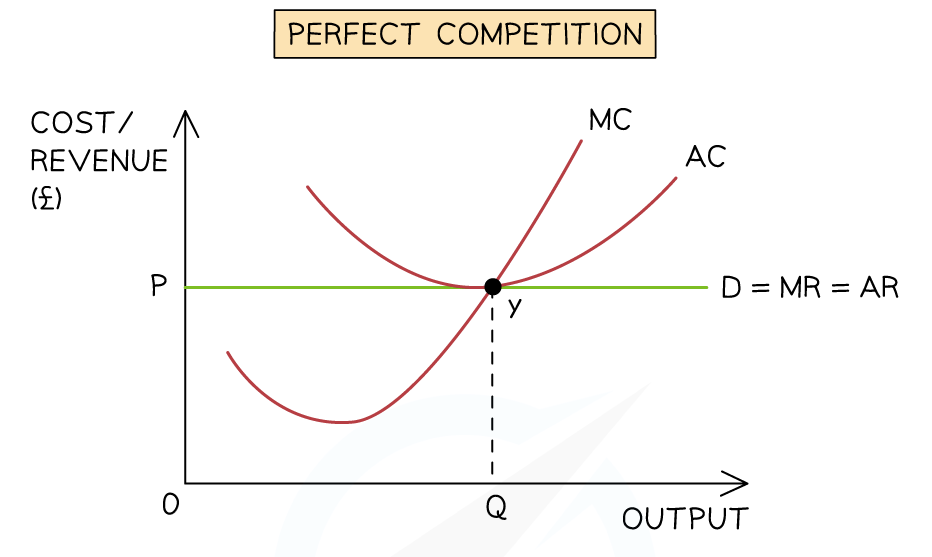
Productive efficiency occurs when firms produce at a level where MC = AC
- Productive efficiency occurs at the minimum point of the AC curve
- This is where MC intersects AC from below
Exam Hint In long-run analysis, productive efficiency occurs at the minimum point of the LRAC curve On a PPC, productive efficiency occurs at any point on the frontier (full use of resources)
2. Allocative efficiency
- Occurs when output reflects consumer preferences
- This happens where price = marginal cost (P = MC)
- At this point, social welfare is maximised
- There is no excess demand or excess supply
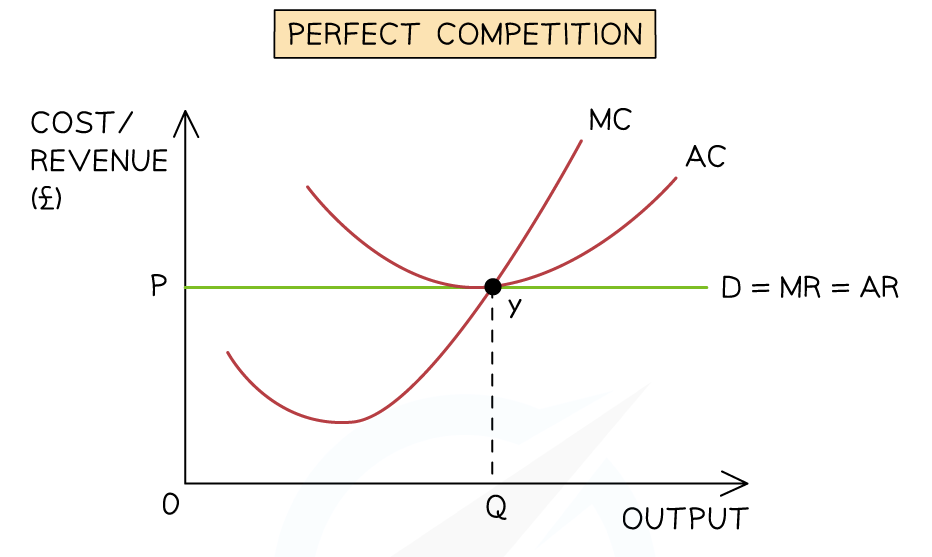
Allocative efficiency occurs where P = MC
- Demand (AR) represents consumer willingness to pay
- MC represents cost of producing the last unit
- Allocative efficiency occurs where AR = MC
Exam Hint If P ≠ MC, there is a welfare loss (deadweight loss)
Summary Comparison
| Productive efficiency | Allocative efficiency |
|---|---|
| - MC = AC | - P = MC |
| - Lowest possible cost | - Right goods produced |
| - No resource waste | - Maximum social welfare |
| - Technical efficiency | - Welfare efficiency |
Global economic efficiency
-
Global efficiency is reached when resources across countries are used in the best possible way
-
This often involves international trade, where nations specialise in what they produce most efficiently
- If Brazil focuses on exporting coffee while Germany specialises in engineering equipment, both countries benefit from trade
- However, protectionist policies, such as tariffs or quotas, can disrupt this balance and reduce global efficiency by limiting access to cheaper or better-quality goods
Examples
- Lithium: As demand for electric vehicles grows, efficient extraction and recycling of lithium becomes essential to avoid shortages and environmental damage
- Freshwater: In regions facing drought, efficient irrigation systems and water-saving technologies help preserve this vital resource
- Digital bandwidth: With rising online activity, efficient use of data networks ensures smoother streaming, communication, and cloud services
- Trade agreements: Deals like the UK’s partnership with Australia aim to reduce barriers and improve the flow of goods, enhancing efficiency across borders
Was this revision note helpful?
Build on this topic