Cartels (Cambridge International A-Level Economics)
Conditions for cartels
-
A cartel is formed when firms engage in collusive behaviour, cooperating to fix prices and restrict output
- They cease to compete as vigorously as they can
- The incentive to collude in these markets is high
A collusive oligopoly
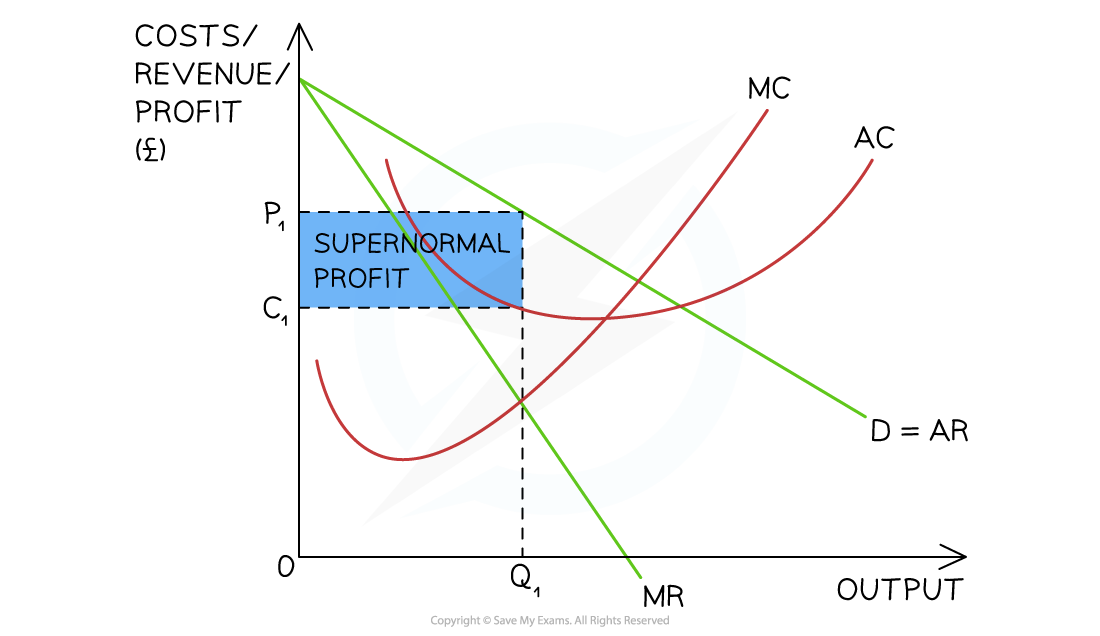
*When firms join together in collusion, they agree on a price and act like a monopoly in the industry by removing competition *
Diagram analysis
-
Five firms meet secretly and agree to fix prices at a particular level
- The five firms present in the market as a single firm
-
The firm produces at the profit maximisation level of output, where MC = MR (Q1)
- At this level, AR (P1) > AC (C1)
- The cartel is making higher levels of supernormal profit
-
A cartel is the most restrictive form of collusion and is illegal in most countries
-
The consequences of overt collusion include:
- Higher prices for consumers
- Less output in the market
- Poor quality products and/or customer service
- Less investment in innovation
-
-
Overt collusion often happens in the following ways:
- Price fixing
- Setting output quotas, which limit supply and naturally result in price increases
- Agreements to block new firms from entering the industry
Conditions for an effective cartel
-
Small number of firms in the market
- Fewer firms makes monitoring and enforcing agreements easier
- Large numbers of firms increase the incentive to cheat
-
High barriers to entry
- New firms find it difficult to enter the market, reducing the threat of competition and helping existing cartel members maintain control
-
Price stability among members
- Members must resist the temptation to undercut each other. A price war—where one firm lowers prices to gain market share—can quickly unravel the cartel
-
Similar cost structures
- If all members have similar production costs, they benefit equally from the agreed price. Large cost differences can lead to dissatisfaction and defection
-
Presence of a dominant firm
- A strong leader within the cartel can enforce discipline, coordinate actions, and deter cheating among members
-
Legal environment that tolerates cartels
- In regions like the EU and USA, cartels are illegal because they restrict competition and harm consumers. Legal enforcement can dismantle cartels quickly
Case Study Cartels in the trucking industry
Between 1997 and 2011, several major truck manufacturers in Europe formed a cartel to coordinate prices for medium and heavy trucks. The firms involved included MAN, Volvo/Renault, Daimler (Mercedes-Benz), Iveco and DAF. Together these companies controlled around 90% of the European truck market
Cartel behaviour in the trucking industry
Collusive behaviour
The firms secretly agreed to fix truck prices and coordinate the timing of price increases. Senior managers communicated regularly to share pricing information and avoid competing aggressively
Outcome
In 2016, the European Commission fined the companies €2.93 billion, one of the largest cartel fines ever issued. The cartel resulted in higher prices for transport firms and reduced competition across the European truck market

Was this revision note helpful?
Build on this topic